What is Las Fallas?
Las Fallas (Les Falles) is Valencia's festival of fire, satire and spring: daily gunpowder concerts from March 1 and a finale on the feast of San José, March 19. The name comes from a medieval Valencian word for torches, and the origin story locals favor goes back to the city's carpenters: each spring they burned the parots, the wooden stands that had held their workshop lamps through the dark months, on the feast of San José, patron saint of carpenters. In the 18th century these were simple pyres, and the burning of winter's leftovers slowly grew into the burning of art.
Because art is what burns. Each neighborhood commission, a falla in the social sense, spends the year and serious money building its monument: ensembles of caricature figures (ninots) in wood, papier-mâché and polystyrene, some towering higher than the surrounding balconies, all skewering politicians, celebrities and whatever embarrassed Spain that year. The city becomes an open-air museum of several hundred of them, counting the children's fallas. UNESCO listed the festivity as Intangible Cultural Heritage in 2016.
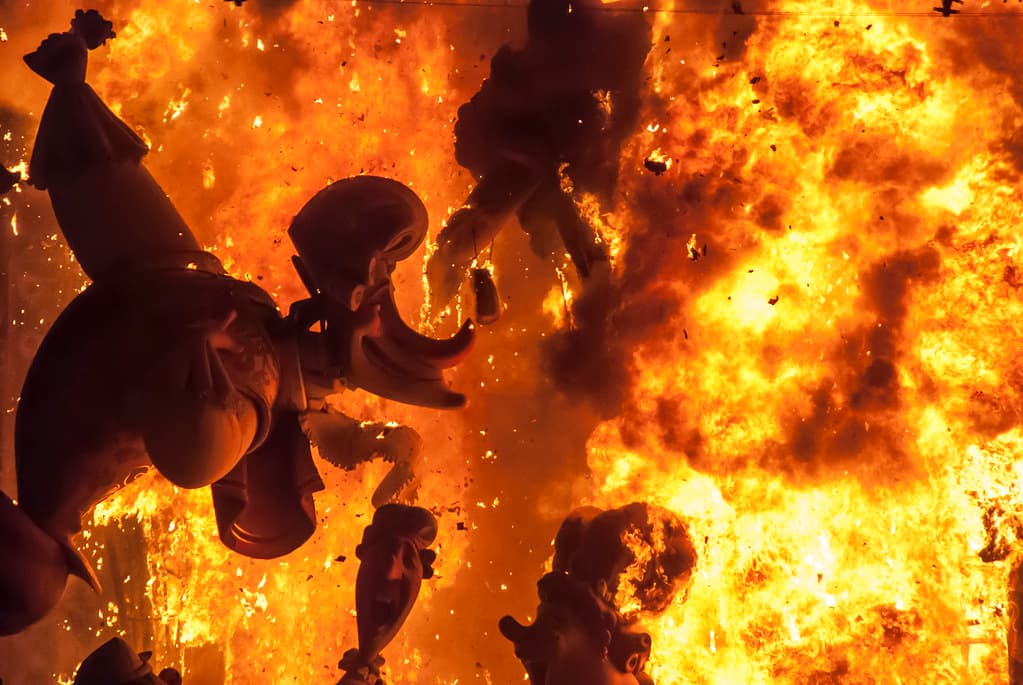
Then, on the night of the 19th, Valencia burns the museum.
Valencia spends a year building an art museum, then burns it down in one night and starts again the next morning.
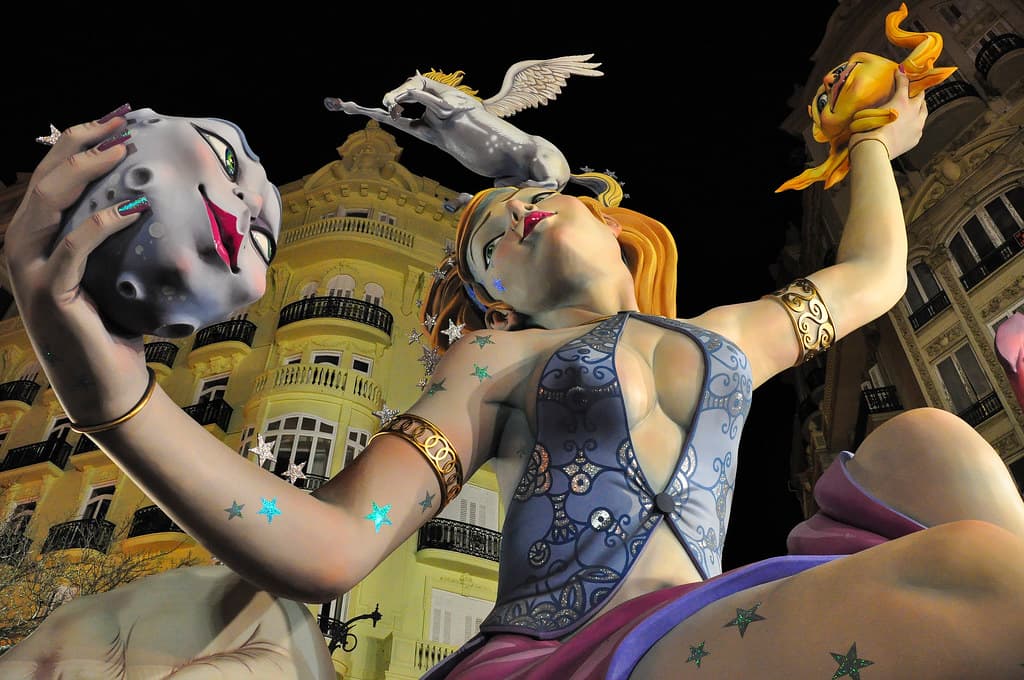
A falla sculpture on the street in Valencia
Photo by keith ellwood / flickr · CC BY 2.0
What to expect
Mar 1–19
The mascletà, daily at 2pm sharp
Every afternoon in Plaza del Ayuntamiento, a choreographed gunpowder concert: a few minutes of rhythmically escalating explosions felt in the sternum more than heard. Valencians judge them like sommeliers. Arrive by 1:30pm; leave your eardrums' expectations at home.
Mar 15–16
La Plantà
Overnight, every falla rises: cranes, scaffolds and finishing touches until dawn, when the juries make their rounds. From now on the city is a maze of monuments, with the finest traditionally found around El Carmen, Ruzafa and the Ayuntamiento square.
Mar 17–18
L'Ofrena de Flors
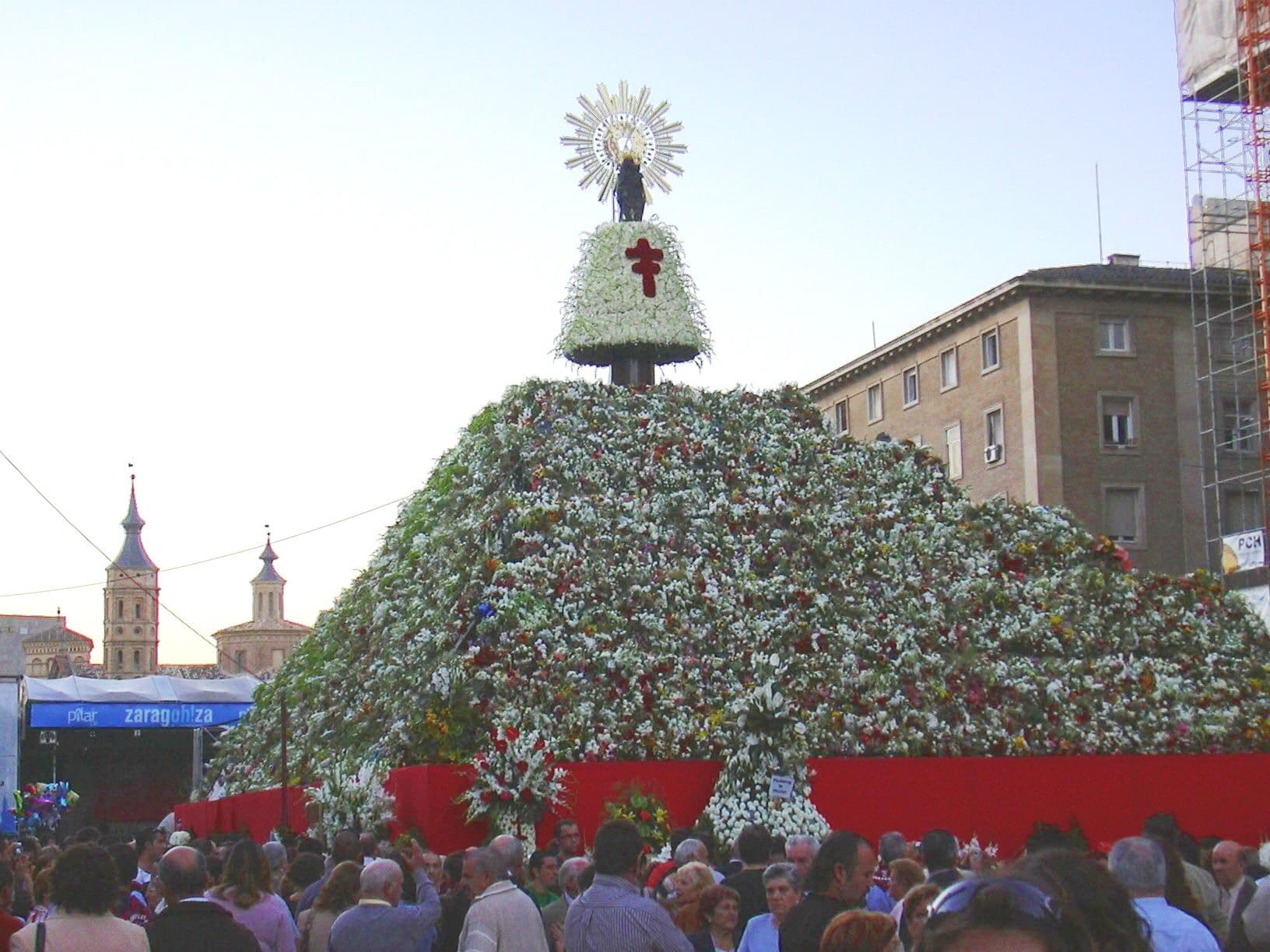
Falleros and falleras in embroidered silk parade flowers to the Plaza de la Virgen from mid-afternoon, where the blooms build a towering floral mantle for the Virgen de los Desamparados. The processions run late into the night; the perfume hits a block away.
Mar 18
Nit del Foc
The Night of Fire: the festival's big closing fireworks castle, fired around midnight from the Monteolivete bridge.
Mar 19
La Cremà
The burning. Children's fallas go around 8pm, the neighborhood monuments from about 10pm, and the municipal falla in the Plaza del Ayuntamiento last, around 11pm in 2026, with firefighters hosing the facades of adjacent buildings between waves of heat. One ninot, the ninot indultat, pardoned by public vote, escapes to the Fallero Museum. Everything else becomes light, then ash, then next year's blank page.
Planning your trip
Getting there
Valencia is an easy trip: well connected by air, with fast trains from Madrid taking roughly 1 hour 50 minutes to two hours. The festival zone is essentially the whole city center, so the metro from the airport (lines 3 and 5, about 20 minutes to the center) plus your feet cover everything.
The full run is glorious but loud; even two well-chosen days, ideally the 18th and 19th, deliver the flower offering's finale, the Nit del Foc, the mascletà and the Cremà. If you have more time in Spain, Holy Week in Seville begins on March 21 in 2027, two days after the Cremà, and the Feria de Abril follows in April or May.
Where to stay
Sleep is the scarce resource. Central areas such as Ciutat Vella, Ruzafa and the Eixample book up many months ahead for the final days, and the despertà wake-up calls, with brass bands and firecrackers, start at 8am regardless of your bedtime.
What it costs
The festival itself is free: it happens in public streets and squares. Your budget goes to lodging, which climbs steeply for the final nights (one accommodation guide cites roughly 60 euros becoming 200 or more), plus street food and earplugs. A few extras are paid: the official digital pass for Special Section monuments starts at 17 euros, and guided tours at 19. March in Valencia is mild, light-jacket weather, and the festival diet writes itself: buñuelos de calabaza (pumpkin fritters) with thick hot chocolate from street stalls, and paella eaten properly, at lunch, in the city that invented it.
Go like you know
- Judge the mascletà like a local: it should build, not just bang, and the finale is called the terremoto, the earthquake, for a reason.
- Walk the fallas in the morning while streets are clear; the monuments read better in daylight and the satire needs a slow lap.
- Visit the Fallero Museum early in your stay: the pardoned ninots there explain what you're about to watch burn.
- The children's fallas (fallas infantils) beside each big monument are gentler, stranger, and often better craftsmanship per meter.
- On Cremà night, position upwind. Ash travels, and so does the smell of burnt polystyrene on a jacket you have to wear home.
Frequently asked questions
Do I need tickets for Las Fallas?
No. The entire festival happens in public streets and squares, free. The only things resembling tickets are museum entries, guided tours, the paid digital pass for monument access, and grandstand seats some commissions sell for their own events. Your budget goes to lodging, fritters and earplugs.
Which day is the best single day?
March 19. You get a mascletà at 2pm, a full day among the finished monuments, and the Cremà from 8pm into the late evening: the festival's entire logic compressed into one date. The 18th is the runner-up for the flower offering's finale and the Nit del Foc fireworks at midnight.
Is Las Fallas safe with all that fire?
Remarkably so, for an event this pyrotechnic. Commissions and firefighters run the burns with practiced precision, and crowd barriers keep sensible distances. Your actual risks are pickpockets in dense crowds and firecrackers underfoot; mind both and you are fine.