What is Semana Santa in Seville?
Semana Santa, Holy Week, marks the last days of Jesus's life, from his entry into Jerusalem on Palm Sunday to his crucifixion and resurrection. Across Spain, cities hold processions, but Seville's are the most famous, the most elaborate and the most emotional, a tradition with roots going back centuries.
The processions are organized by hermandades and cofradías, brotherhoods attached to churches around the city. About sixty process during Holy Week itself, with a handful more in the days before Palm Sunday, and each makes a penitential journey from its church to the Cathedral and back, sometimes walking for more than twelve hours. Each brotherhood carries one or two pasos, floats depicting scenes of the Passion or the Virgin Mary, many with centuries-old sculptures by master artists.
The floats are carried by costaleros, men hidden underneath, who move in perfect unison, guided by a foreman's voice. Ahead of them walk the nazarenos, penitents in robes and pointed hoods, carrying candles or crosses. Brass bands play solemn marches, and at moments a saeta, a flamenco prayer, is sung spontaneously from a balcony.
A city that dances flamenco and celebrates its Feria in spring also knows how to fall silent for a week.
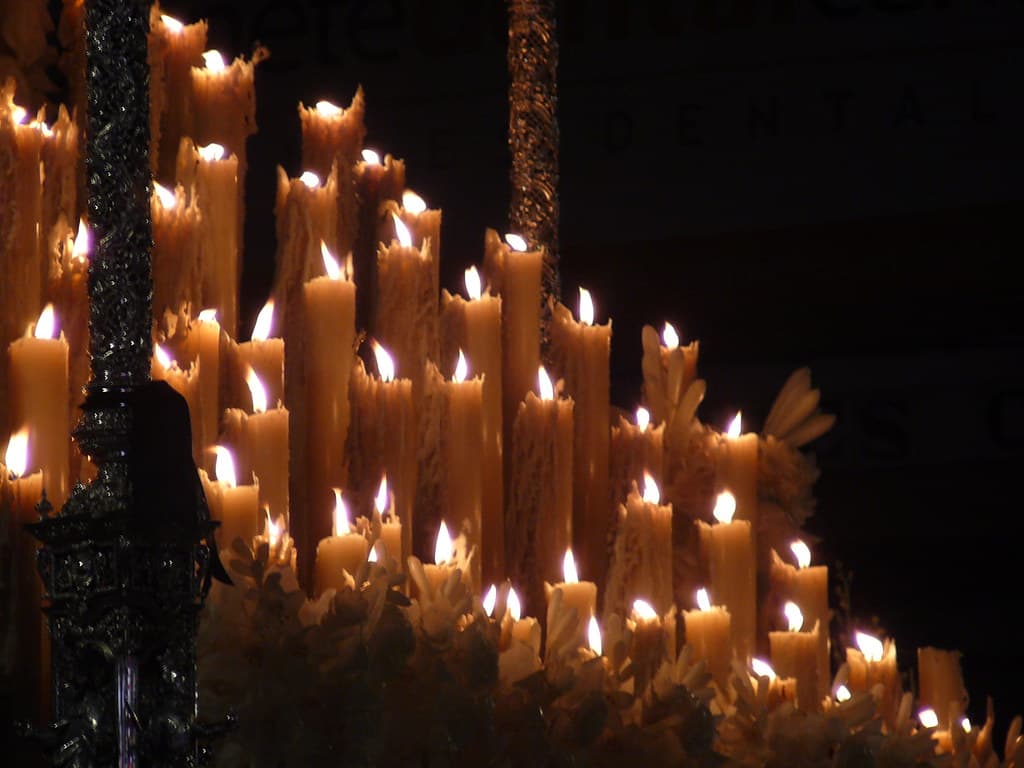
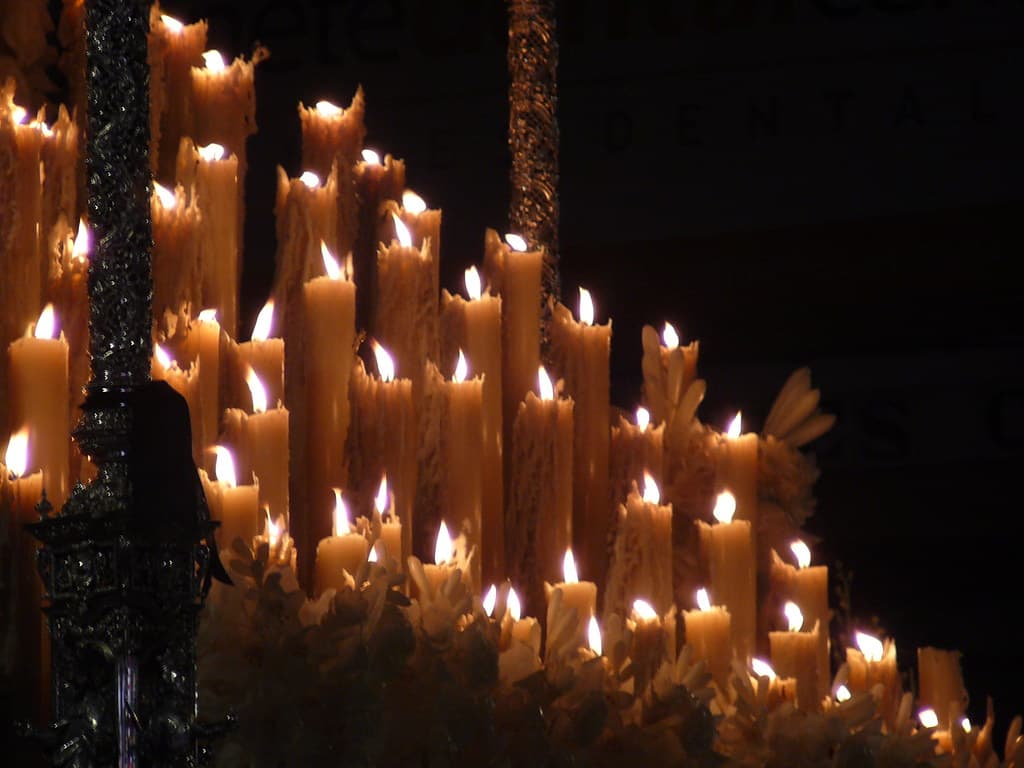
Candle-lit float in a Holy Week procession
Photo by Julie Raccuglia / flickr · CC BY-SA 2.0
What to expect
Every day of Holy Week has its own processions, character and emotion.
Palm Sunday
The first processions
Families in their best clothes see the first brotherhoods, including the joyful La Borriquita, with children in white.
Mon–Wed
Building intensity
Processions from neighborhoods across the city cross the river and the old town, with a mix of solemn and festive moods.
Holy Thursday
Day of the mantillas
Women dress in black with lace mantillas to visit churches, and evening processions prepare for the night ahead.
Thursday night
La Madrugá
The most important night: from midnight to the morning of Good Friday, the city's most venerated images, including the Gran Poder and the Macarena, process through crowded streets.
Fri–Easter
Good Friday to Easter Sunday
Solemn processions on Good Friday and Holy Saturday give way to the Resurrection on Easter Sunday, ending the week.
Planning your trip
Getting there
Seville is reached by high-speed train from Madrid, with the fastest services taking about two and a half hours, and its airport has flights across Europe; the airport bus runs to the center in roughly thirty-five minutes. Getting around the center during Holy Week means walking, as streets are blocked by processions and crowds.
Each brotherhood publishes its timetable and route in the weeks before Holy Week, often in a printed guide sold at newsstands. Many locals plan their week around particular moments: a float squeezing through a narrow arch, crossing the Triana bridge at sunset, or returning to its chapel at dawn. Choose two or three such moments each day rather than chasing every procession.
Where to stay
Book accommodation months in advance, especially for the Thursday night of the Madrugá, when hotels fill first; some trip planners suggest six to eight months out. Staying in or beside the historic center keeps you within walking distance of the processions, which matters when the streets are blocked.
What it costs
Watching from the street is free. The Carrera Oficial, the official route near the Cathedral, has paid chairs and boxes, allocated mostly through the organizing council's subscription system, so visitors rarely get them directly; unofficial resale, including by agencies and tour operators, breaks the council's rules and has drawn complaints from the consumer group OCU. Most visitors watch from the street instead, choosing narrow lanes or squares where the floats pass close by.
Go like you know
- Dress respectfully, particularly on Holy Thursday and Good Friday.
- Try torrijas, Spanish bread pudding fried and soaked in honey or syrup, a Holy Week treat.
- Watch a float leaving or returning to its church, the salida and entrada, two of the most emotional moments.
- Visit the Basílica de la Macarena and the Gran Poder outside procession hours to see the images up close.
- Stay for the Feria de Abril, Seville's spring fair, which usually begins about two weeks after Easter Sunday.
- Cross to Triana, across the river, to see its brotherhoods leave and return; the neighborhood's devotion is famously intense.
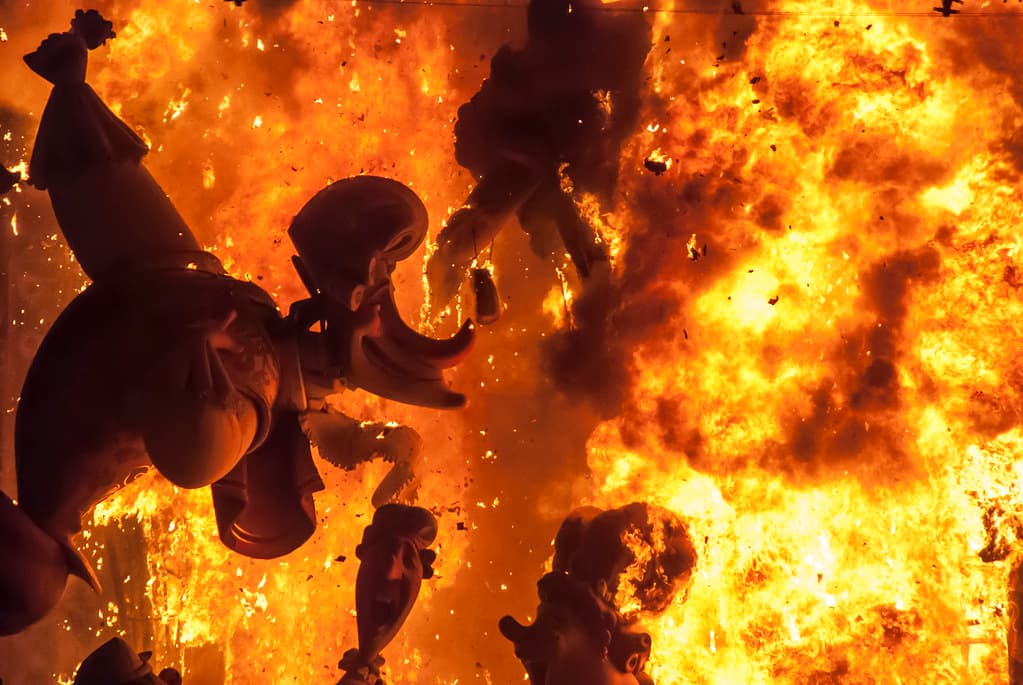
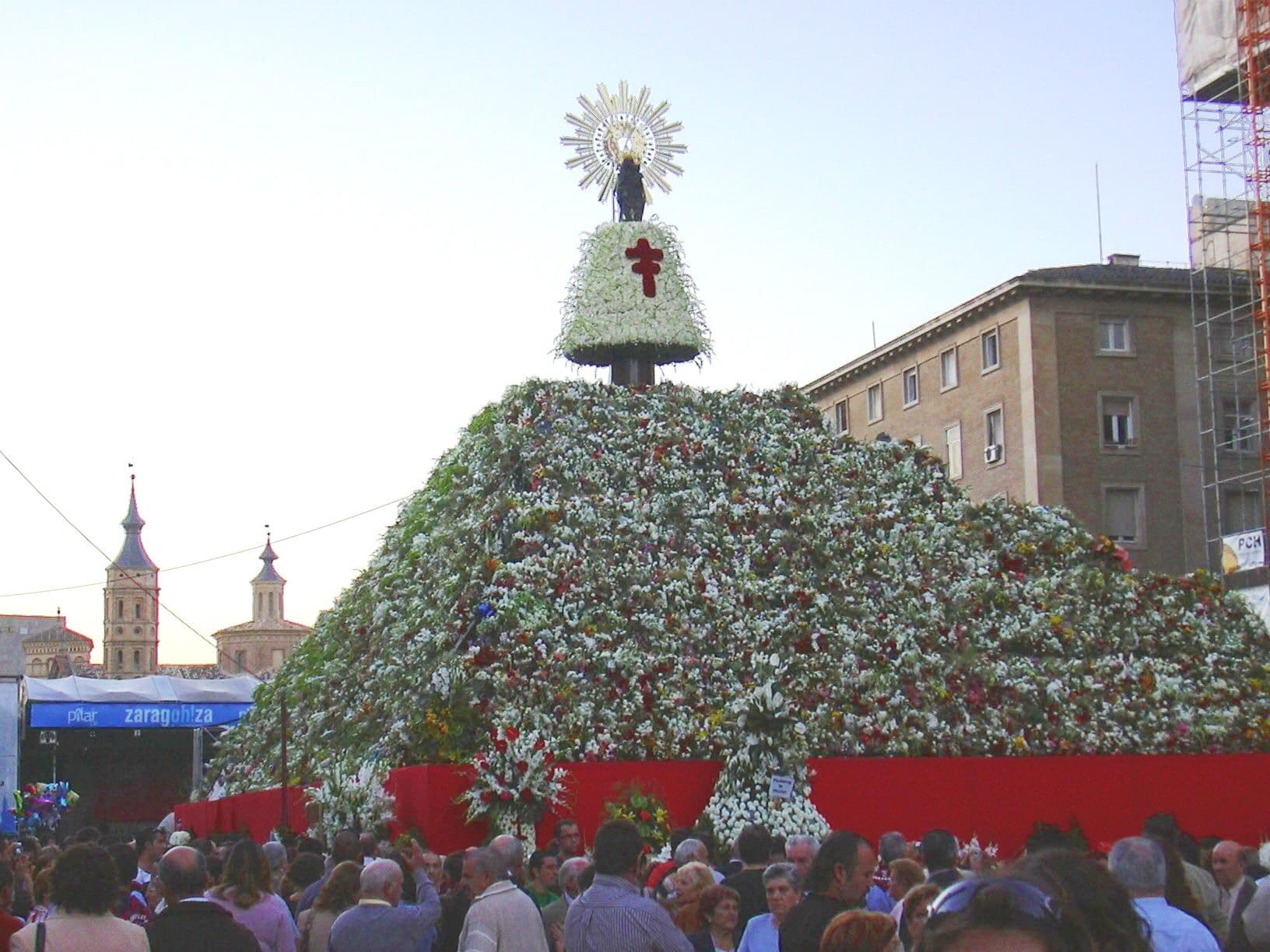
- Making a Holy Week trip of it? In an early-Easter year, Valencia's Las Fallas, always March 15–19, ends just before it begins. For a very different Holy Week, with sawdust carpets instead of floats, see Antigua Guatemala.
Frequently asked questions
When is Semana Santa in Seville?
It runs from Palm Sunday to Easter Sunday, so the dates change every year with Easter, falling in March or April. The most important processions take place during the Madrugá, the night from Holy Thursday to Good Friday.
Do I need tickets?
No, the processions are free to watch from the streets. Chairs and boxes on the Carrera Oficial near the Cathedral are allocated mostly by subscription and are hard for visitors to get directly, and unofficial resale is against the council's rules. Some balconies and terraces offer paid viewing spots.
Is Holy Week suitable for non-religious visitors?
Yes, many visitors come for the art, music and atmosphere. It is a religious event first, so behave respectfully, stay quiet during processions, and follow the lead of locals. Even non-believers often find it deeply moving.
Who are the nazarenos?
Nazarenos are members of the brotherhoods who walk in the procession as penitents, wearing robes and tall pointed hoods called capirotes. The hood, centuries old, allows them to repent anonymously. Its shape has no connection to other groups that adopted similar hoods much later in other countries.
What happens if it rains?
Rain is a serious matter for the brotherhoods, as the centuries-old sculptures and embroidered fabrics can be damaged. Processions may be delayed, shortened or cancelled, and some return early to the nearest church. Check official announcements on the day, and treat any cancelled procession as a reason to come back.