What is Fiestas del Pilar?
Zaragoza's big fiesta honors the Virgin of the Pillar (Virgen del Pilar), patron of the city and, for many Spaniards, of the whole country. According to tradition, the Virgin appeared to the apostle James on the banks of the Ebro standing on a stone column, and the column is still venerated inside the Basílica del Pilar, the baroque church whose tiled domes dominate the riverfront. Her feast day is October 12, which is also Spain's national holiday, so the city celebrates with the energy of a capital.
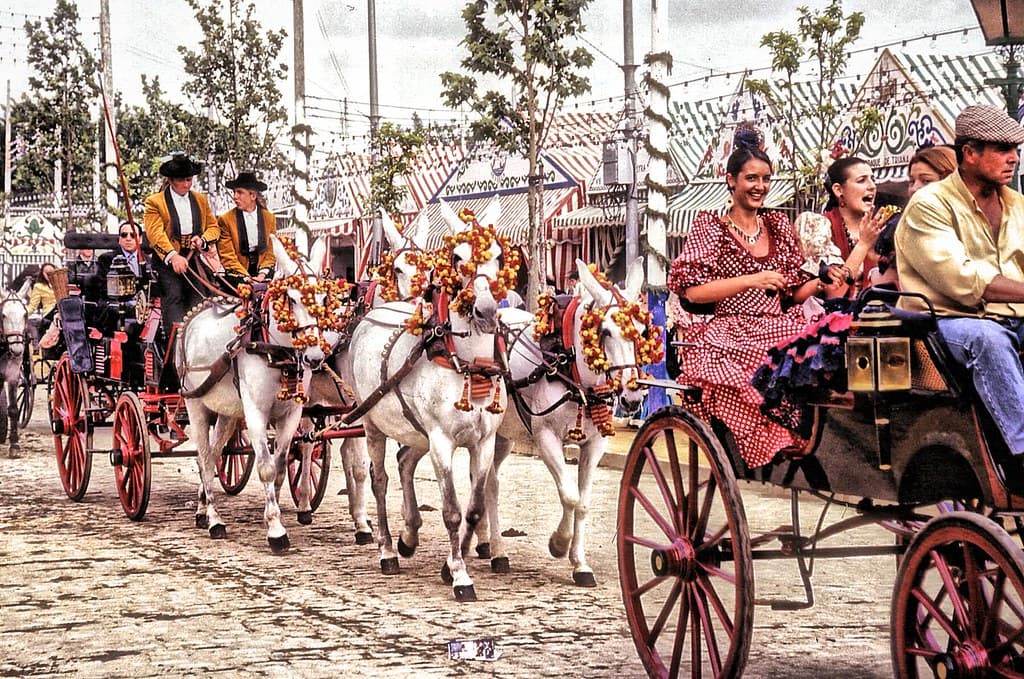
The fiesta wraps nine days of secular fun around that religious core. There are concerts on outdoor stages, a funfair at the Recinto Ferial in Valdespartera on the edge of town, fireworks over the river, and the gigantes y cabezudos: towering giants in royal costume and big-headed figures who chase children through the old town. Bars spill into the street, and the jota, Aragon's leaping folk dance, has its own competitions on the program.
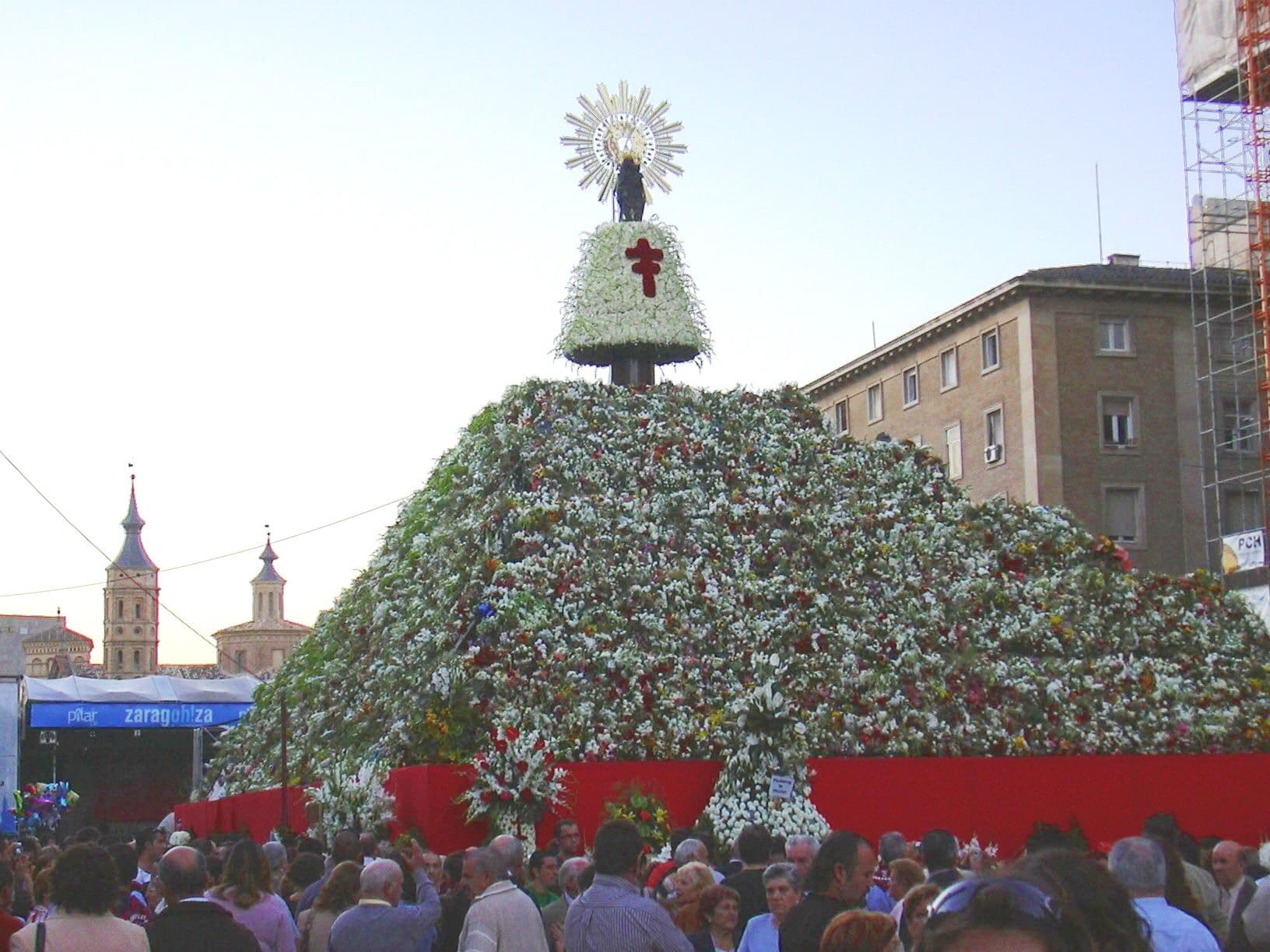
The heart of it all is the Ofrenda de Flores, the flower offering, which began in 1958 with about 2,000 participants, modeled on similar flower offerings in eastern Spain such as the one at Las Fallas in Valencia. In 2025 more than 112,000 people marched in registered groups alone, organized by neighborhood, town and association. They walk in traditional dress to the Plaza del Pilar and hand over their flowers. Volunteers arrange each bunch on the structure around the Virgin's image until her cloak becomes a mountain; the city puts the total at roughly seven million flowers. Spain declared the fiesta an event of International Tourist Interest in 2019.
Every bunch of carnations is passed hand to hand until the Virgin wears a cloak made by the whole city.
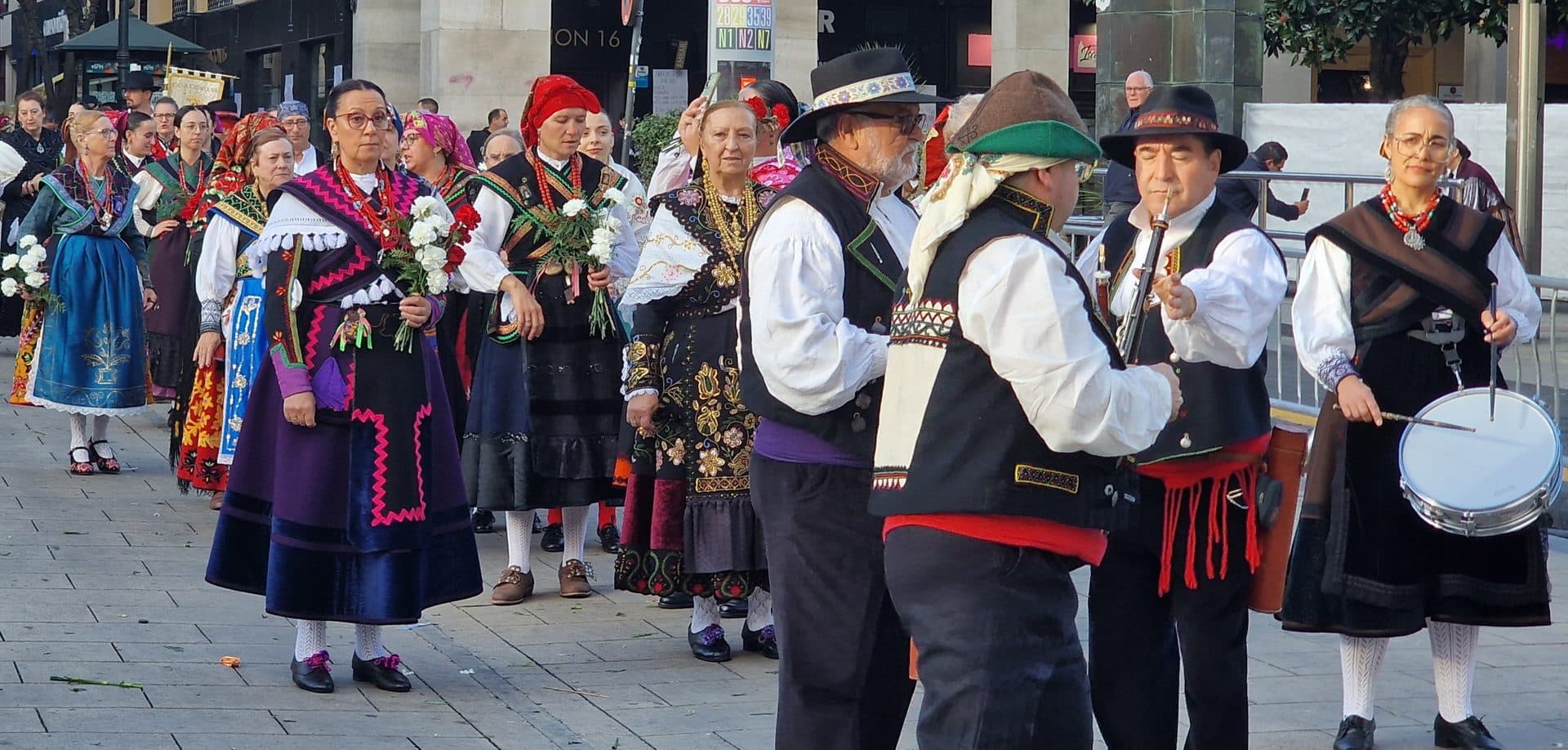
Costumed groups march with their flowers toward the Plaza del Pilar on October 12
Photo by Ecelan / wikimedia · CC BY-SA 4.0
What to expect
The fiesta opens with the pregón, the opening speech, read from the balcony of the city hall, and the pace builds toward the twelfth.
Opening Saturday
The pregón
Crowds pack the Plaza del Pilar for the opening speech (at 9pm in 2026) and the first big night out. Concert venues and the funfair open, and the old town stays loud until late.
Daily
Giants and big-heads
The comparsa of giants and cabezudos parades through the center on festival days, setting out from the Plaza del Pilar around midday. Children run screaming from the big-heads, then come straight back for more.
Oct 12
The flower offering
The first groups set off around 6:30am, and the line of costumed marchers runs all day and into the night. Stand along the route to watch the costumes, then visit the finished flower mountain after dark.
Oct 13
Fruits and the glass rosary
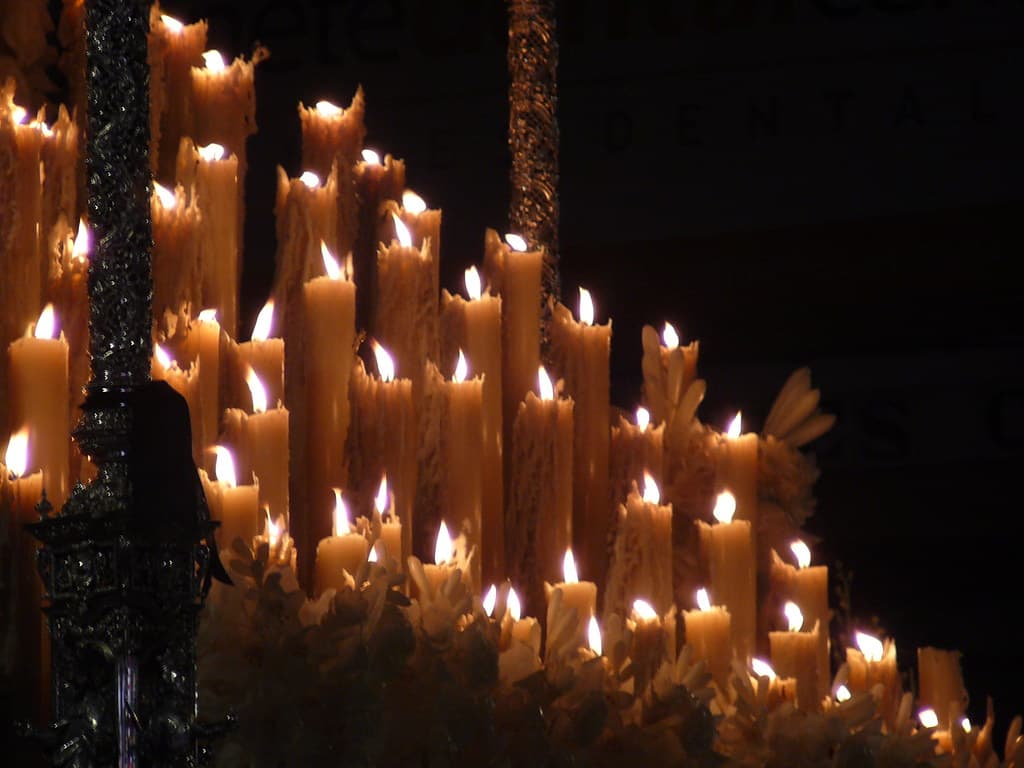
The Ofrenda de Frutos brings harvest produce from across Aragon. At dusk (6:30pm in 2026), the Rosario de Cristal winds through the old town with illuminated glass lanterns and floats.
Closing night
Fireworks
A closing fireworks display over the Ebro ends the fiesta, and the city wakes up the next day as if nothing happened.
Planning your trip
Getting there
Zaragoza sits between Madrid and Barcelona on the high-speed rail line: the fastest AVE from Madrid takes about 1 hour 15 minutes, and from Barcelona about 1 hour 40 minutes, which makes it easy to slot into a wider trip through Spain. Trains arrive at Delicias station, west of the center and roughly a 45-minute walk from the Plaza del Pilar. The old town, the basilica and the riverfront are walkable from each other, and most fiesta events happen within a few streets of the square. Some concerts and the funfair are further out, at the Recinto Ferial in Valdespartera and Parque Grande, so check the program for how to get there.
Where to stay
Because October 12 is a national holiday, Spanish families travel that weekend, and central hotels fill quickly. Book as early as you can, or stay near Delicias station and ride into the center. Stay close to the old town if you want to walk home after the late-night concerts.
What it costs
Most events are free: the city counts more than 500 cultural events, about 90% of them free street programming. The flower offering, the giants, the rosary procession and the fireworks cost nothing to watch. Budget for the funfair rides, bullfights, and some headline concerts, which are ticketed.
Go like you know
- Dress up a little on the twelfth. Many locals wear the traje regional, and even a scarf or a cachirulo, the red-checked Aragonese headscarf, will earn you smiles.
- Buy a bunch of flowers from a street seller and join the individual line if you want to make your own offering. Visitors are welcome.
- Eat tapas in El Tubo, the tangle of narrow lanes off Calle Alfonso, where many bars are known for a single dish.
- Try migas, fried breadcrumbs with chorizo and grapes, and finish with frutas de Aragón, candied fruit coated in chocolate.
- Go up the basilica's tower (a small fee, with a lift) for a view of the square and the river, ideally on a day when the square is quieter.
- The week overlaps with other autumn food trips: Paris's Fête des Vendanges de Montmartre ends on the second weekend of October, and the Alba White Truffle Fair opens that same weekend in 2026, so a Pilar week can sit between two of them.
Frequently asked questions
Do I need tickets for Fiestas del Pilar?
No, almost everything is free: the flower offering, the giants, the rosary procession, the fireworks and most street concerts. Some headline shows, the funfair rides and bullfights cost money. Check the city's official program before you go for which concerts need a ticket.
Which day is best if I can only go for one?
October 12 is the essential day, with the flower offering running from early morning until evening and the square at its fullest. If you can stay two nights, add the thirteenth for the fruit offering and the glass rosary procession, which many visitors find the most beautiful moment of the week.
Can visitors take part in the flower offering?
Yes. Groups of costumed marchers make up most of the line, but individuals can join without registering, through a separate entry route and within set hours (6:45am to 8pm in 2026). The city advises avoiding 10am to 2pm. Bring your own bunch, follow the volunteers' directions, and hand your flowers over at the front.
Is Zaragoza a good base for exploring Aragon?
It is. The city has fast trains in every direction, and day trips to the Mudéjar towers of Teruel, the wine country of Cariñena or the Pyrenean foothills are all possible. During the fiesta, though, most visitors stay in town, since the evenings are the best part.