What is the Feria de Abril?
Seville's April Fair was first held in 1847 as a livestock fair, proposed by two city councillors, one Basque and one Catalan. Farmers brought cattle, horses and goods, and within a year decorated tents were going up to eat, drink and socialize in. Over time, the commercial side faded, and the fair turned into the city's great spring celebration.
Today, the Feria takes place on the Real de la Feria, a fairground in the Los Remedios neighborhood (its home since 1973), where more than a thousand casetas, marquees, are set up along streets named after famous bullfighters. Most casetas belong to families, friends, clubs, companies and associations, who decorate them, hire musicians and host guests throughout the week. Some are public and open to everyone.
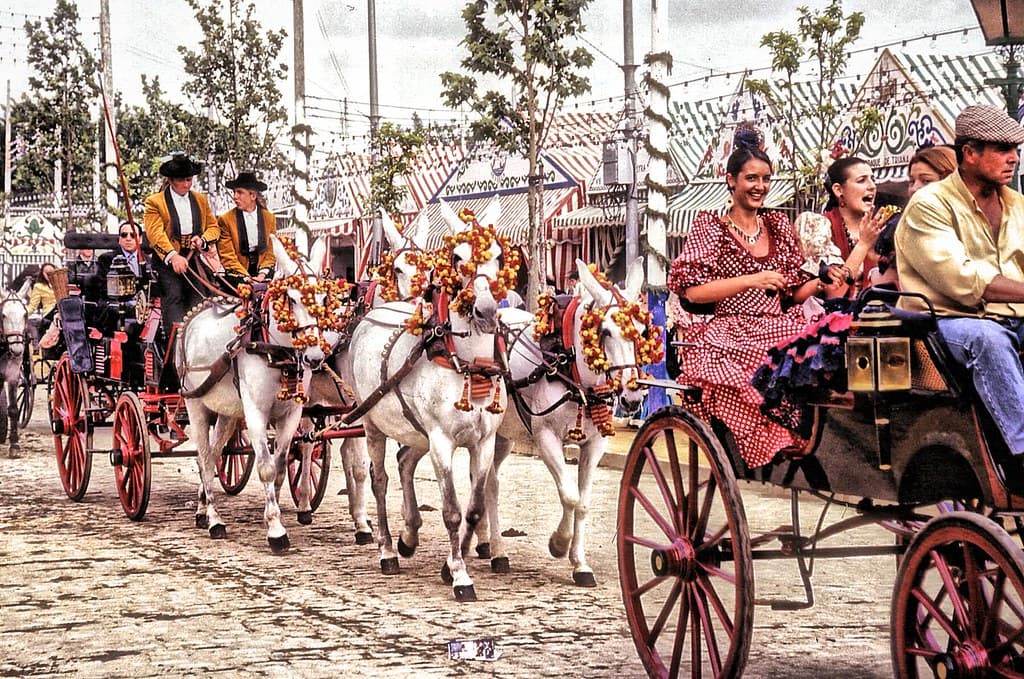
The Feria is a celebration of Andalusian culture. Women wear the traje de flamenca, the flamenco dress, with ruffles, polka dots, shawls and flowers in their hair. Men wear the traje corto, a short jacket and wide-brimmed hat, especially when riding. People dance sevillanas, a lively folk dance in four parts, and drink manzanilla and rebujito, a mix of sherry and lemon-lime soda.
A city that spent Holy Week in silence spends the next fortnight getting ready to dance until dawn.
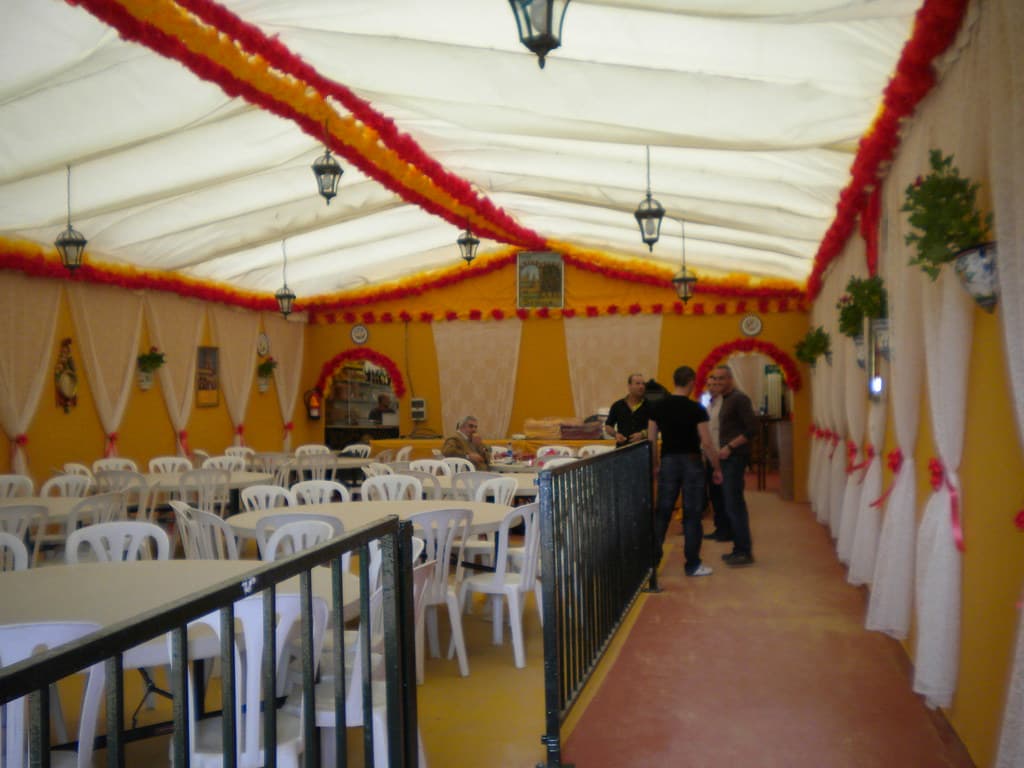
Inside a caseta, one of the decorated tents that host the Feria de Abril
Photo by ReservasdeCoches.com / flickr · CC BY 2.0
What to expect
The Feria lasts a week, from the lighting on Monday night to the fireworks the following Sunday.
Monday
Pescaíto and Alumbrao
Casetas host the noche del pescaíto, a dinner of fried fish, and at midnight the lights are switched on in the alumbrao, opening the fair.
Daytime
Horses and carriages
From midday until about eight in the evening, riders and horse-drawn carriages parade through the fairground in the paseo de caballos, a spectacle of elegance.
Afternoon–night
Casetas and dancing
Casetas fill with music, food and dancing, and the party continues until the early hours. Bullfights take place at the Maestranza bullring during the week.
Sunday
Fireworks
The fair closes at midnight with a fireworks display launched from the Guadalquivir riverbank and watched from the bridges and quays.
Planning your trip
Getting there
Seville is reached by high-speed train from Madrid in under three hours, and its airport has flights across Europe. The fairground is served by metro (Blas Infante, Parque de los Príncipes and Plaza de Cuba are the closest stops), by Tussam buses, which run through the night during Feria week, and by taxis, which queue long after 2 am. Rideshare drop-offs sit at the back of the grounds.
Holy Week ends about two weeks before the Feria starts, so the two rarely fit one short trip. To see the city in its solemn mood first, plan a separate trip for Semana Santa in Seville. Valencia's Las Fallas, held every March, is Spain's other big spring fiesta, with fire in place of flamenco.
Where to stay
Book accommodation early, as hotels fill up and prices rise for Feria week. The fairground sits in Los Remedios, across the river from the old center, so staying anywhere near a metro stop or within a taxi ride keeps the late nights simple.
What it costs
Walking the fairground is free, and so are the public casetas, though you pay for what you eat and drink inside. Horse-drawn carriages can be hired for a ride, and one local guide puts hire at roughly €50 to €150 an hour, so agree the price before you climb in. If you want to dress up, flamenco dresses can be bought in shops across Seville, and rental is an option: one rental house near Seville listed about €90 for a single day, plus a deposit. We found no official figure for the Feria-week hotel surge.
Go like you know
- Learn the basic steps of sevillanas before you go; locals appreciate the effort, and you will be invited to dance.
- Try fino or manzanilla, dry sherries, and rebujito, the Feria's signature drink.
- Eat pescaíto frito, fried fish, and tortilla de patatas in the casetas.
- Visit the Calle del Infierno, the fairground's amusement park, if you have children.
- Take a ride in a horse-drawn carriage for a classic view of the Feria.
- Arrive at the fairground around midday to see the horse parade, then return in the evening for the casetas at their liveliest.
Frequently asked questions
When is the Feria de Abril?
The Feria usually takes place two weeks after Easter, so its dates change every year. Under the city's ordinance it runs Tuesday to Sunday in the third week after Holy Week, which pushes it into May in years with a late Easter. Check the dates the City Council confirms before you book.
Can tourists enter the casetas?
Most casetas are private and require an invitation, but public casetas are open to everyone. Visitors can also enjoy the atmosphere in the streets, the horse parades, and the fairground's amusements. Locals are often friendly and sometimes invite visitors in.
Do I need to dress up?
No, but many visitors enjoy wearing a flamenco dress or traditional attire. Smart, festive clothing is appreciated, and you will see everything from elegant outfits to casual wear. If you plan to ride, traditional riding dress is expected.
Is the Feria suitable for children?
Yes. Families attend during the day, and the Calle del Infierno amusement park is popular with children. Evenings are more crowded and adult. Bring a stroller-friendly route plan, as the fairground streets are sandy and busy with horses.
What is a caseta?
A caseta is a marquee, usually striped in red or green and white, set up on the fairground for the week. Inside there is a bar, a kitchen and space for dancing. Most belong to families, clubs or companies and require an invitation; public casetas are open to all visitors.