What is Salvador Carnival?
Salvador, capital of the state of Bahia, was the first capital of Brazil and for centuries a major port of the transatlantic slave trade. In the 2022 census, about 83 percent of its residents identified as Black or brown, and its culture, from music and food to religion, is deeply shaped by Africa. Its carnival reflects that history, and it is often described as the largest street party in the world.
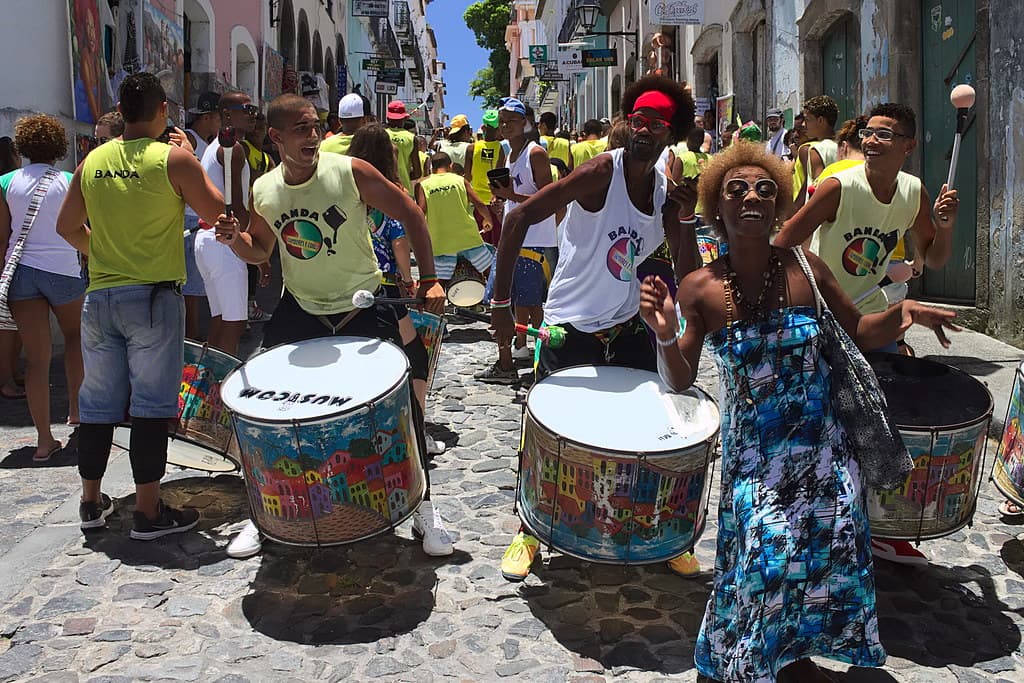
Two inventions shaped modern Salvador carnival. In 1950, two musicians, Dodô and Osmar, mounted an electrified guitar on an old car and drove through the streets playing frevo, creating the first trio elétrico. Today's trios are enormous sound trucks that carry singers and bands along the carnival routes. Then, in the 1970s, came the blocos afro: groups such as Ilê Aiyê, founded in 1974, and later Olodum, which used carnival to celebrate Black identity, African heritage and resistance to racism. Their drumming, known as samba-reggae, became the sound of Salvador.
Unlike Rio Carnival, Salvador's carnival has no single stadium parade. It is built on circuits through the city where trios, blocos and street crowds move together, and anyone can join, either inside the ropes of a bloco or outside as pipoca, the free-dancing popcorn crowd.
Born on a car with an electric guitar, grown into the biggest street party on the planet.
What to expect
Carnival unfolds across three main circuits, each with its own character.
Thursday
Opening
The official opening ceremony launches carnival, and the first trios and blocos hit the streets.
Daily
Barra-Ondina circuit
The seafront circuit, home to the biggest stars on trio elétricos, with massive crowds and camarotes, private viewing boxes with parties.
Daily
Campo Grande circuit
The traditional downtown circuit, known as Osmar, with blocos afro, afoxés and a more traditional atmosphere.
Daily
Pelourinho
The historic old town hosts smaller groups, brass bands and family events among colonial buildings.
Ash Wednesday
Arrastão
A final early-morning procession of trios drags the last revelers along the seafront before carnival ends.
Planning your trip
Getting there
Salvador's international airport has flights from across Brazil and some international connections. The circuits sit in different parts of the city, so choose one base and plan each day around the circuit you want. Barra and Ondina put you on the seafront circuit, while Pelourinho offers history but can be noisy.
If you only have a few days, plan them around the artists and blocos you most want to see, since the big names rotate across circuits and days. Official carnival apps and the city's program list every trio's route and departure time, and they are updated as the days go on. Use official transport and trusted ride-hailing apps, particularly at night.
Where to stay
Accommodation fills quickly: in 2026 press reports counted most hotels and short-term rentals already booked for the peak Saturday, and hotels typically sell multi-night carnival packages with minimum stays. Book as early as you can.
What it costs
Dancing as pipoca is free. To join a bloco, you buy an abadá, a shirt that serves as your ticket to dance inside the ropes alongside the trio, often with security and drinks. In 2026, press reports put abadás from roughly R$240 to well over R$1,000 depending on the bloco and day. Camarotes offer elevated views, food and bars, and cost more still; the priciest day passes reported in 2026 ran into the thousands of reais. Nightly hotel rates climb sharply, so compare package prices with short-term rentals.
Go like you know
- Eat acarajé, black-eyed pea fritters fried in palm oil, from the Baianas in white dresses, a Salvador icon.
- Watch a rehearsal by Olodum or Ilê Aiyê in the weeks before carnival.
- Choose a bloco by artist and style; each has its own vibe and crowd.
- Take breaks at the beach between circuits; Salvador's coastline is part of the experience.
- Learn a few carnival hits of the year, which you will hear constantly.
- Spend a morning in Pelourinho before the crowds arrive, when the colonial squares are quiet and the drum schools are warming up.
- Pair it with another carnival: Barranquilla Carnival in Colombia also peaks on the weekend before Ash Wednesday, so pick one per year, and Bolivia's Carnaval de Oruro shares the same pre-Lent window.
Frequently asked questions
Do I need tickets for Salvador Carnival?
No, the street carnival is free, and many people dance outside the ropes as pipoca. To dance inside a bloco, buy an abadá, and for a view from above, buy a camarote pass. Prices vary widely depending on the artist and services.
Which circuit should I choose?
Barra-Ondina is the biggest and most famous, with major stars and huge crowds. Campo Grande is more traditional, with blocos afro and afoxés. Pelourinho is smaller and family-friendly. Many visitors spend days on different circuits to experience the variety.
Is Salvador Carnival safe?
Millions celebrate each year, and most visitors have a great time, but crowds attract pickpockets. Carry little, avoid valuables, stay with a group and follow police guidance. Joining a bloco with security can make the experience more comfortable for first-timers.
How does it compare with Rio Carnival?
Rio's highlight is the samba school competition in the Sambadrome, plus street blocos. Salvador's carnival is almost entirely in the streets, with trio elétricos and blocos afro and a stronger Afro-Brazilian identity. Many say Salvador is more participatory, while Rio is more spectacular to watch.
What is an abadá?
An abadá is the special shirt that serves as your ticket to dance inside a bloco's ropes, next to its trio elétrico. Each bloco and day has its own design. It usually includes security and sometimes drinks. Buy from the bloco or authorized sellers, and pick it up in advance with ID.