What is the Carnaval de Oruro?
Oruro is a mining city on the Bolivian Altiplano, high, cold and windswept, built around silver and tin mines worked for centuries. Long before the Spanish arrived, the region was home to Uru and Aymara peoples, with their own rituals to honor the earth, Pachamama, and the spirits of the mountains. After the conquest, those rituals were overlaid with Catholic devotion, and the carnival that emerged is a fusion of both.
Its center is the Virgen del Socavón, the Virgin of the Mineshaft, whose image is kept in a sanctuary at the mouth of an old mine. Miners worshipped her alongside the Tío, the horned lord of the underworld who, in their belief, owns the minerals inside the mountain. The carnival's most famous dance, the diablada, the devil dance, shows the battle between devils, led by Lucifer, and the archangel Michael, which ends with the devils' defeat and devotion to the Virgin.
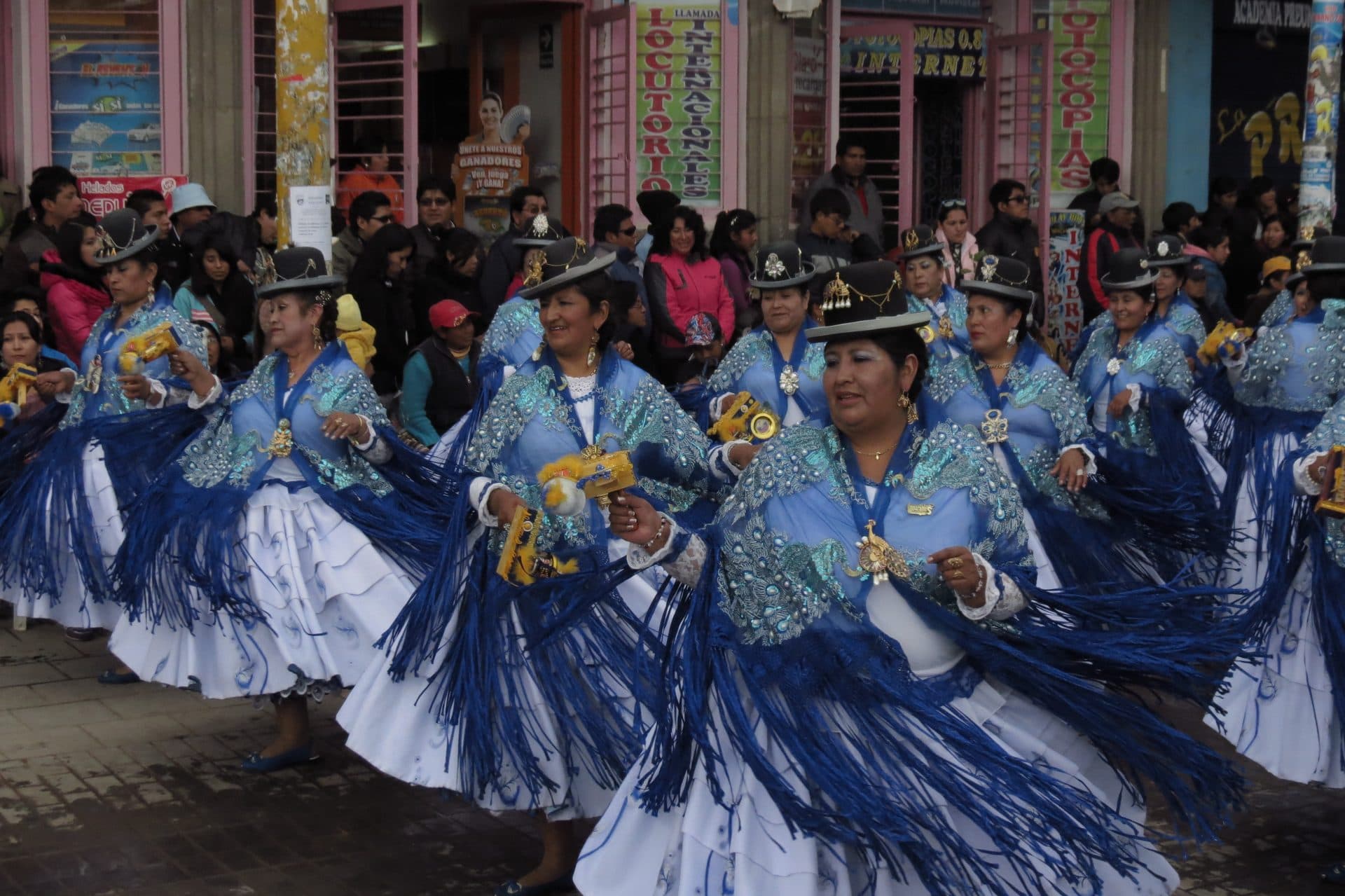
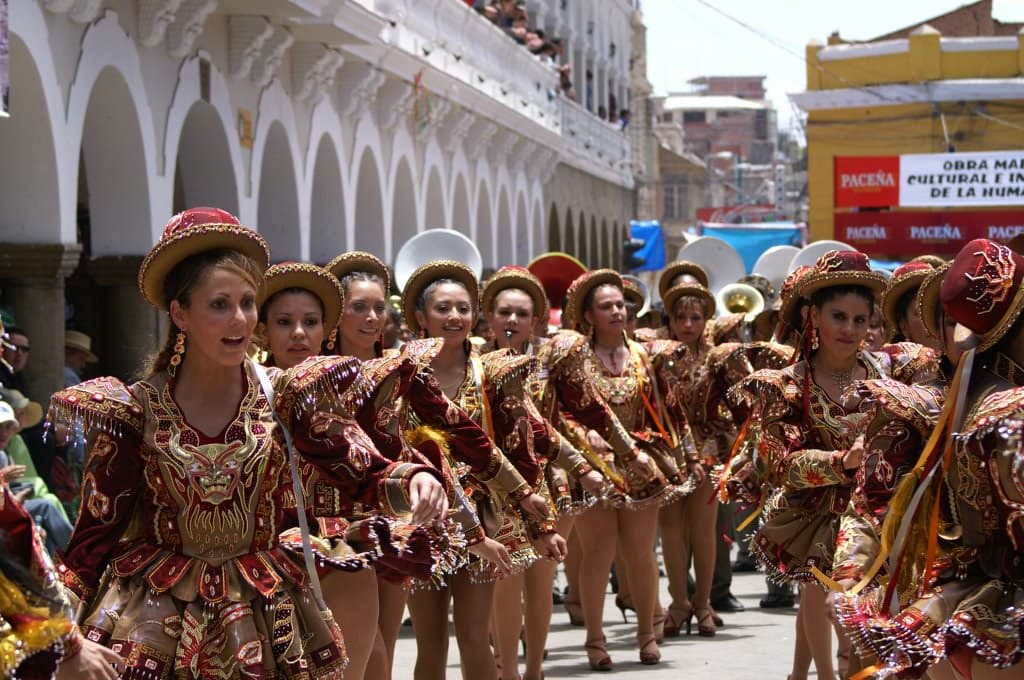
The carnival includes dozens of other dances, each with its own costume and story: the morenada, with heavy jeweled costumes and the rattling sound of matracas; the caporales, energetic and acrobatic; and indigenous dances such as the tinkus and llamerada. In 2001, UNESCO proclaimed the Carnival of Oruro a masterpiece of the oral and intangible heritage of humanity, and in 2008 it joined the Representative List of the Intangible Cultural Heritage of Humanity.
A pilgrimage disguised as a parade, or a parade that becomes a pilgrimage: in Oruro, it is impossible to separate the two.
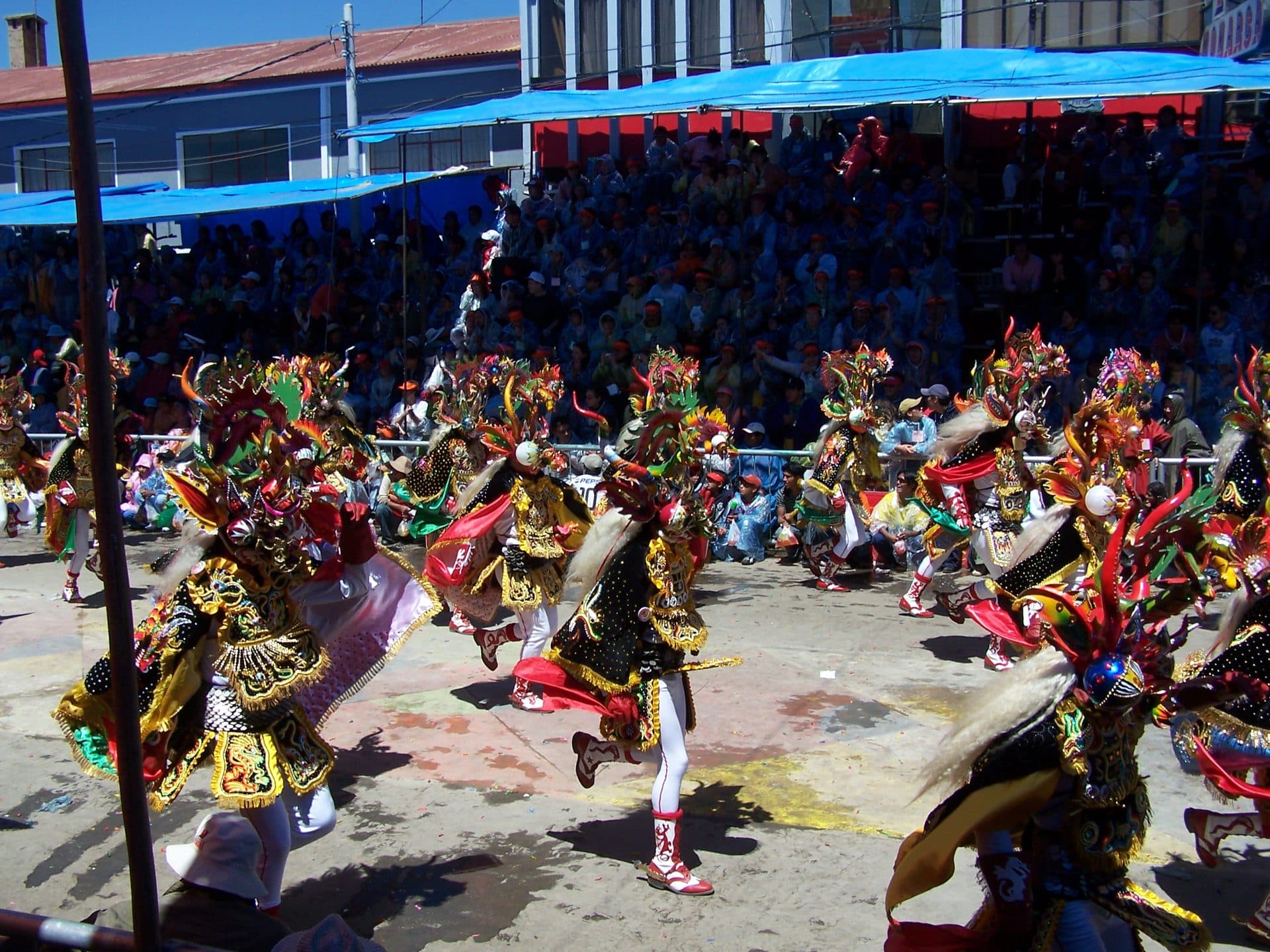
Diablada dancers at the Oruro Carnival
Photo by Elemaki / wikimedia · CC BY 3.0
What to expect
The carnival is built around two great processions and two days of ritual.
Weeks before
Rehearsals and vows
Dance troupes, fraternidades, rehearse for months, and members take vows to dance for the Virgin.
Saturday
The Entrada pilgrimage
More than fifty troupes (55 groups in 2026) with tens of thousands of dancers and musicians process along the route to the Socavón sanctuary, where dancers kneel before the Virgin. The first groups set off early in the morning, and the procession runs for more than twenty hours, through the night.
Sunday
Entrada del Corso
A second procession along the same route, held in the evening and reported to be less formal, with dancers out of their masks and playing with the crowd.
Monday
Day of the Devil and the Moreno
On Avenida Cívica in the morning, the diabladas stage the fight between the archangel and the devil, the story at the heart of the carnival.
Tuesday
Ch'alla
Families perform the ch'alla, a blessing with offerings to Pachamama, across Oruro's neighborhoods, including homes, vehicles and businesses.
Planning your trip
Getting there
Oruro is about three to four hours by bus from La Paz (roughly 230 km), and most visitors travel from there; buses run frequently through the day. Book transport early and expect heavy traffic on the main carnival days. Return trips after the procession can be difficult, and travel agencies advise reserving bus seats ahead because they tend to sell out close to the event, so arrange your return in advance.
Once in Oruro, the Entrada route runs through the center to the sanctuary, so you will be on foot for most of it. Plan to watch from a grandstand rather than chasing the procession.
Where to stay
Accommodation in Oruro is limited, and hotels reportedly run close to full during carnival, so book months ahead if you want a bed in town. Many people instead come on a day trip or an organized tour from La Paz that includes transport and grandstand seats.
What it costs
Watching from the street is free, but most visitors pay for a grandstand seat. For 2026, the city set maximum grandstand prices by sector, ranging from Bs 100 to Bs 900, with the cheaper seats on Calle Bolívar and the dearest around Plaza 10 de Febrero. Packages from La Paz that bundle transport, lodging and meals were advertised from about Bs 1,200 to Bs 2,800. Rooms cost more than usual during carnival, so compare agency packages with booking a hotel yourself.
Go like you know
- Arrive early on Saturday; the first troupes start in the morning, and watching the costumes in daylight is a different experience from night.
- Carry cash in small bills for snacks, street vendors and tips; do not count on cards around the route.
- Try charquekan, a traditional Oruro dish of dried, fried llama (or beef) meat with corn, potatoes, egg and cheese.
- Visit the Socavón sanctuary and the mine museum beneath it to understand the connection between the Virgin and the miners.
- Bring a poncho or raincoat; showers are common in carnival season.
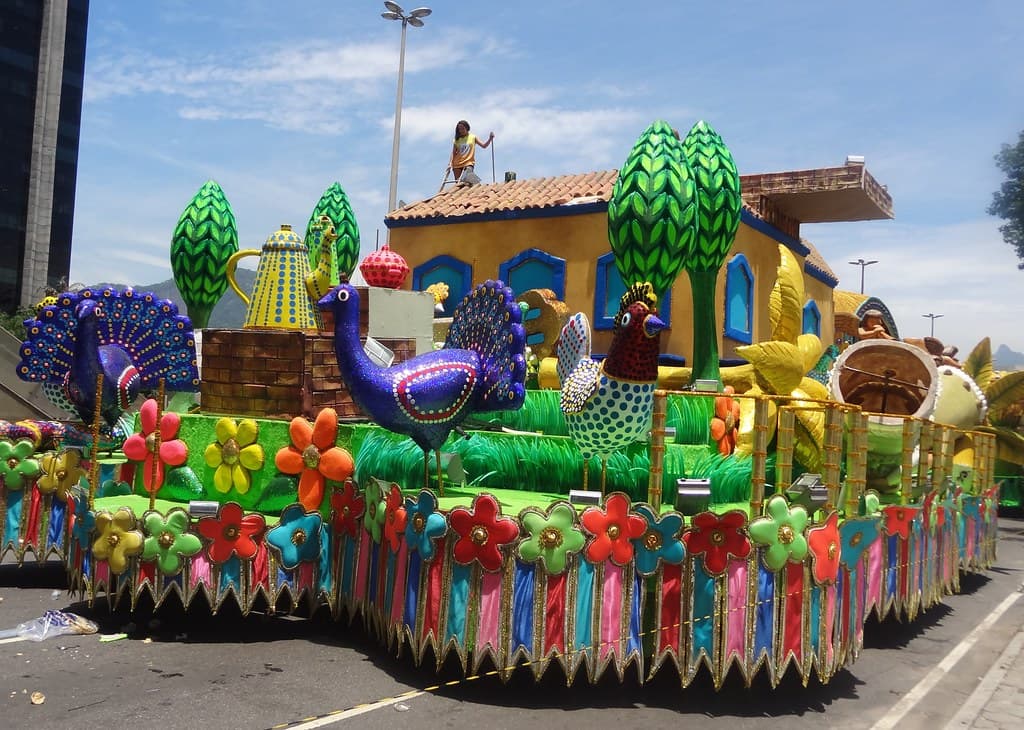
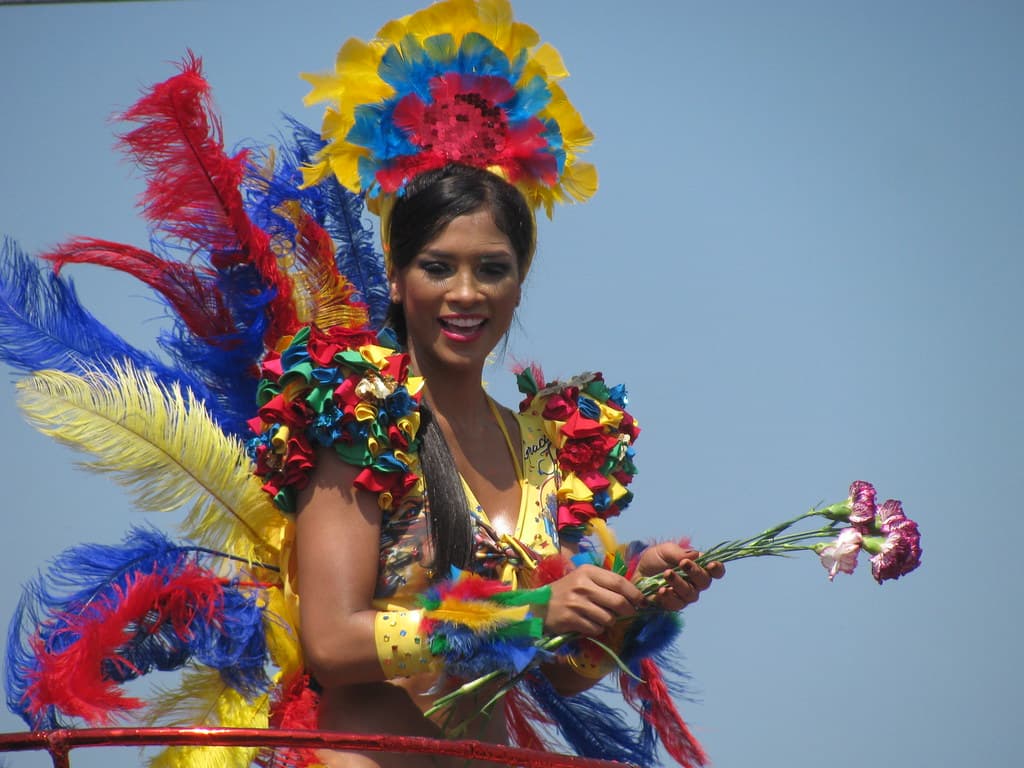
- Choosing between carnivals? Oruro shares its Saturday-to-Tuesday window before Ash Wednesday with Barranquilla Carnival in Colombia and Rio Carnival in Brazil, so you will have to pick one. If you want another Andean festival to the Virgin, Fiesta de la Candelaria in Puno, Peru, is centered on February 2.
Frequently asked questions
When is the Carnaval de Oruro?
The main procession, the Entrada, takes place on the Saturday before Ash Wednesday, followed by more events through Shrove Tuesday. Because it is tied to Easter, the dates change every year, falling in February or early March. Preparations and rehearsals run for months before.
How do I get tickets for the grandstands?
Grandstand seats are sold by private owners along the route, and prices depend on location and day; in 2026 the city set sector price caps of Bs 100 to Bs 900. Many travel agencies and tours from La Paz include seats in their packages. Book ahead for the best spots, especially near the end of the route.
Is it suitable for families?
Yes, though the long hours, crowds, altitude and water fights can be tiring for young children. Bring warm clothes, snacks and sun protection, and consider shorter visits rather than staying for the whole procession. Many local families attend together, and the atmosphere is festive and friendly.
How do I deal with the altitude?
Spend a few days acclimatizing in La Paz or another high city before Oruro. Drink lots of water, eat light meals, avoid alcohol at first and rest. Coca tea is a popular local remedy. If you have serious symptoms, seek medical attention and descend to lower altitude.
Can visitors dance in the Entrada?
Some fraternidades accept outside dancers, usually with rehearsals, a costume fee and a commitment to the group's rules. It is not something to arrange on arrival. If you are interested, contact a troupe months in advance through a local agency or a Bolivian friend, and respect its religious meaning.