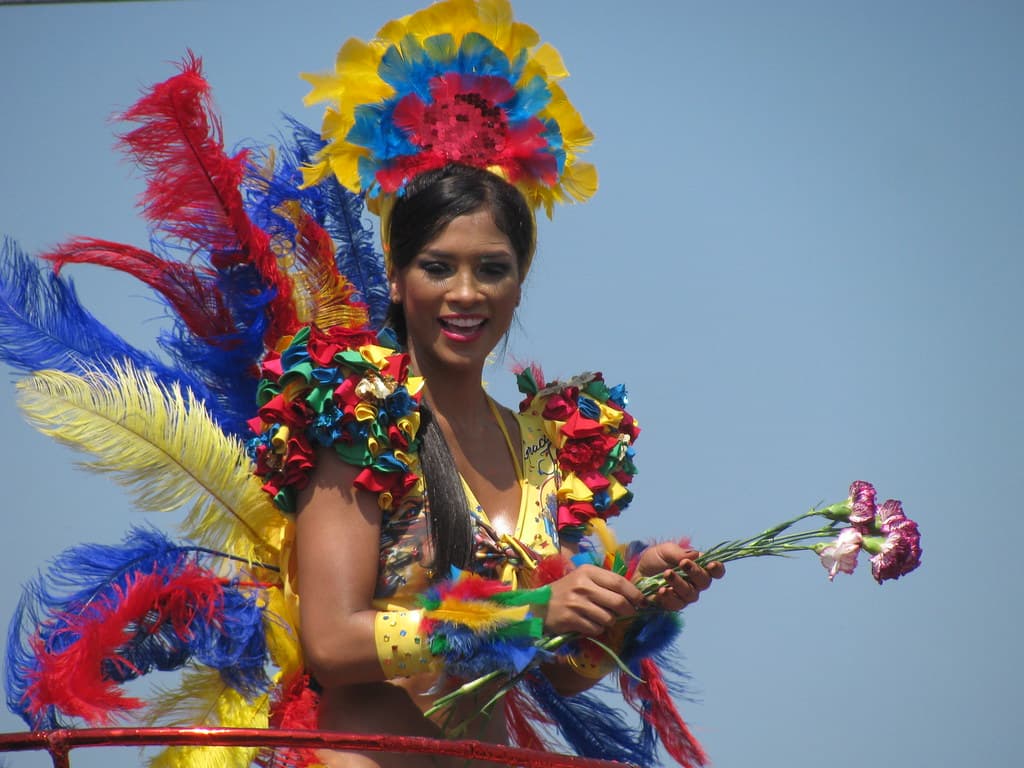
What is Barranquilla Carnival?
Barranquilla, a port city on Colombia's Caribbean coast, holds the country's biggest carnival. Its roots lie in colonial-era celebrations brought by the Spanish, mixed with the music, dances and traditions of African and Indigenous communities of the Caribbean coast. Over the nineteenth and twentieth centuries, the carnival grew into a celebration of that mixed heritage.
The festival is a showcase of Colombian Caribbean folklore. Dances such as cumbia, mapalé, son de negro and the congo are performed by traditional groups, many of them family-run for generations. Characters such as the marimonda, a masked figure with a long trunk-like nose that mocks the elite, and Joselito Carnaval, the symbolic soul of the party, appear everywhere.
In 2003, UNESCO proclaimed the Barranquilla Carnival a masterpiece of the oral and intangible heritage of humanity, and it was inscribed on the Representative List in 2008. Its motto sums up the spirit: Quien lo vive es quien lo goza, "those who live it are those who enjoy it".
Quien lo vive es quien lo goza: only those who live it truly enjoy it.
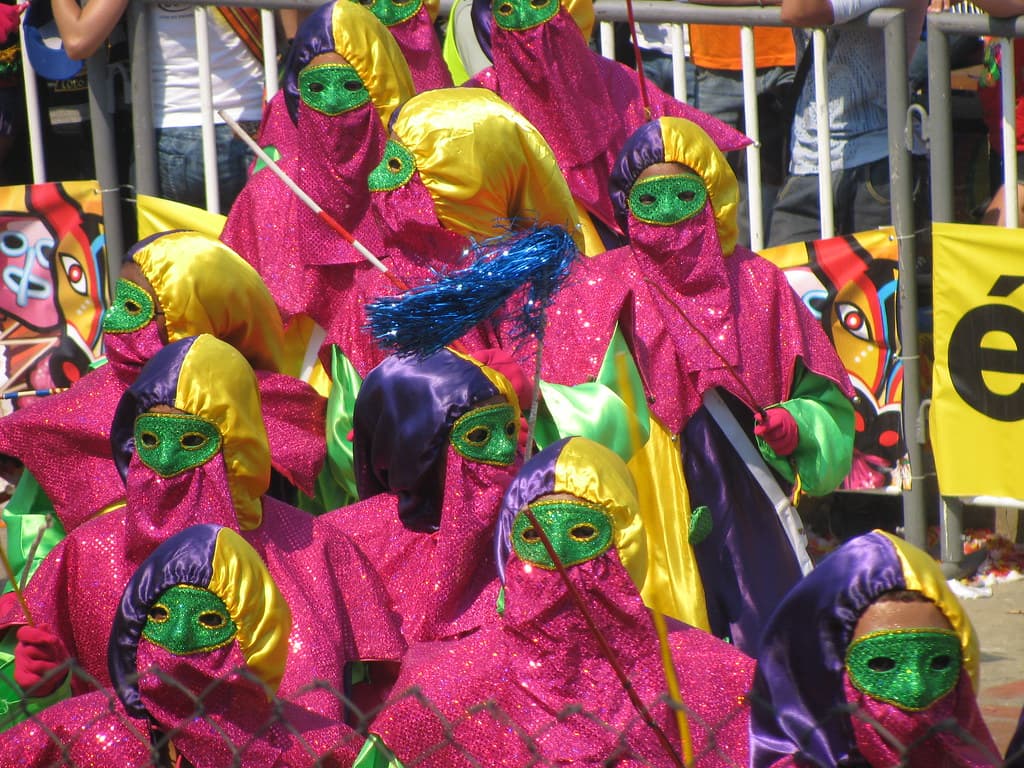
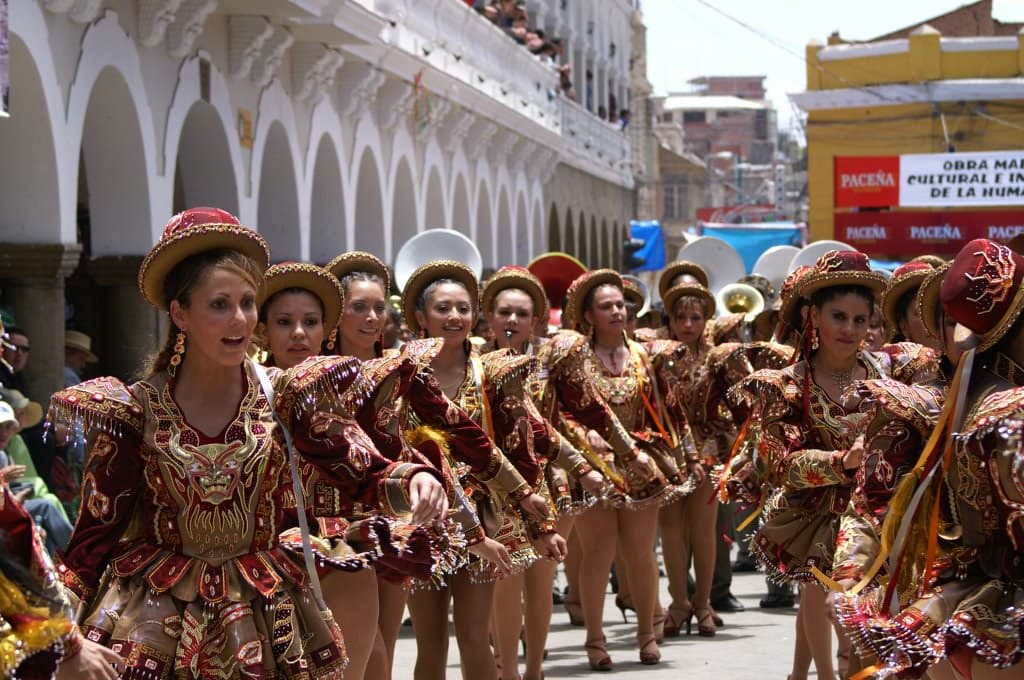
Costumed dancers in the Barranquilla Carnival parade
Photo by Michele Mariani / flickr · CC BY-SA 2.0
What to expect
Carnival starts in January with pre-carnival events, but the four main days before Ash Wednesday are the heart of it.
January
Pre-carnival
The Lectura del Bando, the carnival queen's proclamation (held in mid-January at the Estadio Romelio Martínez in 2026), opens the season, followed by weekend parades, street parties and dance festivals.
Saturday
Battle of Flowers
The flagship parade, with monumental floats, the carnival queen and hundreds of groups, opens the main festivities on the Vía 40 cumbiódromo. In 2026 it set off in the late morning.
Sunday
Great Parade of Tradition
A parade focused on traditional dances and groups, with cumbia, congo and mapalé.
Monday
Great Parade of Comparsas
The Gran Parada de Comparsas, often called the fantasy parade: a more creative procession of costumes, choreography and themed troupes.
Tuesday
Burial of Joselito
Mock funerals for Joselito Carnaval, mourned by "widows", close the festivities before Ash Wednesday. In 2026 the Joselito parade wound from Carrera 54 into Barrio Abajo in the afternoon.
Planning your trip
Getting there
Barranquilla's Ernesto Cortissoz airport has flights from Bogotá, Medellín and a handful of international cities, including Miami. By road, Cartagena and Santa Marta are each roughly two to four hours away by bus or shuttle, depending on traffic and the service you pick.
The big parades run along the Vía 40, an industrial avenue in the north of the city, between roughly Calle 58 and Calle 80. Away from it, carnival spills into neighborhoods, especially in the evenings. Local verbenas and casetas, open-air dance halls with live bands, keep going late into the night, while the city's squares host free concerts. The Orchestra Festival, a competition held since 1969, brings salsa, tropical and vallenato bands together to compete for the Congo de Oro; check the year's program for its evening and venue, which have moved around.
Where to stay
Book accommodation early, as Barranquilla hotels fill up and prices rise for the four main days. Many visitors stay in Cartagena or Santa Marta and travel in for the parades, trading a longer day for a beach base.
What it costs
Watching from the street is free, and parts of the Vía 40 stay open to the public if you arrive early. Palcos, grandstand seats with shade and a clear view, are sold through TuBoleta, the official ticketing platform, in tiers that run from simple mini-palcos to premium boxes; the 2026 rules kept young children out (the cutoff was around seven, so check the current age limit before you buy for a family). Shade is worth paying for in the strong Caribbean sun. Neighborhood verbenas and the Orchestra Festival are separately ticketed, while street snacks along the route cost little.
Go like you know
- Try arepa de huevo and butifarra, local snacks sold along the parade routes.
- Buy a marimonda mask or a straw hat, called a sombrero vueltiao, as a souvenir.
- Visit the Museo del Carnaval, beside the Casa del Carnaval in Barrio Abajo, to learn the history and characters year-round.
- Join a verbena, a neighborhood street party, for a local experience.
- Learn a few dance steps; locals will invite you to join.
- Pace yourself between parades: four days of sun, music and crowds wear down even locals.
- Look for the Danza del Garabato, a traditional dance that stages a battle between life and Death.
- Pick one carnival per year: Salvador Carnival and Trinidad and Tobago Carnival run on the same pre-Lent days, and Bolivia's Carnaval de Oruro does too.
Frequently asked questions
When is Barranquilla Carnival?
The main days are the Saturday to Tuesday before Ash Wednesday, so the dates change each year, falling in February or early March. Pre-carnival events start in January with the reading of the Bando and weekend parties.
Do I need tickets?
The parades can be watched for free from the street, but palcos, grandstand seats along the Vía 40, are sold in advance through TuBoleta and offer better views and shade. Some concerts and parties are ticketed separately. Book palcos early for the Battle of Flowers, the most popular day.
Is it safe to attend?
Most visitors have a great time, but large crowds bring pickpockets. Carry little, keep valuables hidden, and stay with friends. Use registered taxis or ride-hailing apps. Follow local advice and stay aware of your surroundings, especially at night.
What should I wear?
Wear light, comfortable clothes you do not mind getting dirty, a hat and sunglasses, and shoes good for standing and dancing. Many people wear carnival colors or costumes. Bring a small bag with sunscreen and water, and protect your phone from cornstarch and foam.
Who is Joselito Carnaval?
Joselito Carnaval is the symbolic character who represents the spirit of the carnival. According to tradition, he "dies" exhausted after four days of partying and is mourned in mock funerals on Tuesday, with crying "widows" and comic processions. He is reborn the following year when carnival returns.
Can I combine the carnival with the Caribbean coast?
Easily. Cartagena, with its walled old town, and Santa Marta, gateway to Tayrona National Park, are each roughly two to four hours away by road. Many travelers spend a few days at carnival and then relax on the coast, or stay in Cartagena and make day trips for the main parades.