What is Rio Carnival?
Carnival came to Brazil with the Portuguese as entrudo, a rowdy pre-Lenten free-for-all of water fights and pranks. Over the nineteenth century, Rio's elite borrowed European masked balls and parades, while the city's Afro-Brazilian communities brought their own music, dance and religious traditions. Out of that meeting, in the early twentieth century, came samba, and with it the samba schools.
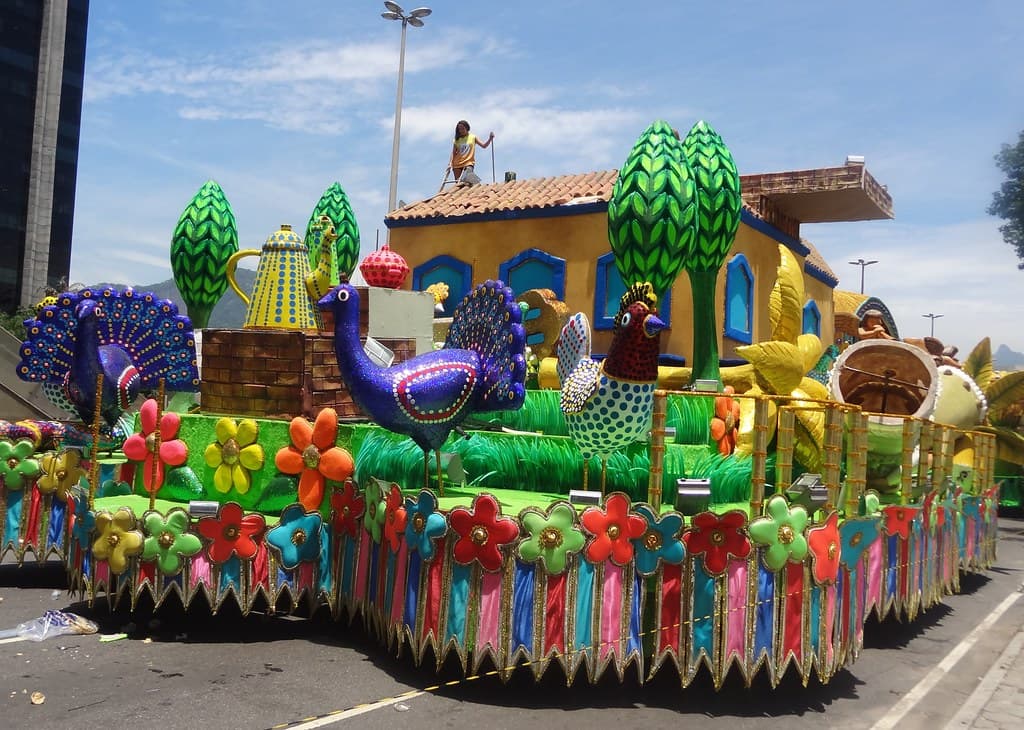
The first samba schools formed in Rio's working-class neighborhoods and hillside communities, starting with Deixa Falar in the Estácio district in 1928. They were social clubs as much as performing groups, and their parades became the heart of carnival. Today, each top school spends a whole year preparing a single parade around a theme, the enredo, with a specially written samba song, costumes for thousands of members, and floats built in vast warehouses in the port zone.
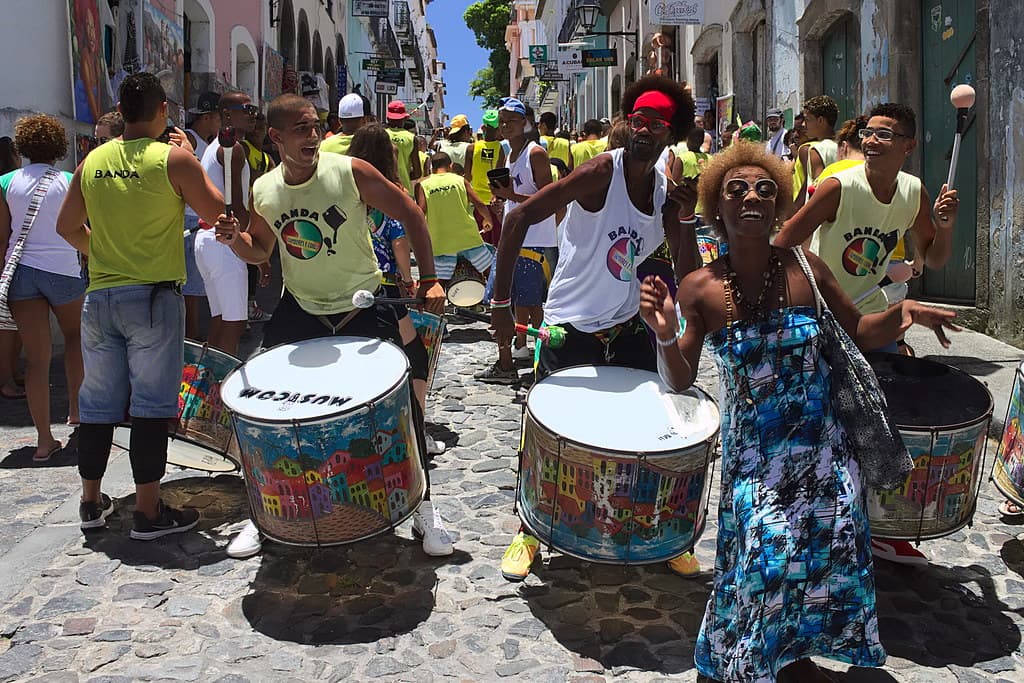
Since 1984, the competitions have taken place in the Sambadrome, a purpose-built parade avenue designed by Oscar Niemeyer. But Rio Carnival is just as much in the streets. Hundreds of blocos, informal street parties with their own bands and songs, take over neighborhoods from Copacabana to Santa Teresa, and they are free, open and joyful.
A whole year of work, one hour on the avenue, and a city that sings every word.
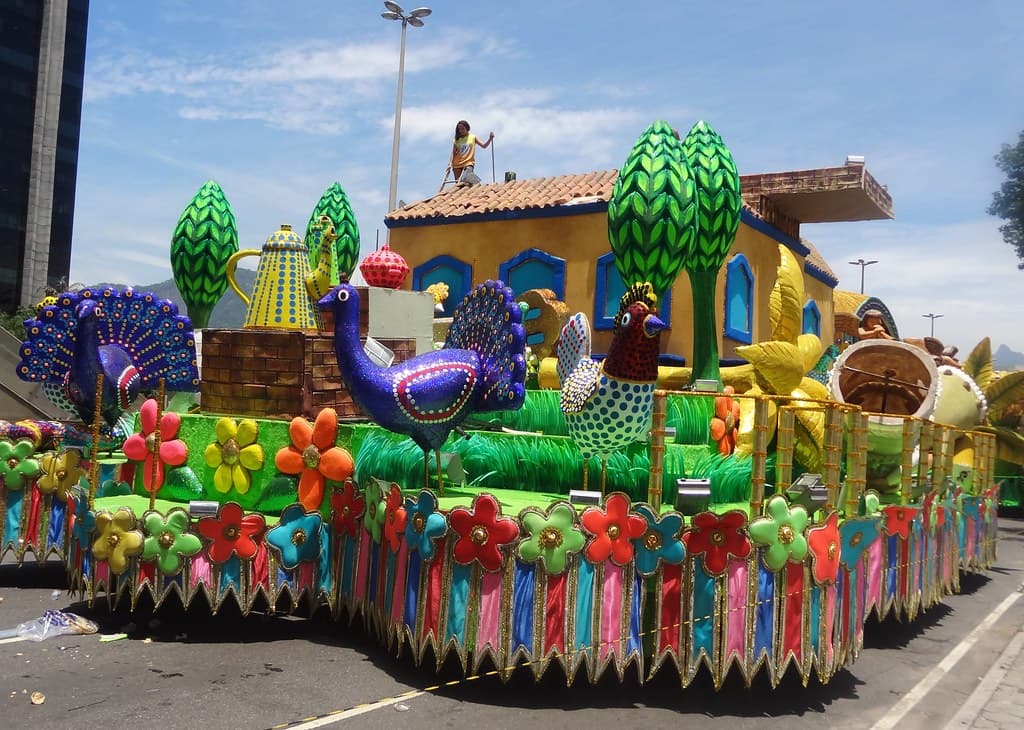
A samba school float on the parade route in Rio de Janeiro
Photo by Jonas de Carvalho / flickr · CC BY-SA 2.0
What to expect
Carnival has two worlds running in parallel: the competition in the Sambadrome and the party in the streets.
Before
Pre-carnival blocos
Street blocos start weeks earlier, especially on weekends (the 2026 street program opened in mid-January), giving a taste of carnival before the main event and calmer crowds.
Friday
Carnival opens
The mayor hands the city's key to King Momo, the carnival king, and the official celebrations begin. The second-tier Série Ouro schools parade in the Sambadrome on Friday and Saturday nights.
Sun–Tue nights
Special Group parades
The twelve top samba schools parade across three nights, four schools a night, each taking an hour or more on the avenue. The parades run late into the night.
Daily
Blocos everywhere
Hundreds of street blocos fill the city from morning to night, from tiny neighborhood gatherings to huge processions with trucks and sound systems.
Saturday after
Champions' Parade
The top-placed schools return to the Sambadrome for a victory parade, often an easier ticket than the competition nights.
Planning your trip
Getting there
Rio's international airport connects with major hubs in the Americas and Europe. Once in the city, the metro is the easiest way to reach the Sambadrome: in 2026 it ran around the clock from Friday morning to Ash Wednesday, with Praça Onze station serving the even-numbered Sambadrome sectors and Central do Brasil the odd-numbered ones. Carnival is tied to Easter, so other pre-Lent celebrations peak around the same days: Salvador Carnival in Brazil's northeast, Cologne Carnival and New Orleans's Mardi Gras. They overlap, so you will have to choose one for the big weekend.
Where to stay
Book flights and accommodation as early as possible, because carnival is the city's peak season and, according to travel operators, hotels often impose a minimum stay of around five nights. Copacabana, Ipanema and Botafogo are convenient bases with metro access to the Sambadrome area and many bloco routes.
What it costs
Street blocos are free. Sambadrome seats are sold per night and sector, online through the league's official Ticketmaster Brasil platform. In 2026, special grandstand seats for the Special Group nights cost about R$200 to R$230 (half-price about R$100 to R$115), popular sectors 12 and 13 started at R$10, and a three-night passport cost R$450; the first 2027 sales phase listed R$250. Sectors differ in view and atmosphere, so compare carefully. Accommodation and flights are the real cost.
Go like you know
- Wear a costume, or fantasia, to the blocos. Anything goes, and you will blend in better than in plain clothes.
- Visit a samba school rehearsal, ensaio, in the weeks before carnival for a less touristy look at how schools prepare.
- Learn the chorus of a few popular carnival songs; the crowds will sing them all week.
- Pace yourself. Carnival is a marathon of late nights and long days; build in beach afternoons and naps.
- Consider joining a samba school parade. Some schools sell costumes and places to visitors, an unforgettable, if exhausting, way to experience the Sambadrome.
- Take the cable car up Sugarloaf or the train to Christ the Redeemer in the morning, before the day's parades and blocos begin, so the sights do not clash with the nights.
Frequently asked questions
Do I need tickets for Rio Carnival?
You need tickets for the Sambadrome parades, sold for each night and sector. The street blocos, which are a huge part of carnival, are free and open to everyone. Many visitors combine one night at the Sambadrome with several days of blocos for the full experience.
Which Sambadrome night should I choose?
The three Special Group nights feature the top schools and are the most spectacular. Each night includes different schools, so there is no single best one. The Champions' Parade on the following Saturday shows the winners and is a good alternative if competition nights sell out.
Is Rio Carnival safe?
Millions celebrate each year, and most visitors have a fantastic time. The main risk is petty theft in crowds. Carry very little, keep phones hidden, use official transport, and stay alert at night. Following local advice and staying with friends makes a big difference.
How long should I stay?
Plan at least four or five days to experience both the Sambadrome and the blocos without burning out. Arriving a few days before the official start lets you catch pre-carnival blocos and samba school rehearsals while crowds are still manageable.
What should I wear to the blocos?
Light, cheap clothes you can get wet or dirty, comfortable closed shoes, and plenty of glitter if you like. Many people wear simple costumes, colorful wigs or matching outfits with friends. Leave jewelry at home and bring a small waterproof pouch for cash and a phone.