What is Trinidad and Tobago Carnival?
Carnival arrived in Trinidad with French planters and other settlers in the late eighteenth century, who held masked balls before Lent. Enslaved Africans were excluded, but after emancipation in 1838, they took carnival into the streets and made it their own, with drumming, stick fighting and canboulay (from the French cannes brûlées, "burnt cane"), torchlit celebrations that recalled the burning of sugarcane fields. Colonial authorities repeatedly tried to suppress these celebrations, and the resulting clashes became part of carnival's story of resistance.
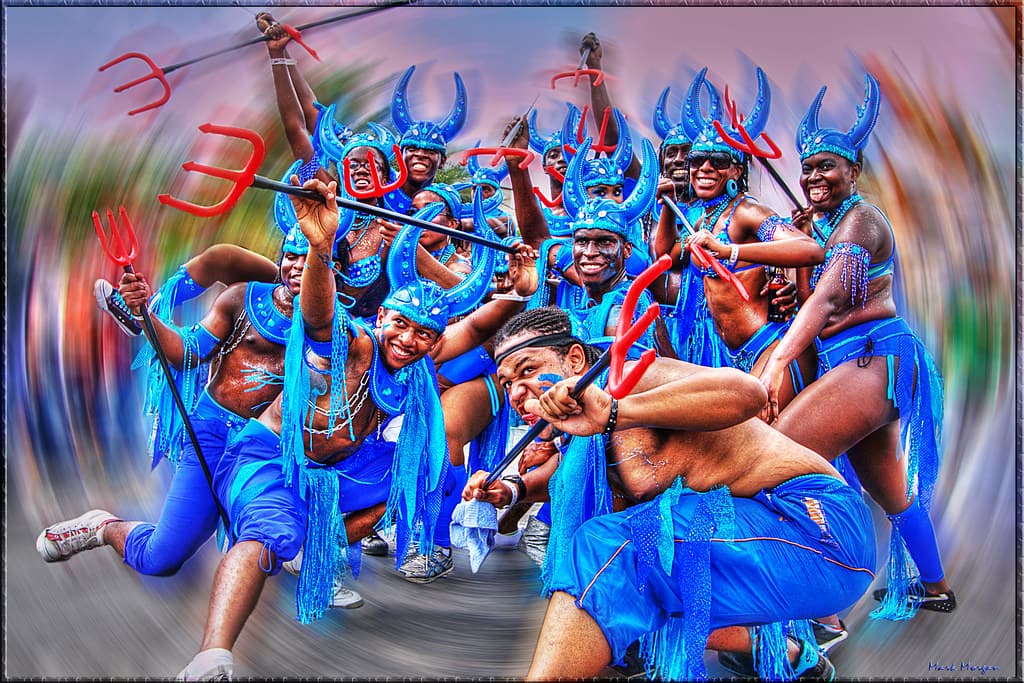
From that history came the art forms that define Trinidad carnival today. Calypso, sharp, witty songs commenting on politics and daily life, grew out of West African kaiso traditions. The steelpan, invented in Trinidad from discarded oil drums, became the national instrument. Soca, a faster, more danceable offshoot of calypso, now drives the road march. And mas, short for masquerade, ranges from traditional characters such as the Midnight Robber and the Moko Jumbie on stilts to the feathered, jeweled costumes of modern bands.
Trinidad's carnival has also travelled, and its influence shows in diaspora carnivals from London to Toronto and New York. But the original still happens on the island where it was born.
Born in resistance, played in joy: carnival is where Trinidad tells its own story at full volume.
What to expect
Carnival season starts weeks earlier, but the main event packs into the weekend and two days before Ash Wednesday.
Weeks before
Fete season
Parties called fetes run almost every night, from all-inclusive events with food and drinks to beach parties. Calypso tents and soca competitions take place across the island.
Saturday
Panorama finals
The national steelpan competition (Panorama) brings the large steel orchestras to the Queen's Park Savannah on the Saturday before Carnival, an extraordinary concert of sound and skill.
Sunday
Dimanche Gras
The evening show at the Savannah is the Kings and Queens competition, with enormous costumes, and has also hosted the Calypso Monarch finals.
Monday 4am
J'ouvert
J'ouvert kicks off at 4am on Carnival Monday. Revelers fill the streets, covered in mud, paint, oil or chocolate, dancing behind trucks and steel bands into the morning.
Mon–Tue
Parade of the bands
Mas bands in costume dance through Port of Spain, crossing judging stages, with Tuesday's full costumes the most spectacular.
Planning your trip
Getting there
Piarco International Airport serves Trinidad with flights from North America, Europe and the Caribbean. The main events centre on the Queen's Park Savannah and the streets of Port of Spain, and registered taxis or band transport are the safer way to move around at night.
After carnival, many people head to Tobago, a flight of about 25 minutes or a ferry crossing of several hours away, to relax on its beaches. Tobago has its own separate carnival, but it falls in autumn (October 30 to November 1 in 2026), not around Ash Wednesday.
Where to stay
Many visitors stay in Port of Spain near the Savannah or in neighborhoods such as Woodbrook and St. Clair, close to the action. Carnival is the busiest time of year, so book flights and accommodation early; one 2026 guide advises six to twelve months ahead.
What it costs
Watching from the street costs nothing; playing mas and partying are where the money goes. One 2026 travel guide puts a costume at roughly US$1,000 and up before extras, and a full masquerader's costume at around US$2,500. Fete tickets range from about US$50 to US$700 an event, and the same guide quotes hotels at roughly US$200 to US$600 a night. Prices vary widely by band and section, so check what a package includes before you pay.
Go like you know
- Wear old clothes to J'ouvert and expect them to be ruined. Bring a waterproof pouch for essentials.
- Learn some soca songs before you go. Each year has its hits, and the road march, the most-played song, is a big deal.
- Attend Panorama at least once; even non-music fans are amazed by the steel orchestras.
- Eat doubles, chickpea curry in fried bread, from street vendors for breakfast; they are the fuel of carnival.
- Rest between events. Carnival is a marathon, not a sprint, and the biggest days come at the end.
- Deciding between carnivals? Barranquilla Carnival and Rio Carnival also build to the same Ash Wednesday weekend, and New Orleans' Mardi Gras ends on the same Fat Tuesday, so you will usually choose one per year.
Frequently asked questions
When is Trinidad Carnival?
The main days are Carnival Monday and Tuesday, the two days before Ash Wednesday, so dates change every year with Easter, falling in February or early March. The carnival season, with fetes and competitions, starts weeks before and builds up to the final weekend.
How do I join a mas band?
Mas bands sell costumes and places online, often several months ahead. Packages usually include the costume, drinks, food and security on the road. Spots in popular bands can fill, so register early and check what is included before you pay.
What is J'ouvert?
J'ouvert, from the French for "daybreak", opens carnival at 4am on Monday. Revelers cover themselves and others in mud, paint, oil or chocolate and dance through the streets behind trucks and steel bands. It recalls the emancipation-era celebrations and is one of carnival's most exhilarating moments.
Is Trinidad Carnival safe?
Many visitors have a great time, but Trinidad has a high level of violent crime, according to the UK government, and carnival adds crowds and late nights. Join an organized band with security, stay with friends, keep valuables to a minimum and use trusted transport. Check your government's current travel advice before booking, as advisories can change.
What should I pack?
Pack light clothes, comfortable shoes you can dance in for hours, a swimsuit for the beach, sunscreen and a hat. For J'ouvert, bring old clothes you can throw away and a waterproof phone pouch. Bring earplugs for fetes with huge sound systems and a small cross-body bag for essentials.