What is Obon & Gozan no Okuribi?
Obon is the midsummer season when Japanese families welcome their ancestors home. Across most of the country it falls on August 13–16 (parts of Tokyo keep the older July calendar), and it works at household scale: family graves are swept and washed, small mukae-bi (welcome fires) are lit at gates on the 13th to show the spirits the way, and home altars fill with offerings for the visit.
Among the offerings stands the shōryō-uma: a cucumber horse and an eggplant ox on chopstick legs. The spirits, the telling goes, ride the swift horse home and take the slow ox back, because nobody wants the visit cut short.
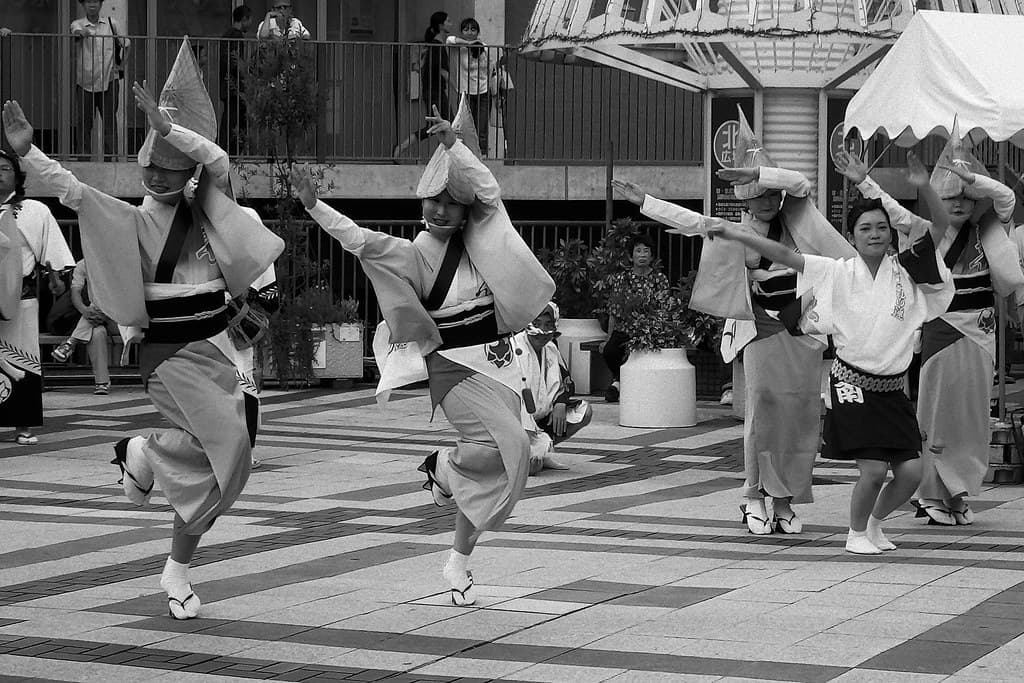
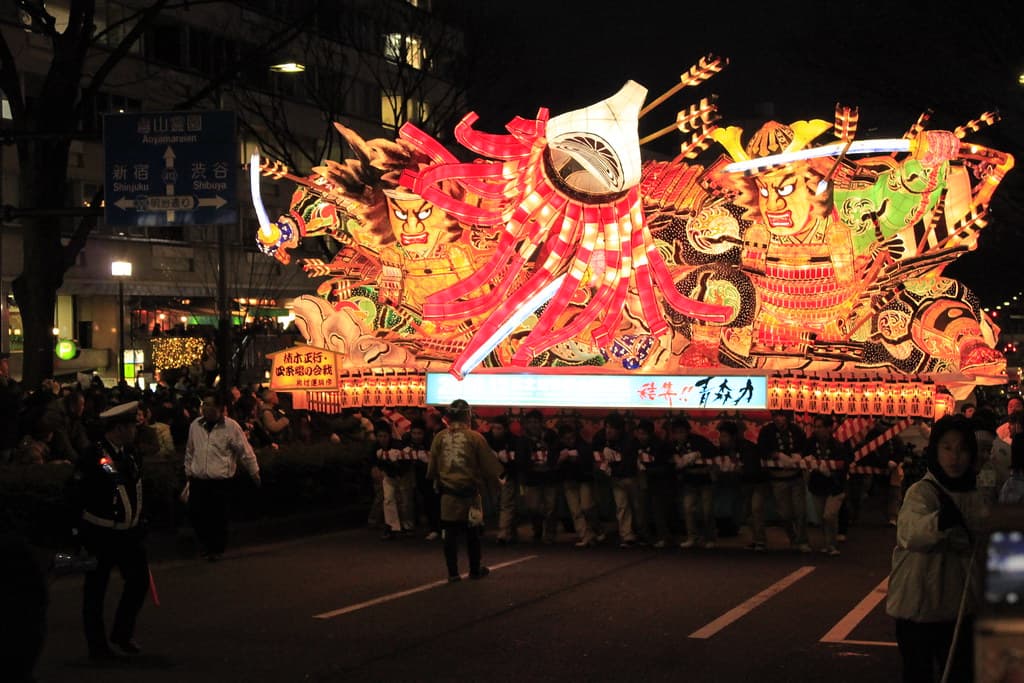
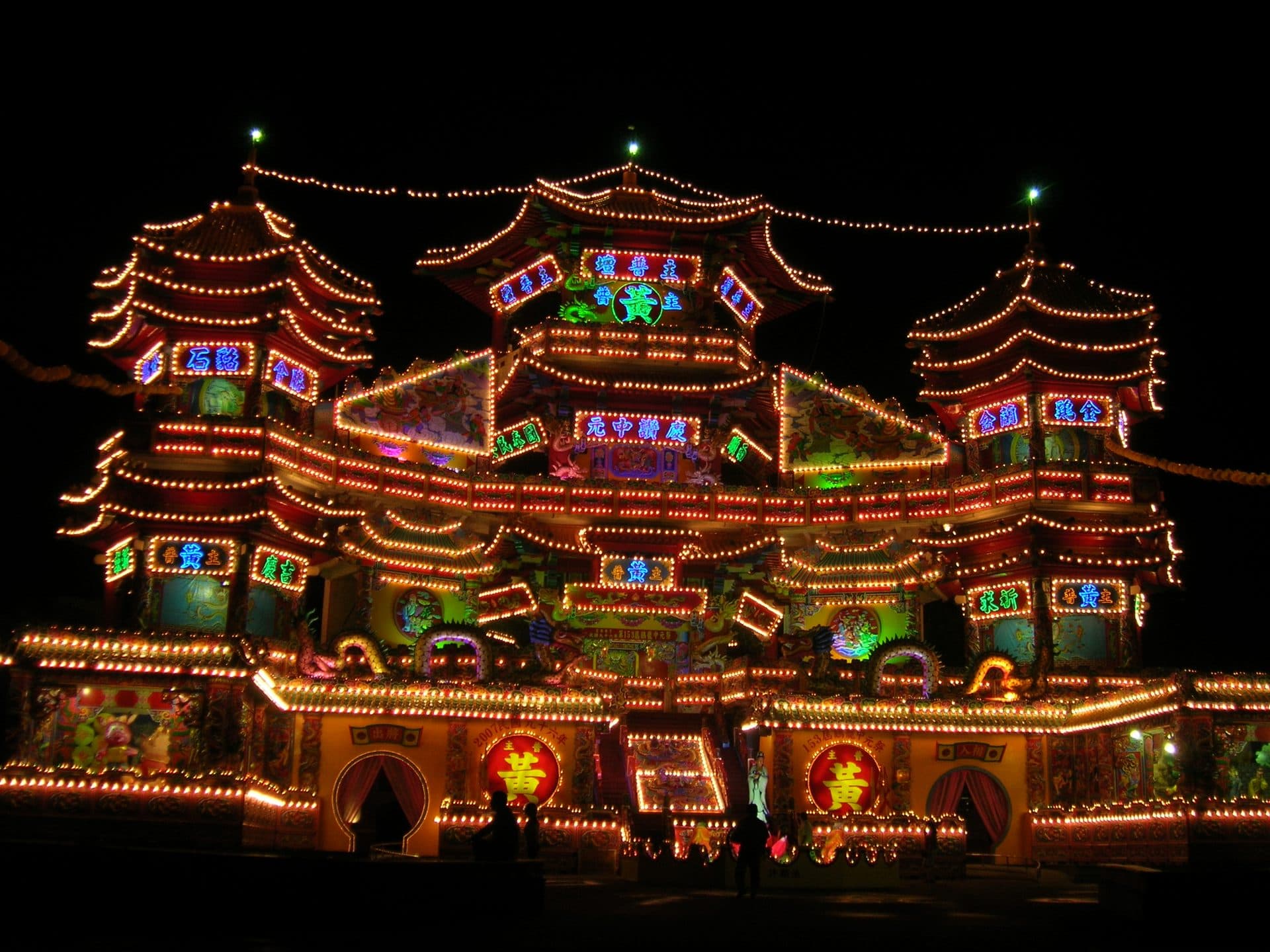
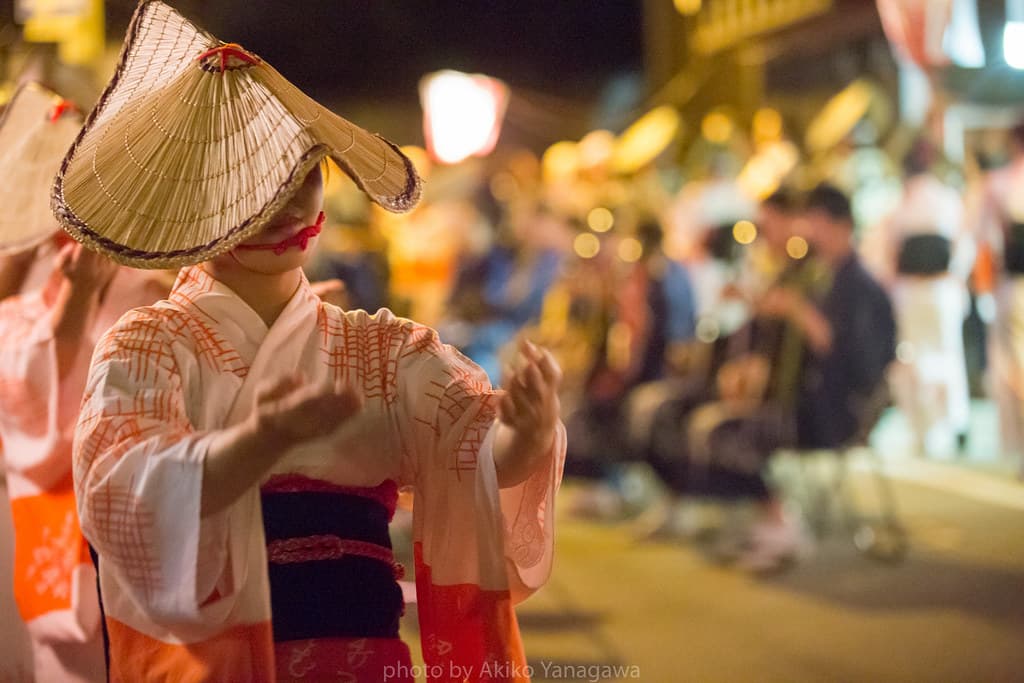
Evenings belong to bon odori, the neighborhood circle dances in summer yukata robes, and in many river towns to tōrō nagashi, candlelit paper lanterns set floating downstream. This is the same season that powers Awa Odori's four riotous nights in Tokushima, the loud face of a mostly quiet observance. The Hungry Ghost Festival in Keelung, Taiwan, follows a lunar calendar rather than the Japanese one, but runs across the seventh lunar month (from mid-August in 2026).
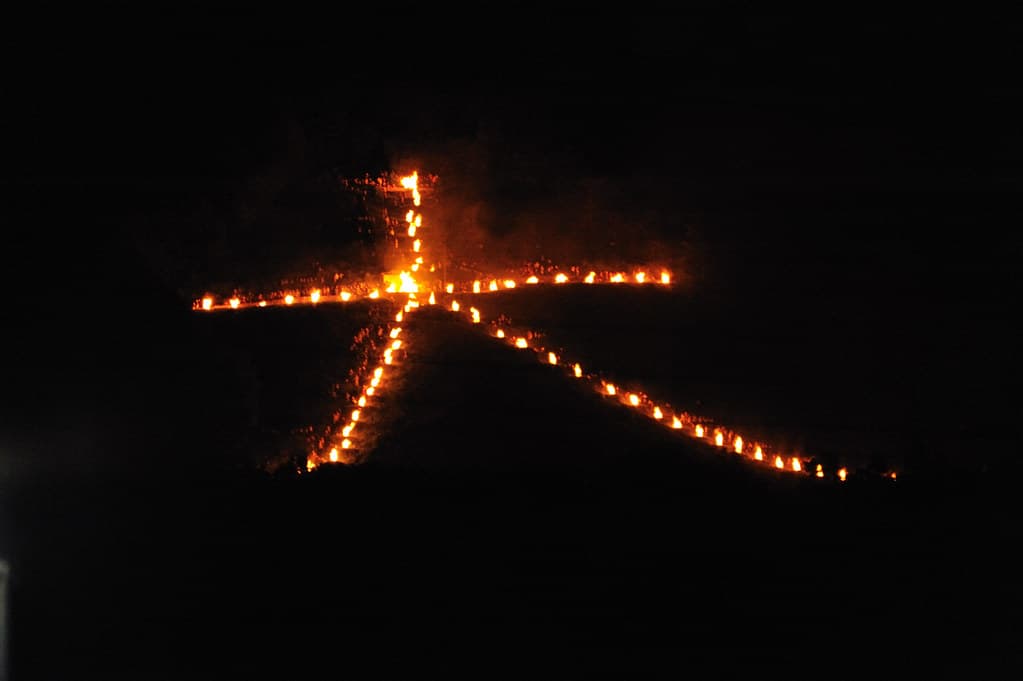
Kyoto closes the season. On the evening of August 16, five enormous characters and shapes, the Gozan no Okuribi (literally the "five mountain send-off fires"), are lit in sequence on the hillsides ringing the city, burning brightly enough to be read from the streets below. Their job is the mirror of the welcome fires: to guide the spirits back to the other side.
Tens of thousands of people watching mountains burn, and almost nobody cheering. The hush is the point.
What to expect
Aug 13
The welcome
Families clean graves, and at dusk the mukae-bi flicker at doorways. It's a domestic day, not a spectator event, but walk a residential neighborhood at nightfall and you'll catch small fires, incense, altars glimpsed through open doors.
Aug 14–15
Dancing nights
Neighborhood bon odori take over temple grounds, parks, and shopping-street plazas: a drum tower, a looping song, and a circle of dancers in yukata that anyone can step into. Every district's dance is slightly different; wander until you hear one.
Aug 16
The send-off
Kyoto's night. At 20:00 the Daimonji 大 ignites on the eastern hills, then Myō/Hō 妙法 at 20:05, the Funagata boat at 20:10, the Hidari Daimonji at 20:15, and the Toriigata torii gate at 20:20, with each burning for roughly thirty minutes.
Planning your trip
Getting there
Base yourself in Kyoto and treat the whole window as the trip: arrive by the 13th, spend the middle evenings hunting bon odori, and hold the 16th for the fires. Four days covers it without rushing, with mornings free for temples and evenings for lantern light. Obon is one of Japan's busiest domestic travel weeks, because the whole country is going home at once, so reserve long-distance train seats as early as your dates are firm and don't plan tight same-day connections on the 13th or 16th.
If you want the loud half of Obon too, the pairing writes itself: Awa Odori runs August 12–15 in Tokushima, so you can dance four nights there and land in Kyoto on the 16th for the stillest possible comedown, the same season shouted and then whispered.
Where to stay
Stay in central Kyoto if you can, within reach of the Kamo River and the bon odori nights, and book as soon as your dates are firm. Hotels and ryokan in Kyoto are often booked months ahead in peak periods like this one.
What it costs
The fires and the neighborhood dances are free, and no tickets exist beyond optional paid viewing plans sold by some hotels, which offer a more comfortable view for a fee. The riverbanks cost nothing and, we'd argue, give the truer experience: the Okuribi draws enormous crowds, but the mood is hushed and communal, closer to a vigil than a fireworks show. The real expense is the rooms, since rates climb across the whole window.
Go like you know
- Claim your riverbank spot before dusk on the 16th; all five fires are lit within twenty minutes, and latecomers watch the backs of heads.
- Join a bon odori circle. The steps repeat every few bars, the dancers around you are the instruction manual, and neighborhoods are generally glad to see a visitor try. You don't need a yukata, though this is the week one earns its keep.
- Keep your voice down and your flash off during the fires. Many around you are remembering specific people; some press their palms together as the characters catch.
- The fires burn about thirty minutes each, so there is no need to sprint between vantage points; watch one fully.
- August in Kyoto is hot and thick even after dark; carry water.
- If your dates land in July instead, parts of Tokyo observe Obon then, and the neighborhood dances come a month early there.
Frequently asked questions
Is Obon appropriate for tourists to attend?
Yes, with calibration. Bon odori dances are public and genuinely welcoming: joining in is expected, not intrusive. Grave visits and home rituals are family matters you observe only incidentally. At the Kyoto fires, act like a guest at a memorial: watch quietly, skip the selfie stick, and the crowd absorbs you.
Where is the best place to watch Gozan no Okuribi?
The Kamo River banks north of the Marutamachi bridge for a clear look at the Daimonji, or Funaokayama Park to catch several fires from one spot. Paid hotel viewing plans exist for a more comfortable view. Wherever you choose, arrive before dusk, because the good ground goes early.
Do I need tickets, and how far ahead should I book?
The fires and the neighborhood dances are free, and no tickets exist except optional hotel viewing plans. The real cost is logistics: Obon is one of Japan's peak domestic travel weeks, so reserve Kyoto accommodation and long-distance trains as many months ahead as you can manage. Next year always comes; cheap rooms in August don't.