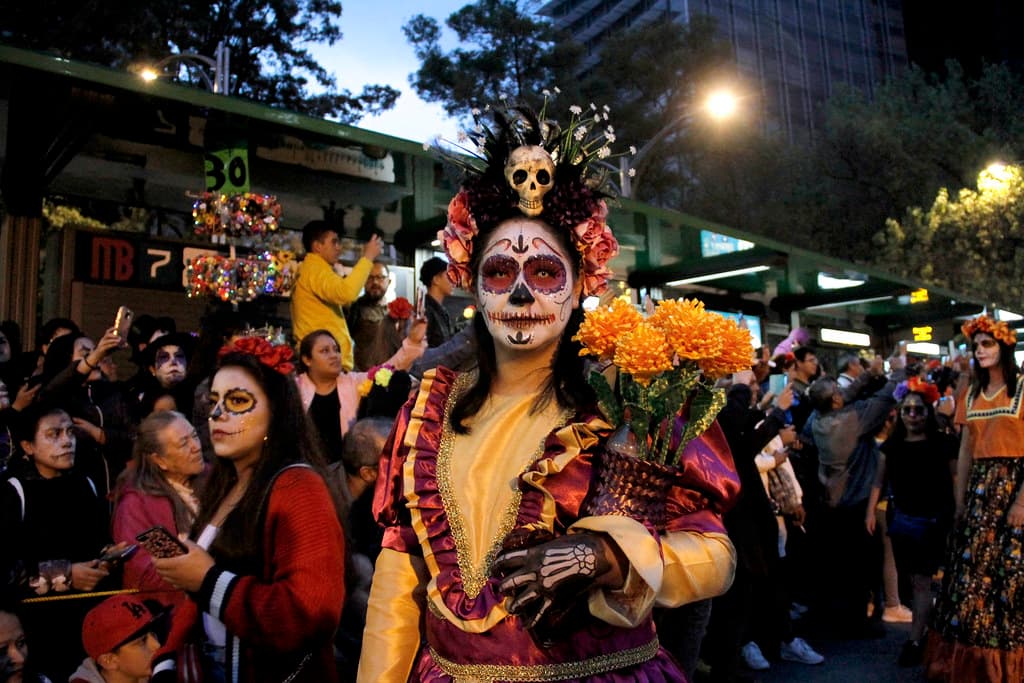
What is Día de Muertos?
Across Mexico, the turn of October into November is when the dead come home. Families believe the souls of their relatives return for a short visit, and they get the house ready the way you would for any guest you love: a cleaned-up grave, a path of petals to the front door, and an altar loaded with the visitor's favorite food and drink. UNESCO added the tradition to its intangible heritage list in 2008 and ties it to the end of the maize harvest, which is part of why it feels as much like a homecoming as a memorial.
The center of it all is the ofrenda, the home altar. Each object has a job. Orange cempasúchil (marigold) stands in for the sun and lights the way, water is there for souls thirsty from the journey, salt purifies, and copal resin smokes the room clean. Then come photos, candles, sugar skulls, pan de muerto (a soft, orange-scented bread decorated with dough "bones"), and whatever the person liked in life: mole, a cold beer, cigarettes, a bottle of mezcal.
Different souls arrive on different nights. In Oaxaca, October 28 is for people who died violently or by accident. The night of October 31 belongs to children, the angelitos, and November 2 to adults, when families gather in the cemeteries to eat, talk and play music beside the graves. Customs shift from village to village, so treat those dates as a pattern rather than a rule.
The grinning skeleton everyone recognizes has its own story. La Catrina began as a 1912 print by José Guadalupe Posada mocking Mexicans who put on European airs, and Diego Rivera put her at the heart of his 1947 mural of Mexico City's Alameda park. She is satire turned icon, which suits a holiday that laughs at death while taking the dead seriously.
The transitory return to Earth of deceased relatives and loved ones.
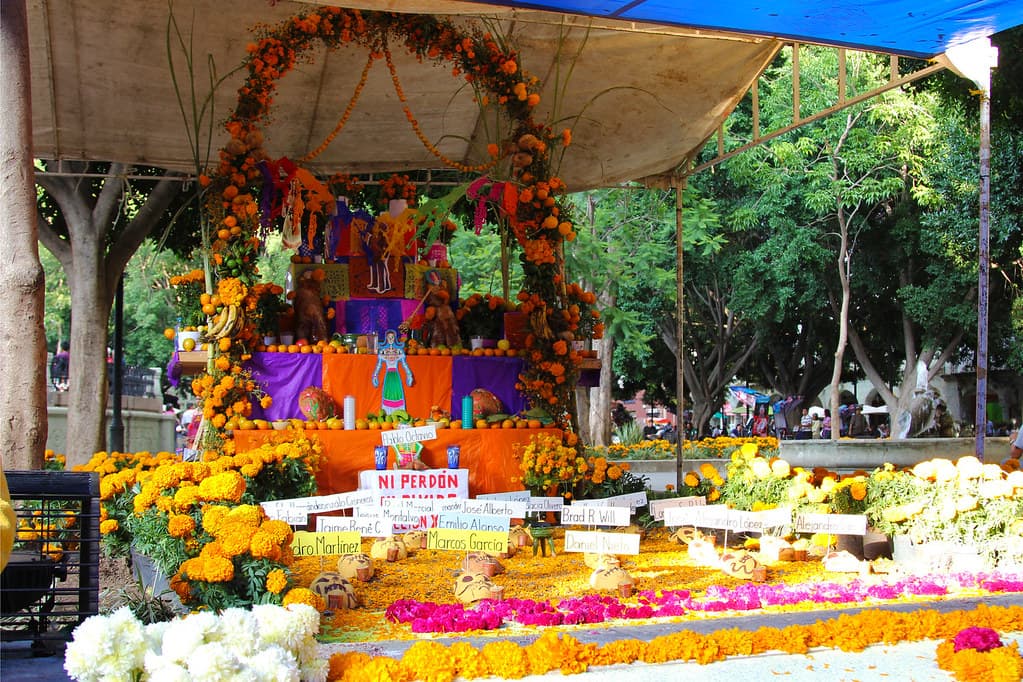
A community ofrenda under a marigold arch in Oaxaca
Photo by Cidades para Pessoas / flickr · CC BY 2.0
What to expect
Oaxaca is the classic choice: a walkable colonial city surrounded by villages that still keep the old customs. Its 2026 city program runs for more than a week, and the days below follow the Oaxaca rhythm.
Oct 26–30
The altars go up
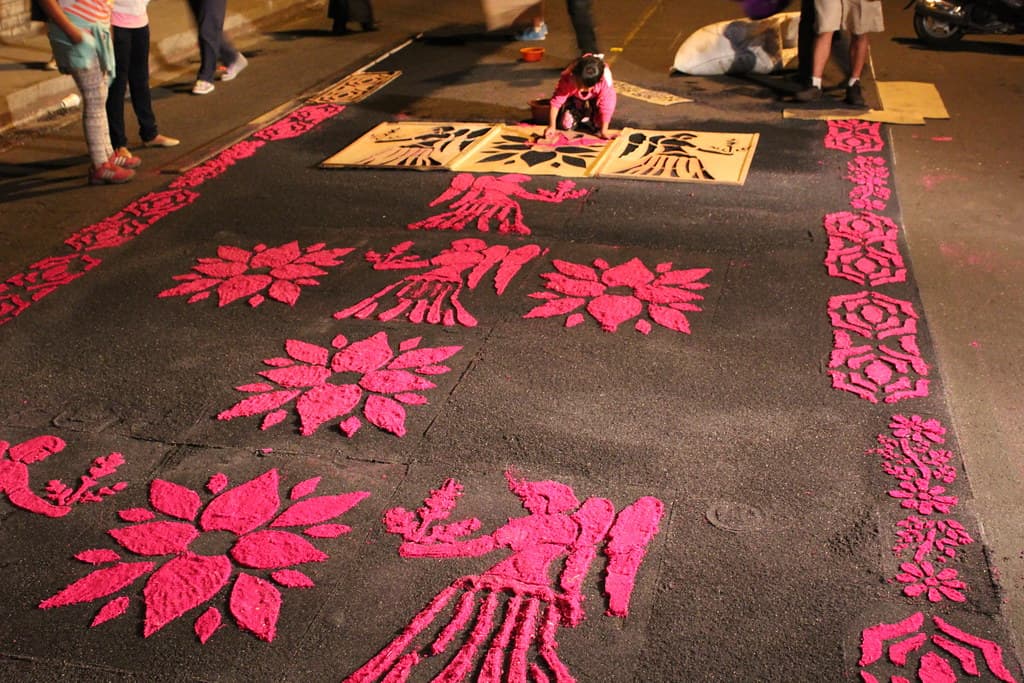
Families stock up for their altars at markets such as 20 de Noviembre and the sprawling Mercado de Abastos: marigolds, candles, sugar skulls and pan de muerto. About 30 monumental altars rise in the zócalo, a 250-square-meter sand carpet takes shape in Jalatlaco, and on October 30 the Verbena Xandú street fair fills the main square.
Oct 31
Children's night and the Gran Comparsa
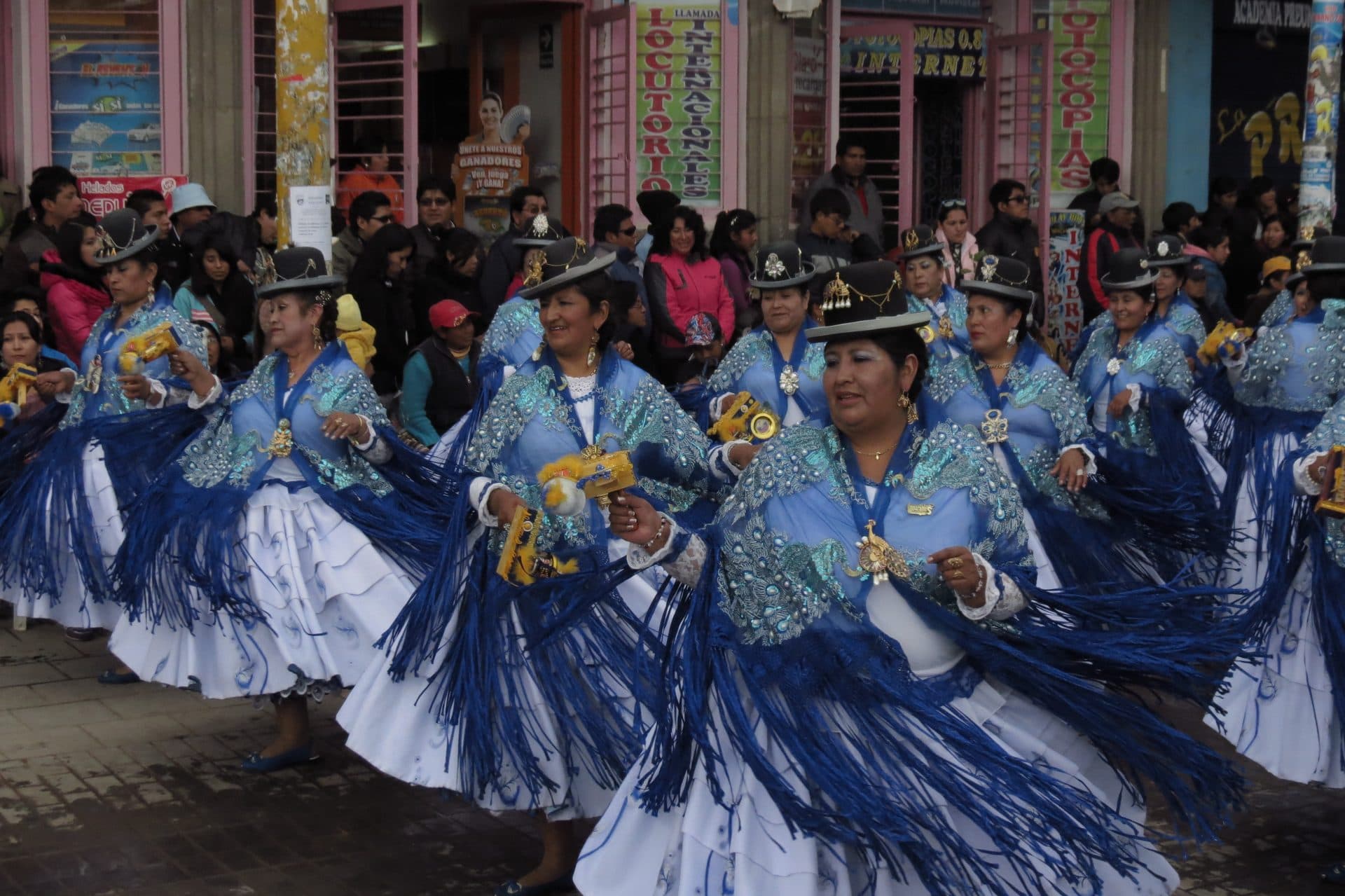
At 6 pm the Gran Comparsa, a costumed street procession of skeletons, devils and brass bands, sets off from Calzada Porfirio Díaz toward García Vigil, with a Catrina contest in the Alameda de León. After dark, the cemeteries of Xoxocotlán and Santa María Atzompa glow with candles through the night.
Nov 1
Muerteadas in the villages
The Etla valley villages stage their muerteadas, all-night comparsas of masked dancers, music and mezcal that hop from house to house. In the city, Jalatlaco and Xochimilco are the likeliest neighborhoods for a local comparsa.
Nov 2
The adults come home
Families spend the day at the Panteón General and village cemeteries, cleaning, decorating and sharing food at the graves. It is the most intimate day and the one to approach most quietly.
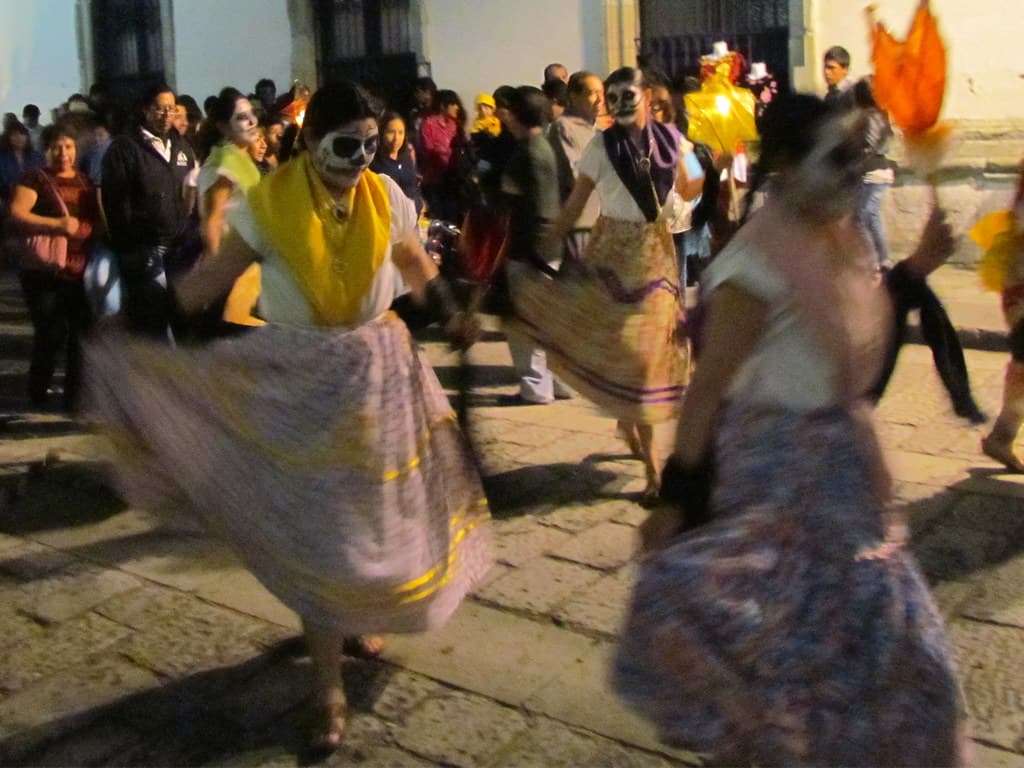
A comparsa, Oaxaca's costumed street procession, dancing through the city at night
Photo by Cidades para Pessoas / flickr · CC BY 2.0
Mexico City does it bigger. The Gran Desfile, a parade of giant skeletons and floats first staged in 2016 after the opening scene of the film Spectre, runs along Reforma from the Diana Cazadora fountain to the Zócalo, starting at 2 pm on Saturday, October 31, 2026. The Zócalo's monumental ofrenda, this year a 32-meter Catrina, stands from October 29 to November 2. For the traditional side, head to Mixquic on the city's southeastern edge, where the cemetery goes dark on the night of November 2 and families light thousands of candles for La Alumbrada.
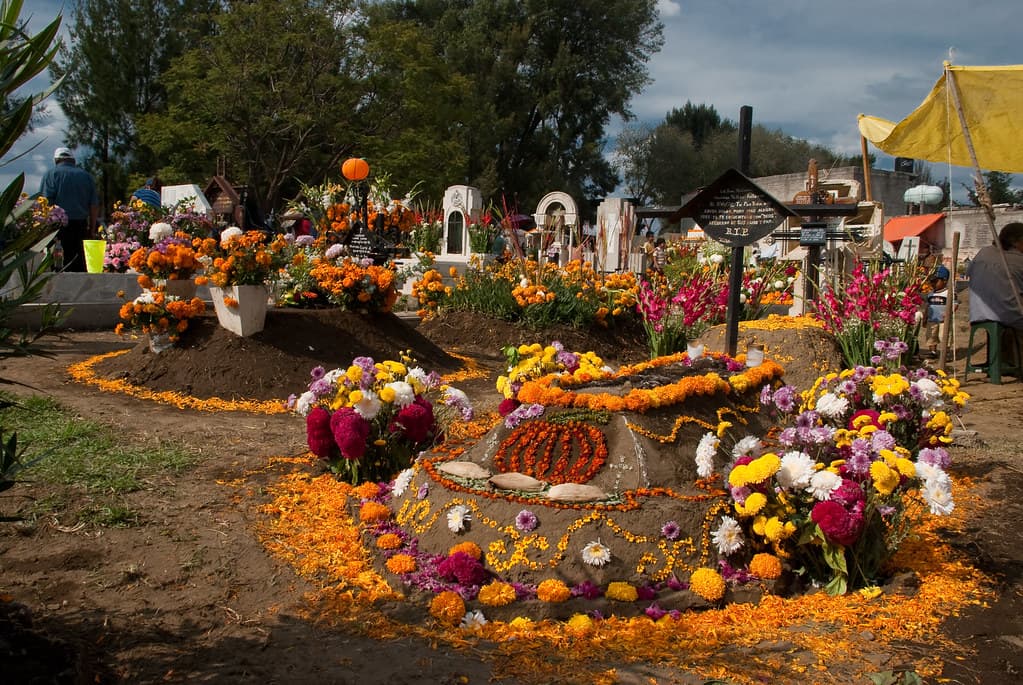
A grave dressed for November 2 in the cemetery of San Antonio Tecómitl, on Mexico City's rural southern edge
Photo by Eneas / flickr · CC BY 2.0
Planning your trip
Getting there
Oaxaca has its own airport, a short flight from Mexico City, and long-haul buses link the two. Inside the city, walk. For the cemeteries, a taxi to Xoxocotlán or Atzompa costs roughly 150 to 220 pesos each way: agree the price before you get in and book the ride back, because empty taxis are scarce after midnight. Doing both cities? Spend October 31 in Mexico City for the parade, then fly to Oaxaca for November 1 and 2.
Where to stay
Base yourself in Oaxaca's Centro, Jalatlaco or Xochimilco so you can walk to the altars and comparsas. Most visitors book three to four months ahead, and the best-located rooms go first. In Mexico City, the Centro Histórico puts you beside the Zócalo, but Roma and Condesa are calmer and a short ride away.
What it costs
The altars, parades and cemeteries are free. Some village comparsas charge outsiders: San Agustín Etla asks 1,000 pesos to join in costume or to film, while neighboring Villa de Etla, Soledad Etla and San Pablo Etla are free. Guided night tours to the cemeteries cost more but handle transport and context, worth it if you do not speak Spanish.
Go like you know
- Ask before you photograph anyone at a grave, and never sit or step on a tomb. You are a guest at a family reunion.
- Bring your own bottle of mezcal and a small bamboo cup to a muerteada and share it (no plastic). At a vigil, do not drink unless a family offers, and accept food or a drink if they do.
- Buy pan de muerto and a cup of hot chocolate from a market stall in the afternoon. It is what locals snack on all week.
- Skip the full Catrina face paint at the cemeteries; save it for the parades and comparsas, where costumes are the point.
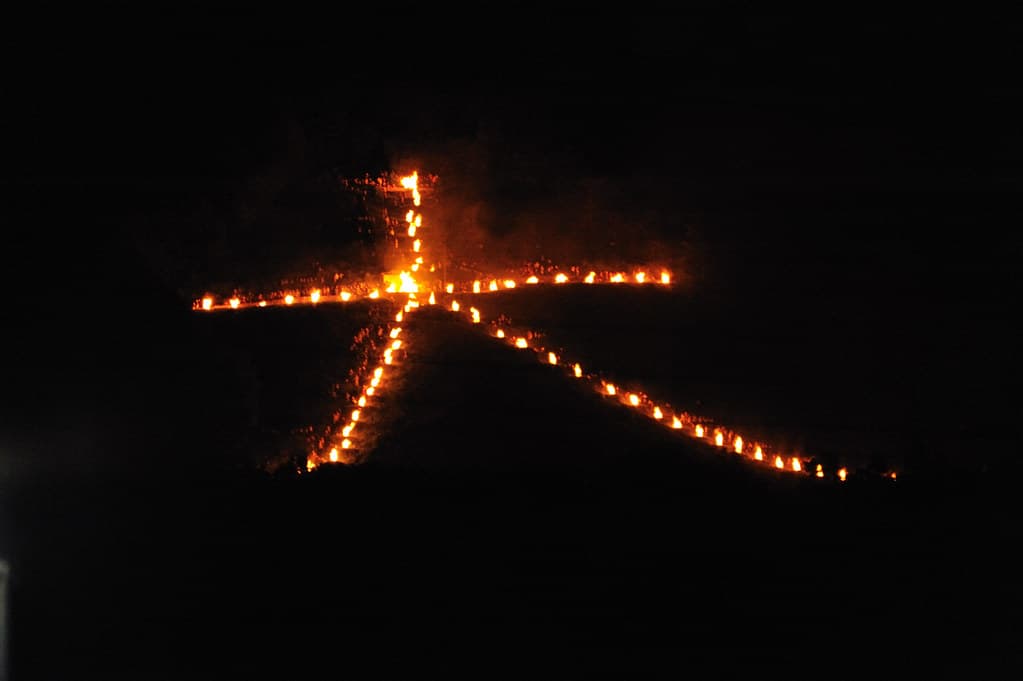
- Death festivals elsewhere make an interesting comparison: Japan's Obon also welcomes ancestors home with lanterns, and the Hungry Ghost Festival feeds wandering spirits across Southeast Asia.
Frequently asked questions
Is Día de Muertos the same as Halloween?
No. They fall close together and share skeletons, but Día de Muertos is a family remembrance rooted in Indigenous and Catholic tradition, not a night about fear. Families welcome the dead home with food and flowers. In big cities you will see some Halloween costumes too, especially on October 31.
Is it respectful for tourists to visit cemeteries?
Yes, if you behave like a guest. Families in Oaxaca and Mixquic are used to visitors and many welcome conversation. Keep your voice low, ask before taking photos, do not use flash in someone's face, and never step on graves. If a family offers mezcal or food, accept it graciously.
Oaxaca or Mexico City?
Choose Oaxaca for cemetery vigils, village muerteadas and a city small enough to walk. Choose Mexico City for the big parade, the Zócalo ofrenda and easy flights. With four or five days you can do both: the parade on October 31, then Oaxaca for the last two nights.