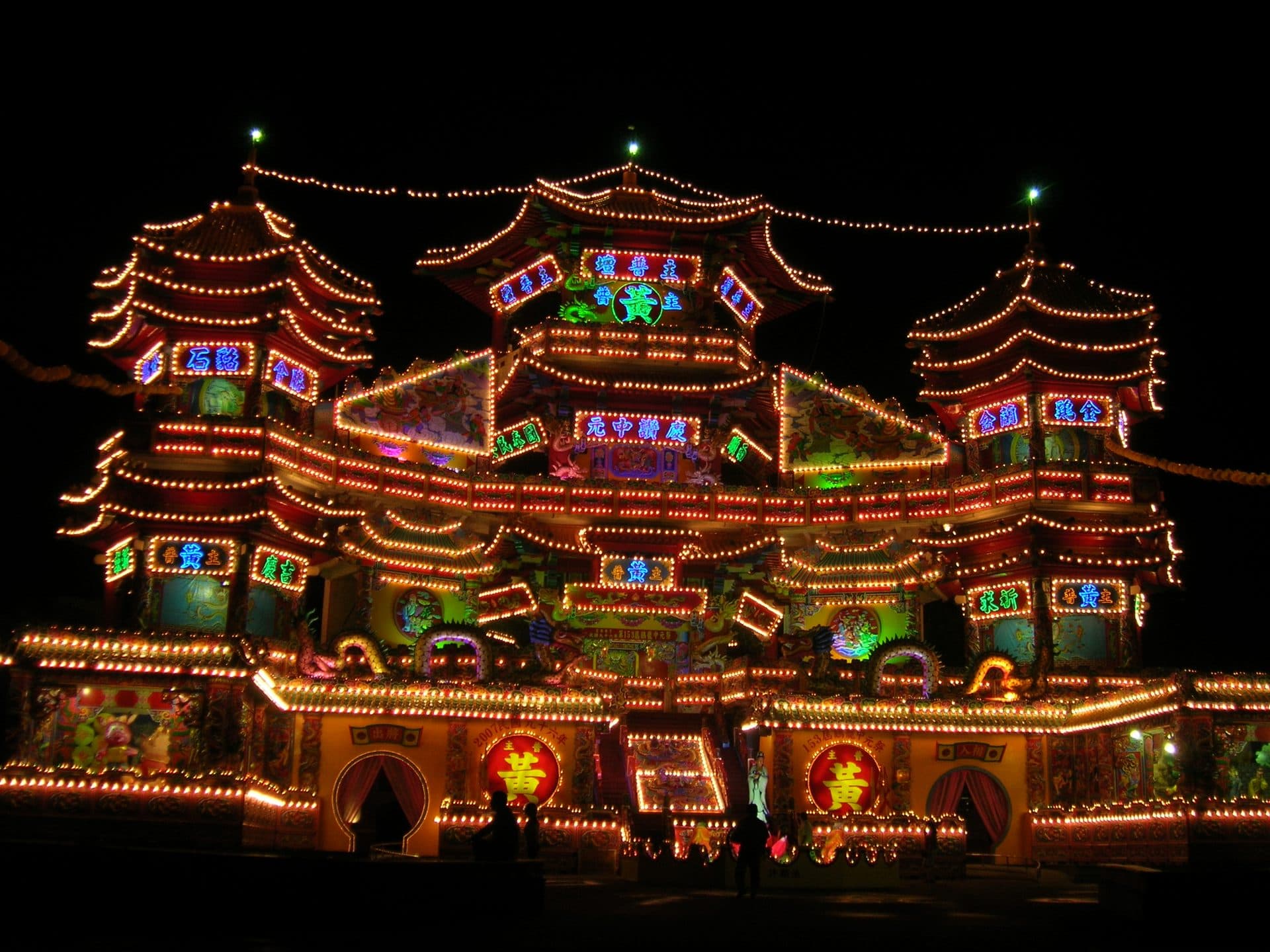
What is the Hungry Ghost Festival?
In Chinese folk belief, the seventh lunar month is Ghost Month: the gates of the underworld open, and the dead (especially the neglected, "hungry" dead with no descendants to feed them) walk among the living. The living respond not with fear so much as hospitality. Tables of food appear outside shops and homes, incense smolders in coffee tins on the curb, and stacks of joss paper (spirit money) burn in metal drums so the visitors have something to spend.
The month peaks on its fifteenth night with Zhongyuan Pudu, the great universal salvation rite, when temples and whole neighborhoods lay out banquet offerings for any spirit who cares to come. In 2026 that night fell on August 27, with the month running from mid-August into September; being lunar, the dates shift every year.
This is not a single event you attend, and that's its magic. Ghost Month is an atmosphere that settles over ordinary streets: the smell of sandalwood outside a 7-Eleven, an opera troupe performing to an audience of nobody visible. You don't buy a ticket. You notice it, and then you can't stop noticing it.
The front row of every getai stage is left empty. Those seats are taken.
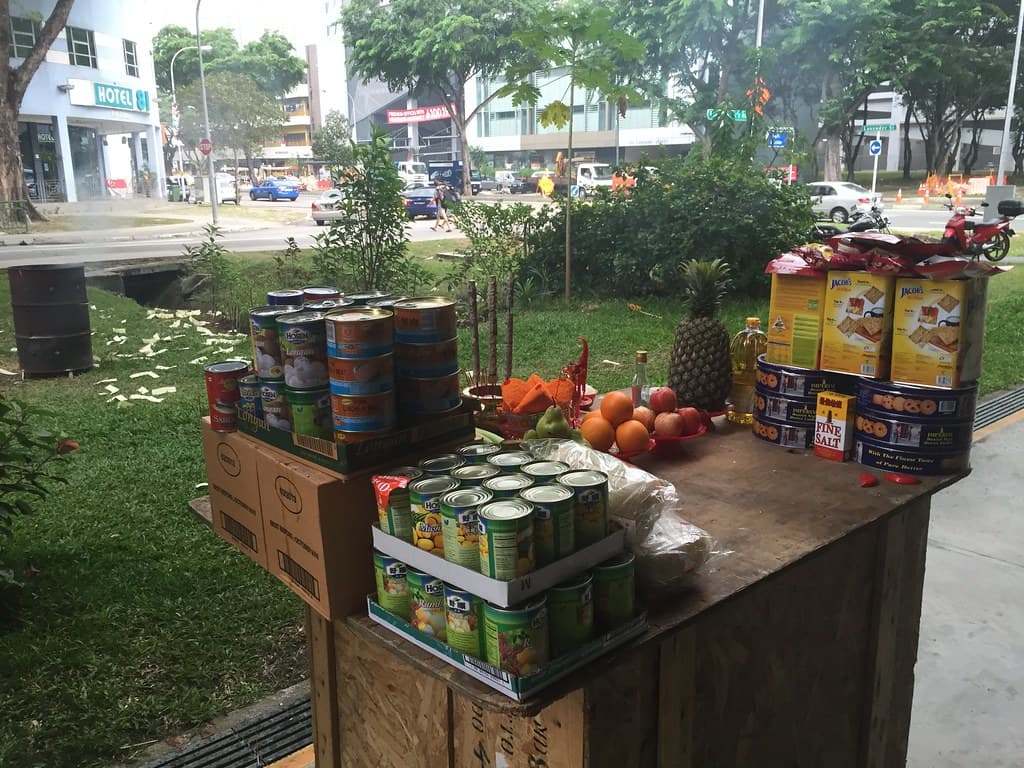
Offerings set out at the roadside during the Hungry Ghost Festival in Singapore
Photo by Kai Hendry / flickr · CC BY 2.0
What to expect
In Keelung, Taiwan's rainy northern port, Ghost Month is the civic event of the year. The festival dates to 1855 (the city counted 2026 as its 172nd edition) and is organized each year by a different family clan. The month opens at the Laodagong temple, where the gates of the shrine are ceremonially opened on the first day of the seventh lunar month. The crescendo comes on the fourteenth lunar night (August 26 in 2026), when a parade of clan floats rolls through the city at about 7pm, and around 11pm the water lanterns, each clan's built like a small house, are launched into the sea at Wanghai Xiang in Badouzi to guide the water ghosts ashore for the feast. The Zhongyuan Pudu rites follow the next evening.
In Singapore and Malaysia, the signature is getai: brash, brilliant open-air stages that pop up in housing estates and night markets, running song, comedy, and opera for the entertainment of the spirits. The front row of chairs is left empty for the guests of honor. Wander a heartland neighborhood after dark during the month and you may find one by following the light and the volume.
Planning your trip
Getting there
Keelung is about 45 minutes from Taipei by train, which makes the whole month easy to sample from a Taipei base. On parade night the city runs traffic controls and shuttles, so check its announcements and plan your way back before midnight. The coastal lantern-release site at Wanghai Xiang fills hours before the launch; locals bring stools and snacks.
In Singapore and Malaysia there is no single venue: getai stages and offerings pop up in different neighborhoods, so local transit and a bit of wandering are your best tools. If you are already in Malaysia for Thaipusam, note that it falls in January or February, not in ghost season.
Where to stay
On the main parade night, staying in Keelung itself saves you a crowded midnight journey back to Taipei, while a Taipei base lets you sample the rest of the month. Neither city asks for much advance planning outside the parade night, but book early if you want to sleep near the harbor.
What it costs
Watching is free: the street rites, the getai stages and the Keelung parade are public, woven into the streets rather than fenced into venues. Travel can go on as normal during Ghost Month, though some locals avoid trips, weddings, swimming, and big purchases in these weeks. We found no published price figures for ghost-month flights or hotels, so don't plan on a discount.
Go like you know
- Time your Keelung visit to the fourteenth and fifteenth lunar nights: parade, water lanterns, and Pudu rites in one two-day swing.
- Folk custom holds that the farther the water lanterns drift, and the more vigorously they burn, the more fortune they bring the clan that built them. Watch the harbor with that in mind.
- In Singapore, Geylang is a reliable place to find large getai stages and streetside offerings during the month.
- Traditionalists avoid swimming during Ghost Month, since water ghosts are said to be looking for replacements. Follow suit or don't, but know why the beaches are empty.
- Pair it with Obon in Japan for a two-country study in how differently Asia welcomes its dead in the same lunar season.
Frequently asked questions
Is it disrespectful for tourists to attend?
No. The rites are public by design, and respectful visitors are welcome. The Pudu feast is explicitly for all wandering souls, which locals will cheerfully point out includes travelers. Observe from the side, follow the etiquette above, and you're a guest, not an intruder.
When exactly should I go?
Aim for the days around the fifteenth lunar night (August 26–27 in 2026), when Keelung's parade, water-lantern release, and Pudu rites cluster together. The wider month has atmosphere everywhere, but those two nights are the summit. Dates shift yearly; check before booking.
Is any of this scary or somber?
Neither. The mood is closer to a family reunion with extra places set: practical, warm, occasionally raucous at the getai end. The only real solemnity belongs to the temple rites, and even those end in a feast.