What is Aomori Nebuta Matsuri?
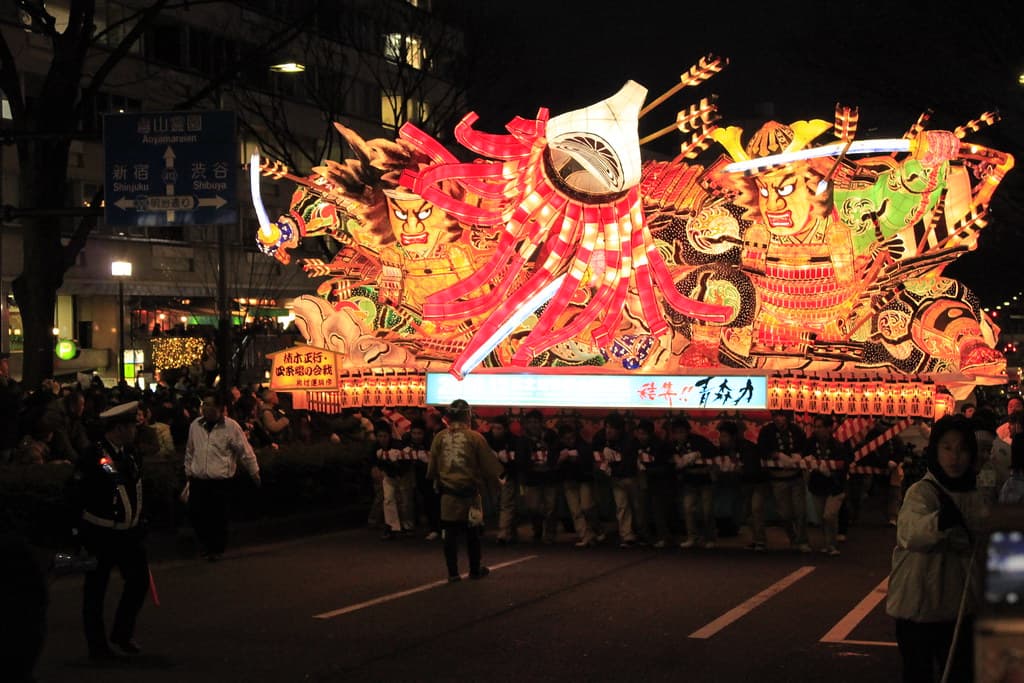
Nebuta Matsuri is the far north's great lantern festival, held in Aomori, the port city at the top of Honshu in Tōhoku, every August 2 through 7, without exception. A nebuta is the float itself: a skeleton of wire skinned in washi paper, painted in furious color, and glowing from within. The largest run about nine meters wide and five meters tall and weigh around four tons, and the scenes they carry are pure theater: kabuki heroes mid-glare, gods and demons out of myth, warlords frozen at the moment of the sword-draw.
These are not weekend hobby projects. Each float takes shape over months in dedicated construction sheds under a nebuta-shi, a professional float master, and the masters' names are known and argued over the way other cities argue about chefs. The craft is the festival's spine; the parade is its six-night payoff.
What keeps Nebuta from being a spectator sport is the haneto, the leaping dancers who swarm around and between the floats. The rule is simple and generous: anyone wearing the haneto costume may join the parade. Not locals only, not registered troupes: anyone. Rental shops around town will dress you for a few thousand yen, and the only choreography that matters is the two-footed hop and the chant.
Be clear-eyed about scale, though. This is one of Japan's most famous festivals, and the prefecture's tourism board counts more than three million visitors over the week. It is a crush (a joyful, well-marshaled crush), not a quiet discovery.
Rassera is not a cheer from the sidelines. It is the sound the parade makes from the inside, and the costume is your ticket in.

A Nebuta float on display at the Nebuta Museum Wa Rasse in Aomori
Photo by bryan... / flickr · CC BY-SA 2.0
What to expect
Aug 2–6
The night parades
The parade starts around 7pm on August 2 and 3, when children's nebuta roll out alongside the big floats, and at about 6:45pm on August 4 to 6, when the large floats have the streets to themselves. Either way it runs until a little after 9pm, circling the city-center blocks near Aomori Station, each float with its own drummers, flute players, and mob of haneto. The route loops, so a fixed spot sees float after float roll past; the corners are the drama, where crews muscle each nebuta around the turn and tilt it toward the crowd.
Aug 7
Daylight, then the bay
The final day breaks the pattern. The parade runs in the early afternoon, a stranger, flatter beauty with all that paint under sun, and in the evening the floats go out onto Aomori Bay for a slow waterborne procession beneath fireworks. Lantern light, sea, and fire at once: the festival's proper goodbye.
Planning your trip
Getting there
Aomori sits at the very top of Honshu, but it's easier to reach than the map suggests: the Hayabusa Shinkansen runs Tokyo to Shin-Aomori in roughly three to three and a half hours, and a local train covers the last few minutes to Aomori Station. Flying in, a bus links Aomori Airport to the station in about 35 minutes. The parade route circles the blocks right by the station, so once you've arrived, the whole festival is on foot: no shuttles, no transfers, just follow the drums.
Where to stay
The hard part is the bed, not the journey. Rooms near Aomori Station and the parade route go months in advance, and many are held for package tours, so book as soon as your dates are firm.
What it costs
Watching is free: the curbs along the route are open to anyone who claims a spot. Reserved seats exist for those who want a guaranteed view; for 2026 the organizers sold them at ¥4,000 per person for the night parades and the August 7 daytime parade, and ¥9,500 for a combined daytime-and-fireworks ticket, through a June lottery and later general sales. Dancing costs only the costume, which rental shops let out for around ¥4,000 to ¥5,000. The real expense is the room, where festival-week demand pushes Aomori prices up, or out of reach.
Go like you know
- Visit Nebuta Warasse, the city's nebuta museum, before your first parade night. It shows real floats year-round, close enough to study the wire under the washi; the parade reads differently once you know how the light is made.
- Stake out your curb spot before the parade starts (7pm on the first two nights, 6:45pm after that). The route loops the same blocks, so pick one corner and let the parade come to you.
- Eat early. Three million visitors in a week means festival-night restaurants queue long; the street stalls are part of the festival anyway.
- Don't skip the last day on the theory that the nights are the whole show. The bay procession under fireworks is the only version of Nebuta that floats.
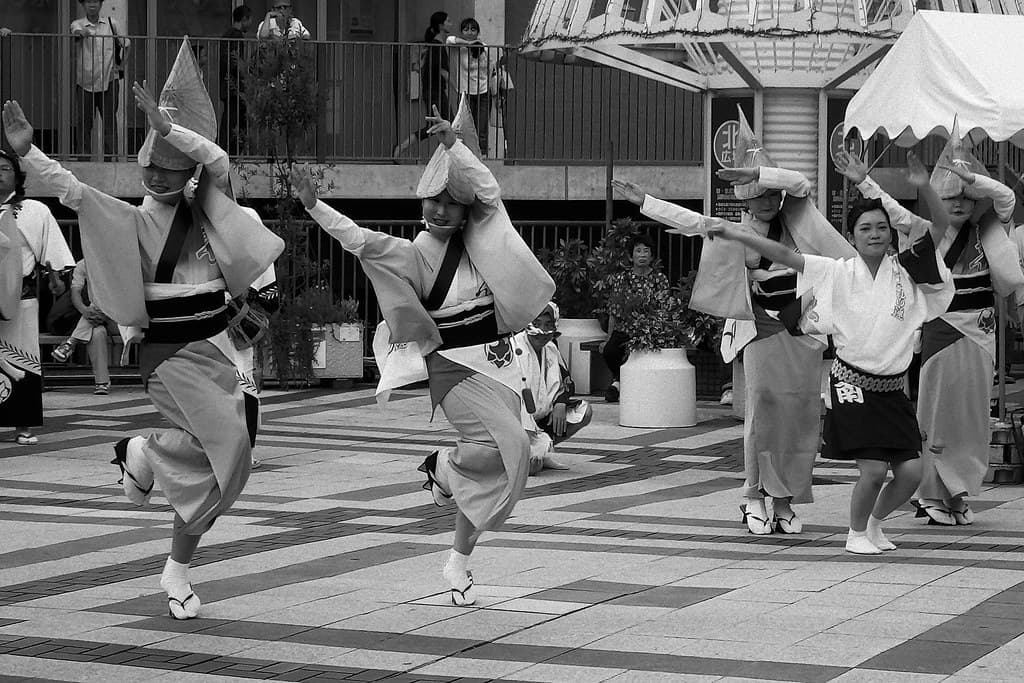
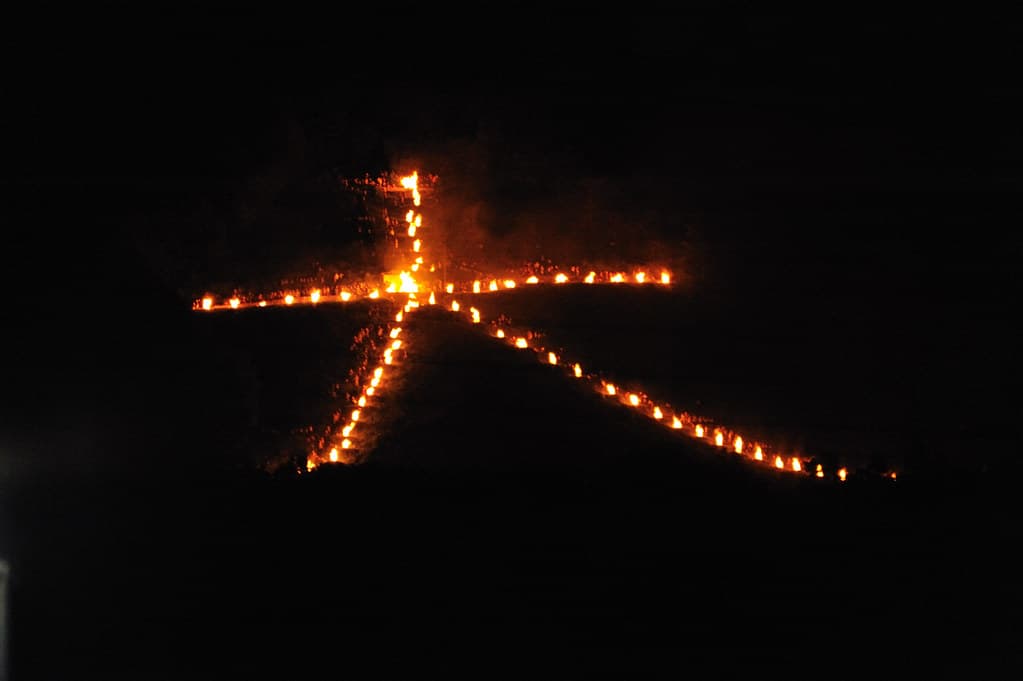
- Make it a summer circuit: Nebuta closes on the 7th and Awa Odori opens in Tokushima on the 12th, just before the country turns home for Obon, which Kyoto ends with its mountain fires on the 16th.
- If you miss this year, the dates never move (August 2–7, every year), so next year is bookable the moment you decide. Warasse keeps the floats lit in the meantime.
Frequently asked questions
Can anyone really dance in the parade?
Yes, and that is the rule that makes Nebuta special. Anyone wearing the full haneto costume may join the parade, no reservation or troupe membership needed. Rental shops around town outfit you for around ¥4,000 to ¥5,000. Learn the chant, rassera, rassera, and start leaping.
Which night should I pick if I only have one?
Any evening from August 2 through 6 gives you the full parade: floats, drummers, and haneto circling the center until a little after 9pm. The first two nights add children's floats; August 4 to 6 are the large-float nights. August 7 breaks the pattern with a daytime parade, then the floats take to the bay under fireworks.
Where do I stay if Aomori is sold out?
Hirosaki or Hachinohe: both are a train ride from Aomori, and Hirosaki puts its own Neputa festival, running the same week, on your doorstep. Aomori's hotels sell out many months ahead, so book the moment your dates are firm, or plan the commute from the start.