What is Şeb-i Arus?
Mevlana Jalaluddin Rumi, the thirteenth-century poet and Sufi mystic whose verses are read around the world, spent most of his life in Konya and died there on December 17, 1273. His followers did not mourn the date as a death. They called it Şeb-i Arus, the "wedding night", the moment Rumi was finally united with the divine Beloved he had written about for decades.
After his death, his son and disciples formalized the Mevlevi order and its signature ritual, the sema. It is a structured ceremony of music, prayer and turning, and every element carries meaning. The tall felt hat, the sikke, is traditionally read as a tombstone; the black cloak as the grave; the white skirt as the shroud. Dropping the cloak is a symbolic rebirth. As the dervish turns, the right palm faces up to receive grace and the left palm faces down to pass it to the earth.
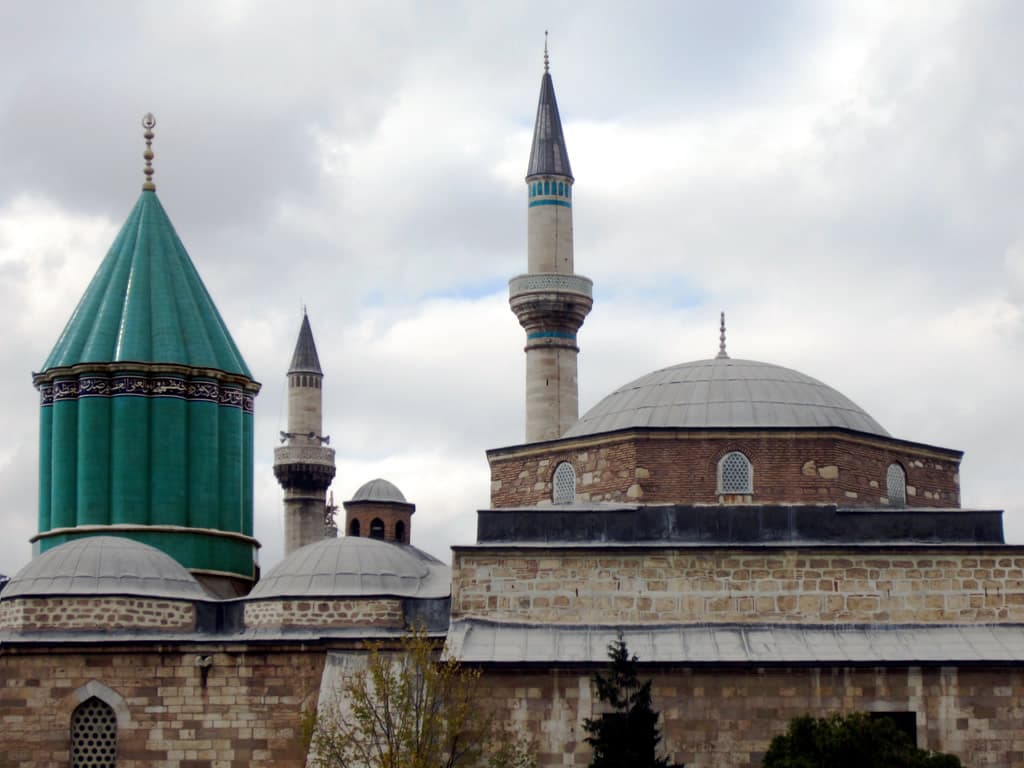
The Mevlevi Sema Ceremony was inscribed on UNESCO's Representative List of the Intangible Cultural Heritage of Humanity in 2008, and Konya's December commemoration is its most important annual occasion. The Mevlana Museum, built around Rumi's tomb beneath its turquoise dome, becomes the spiritual center of the city as pilgrims, poetry lovers and the curious arrive from across Türkiye and beyond.
Come, come, whoever you are.
What to expect
The commemoration is a program, not a street party. Its heart is a series of evening ceremonies in the large sema hall of the Mevlana Culture Center, supported by conferences, recitations and concerts during the day.
Dec 7
The first sema
The program opens at the Mevlana Culture Center's sema hall (in 2025 there were two ceremonies on opening day). It sets the tone: formal, hushed, and different from the short demonstrations you may have seen elsewhere in Türkiye.
Evenings
Ceremonies and live music
The sema is performed with live Mevlevi music: the ney reed flute, kudüm drums and chanted poetry. A ceremony follows a fixed order that includes four turning movements, called selams, and ends in prayer. Check the official program booklet for which evenings have a full ceremony.
Daytime
The museum and the tomb
Days are for the Mevlana Museum, where Rumi lies under an embroidered cover, and for nearby mosques and the old city. Expect long, quiet queues of pilgrims.
Dec 17
The wedding night
The program closes with the Şeb-i Arus ceremony itself, in 2025 at 7pm, attended by officials and religious leaders. It is the most solemn night of the run, and you are asked to be inside before it starts.
Planning your trip
Getting there
Konya sits on the Anatolian plateau in central Türkiye. The high-speed train links it with Ankara in under two hours and with Istanbul in roughly four to five hours, and there are direct flights from Istanbul to Konya's airport. The Mevlana Museum and the old center are walkable from most central hotels; the Culture Center, where the ceremonies are held, is a short ride away.
Because the program ends on December 17, it fits ahead of a European Christmas-market stop: the Nuremberg Christkindlesmarkt runs until December 24 and the Vienna Christkindlmarkt until December 26. Lyon's Fête des Lumières (December 5 to 8 in 2026) overlaps only the opening days, so pick one.
Where to stay
Hotels near the museum book up for the final days, so reserve early if you want to walk to the tomb at dawn; local reports note that prices rise during the anniversary week. The museum's winter hours run shorter than its summer ones, so plan to go in the morning.
What it costs
Ceremony tickets are sold online through Biletinial, and for 2026 the Ministry of Culture and Tourism has set sales to open on October 9 at 10am. In 2024 prices ran from about 150 to 300 lira, and in 2025 every ticket for the run sold out, so buy the moment sales open. Cultural events around the city during the commemoration are listed as free.
Go like you know
- Arrive at the hall early. Security lines can be slow, and seats with a clear view of the floor go to whoever sits first.
- Visit the Mevlana Museum early in the morning, when the pilgrim crowd is thinnest and the tomb room is at its most peaceful.
- If you cannot get tickets, Konya also hosts regular Saturday-evening sema ceremonies at the Mevlana Culture Center outside the festival period; check the Center's website for the current schedule and prices.
- Try etli ekmek, Konya's long, thin flatbread topped with minced meat, and the city's tender oven-roasted lamb, fırın kebabı.
- Read a little Rumi before you go. Knowing a few lines from the Masnavi makes the music and the turning land very differently.
Frequently asked questions
Do I need tickets to see the whirling dervishes?
Yes for the main commemoration. Ceremonies in the Mevlana Culture Center during Şeb-i Arus are ticketed and sold online in advance through Biletinial, and in 2025 every ticket for the run sold out. Outside the festival, Konya hosts regular Saturday sema ceremonies at the same center, so there is still a chance to see one if you miss out.
Is the ceremony suitable for non-Muslims?
Absolutely. Rumi's message of tolerance draws visitors of every faith and none, and the ceremonies welcome respectful audiences. What matters is behavior: stay silent during the sema, do not applaud, dress modestly, and avoid flash photography. Treat it as you would a service in any house of worship.
How long is a sema ceremony?
A full ceremony, with music, prayers and the four movements of turning, usually lasts around an hour, and the anniversary night can run longer with speeches and remarks. It is slower and more meditative than the tourist demonstrations you may find elsewhere, which is exactly the point, so settle in and do not plan a tight dinner reservation afterward.
Can I photograph the ceremony?
Policies vary by night, and some ceremonies ask audiences not to film at all. Where photos are allowed, flash is not. Keep your phone low and quiet, and consider simply watching: the turning is hard to capture and easy to remember.