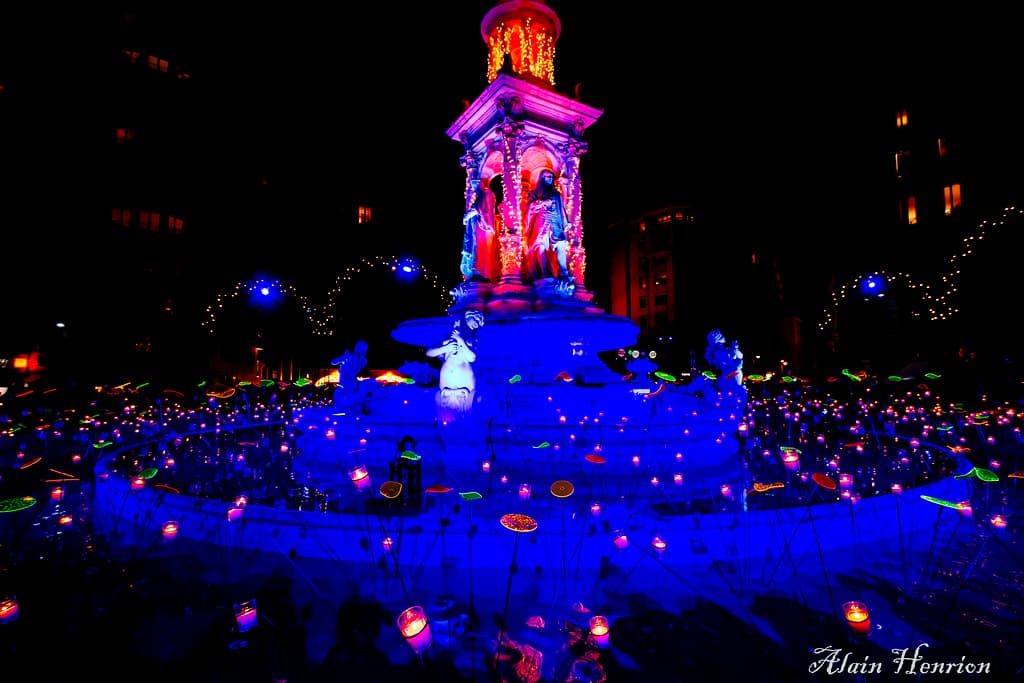
What is the Fête des Lumières?
The story starts in 1852. Lyon had commissioned a gilded statue of the Virgin Mary for the bell tower of the chapel on Fourvière hill, and its inauguration was set for September 8. The Saône flooded, the ceremony was pushed to December 8, and on the day itself a storm threatened to wash everything out. When the sky cleared that evening, residents spontaneously placed candles in their windows and spilled into the streets to see the hill glowing. The city has repeated the gesture ever since.
Those little candles, known as lumignons, are still the soul of the night. Set in coloured or frosted glasses along balconies and window ledges, they turn ordinary apartment blocks into strings of warm points. On December 8 itself, many Lyonnais light them at home, and the basilica of Notre-Dame de Fourvière, built on the hill later in the nineteenth century, is illuminated as a focus of devotion.
Since Lyon adopted its first Plan Lumière (a citywide lighting plan) in 1989, the city has layered a contemporary light-art festival on top of the tradition. Lighting designers and studios from France and abroad now create projections, installations and interactive pieces across the historic center, and the city reports crowds of around two million over the four nights. The faithful, the families and the architecture buffs all share the same pavements.
A city that once lit its windows to thank the sky now lights its whole skyline, and still keeps the candles.
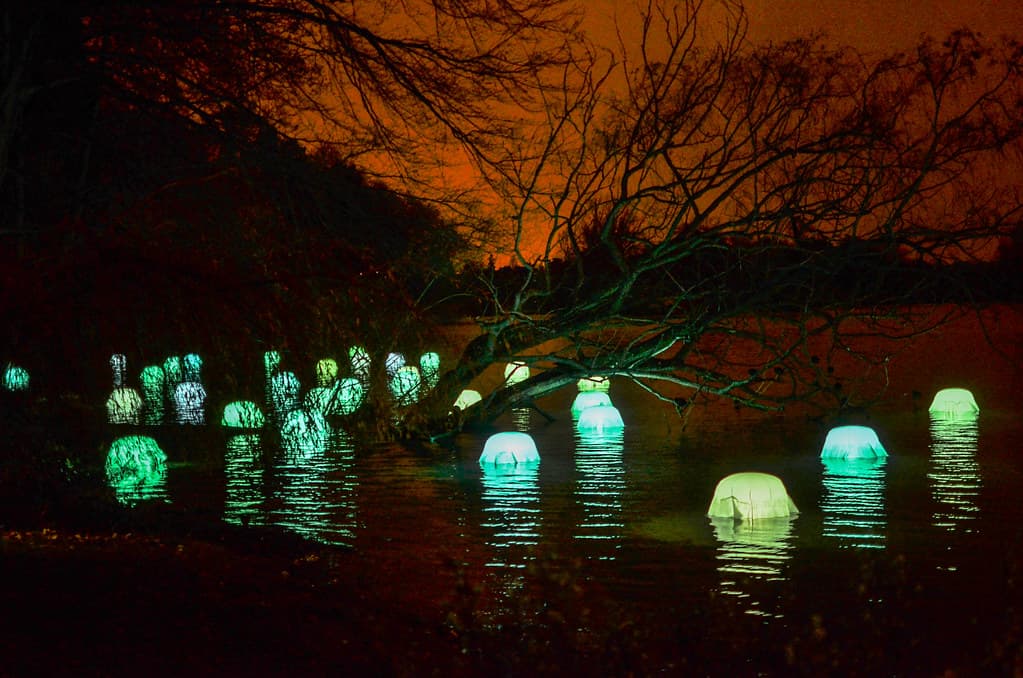
A light installation glowing on the water
Photo by Cristiano Dalbem / flickr · CC BY 2.0
What to expect
Each evening is built around the hours after dark: in 2025 the official lighting hours were 7pm to 11pm, and 6pm to 10pm on the Sunday, though some sites stay lit later. Installations are spread across a broad but walkable zone, with the biggest crowds on the Presqu'île and in the old town.
Night 1
Opening night
The program switches on across the city at dusk. Opening night is lively but often slightly calmer than the weekend, a good time to see headline projections.
Weekend nights
Peak crowds
The weekend nights bring visitors from across France and beyond. Streets become one-way pedestrian flows, and patience becomes part of the experience.
Dec 8
The night of the lumignons
The traditional heart of the festival. Look up at windows across the city for candles, and climb, or ride the funicular, toward Fourvière for the view over a glowing Lyon.
Planning your trip
Getting there
Lyon is about two hours from Paris by high-speed train, and its international airport, Saint-Exupéry, connects to Part-Dieu station by the Rhônexpress tram-train in under 30 minutes. Inside Lyon, the metro and trams run with enhanced frequencies during the festival, and a car-free pedestrian perimeter covers the center from late afternoon (in 2025, from 5pm, and 4pm on Sunday), with about forty entrances and four footbridges closed. Check the TCL transit notices for station closures on the day. Walking is almost always faster.
Where to stay
Book accommodation as early as you can, ideally several months ahead. Central rooms fill and prices climb for these four nights; before the 2025 edition, hotel analysts reported average occupancy around 79%, with some central hotels already full on the Saturday, although last-minute rooms still turned up. If central Lyon is full, look at towns on fast train lines, such as Villefranche-sur-Saône or Vienne, and ride in each evening.
What it costs
The light installations are free, with no tickets required. The money goes on the room, meals and getting around. For transit, the city's operator sold an all-day "en Fête" pass at €3.70 in 2025 and made metro and tram zones 1 and 2 free from 4pm on December 8, which is worth checking again for 2026. Expect hotel prices well above ordinary December rates.
Go like you know
- Download the official program map and plan a route by district. Trying to cross the whole city in one night means spending it in queues.
- Buy lumignons from shops and bakeries in the days before, and light them on your own windowsill on December 8 if your accommodation allows.
- Warm up with vin chaud and roasted chestnuts from street vendors, and ask early about a table at a traditional bouchon; many restaurants stop taking individual bookings during the festival, so be ready to eat when you spot a free seat.
- Pick up papillotes, the foil-wrapped chocolates Lyon eats at this time of year, each wrapped with a little joke or riddle.
- For a quieter perspective, look for viewpoints on the slopes of Fourvière and the Croix-Rousse, where the illuminated city spreads out below.
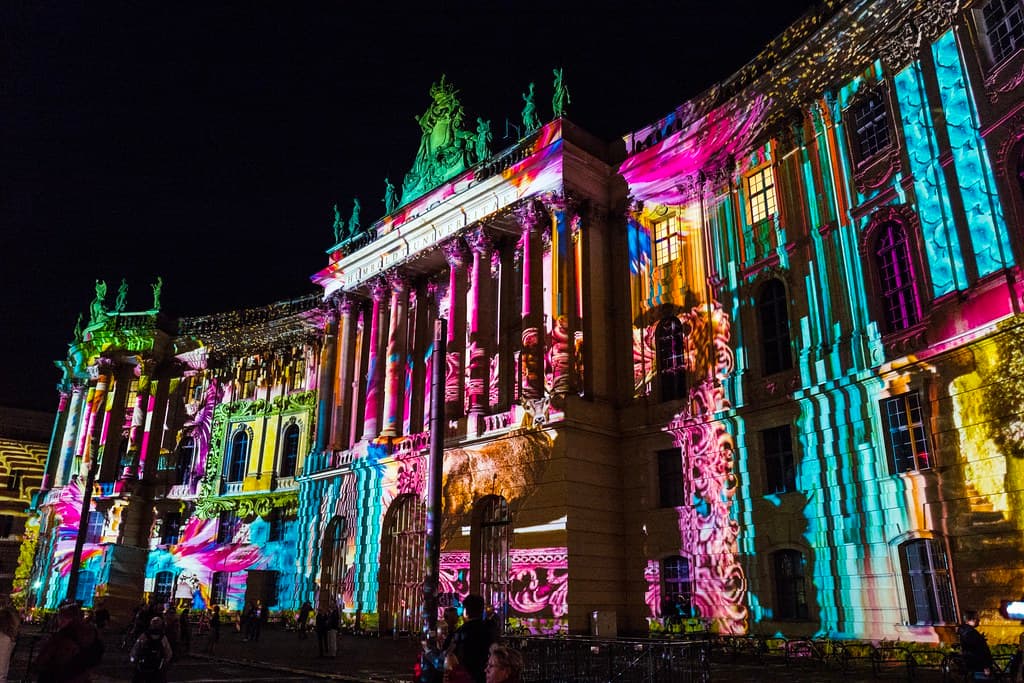
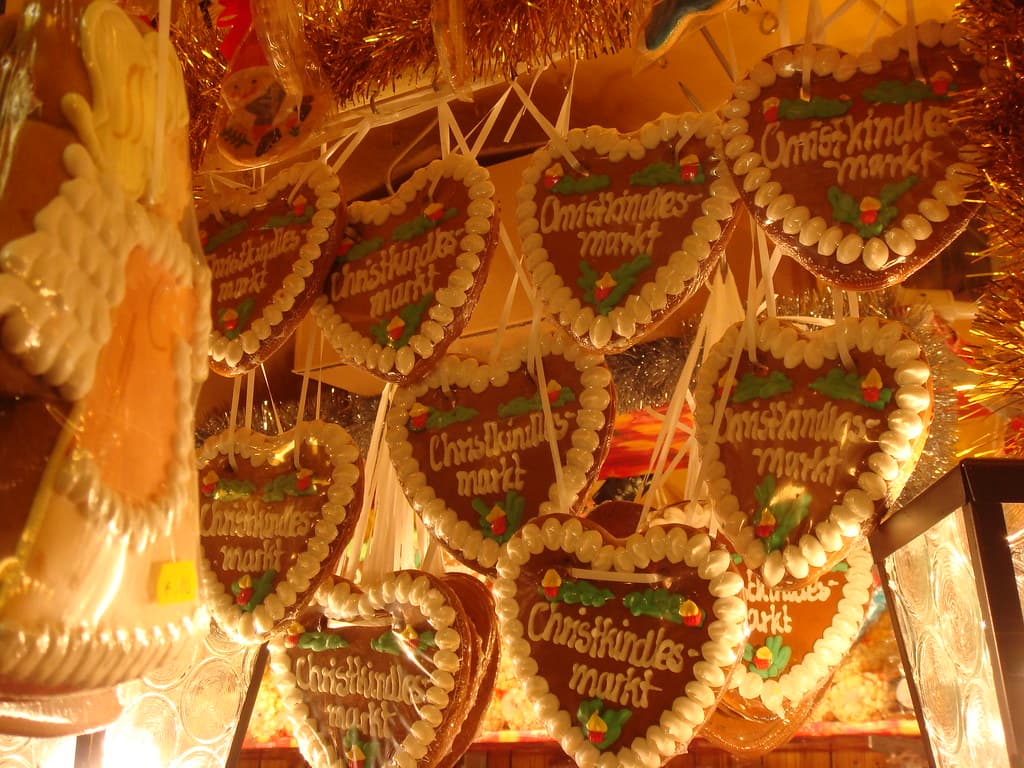
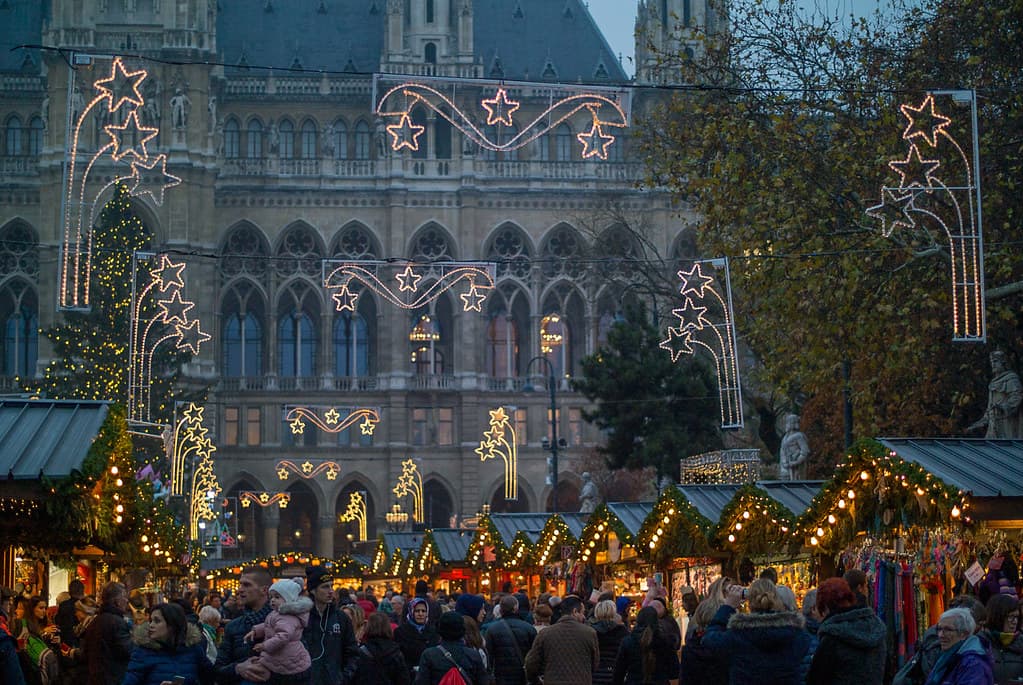
- Building a December trip? The Nuremberg Christkindlesmarkt (open until December 24) and Vienna Christkindlmarkt (until December 26) are both still running on the nights of the Fête. For more light art, Berlin's Festival of Lights fills early to mid October.
Frequently asked questions
Is the Fête des Lumières free?
Yes. The city presents the light installations as free and open to everyone, with no tickets required. What costs money is everything around it: accommodation, restaurant meals and transport. A handful of private or partner events may charge, but the installations themselves do not.
Which night is best to go?
Opening night and the weekday evenings are usually a little more comfortable than Friday and Saturday. December 8 carries the strongest sense of tradition, with candles in windows across the city, but it is also extremely busy. If you have two nights, combine a weekday with December 8.
Is it suitable for children?
Children love the installations, but the crowds can overwhelm small ones. Choose earlier hours, smaller sites and parks, and avoid the densest squares at peak time. A carrier is far easier than a stroller, which can be impossible to move through packed streets.
How far ahead should I book a hotel?
As early as you can, ideally a few months out. Central rooms fill and prices climb, and before the 2025 edition average occupancy was reported near 79%, though last-minute rooms still appeared. If choice is thin or prices high in central Lyon, consider staying in a nearby town with a quick train connection.