What is Paro Tshechu?
A tshechu, meaning "tenth day", is a religious festival held in Bhutan's monasteries and dzongs, fortress-monasteries that serve as administrative and religious centers. Tshechus honor Guru Rinpoche, also known as Padmasambhava, the eighth-century master credited with bringing Tantric Buddhism to the Himalayas, and they take place on or around the tenth day of a lunar month associated with events in his life.
Paro Tshechu is one of the largest and most famous tshechus in Bhutan. It is held at Rinpung Dzong, a massive white fortress overlooking the Paro River, and draws people from across the valley and beyond. For locals, it is a chance to receive blessings, meet family and friends, and wear their finest clothes. For visitors, it is a rare window into a living Buddhist culture.
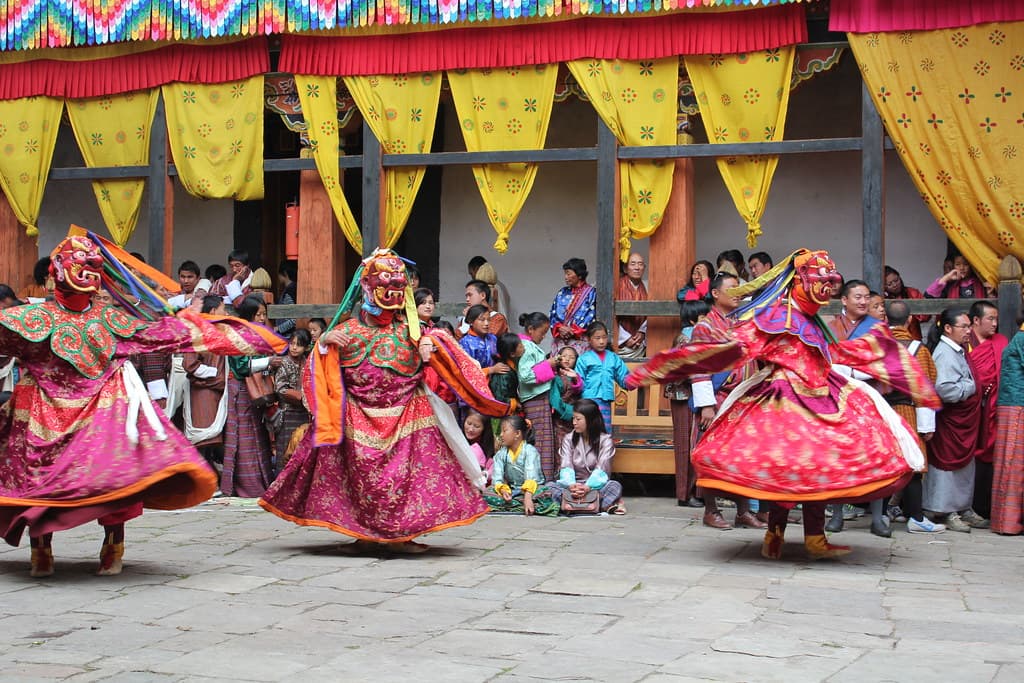
The heart of the festival is cham, masked dances performed by monks and laymen. Each dance tells a story or teaches a moral lesson, from the triumph of good over evil to the judgment of the dead. Clowns, atsaras, wear comic masks and entertain the crowd with jokes and mischief. Watching the dances is believed to bring merit and blessings.
To see the great thongdrel at dawn is said to cleanse a lifetime's sins.
What to expect
The public festival lasts five days, with a sequence of dances culminating in the unveiling of the giant thongdrel.
Day before
Preliminary rites
On the tenth lunar day, monks hold final rehearsals and prayers inside the dzong, which stays closed to the public until the festival opens on the next day.
Main days
Cham dances
In the courtyard, dancers in elaborate masks and costumes perform sacred dances throughout the day, alternating with folk performances, while clowns entertain the crowd.
Final day, dawn
The thongdrel
Before sunrise, a giant thongdrel, an embroidered tapestry of Guru Rinpoche, is unrolled down the face of the dzong. People come in the dark to see it before the first rays of sun reach it.
Planning your trip
Getting there
Paro has Bhutan's main international airport, with direct flights from cities such as Bangkok, Delhi, Kathmandu and Kolkata. The approach into the valley between mountains is famously dramatic. Paro town and Rinpung Dzong are a short drive from the airport, and Thimphu, the capital, is roughly 65 kilometers away, about an hour or a little more by road. Most itineraries combine Paro with Thimphu and the Punakha valley over the Dochula pass.
Where to stay
Paro's hotels fill quickly for festival dates and are the real bottleneck, so book your trip, flights and accommodation well in advance. Base yourself in the Paro valley to be at the dzong early, and plan more than the festival itself: a week allows you to see the festival, hike to the Tiger's Nest and explore the countryside at a relaxed pace, adjusting to the altitude as you go.
What it costs
Visiting Bhutan requires a visa and a daily Sustainable Development Fee set by the government. For 2026 the fee was USD 100 per adult per night (half for ages 6 to 11, free under 6), confirmed through August 2027, plus a one-off visa fee reported at USD 40. These come on top of tour, hotel and guide costs. We found no separate ticket for the dances themselves.
Go like you know
- Wear local dress if you can: a gho or kira is appreciated, and many guides can help you rent or buy one.
- Bring a cushion or mat for sitting on the stone courtyard steps.
- Hike to Taktsang, the Tiger's Nest monastery, before or after the festival; it is the highlight of most visits to Paro.
- Try ema datshi, Bhutan's national dish of chilies and cheese, and butter tea.
- Visit the National Museum in Paro to understand the meaning of the masks and dances. For masked dance of a different kind, South Korea's Andong Maskdance Festival fills an autumn week with satirical talchum.
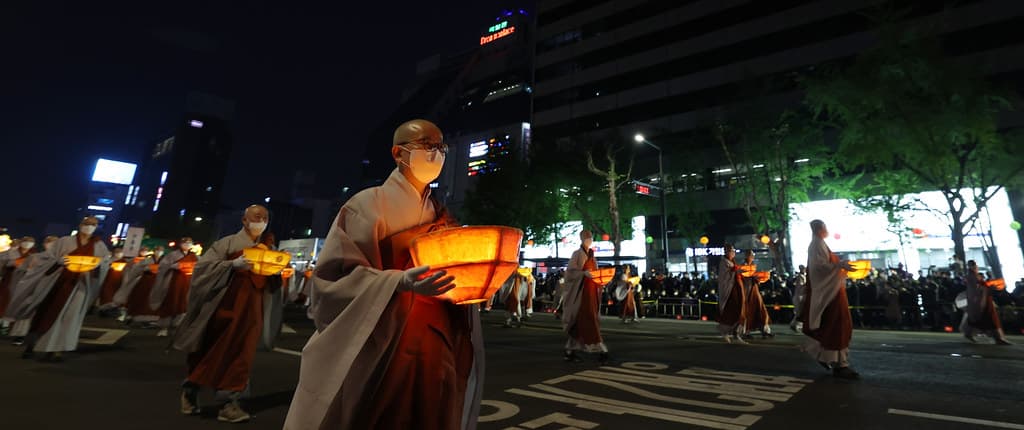
- Want a second Buddhist spring festival? Seoul's Yeon Deung Hoe lantern parade, held in the weeks before Buddha's Birthday, usually falls in late April or May.
Frequently asked questions
When is Paro Tshechu?
Paro Tshechu follows the Bhutanese lunar calendar and runs for five days, from the 11th to the 15th day of the second month, usually in March or April. Dates change every year and are confirmed by the government and monastic body. Check the official festival calendar of Bhutan's Department of Tourism before booking.
Do I need a guide to visit Bhutan?
Bhutan's visitor rules have changed, and sources differ on whether a licensed guide is mandatory. Check the current requirements for guides, visas and the Sustainable Development Fee, which was USD 100 per adult per night for 2026, on Bhutan's official tourism website before planning. Many visitors use licensed tour operators, which can arrange festival access, transport and accommodation.
What should I wear?
Wear modest clothing that covers shoulders and knees, as the dzong is a religious site. Layers are useful: mornings are cold, especially for the thongdrel at dawn, while days can be warm and sunny. Comfortable shoes and a hat for outside the dzong are helpful.
Can I take photos?
Photography of the dances in the courtyard is generally allowed, but without flash and without blocking views or entering the dance area. Photography inside temples and some areas is prohibited. Always ask before photographing people, and respect your guide's advice and any signs.
How crowded is the festival?
Paro Tshechu is one of Bhutan's most popular festivals, and the courtyard can be very full, especially on the final days. Locals take priority as participants in a religious event. Arrive early for a good spot, be patient, and let elders and families sit in front when needed.