What is Orthodox Easter in Corfu?
Easter, Pascha, is the most important feast in the Greek Orthodox calendar, more significant than Christmas. Across Greece, Holy Week is a time of fasting, church services and processions, building to the midnight Resurrection service on Holy Saturday and a joyful feast on Easter Sunday. Orthodox Easter is calculated using the Julian calendar, so it often falls on a different date from Western Easter.
Corfu has its own unique Easter traditions, shaped by its history. The island was ruled by Venice for more than four centuries, then by the French and British, and its Easter blends Orthodox faith with Western influences. Philharmonic bands, a legacy of the British period (the island's Philharmonic Society dates to 1840), play mournful funeral marches in the Good Friday processions and again in the Holy Saturday litany.
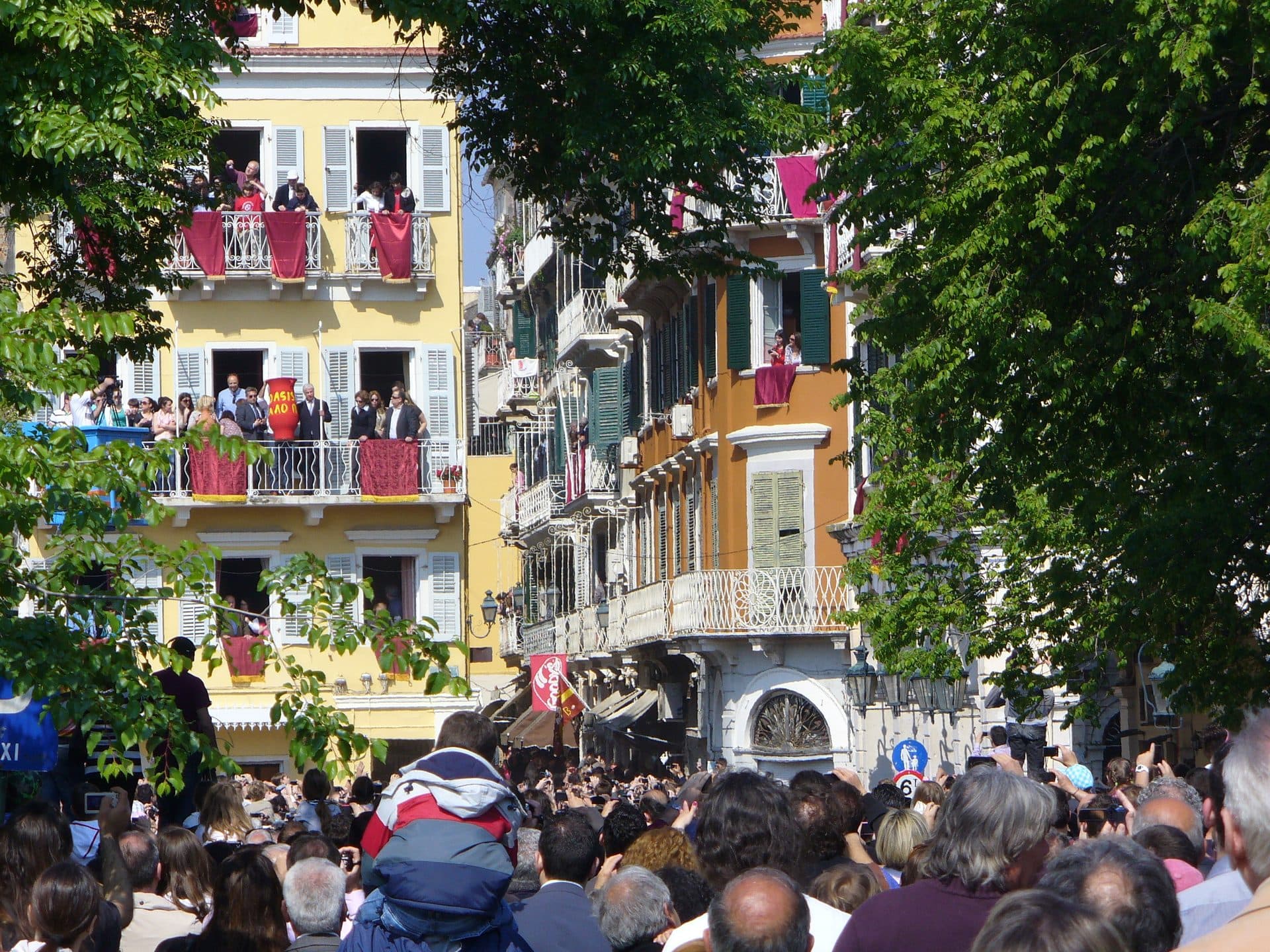
The most famous custom is the botides, clay pots thrown from balconies on Holy Saturday morning. Locals often link the tradition to a Venetian New Year custom of throwing out old items; another reading hears in the crash the earthquake that accompanied the Resurrection, and the victory of life over death. Corfu also honors its patron saint, Saint Spyridon, whose relics are carried in a procession on Holy Saturday.
Funeral marches on Friday, smashing pots on Saturday, fireworks at midnight: Corfu's Easter moves from sorrow to joy in a day.
What to expect
Holy Week builds day by day, with the most important events from Good Friday to Easter Sunday.
Good Friday
Epitaphios processions
Each church carries its epitaphios, a decorated bier representing Christ's tomb (33 of them, one for each year of Christ's life), in processions through the old town, accompanied by philharmonic bands playing funeral marches. The processions run from the afternoon into the night.
Holy Saturday morning
Litany and botides
The relics of Saint Spyridon are carried in procession, and at eleven the bells ring and residents throw botides from their balconies.
Holy Saturday night
Resurrection
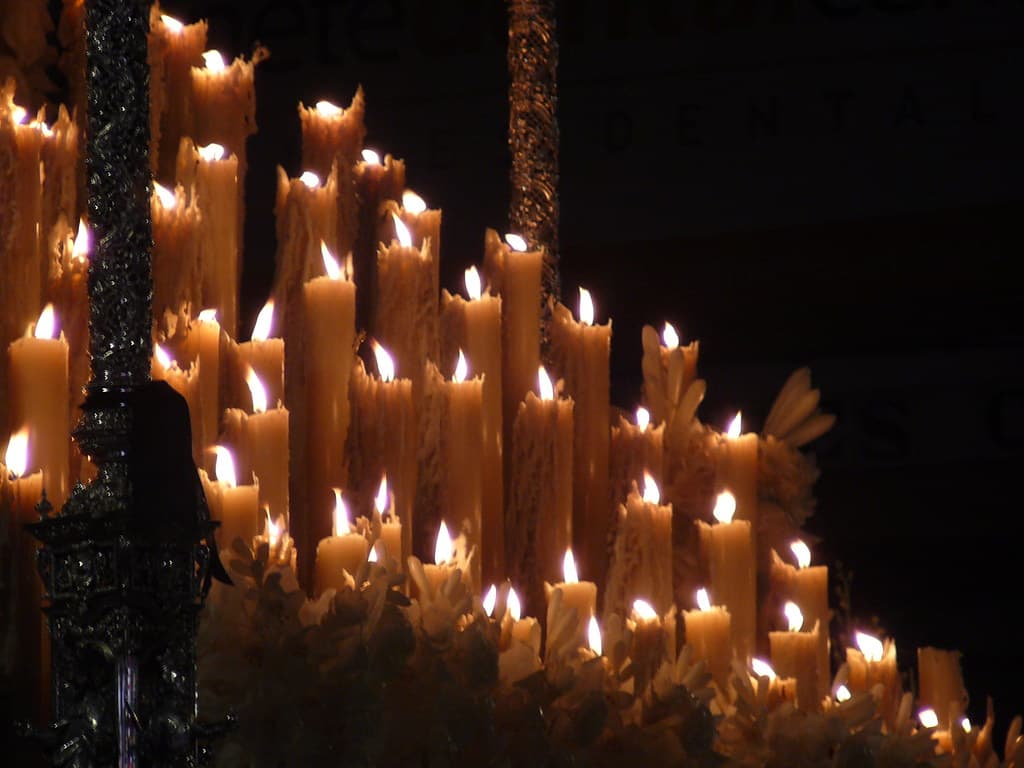
At midnight, the Resurrection is announced with Christos Anesti, "Christ is risen", candles are lit from the holy flame, and fireworks light up the sky over Spianada Square.
Easter Sunday
Feast
Families gather to roast lamb on spits, crack red-dyed eggs and celebrate with music and dancing.
Planning your trip
Getting there
Corfu's airport has flights from Athens and many European cities, especially in spring and summer, and ferries connect the island with the Greek mainland and Italy. Ferry bookings boom at Easter, so reserve early. Corfu Town is compact and best explored on foot; processions and celebrations take place in its streets and squares, so expect some streets to be closed or packed at peak hours.
Orthodox Easter often falls after Western Easter, by five weeks in 2027. If you like to compare traditions, Semana Santa in Seville and Semana Santa in Antigua follow the Western date.
Where to stay
Stay in or near Corfu Town to walk to the main events, and book an old town hotel well ahead to feel the atmosphere. Outside the town, villages hold their own Easter traditions, and many Corfiots head to them on Easter Sunday to roast lamb on spits from early morning. Some hotels and tavernas outside town run Easter programmes with lunch, music and dancing; book ahead, as tables fill quickly.
What it costs
Watching the processions, the botides and the midnight celebration from the street is free. Easter is a peak holiday for Greeks, so the costs you will feel are ferries, flights and old town rooms, which book up early. We found no published prices for Easter lunches or balcony views, so confirm them directly when you book.
Go like you know
- Try mageiritsa, a lamb soup eaten after the midnight service, and tsoureki, sweet Easter bread.
- Crack red eggs with friends after the midnight service: one person calls Christos Anesti, the other answers, and the egg that survives the tap wins.
- Visit the Church of Saint Spyridon to see the saint's relics.
- Respect the solemnity of Good Friday, a day of mourning and fasting.
- Learn the greeting Christos Anesti and the reply Alithos Anesti, "Truly He is risen".
- Look beyond town: local programmes list Easter events in the central Corfu villages as well, a quieter way to see the week.
- Walk the Liston arcade on Holy Saturday evening, when locals in their best clothes gather before the midnight service.
Frequently asked questions
When is Orthodox Easter?
Orthodox Easter follows the Julian calendar and often falls on a different date from Western Easter, usually in April or early May. In some years the two coincide. Check the dates for the year you plan to visit, and arrive a few days early to experience Holy Week.
Can visitors attend the services?
Yes, visitors are welcome to attend Orthodox services and processions. Dress modestly, follow the lead of locals, and be respectful during prayers. For the midnight Resurrection service, buy a candle and join the crowd outside the church as the holy flame is passed.
Why are pots thrown in Corfu?
Explanations differ. The botides tradition is often linked to a Venetian custom of throwing out old items at New Year, and some hear in the crash the earthquake of the Resurrection and the victory of life over death. Today, residents throw specially made clay pots filled with water from their balconies.
What else can I do in Corfu at Easter?
Explore the UNESCO-listed old town, with its Venetian fortresses and Liston arcades, visit Achilleion Palace, and enjoy spring walks in the countryside. The weather is usually mild, and the island is green and full of wildflowers.