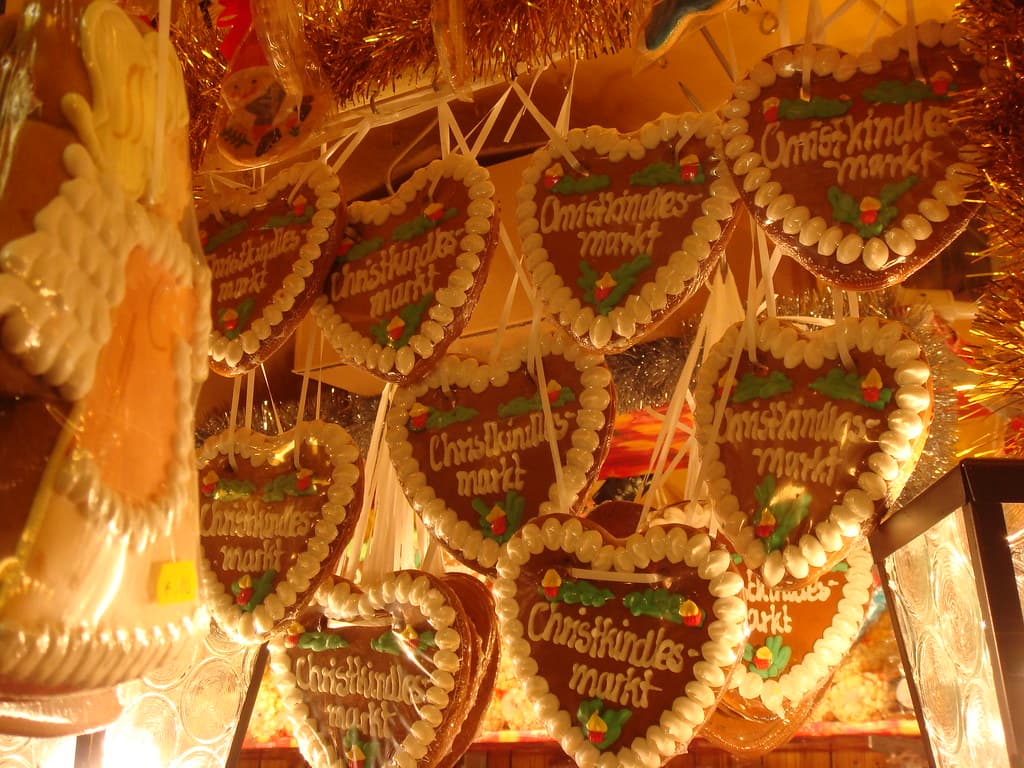
What is the Nuremberg Christkindlesmarkt?
Nuremberg has held a Christmas market on its main square for centuries. Written traces go back to the early 1600s (a museum box inscribed with the "Kindles-Marck" is dated 1628), when the market grew out of the city's regular trade, and the city's merchants and gingerbread bakers turned it into a regional attraction. Today it is one of the oldest and best-known Christmas markets in Germany, drawing around two million visitors a year by one count to the Hauptmarkt in the heart of the old town.
The market is named for the Christkind, the Christ Child, who in Franconian tradition brings children their presents. The Christkind has a human face: since 1969 the role has gone to a local girl aged 16 to 19, elected every two years, who dresses in white and gold with a golden crown. On opening evening she appears on the balcony of the Frauenkirche, the church overlooking the square, and recites the prologue written for the first post-war market in 1948, which begins by addressing the grown-ups in the crowd, who were once children themselves.
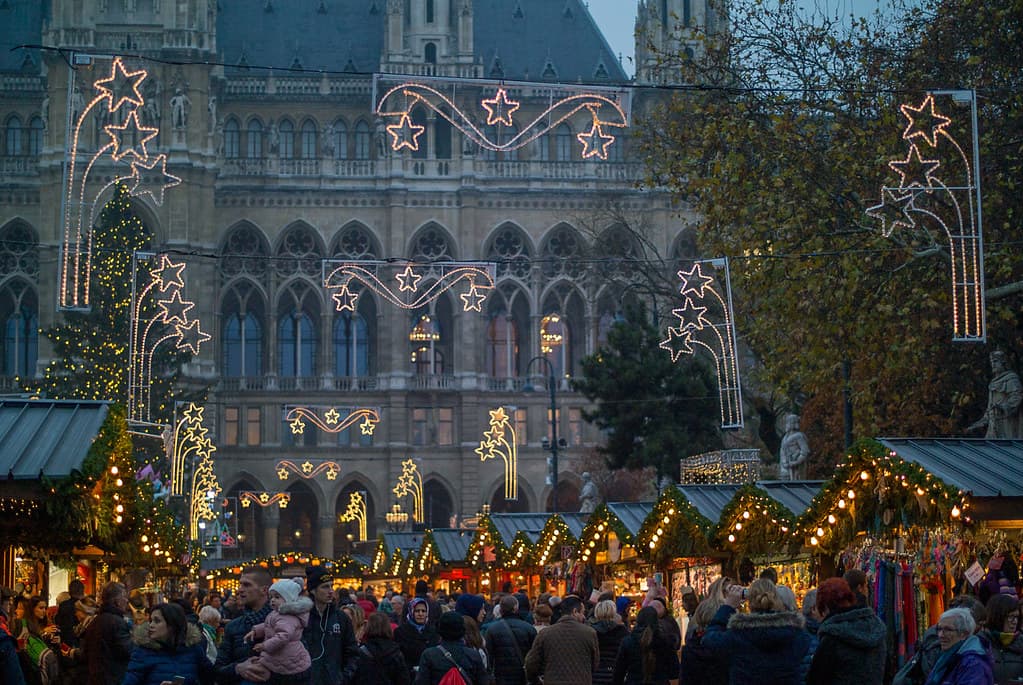
The market keeps a traditional look: roughly 180 wooden stalls under red-and-white striped cloth, selling Christmas decorations, sweets and regional specialties, which earned it the nickname "the little town of wood and cloth."
Ladies and gentlemen who were once children yourselves: listen, all of you, to what the Christkind says.
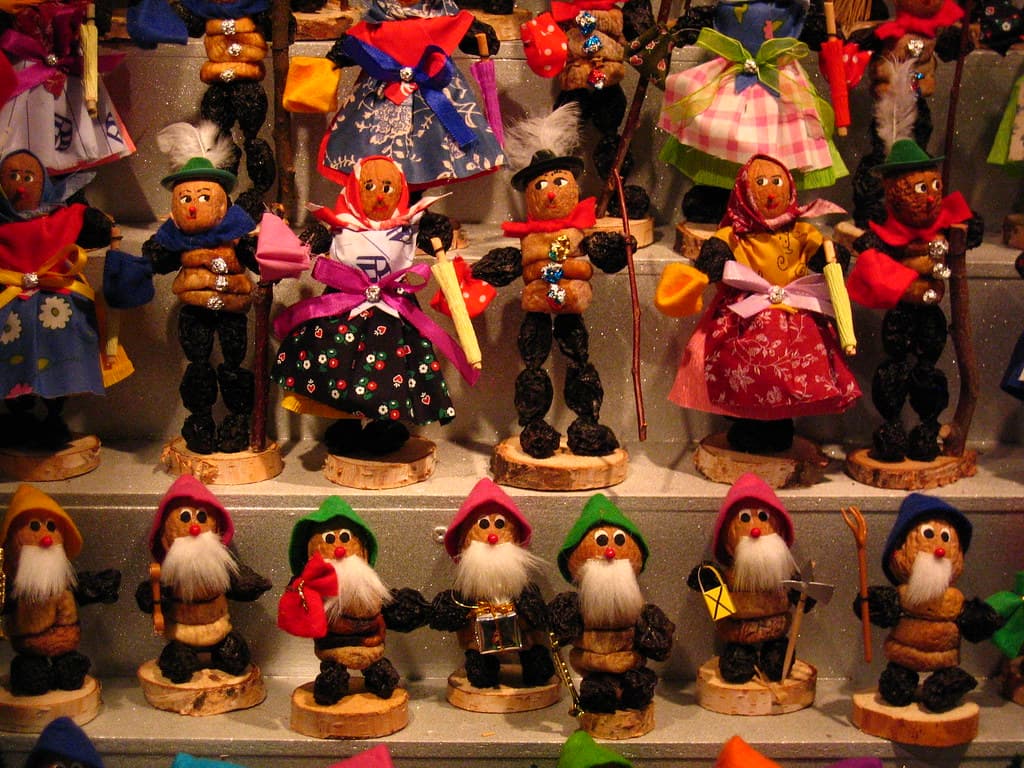
Zwetschgenmännle, the dried-prune figures that are the market's best-known souvenir
Photo by charley1965 / flickr · CC BY-SA 2.0
What to expect
Most visitors spend an afternoon and an evening at the market itself, then explore the old town, the castle and the satellite markets nearby.
Opening Friday
The prologue
The opening ceremony is scheduled for 5:30 PM in 2026, as crowds pack the Hauptmarkt and the Christkind recites her prologue from the Frauenkirche balcony. Arrive well ahead to see anything at all.
Daily
The main market
Around the Hauptmarkt, stalls sell glass ornaments, wooden toys, candles and the classic gold-foil angels known as Rauschgoldengel. Food stalls serve gingerbread, sausages and hot drinks until 9:00 PM. On Tuesday to Friday afternoons the Christkind makes a short appearance on the market (14:30 to 15:00 in 2026).
Daily
Children's and sister-city markets
A children's market on Hans-Sachs-Platz offers rides, baking and crafts, while the Market of the Sister Cities on Rathausplatz brings food and handicrafts from Nuremberg's twin towns around the world.
Dec 24
Christmas Eve
The market opens for a final short stretch, 10:00 AM to 2:00 PM, then closes so stallholders and locals can go home for the holiday. The Sister Cities market has already closed on the 23rd.
Planning your trip
Getting there
Nuremberg is a major rail hub in Bavaria, with fast ICE trains from Munich (about an hour), Frankfurt (about two hours) and Berlin (about four and a half), and an airport connected to the central station by subway line U2 in around 12 minutes. The old town is compact and walled; once inside, you can walk to everything, including the Imperial Castle on its hill above the square. The city's own visitor tips point to the Lorenzkirche U-Bahn stop as the best way to reach the market. If you are traveling in Germany in early November, St. Martin's Day lantern processions fall around November 11, before the market opens.
Where to stay
Weekends, and especially Saturdays, are dramatically busier than weekdays because of day-trippers and coach tours from across Germany and neighboring countries. The city advises arriving at off-peak times, so plan your main market visit for a weekday afternoon and book your hotel early for any Advent weekend. Staying in or near the old town lets you visit the market at both quiet and busy hours.
What it costs
Entry is free and the market is open every day. You pay for what you eat, drink and buy. As a guide, a regional news report put a cup of mulled wine at €4.50 in 2025 (berry varieties €5), with a €5 deposit on the mug, so check current prices at the stall. Hotels are the larger cost: Advent weekends are peak season in Nuremberg.
Go like you know
- Visit at opening time on a weekday morning for unhurried browsing, then return after dark for the lights.
- Climb to the Imperial Castle for a view over the old town's rooftops, and wander the side streets, where smaller markets and bakeries are far calmer than the main square.
- Look for Zwetschgenmännle, little figures made of dried prunes and nuts, a Franconian market tradition and an unusual gift.
- Try Feuerzangenbowle, mulled wine with a rum-soaked sugar cone set alight above it, at least once.
- Buy gingerbread from a long-established Nuremberg baker rather than the first stall you see; quality varies, and locals have strong opinions.
Frequently asked questions
Is there an entry fee for the Christkindlesmarkt?
No. The market is free to enter and open to everyone throughout its run. You pay only for what you buy, from sausages and gingerbread to ornaments. Mulled wine and other hot drinks usually carry a refundable mug deposit (€5 in 2025), which you can forfeit to keep the mug as a souvenir.
When is the market least crowded?
Weekday mornings and early afternoons are the calmest times. Crowds build through the late afternoon and are heaviest at weekends, when day-trippers and coach groups arrive. The final days before Christmas are also busy with locals doing last-minute shopping.
How much time should I plan for Nuremberg?
One full day covers the main market, a sausage lunch and the castle. Two days let you enjoy the market at both quiet and busy times, visit the children's and sister-city markets, and explore the old town's museums and churches without rushing between stalls.
Can I combine Nuremberg with other Christmas markets?
Easily. Nuremberg's rail connections make day trips simple, and many travelers combine it with markets in other Bavarian and Franconian towns. Vienna's Christkindlmarkt typically opens a couple of weeks earlier, so it fits a longer Central European route. Base yourself in one or two cities and keep weekend evenings for wherever you are staying.