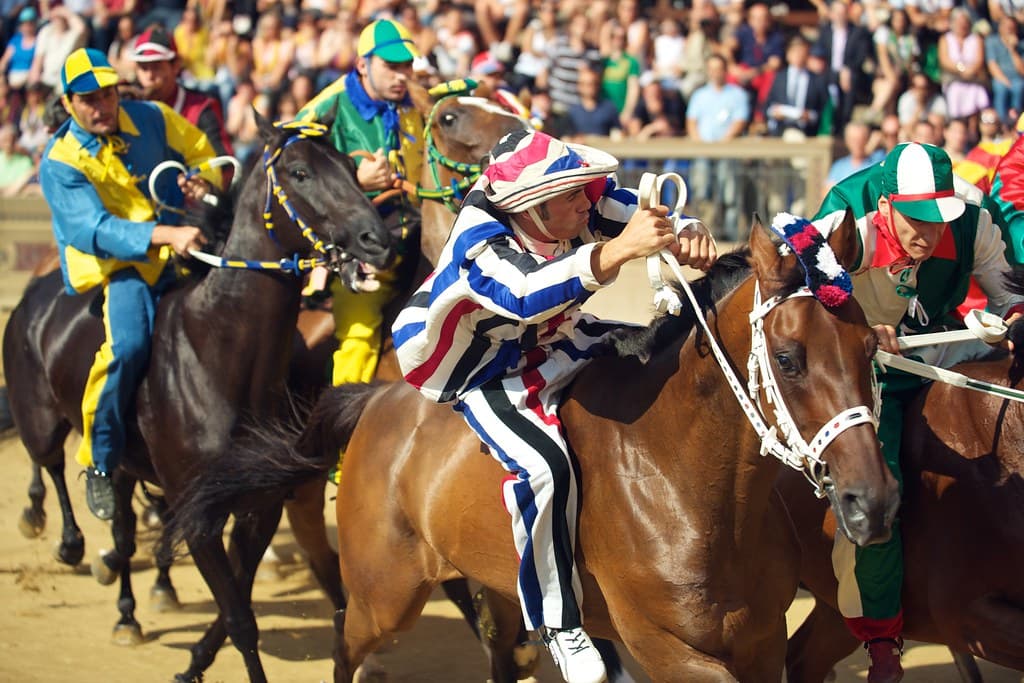
What is the Palio di Siena?
Il Palio is a bareback horse race around Siena's sloping, shell-shaped main square, the Piazza del Campo, run twice every summer: on July 2 for the Madonna di Provenzano and on August 16 for the Assumption. The race itself lasts about ninety seconds. Everything around it, the rivalries, the deals, the pageantry and the year-long waiting, is what makes it the most famous historic race in Italy. Its roots are medieval, and the modern form, three laps of the Campo, was first run in 1633.
The riders don't race for themselves. Siena is divided into seventeen contrade, city districts with their own names, colours, churches, songs and patron saints, and every Sienese belongs to one for life. Only ten race in each Palio: the seven that sat out the same race the year before are in automatically, and three more are drawn by lot. Each contrada hires its jockey, but the horses are assigned by a draw days before the race, so luck counts as much as skill.
What the winners take home is the drappellone, a large hand-painted silk banner, commissioned from a different artist for every race. A winning contrada celebrates for weeks with dinners in the street and parades through the city. The losers often celebrate too, if their great rival lost.
What to expect
Each Palio is a four-day cycle that begins three days before the race.
Day 1
The horses are drawn
The ten horses chosen for the race are assigned to the ten contrade by lottery, the moment when each district learns whether it has a chance. The trial runs, the prove, begin straight after.
Days 2–3
The trials
Six trial runs in all let the jockeys learn their horses and the track of sand and tufa laid over the square's paving. On the eve of the race each contrada eats together at long tables in its own streets.
Race day
Pageant and race
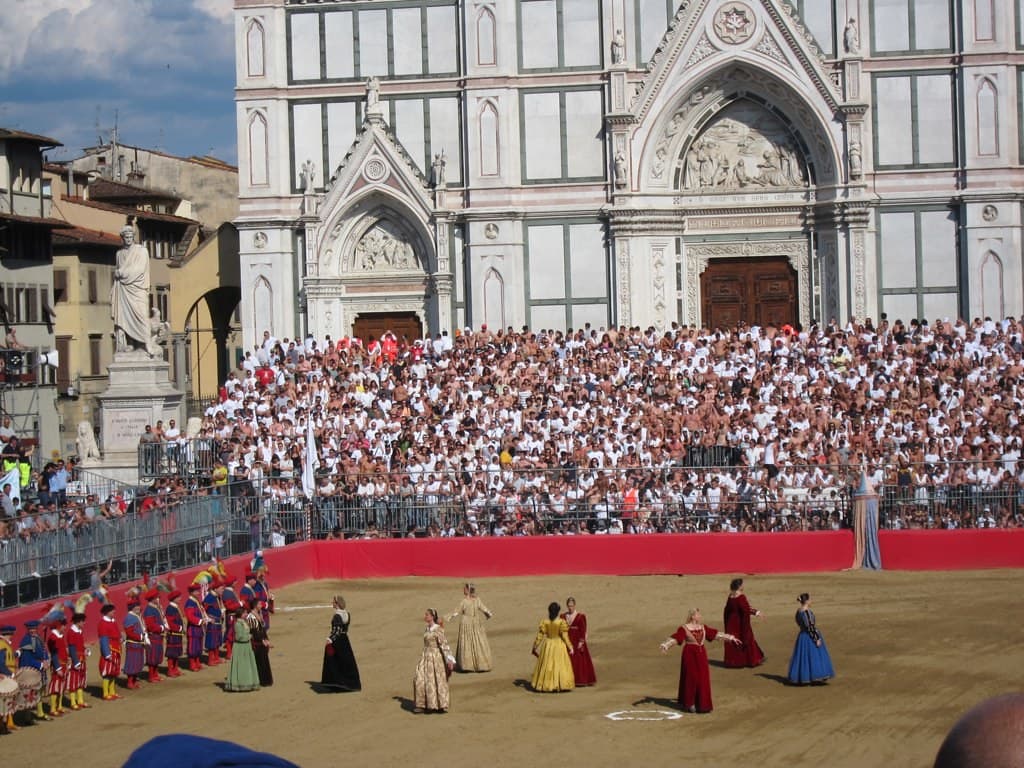
Each contrada blesses its horse and jockey in its own church. In the late afternoon the corteo storico, a costumed pageant of about two hours with drummers, flag-throwers and the carroccio (a historic war cart carrying the banner), circles the square. Then the horses line up between two ropes for the start, the mossa, and three laps later it is over. A horse can win even if its jockey has fallen off.
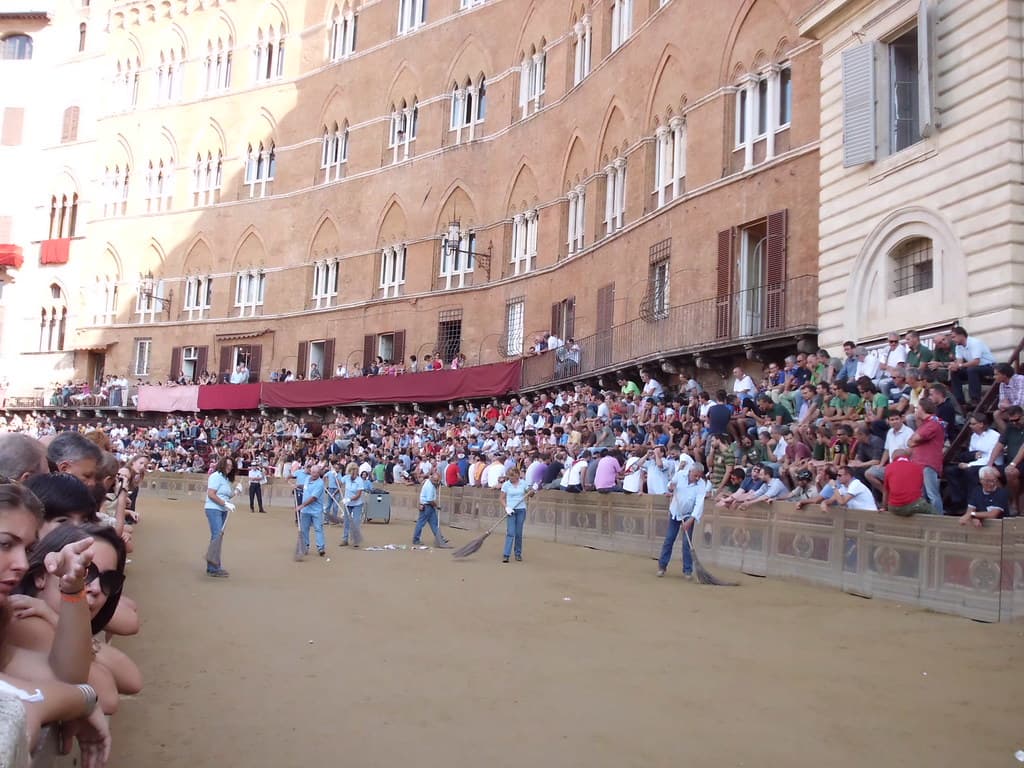
The Campo before a run, with the track laid round the square
Photo by Blob79 / flickr · CC BY-SA 2.0
Planning your trip
Getting there
Siena is a little over an hour from Florence by bus or regional train; the train station is below the old town, so allow time to walk or take a bus up. The historic centre is closed to traffic; on race day, everything inside the walls is reached on foot.
Where to stay
A room inside the walls lets you follow the contrade's dinners and walk home late, but those rooms book up a long way ahead for both race weeks. Hotels just outside the walls, or in the countryside around Siena, are the practical alternative.
What it costs
Watching from the centre of the square costs nothing. Seats in the wooden stands around the edge and places on the balconies are sold by the owners of the buildings or through agencies, with no central ticket office, and cost a few hundred euros each. Food and lodging are the other costs, and both peak in the race weeks.
Go like you know
- Pick a contrada to follow for the four days, wear its scarf, and go to its dinners. It turns the race from a spectacle into something you care about.
- Don't cheer for a contrada while standing among its rival's supporters. The rivalries are real.
- The race is over in about ninety seconds, so don't spend them filming.
- The Palio has critics: dozens of horses have died in the race over the past half-century, and falls are common. It is worth reading about before you decide to go.
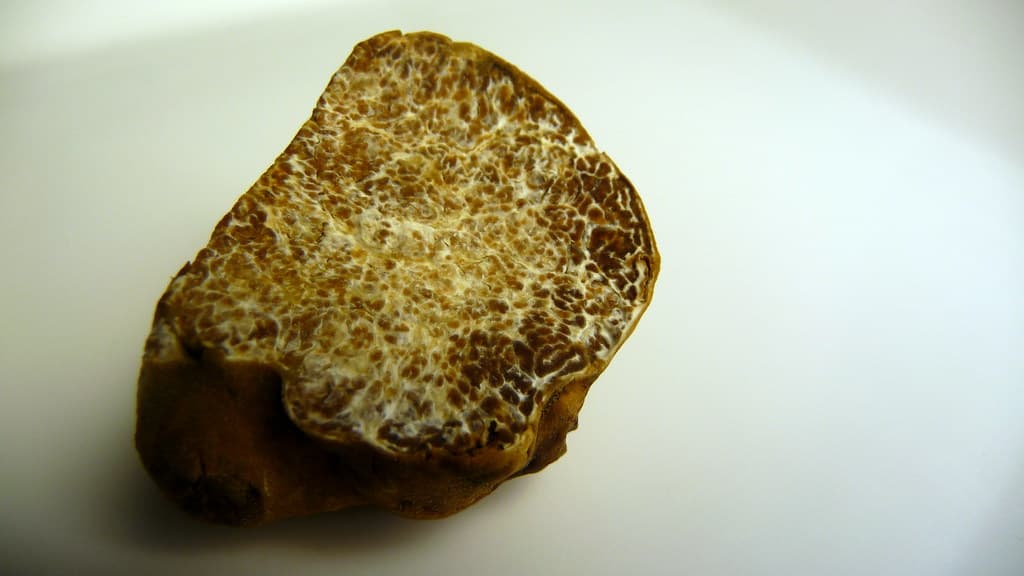
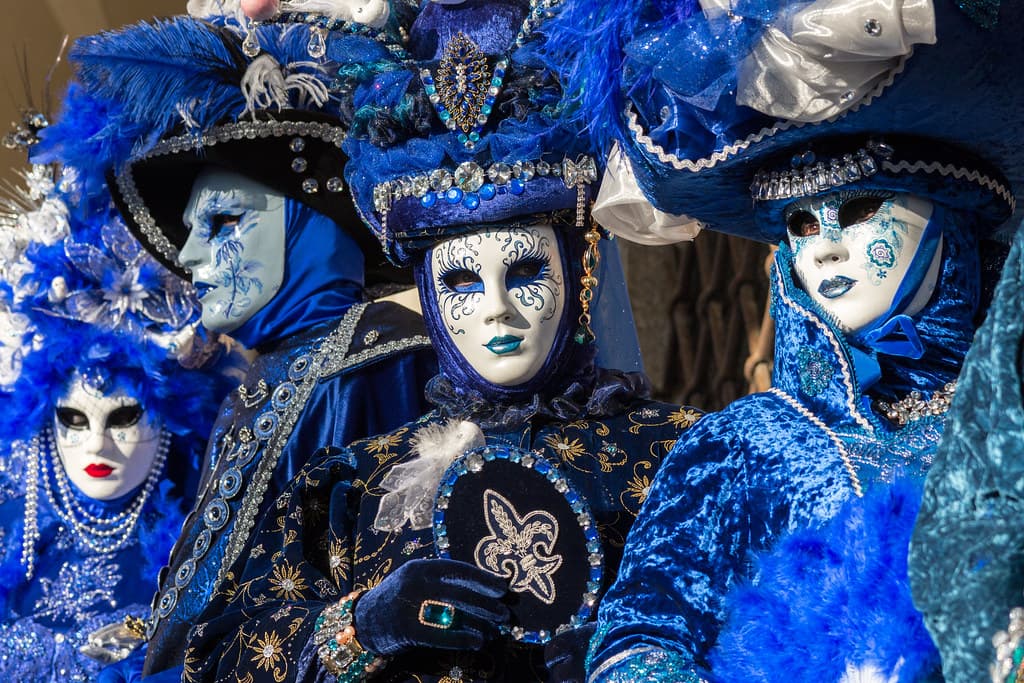
- Pair it with a slower Italian festival such as Piedmont's Alba White Truffle Fair in the autumn, or the masks of the Venice Carnival in winter.
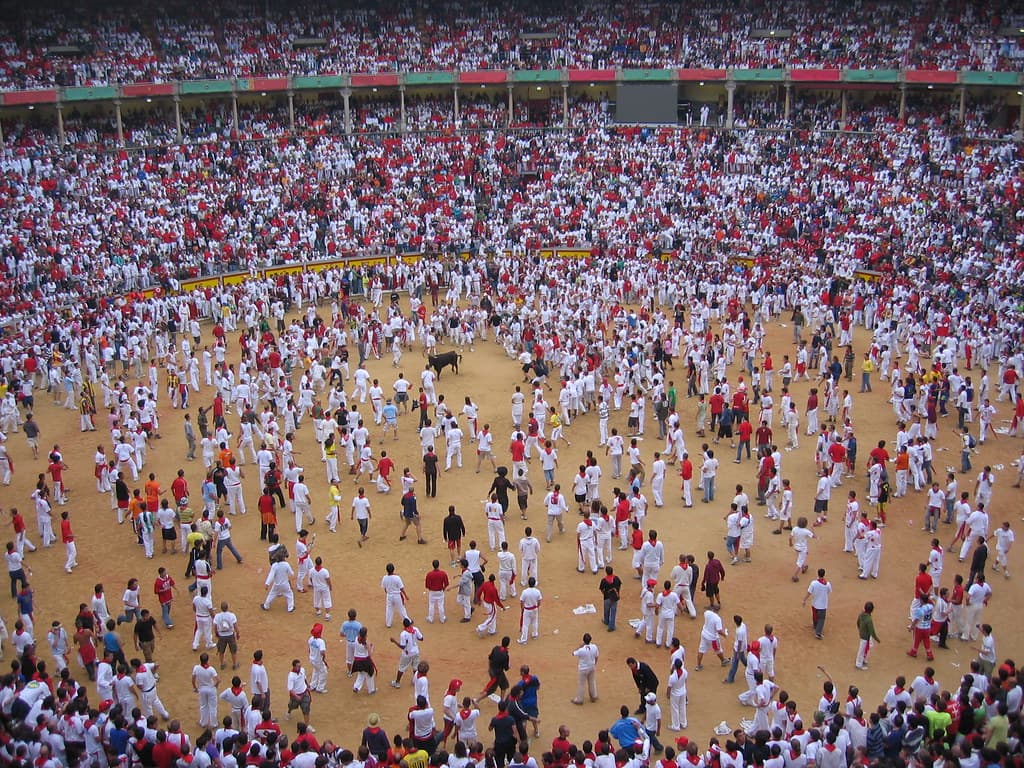
- Summer in Spain brings another one-morning, all-city spectacle: San Fermín in Pamplona.
Frequently asked questions
Do I need a ticket to see the Palio?
No. The centre of the Piazza del Campo is free and open until it is full, which happens hours before the race. A seat in the stands or a balcony costs a few hundred euros and has to be booked through the owners or an agency, long in advance. The trial runs are free and much easier to see.
Which Palio is better, July or August?
They follow the same pattern and draw similar crowds. The July race, for the Madonna di Provenzano, has a banner painted by a local artist, while the August banner is often by an internationally known one. Choose by your travel plans; both fill Siena to capacity.
How long is the race?
Three laps of the square, usually in about ninety seconds. The start can take much longer: the ten horses have to settle between the ropes, and false starts and tactics can stretch the wait. With the pageant before it, the whole event takes most of the afternoon and evening.