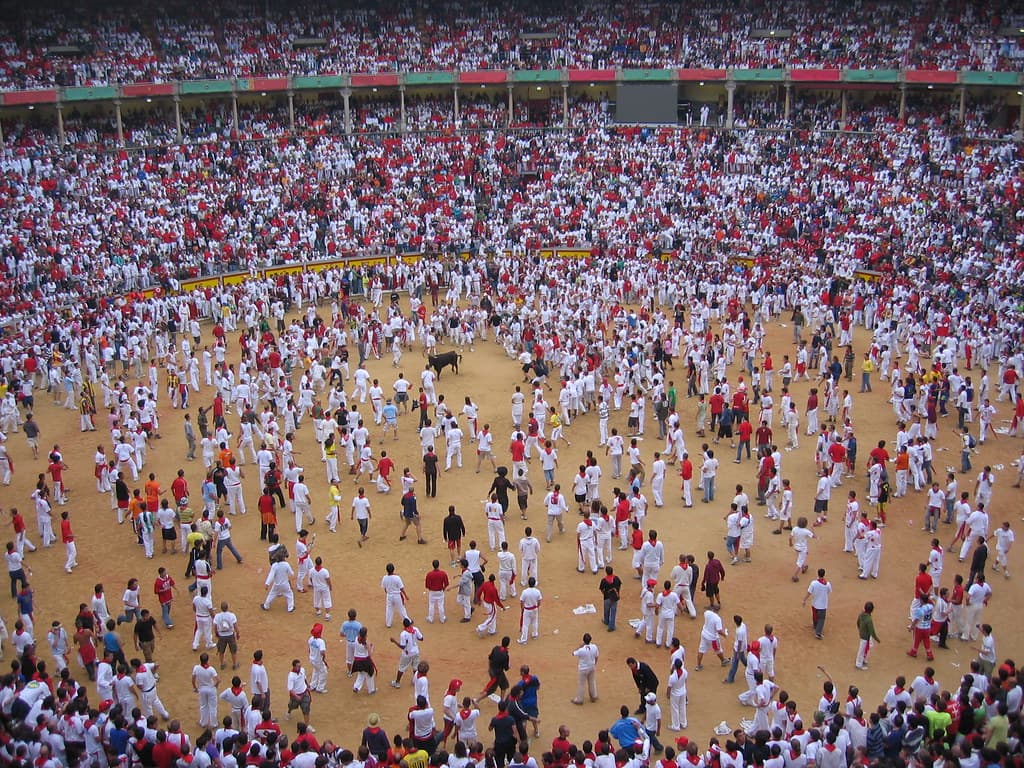
What is San Fermín?
San Fermín, or the Sanfermines, is Pamplona's festival for its patron saint, and for nine days the capital of Navarre does almost nothing else. It starts at noon on July 6 with the chupinazo, a rocket fired from the City Hall balcony over a square packed so tight that people hold their red neckerchiefs above their heads, and only knot them on when the rocket goes up. From then on the city dresses in white and red, and the streets of the old town stay full more or less around the clock.
The part the world knows is the encierro, the running of the bulls. Every morning from July 7 to 14 at 8am, six fighting bulls and a group of steers are released at the bottom of the old town and driven through narrow, barricaded streets to the bullring, a little over 800 metres away. A few hundred runners go ahead of them, after singing a short prayer three times to a small statue of the saint set into the wall of the Cuesta de Santo Domingo, asking for his protection. The run usually takes between two and four minutes, and Spanish television shows it live.
Ernest Hemingway first came in 1923, and The Sun Also Rises turned a regional fiesta into an international one; he returned until 1959. But the festival is older and broader than its most famous visitor. The procession of the saint, the giants and big-heads, the brass bands of the peñas (social clubs) and the family lunches are what most Pamplonans mean when they talk about it.
What to expect
Jul 6
The chupinazo
The square in front of City Hall fills from mid-morning; at noon the rocket goes up and the party starts. Expect to be soaked in wine and cava if you are inside the square. The rest of the old town turns into a street party that runs through the night.
Jul 7
The saint's day
The first bull run at 8am, then a High Mass and the procession of the statue of San Fermín through the old town, with dancers, the city's giants and the civic corporation in full dress. It is the most traditional and family-heavy day of the week.
Jul 8–13
Runs, giants and bands
Each day follows the same rhythm: the 8am run, the morning parade of the gigantes y cabezudos (towering giants and big-headed figures that dance through the old town), long lunches, and the peñas marching their brass bands through the streets in the evening.
Jul 14
Pobre de mí
The last run is in the morning. At midnight the crowd gathers in the City Hall square with candles to sing Pobre de mí ("poor me"), and people take off their red neckerchiefs until next year.
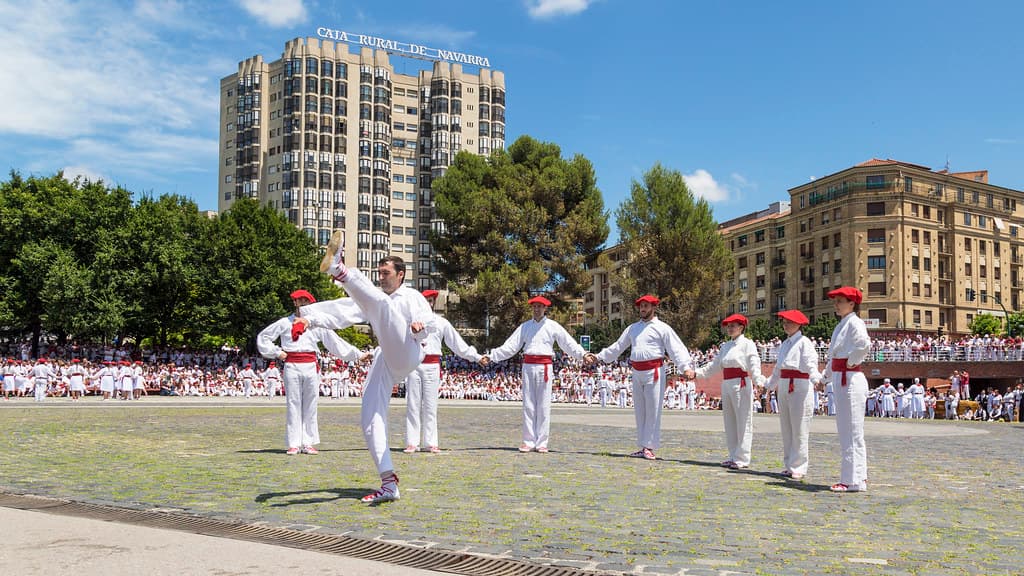
Dancers in the festival's white and red during Sanfermines
Planning your trip
Getting there
Pamplona has a small airport with domestic flights, but most visitors fly into Bilbao, Madrid or Barcelona and continue by train or bus. The old town is compact and largely closed to traffic during the fiesta, so plan to walk everywhere once you arrive.
Where to stay
Staying inside or next to the old town means you can walk to the 8am run and back to bed. Rooms there cost several times their usual rate and are often gone months ahead. Many visitors base in the newer districts south of the centre, or in towns along the rail line, and come in each day.
What it costs
Almost everything is free: the chupinazo, the runs, the parades, the procession and the street concerts. The costs are accommodation, which is the big one, a rented balcony if you want one, and bullring tickets for the run's finish or the evening fight. Food and drink in the old town stay at normal Spanish prices, which makes the week cheaper than it looks.
Go like you know
- Buy the white trousers, white shirt and red pañuelo (neckerchief) in Pamplona rather than at home; every shop sells them and you will need more than one set.
- Watch the morning gigantes y cabezudos parade with a local family. It is the warmest part of the festival and almost free of visitors.
- Sleep in the afternoon. The fiesta's real hours are midnight to dawn, and the run is at 8am.
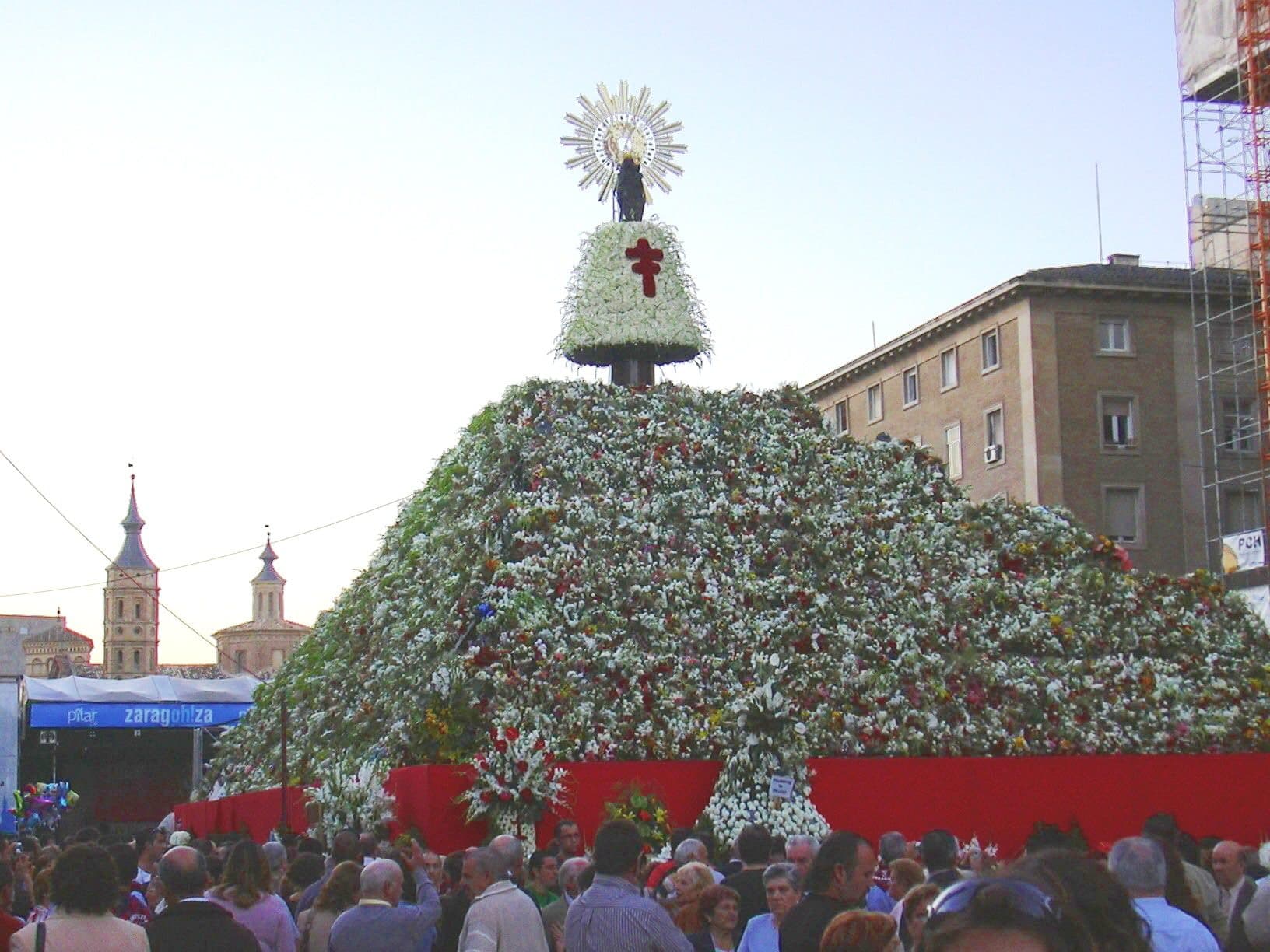
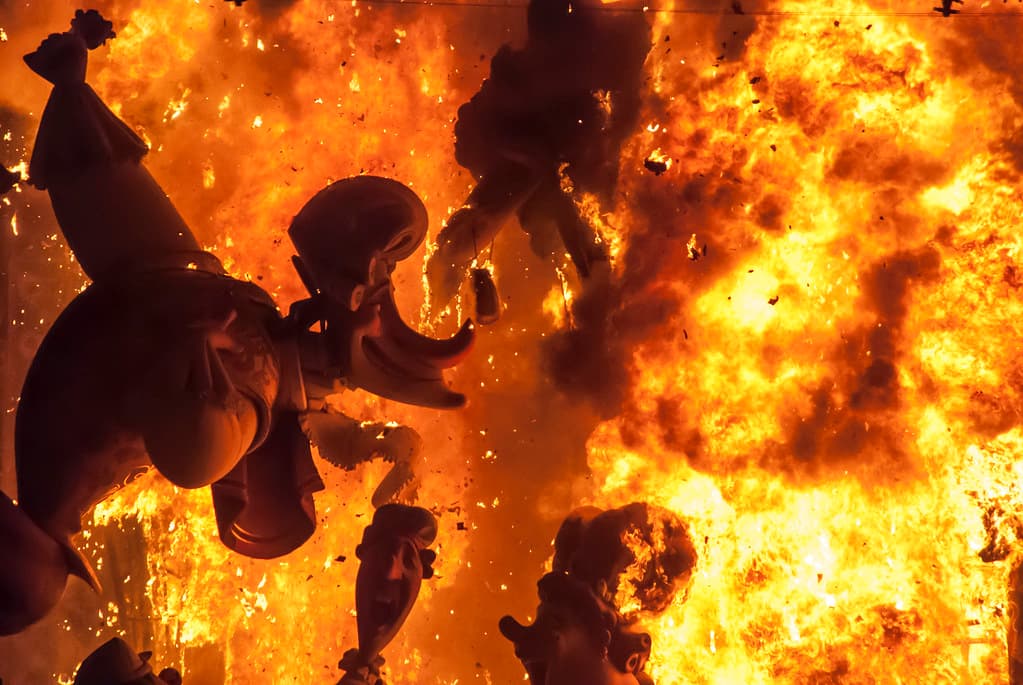
- Spain has more festival weeks than any one summer can hold. Zaragoza's Fiestas del Pilar has the same giants, bands and processions without the bulls, and Valencia's Las Fallas is the spring equivalent.
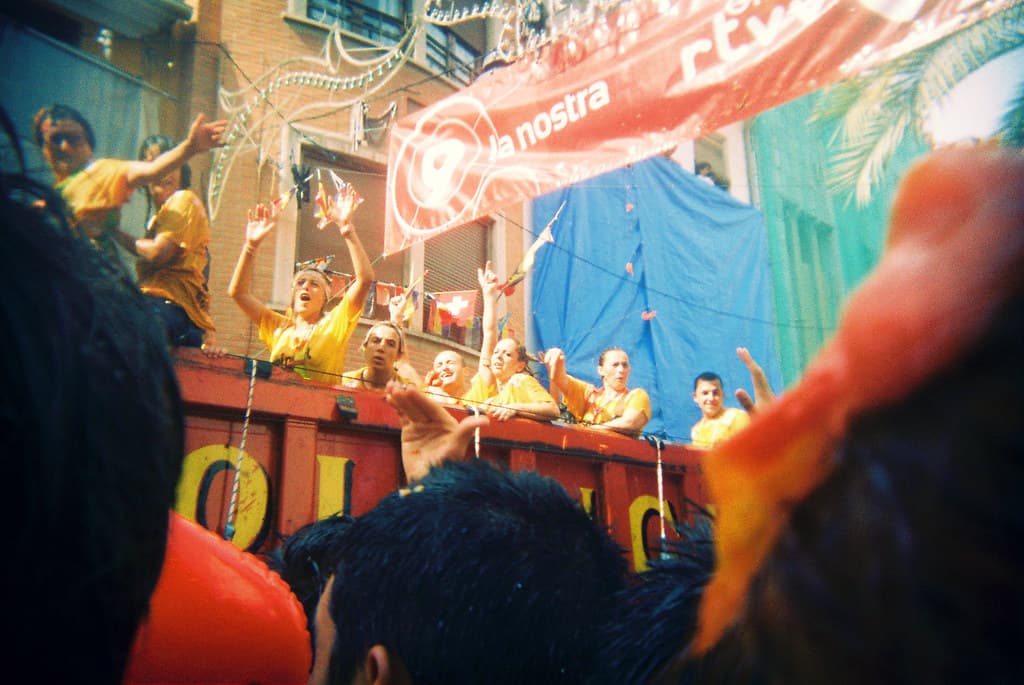
- If you're in Spain in late August, La Tomatina in Buñol is the other famous one-morning spectacle.
Frequently asked questions
Can tourists run with the bulls?
Yes, as long as you are 18 or over and sober. There is no registration: you enter the course from the town hall square before it closes, and police remove anyone carrying a camera or phone or who looks drunk. Watch a run or two first, and pick one short stretch rather than trying to cover the whole course.
Is San Fermín worth it if I don't want to see the bulls?
Yes. The bull run lasts a few minutes a day, and the bullfights are easy to skip. The opening rocket, the saint's procession, the giants, the brass bands and the midnight street parties fill the other twenty-three hours of the day.
Which day should I go?
July 6 and 7 have the opening rocket and the saint's procession, and the biggest crowds. Midweek days are calmer and easier for finding rooms and balcony views, and the closing Pobre de mí on the night of July 14 is moving even if you only catch the end of the week.