What is Kanda Matsuri?
Kanda Matsuri (神田祭) is the festival of Kanda Myojin, a shrine founded in 730 according to tradition and long considered the guardian of Edo, the old name for Tokyo. When Tokugawa Ieyasu established his shogunate in Edo in the early seventeenth century, the shrine was moved to its present site in 1616 and became one of the city's most important, and its festival grew into one of the great celebrations of the townspeople.
In the Edo period, the festival's processions were so splendid that they were allowed to enter the grounds of Edo Castle, where the shogun himself watched, earning it the nickname tenka matsuri, "the festival of the realm". Today it is counted, with Kyoto's Gion Matsuri and Osaka's Tenjin Matsuri, among Japan's three great festivals, and with the Sanno and Fukagawa festivals, among Tokyo's great three.
The full festival is held only in odd-numbered years, alternating with the Sanno Matsuri of Hie Shrine. The shrine honors three deities, including Taira no Masakado, a tenth-century warrior who rebelled against the imperial court and became a protector of the city after his death. The shrine's location, near Akihabara, also makes it a favorite of electronics and anime fans, who buy charms for their computers.
Once paraded before the shogun, now paraded past office towers and anime shops: Kanda's gods still tour their city.
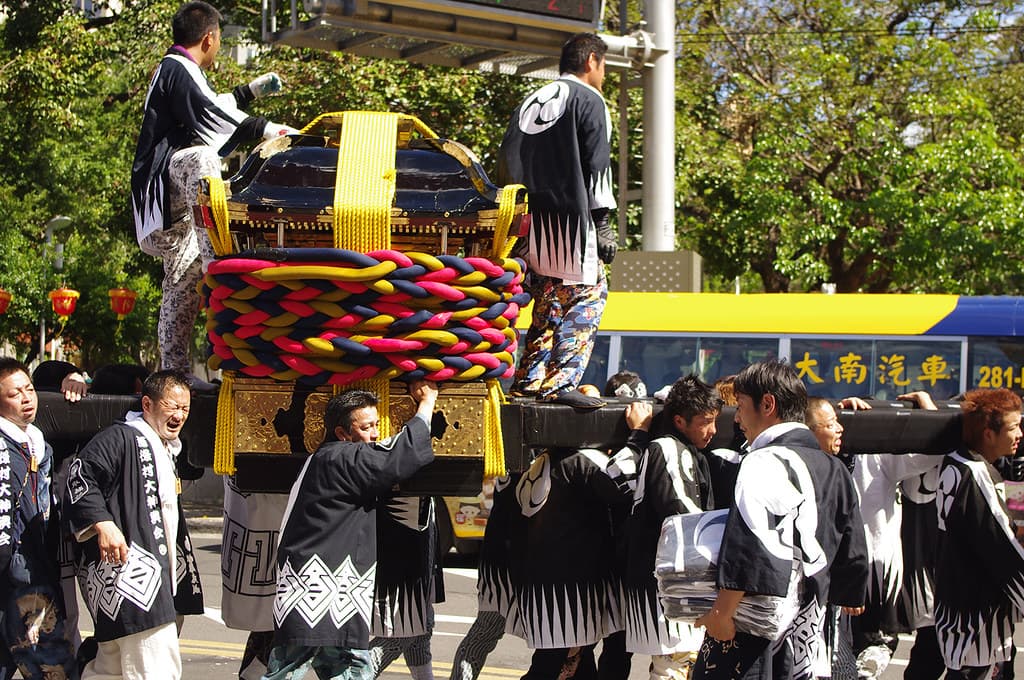
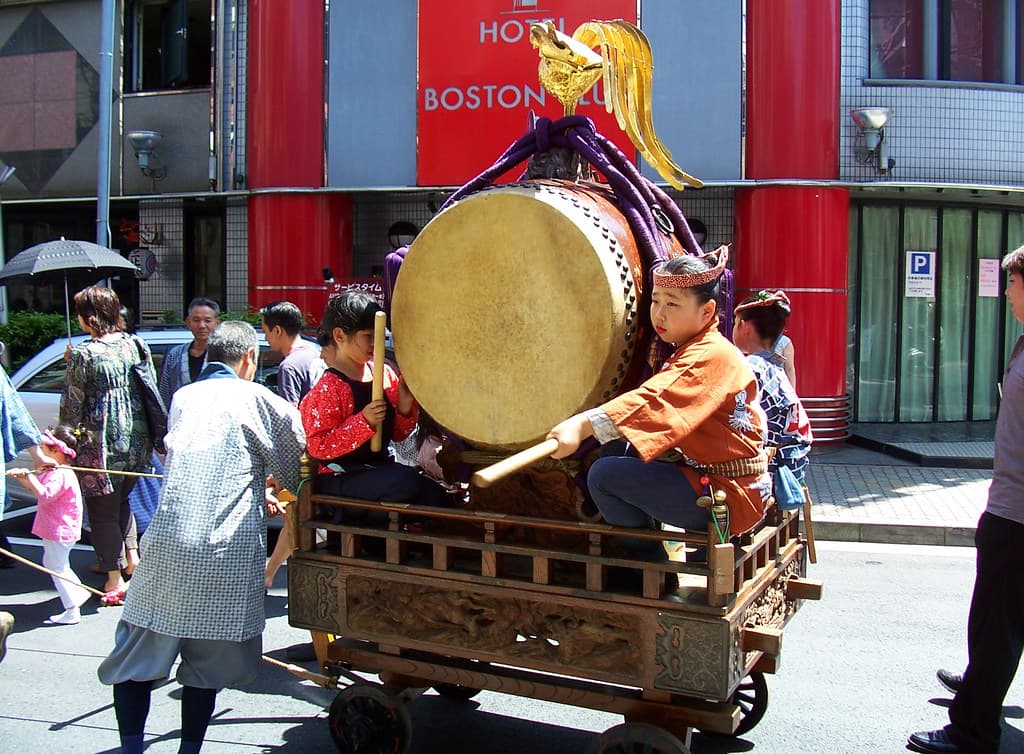
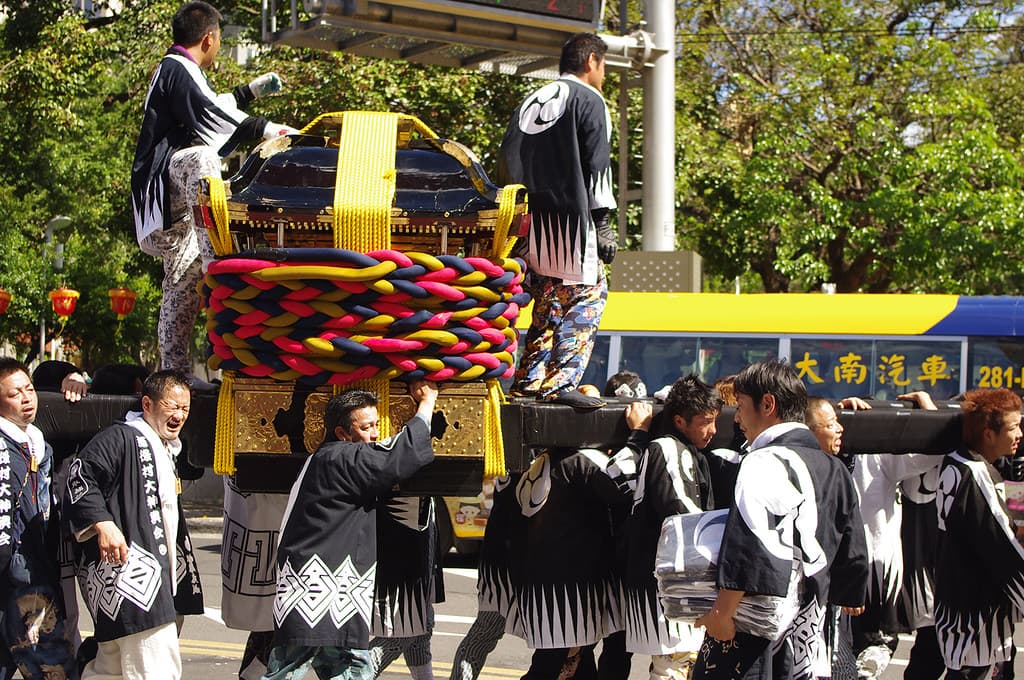
Carrying a portable shrine through the streets during Kanda Matsuri
Photo by Republic Of China / flickr · CC BY 2.0
What to expect
The festival runs for about a week, with two main days of processions on the weekend closest to May 15.
Early week
Rituals at the shrine
The festival week opens with rituals at Kanda Myojin that lead up to the weekend processions.
Saturday
Shinkosai procession
A day-long procession carries the deities through Kanda, Nihonbashi, Otemachi and Marunouchi, with priests, musicians, horsemen and floats in historical costume.
Sunday
Mikoshi Miyairi
Around two hundred portable shrines from the neighborhoods are carried to Kanda Myojin by chanting bearers, one after another, in a joyful, crowded parade.
May 15
Reitaisai
The festival closes with the reitaisai (例大祭), the shrine's grand annual ritual, a solemn ceremony attended by priests and parishioners. It is held every year, including the even years without processions.
Planning your trip
Getting there
Kanda Myojin is about a five-minute walk from Ochanomizu Station and seven from Akihabara Station. Central Tokyo is easy to reach from Narita and Haneda airports, and Narita to Akihabara takes roughly an hour by Keisei Skyliner or Narita Express plus a change to the Yamanote Line. The procession route runs through Kanda, Nihonbashi and Otemachi, all on the subway and rail network, so you can hop between viewing spots.
The dates of Sanja Matsuri in Asakusa vary against Kanda's: in 2025 it fell a week later, while in 2027 the two are expected to share a weekend. Check each year's schedule before planning a double dose of Tokyo festival spirit.
Where to stay
Tokyo has plenty of accommodation, but book early for May, which is a popular travel month and starts with the Golden Week holidays. Akihabara, Kanda, Nihonbashi and the area around Tokyo Station all sit on or near the procession route, so you can walk to the action and go back to rest between the two big days.
Even in an off year, Kanda Myojin is worth a visit. Its vermilion and gold buildings, rebuilt in concrete after the 1923 earthquake, sit on a small hill above Akihabara, and the shrine is busy with office workers praying for business success, students before exams, and anime fans buying charms decorated with characters from series set in the neighborhood.
What it costs
Watching is free, and the shrine offers no paid seats for the processions, so arrive early for a good spot. Your main expenses are lodging and food: charms at the shrine and a cup of amazake from a shop by the gate are small extras, and the neighborhood's restaurants cover every budget.
Go like you know
- Buy an IT charm at Kanda Myojin to protect your electronics, a modern twist on a traditional amulet.
- Try amazake, a sweet fermented rice drink, at Amanoya, the shop by the shrine's torii gate, open since 1846.
- Watch the mikoshi enter the shrine grounds through the main gate, one of the most energetic moments of the festival.
- Explore Akihabara and Kanda's old bookshops between processions.
- Learn the bearers' chant, wasshoi, and join in from the sidelines.
- Visit Yushima Seido, a historic Confucian temple nearby, for a calm break from the crowds.
Frequently asked questions
When is Kanda Matsuri?
The full festival takes place in mid-May of odd-numbered years, with the main processions on the weekend closest to May 15. In even-numbered years, a smaller version is held. The shrine publishes the year's schedule in spring.
Do I need tickets?
No, the processions and mikoshi parades are free to watch from the streets. There are no paid seats. Arrive early for a good spot along the route, especially near the shrine on Sunday, when crowds are densest.
What is the difference between Kanda Matsuri and Sanja Matsuri?
Both are major Tokyo festivals in May with portable shrines. Kanda Matsuri is known for its long historical procession through central Tokyo and is held in odd years. Sanja Matsuri in Asakusa is held every year and is famous for its lively, rowdy mikoshi carrying.
Can visitors carry a mikoshi?
Mikoshi are usually carried by members of neighborhood associations and their guests. Visitors generally watch, but some groups invite outsiders to join, especially if they have local connections. Never touch or join a mikoshi without an invitation.
Where should I stand for the mikoshi parade?
The approach to Kanda Myojin and the main gate are the most dramatic spots, as bearers push each mikoshi up the slope and into the grounds, but they are also the most crowded. For a calmer view, follow a mikoshi through the streets of Kanda or Akihabara as it makes its way to the shrine.