What is Tenjin Matsuri?
Tenjin Matsuri (天神祭) is the summer festival of Osaka Tenmangū, the shrine dedicated to Sugawara no Michizane, the 9th-century scholar and statesman who, after his death and posthumous rehabilitation, was deified as Tenjin, the god of learning. Students still come to his shrines to pray before exams, and once a year Osaka repays the debt with one of the largest festivals in the country.
The celebration dates back to 951, when a sacred halberd was floated down the river to divine where the god's rites should be held. That gesture survives as the hokonagashi, the opening purification that still sets the festival's course each July. Over more than a thousand years the observance grew from a shrine rite into a citywide spectacle, and today it is counted among Japan's three great festivals, alongside Kyoto's Gion Matsuri and Tokyo's Kanda Matsuri.
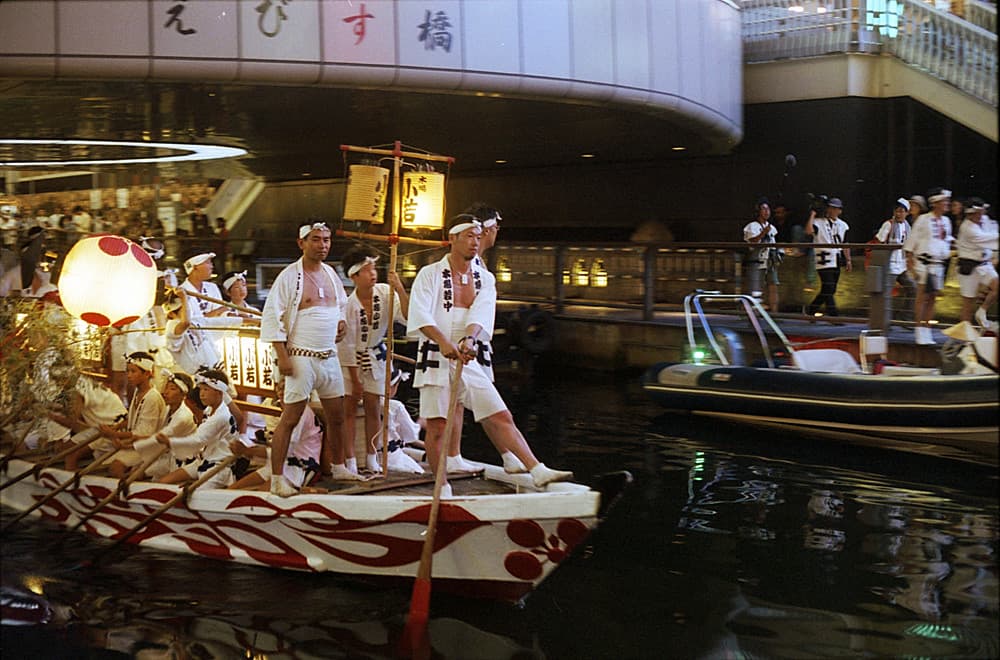
What sets Tenjin Matsuri apart is that it takes place as much on the water as on land. The rikutogyo land procession carries the god's spirit out of the shrine and through the streets; the funatogyo river procession then loads it onto boats and parades it up and down the Ōkawa. The two halves meet at dusk, and the fireworks, some three thousand dedication shots, turn the whole thing into what Osakans call a festival of fire and water. Crowd estimates of around 1.3 million visitors are often cited.
A festival of fire and water: the god carried downriver beneath the sparks.
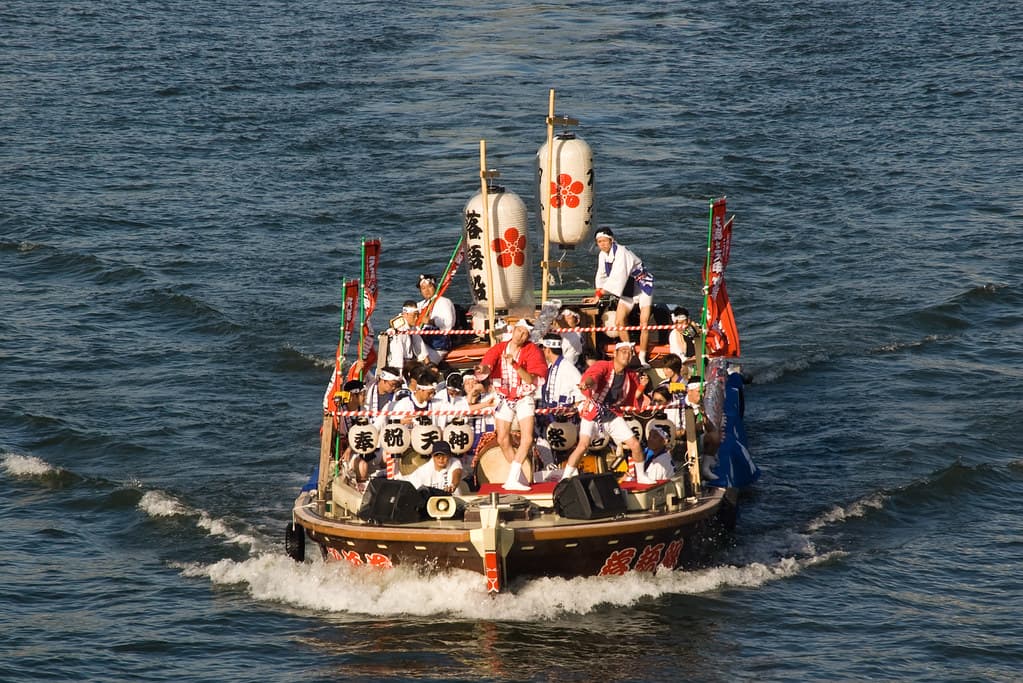
The river procession boat of Tenjin Matsuri on the Osaka waterway
Photo by elmimmo / flickr · CC BY 2.0
What to expect
Tenjin Matsuri runs across two days, but nearly everything you have come to see falls on the second.
Jul 24
Yomiya, the eve
The eve fills with drumming and rituals at Osaka Tenmangū. In the evening (around 8:50pm in 2026) comes the hokonagashi, in which a sacred halberd is floated down the river to purify the route the god will travel. It is quieter than the 25th, a good chance to walk the shrine grounds and scout the riverbanks before the crowds arrive.
Jul 25
Hongū, the main day
Around 3:30pm the rikutogyo land procession leaves the shrine: roughly 3,000 participants escort the mikoshi through the streets to the river. From about 6pm the parade boards boats for the funatogyo, and about 100 illuminated craft move up and down the Ōkawa with bonfires burning. From roughly 7:30 to 8:50pm, about 3,000 fireworks rise over the river, timed to the boats below.
Planning your trip
Getting there
Osaka Tenmangū sits in Kita-ku, a few minutes' walk from JR Osaka Tenmangū Station on the JR Tōzai Line, or from Minami-morimachi Station on the Osaka Metro Tanimachi and Sakaisuji lines. The action then spreads along the Ōkawa between Temmabashi and Sakuranomiya Park, so any of those stations puts you within walking distance of the route. After the fireworks end, avoid the crush at Minami-morimachi and walk on to Temmabashi or Kitahama instead. Kyoto's Gion Matsuri runs through the whole of July, so the two festivals fit into one Kansai trip.
Where to stay
Aim for the Kita/Umeda area or somewhere near Minami-morimachi or Temmabashi, all walkable to the river, which matters when a huge crowd is trying to move through the same streets after dark. The best free viewing is along the Ōkawa banks between Temmabashi and Sakuranomiya Park; arrive at least an hour early, and expect police to keep spectators moving on the bridges. Sakuranomiya Bridge, by the main launch point, was reported closed to pedestrians from around 6pm in 2026.
What it costs
Watching from the riverbanks is free. If you would rather sit, paid viewing seats vary widely: standing or unreserved spots on the sandy riverbank have been listed at about ¥3,000 to ¥8,000 for 2026, while reserved table and bento seats start around ¥18,000 and reach well into five figures. Prices differ by vendor and venue, so treat these as a guide rather than a fixed rate. Hotel rates around Osaka rise sharply on the festival dates.
Go like you know
- Stake out the free banks between Temmabashi and Sakuranomiya Park at least an hour before the fireworks; the good spots fill fast in a million-strong crowd.
- Eat hamo (pike conger eel), a Kansai summer staple that is traditionally part of the festival: at its best right after the rainy season and often served yubiki-style, blanched and eaten with plum sauce.
- Dress for the heat: light cotton or a yukata, sunscreen, and more water than you think you need.
- Note that Sakuranomiya Bridge closes to pedestrians in the evening and police keep the other bridges moving, so do not plan to linger mid-span for photos.
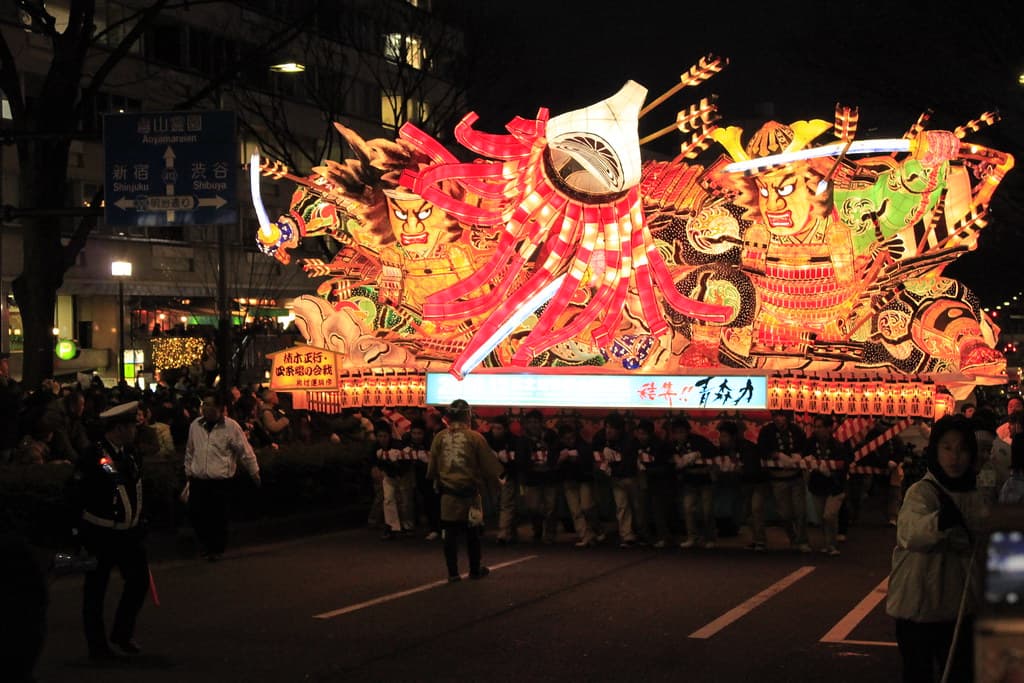
- For calmer fireworks views, try the area near Genpachi Bridge, and plan the rest of your summer: Aomori Nebuta Matsuri starts on August 2, about a week after Osaka's festival.
Frequently asked questions
Is Tenjin Matsuri worth it if I only have one day?
Yes, make it July 25. The eve on the 24th has its rituals and charm, but the land procession, the hundred-boat river parade, and the fireworks all fall on the 25th. Arrive by mid-afternoon to catch the rikutogyo leaving the shrine, then follow the crowd to the river for dusk.
Do I need tickets?
No. Watching from the Ōkawa banks between Temmabashi and Sakuranomiya Park is free, and that is how most spectators experience it. Paid seats (from roughly ¥3,000 for standing spots to tens of thousands of yen for reserved tables and boats) buy you a guaranteed spot and must be booked ahead, but they are entirely optional for a great night.
When is Tenjin Matsuri held each year?
It falls on the same fixed dates annually: July 24 for the yomiya eve and July 25 for the hongū main day. Osaka Tenmangū publishes each year's detailed schedule in spring, so check the shrine or Osaka tourism pages closer to your trip to confirm exact procession and fireworks times.