What is Sanja Matsuri?
Sanja Matsuri (三社祭), "the festival of the three shrines", honors the three men credited with founding Sensō-ji, Tokyo's oldest temple. According to legend, in the seventh century two fishermen brothers pulled a statue of the bodhisattva Kannon out of the Sumida River in their nets. A local landowner recognized its importance and converted his home into a temple to enshrine it. Asakusa Shrine, beside Sensō-ji, honors the three men as deities.
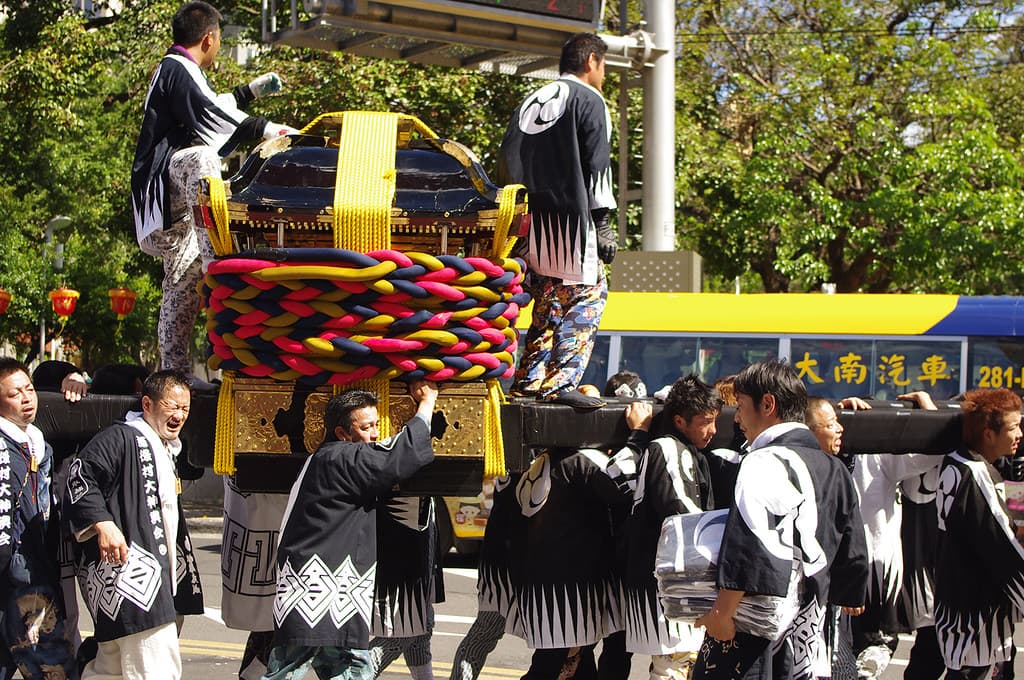
The festival is held over the third weekend of May, from Friday to Sunday, and is one of Tokyo's largest, drawing an estimated 1.5 to 2 million people to the streets of Asakusa over the three days. It is known as one of the city's wildest festivals, with the mikoshi carried in an energetic, bouncing style that makes them appear to dance.
Asakusa is part of Tokyo's shitamachi, the old downtown of merchants and craftsmen, and the festival reflects its spirit: loud, proud and fiercely local. Neighborhood associations spend the year preparing their mikoshi, and residents of all ages take part in parades, music and dances.
Old Tokyo shakes its gods through the streets, and the gods are said to enjoy the ride.
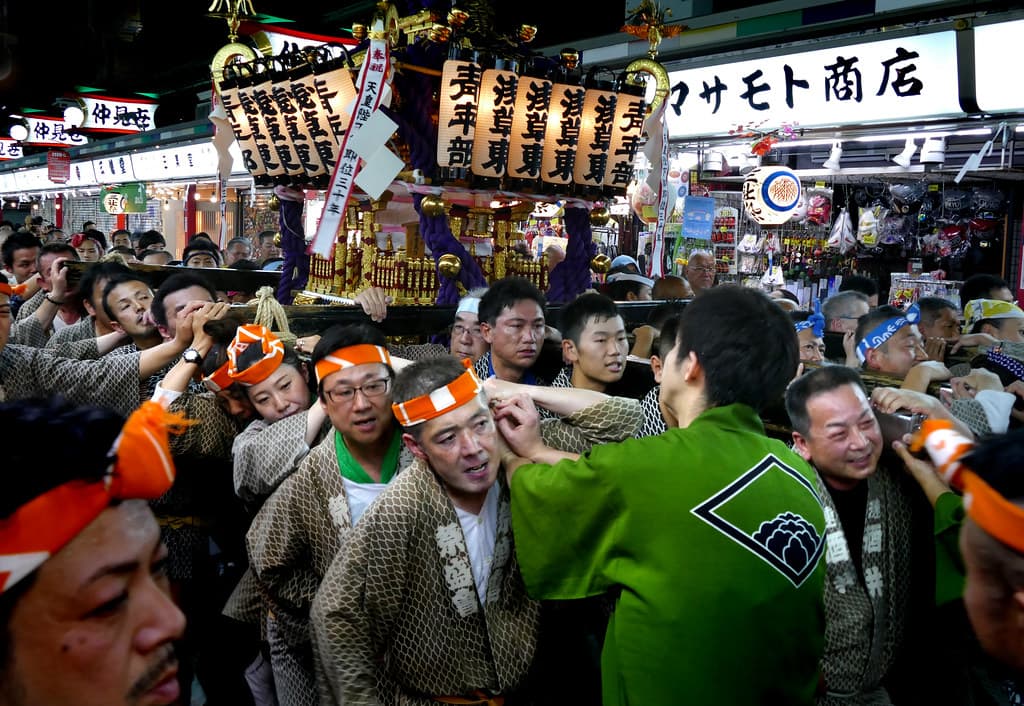
Carrying a portable shrine through the Asakusa shopping streets for Sanja Matsuri
What to expect
The festival runs over three days, each with its own highlights.
Friday
Daigyōretsu
A grand procession of priests, musicians, geisha, dancers and officials in traditional costume parades through Asakusa in the afternoon, followed by traditional dances at the shrine.
Saturday
Neighborhood mikoshi
Around a hundred portable shrines from Asakusa's neighborhoods are blessed at the shrine and then carried through their local streets.
Sunday
Miyadashi and Miyairi
From 7 a.m., the shrine's three main mikoshi leave Asakusa Shrine in the miyadashi and are carried through the neighborhoods all day, then return in the evening in the miyairi.
The festival is famous for its energy, and part of that comes from the style of carrying. Bearers bounce and shake the mikoshi vigorously, a practice said to please the deities and spread their blessings through the neighborhood. The louder the chanting and the harder the shaking, the stronger the blessing, or so the saying goes in Asakusa.
Planning your trip
Getting there
Asakusa is easily reached by subway on the Ginza and Asakusa lines, and by the Tobu Skytree line. The area around Sensō-ji and Asakusa Shrine gets extremely crowded during the festival. Walk rather than taking taxis, and use the back streets to move between neighborhoods. Combine your visit with Sensō-ji, the Nakamise shopping street and a view of Tokyo Skytree across the river.
In odd-numbered years such as 2027, Kanda Matsuri holds its full edition in mid-May as well, so the two can share a trip to Tokyo.
Where to stay
Hotels in Asakusa fill up for the festival weekend, but there are many options across Tokyo a short subway ride away. Ueno has plenty, as do central areas along the Ginza line. Book as soon as your dates are set.
What it costs
Watching is free, and there are no paid seats. Budget for street food from festival stalls, subway fares and a hotel that is likely to cost more than usual in Asakusa itself.
Go like you know
- Try street food from festival stalls, such as yakisoba, takoyaki and ningyō-yaki, small cakes made in Asakusa.
- Visit Sensō-ji early in the morning, before the crowds, to see the temple in a calmer mood.
- Look for the Binzasara-mai, a traditional dance performed at the shrine on Friday, praying for good harvests and prosperity.
- Wear comfortable shoes; you will be standing and walking for hours.
- Respect the bearers and their neighborhoods; they have prepared all year for this moment.
- Take a river cruise on the Sumida River for a different view of Asakusa.
- Want a bigger, slower Japanese festival? Kyoto's Gion Matsuri fills the whole of July with processions, rites and lantern nights.
Frequently asked questions
When is Sanja Matsuri?
It takes place every year over the third weekend of May, from Friday to Sunday, at Asakusa Shrine (May 14 to 16 in 2027). The program is published by the shrine in spring. Sunday, with the three main mikoshi, is the busiest and most energetic day.
Is it free?
Yes, the festival is free to watch from the streets. There are no paid seats. Arrive early for the main events, especially Sunday's 7 a.m. miyadashi, and expect large crowds throughout the weekend around Sensō-ji and the shrine.
Can visitors carry a mikoshi?
Mikoshi are carried by members of neighborhood associations and their guests. Visitors generally watch, but some groups welcome outsiders with local connections. Do not try to join without an invitation, and never touch a mikoshi as it passes.
What is the best way to see the festival?
Plan around the main events: the Friday procession, the Saturday neighborhood mikoshi and the Sunday miyadashi. Between them, explore Asakusa's side streets, where smaller mikoshi pass and residents celebrate, and take breaks in cafés away from the main crowds.
Where should I stay?
Asakusa has hotels, ryokan and hostels within walking distance of the shrine, but they fill early for the festival weekend. Ueno, a short subway ride away, has more options, as do central areas along the Ginza line. Book as soon as your dates are set.