What is Hornbill Festival?
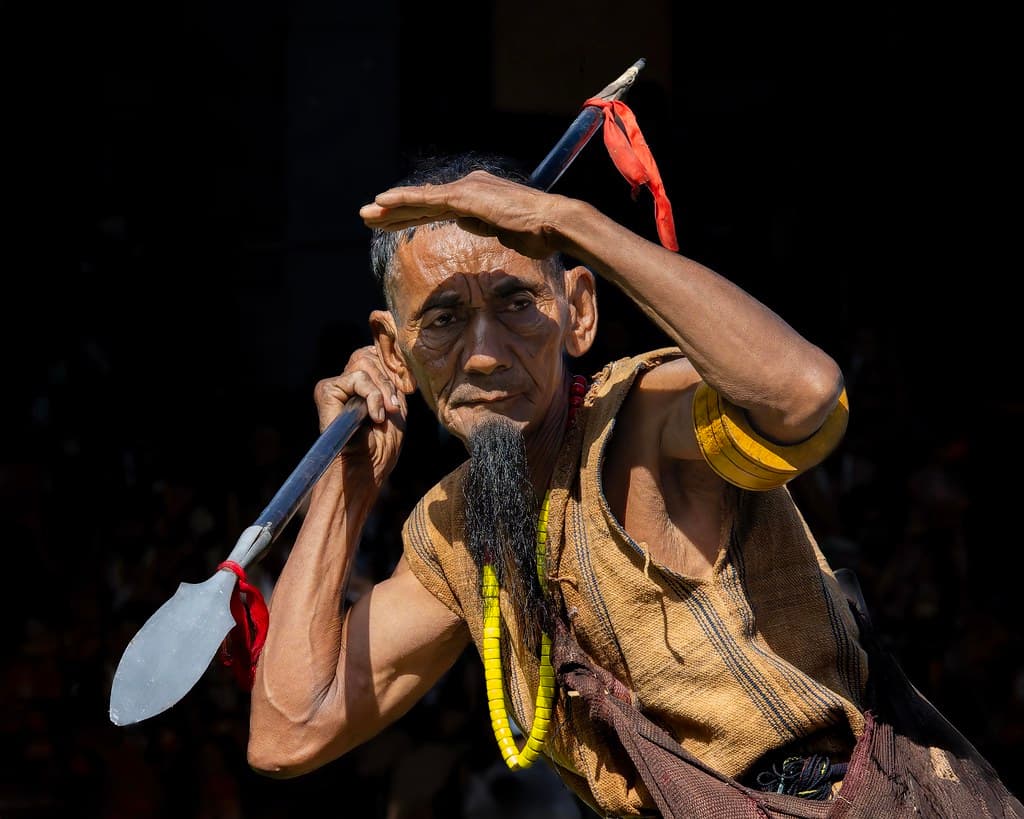
Nagaland is home to seventeen major Naga tribes, each with its own language, dress, songs and harvest calendar. For most of the year those traditions live in scattered villages across steep, forested ridges near the Myanmar border. In 2000 the state government created the Hornbill Festival to bring them together in one place, both to encourage the tribes to meet one another and to show the rest of India, and the world, what Naga heritage looks like.
The festival takes its name from the great hornbill, a bird woven through Naga folklore. Its black-and-white tail feathers crown ceremonial headgear, and its image turns up on shawls, carvings and village gates. Calling the festival after it was a statement: this is a celebration of shared identity, not a single tribe's rite.
The stage is the Naga Heritage Village at Kisama, a hillside site where each tribe maintains its own morung, the traditional dormitory where young men were once trained in warfare, craft and lore. Every morung is built in its tribe's own architectural style, so walking the site is a crash course in how differently the Naga peoples see the world.
Every tribe brings its own song. For ten days, they share one stage.
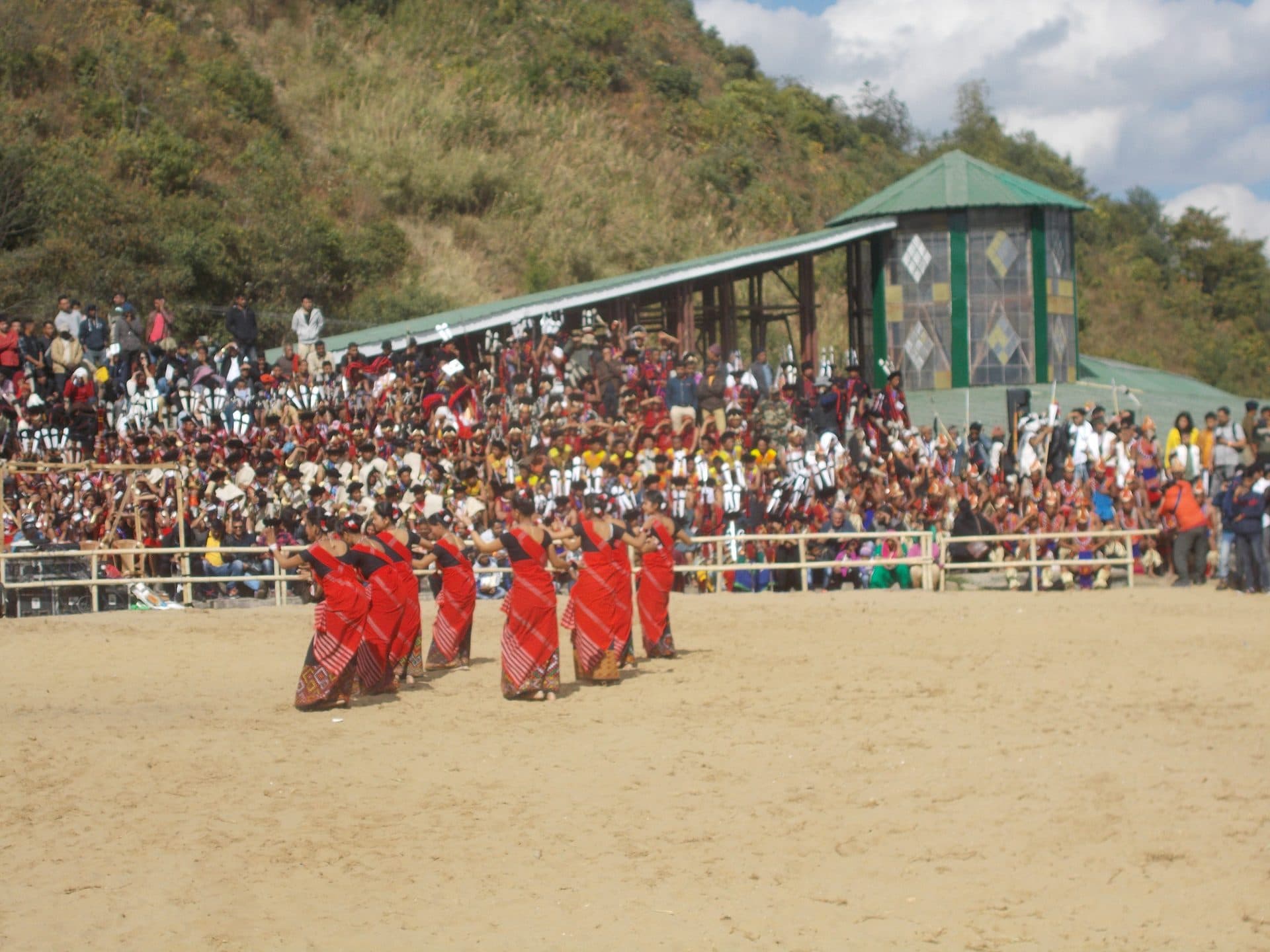
A cultural dance performance in the arena at the Hornbill Festival, Kisama
What to expect
The rhythm of the festival is steady rather than climactic. The days revolve around the main arena, where tribe after tribe takes a turn with war dances, harvest songs and folk theatre. Games and contests fill the afternoons, and evenings move down the hill into Kohima itself.
Dec 1
Opening on Statehood Day
The festival opens alongside Nagaland's Statehood Day with a ceremony led by state dignitaries, a walk through the morungs, and the first round of performances in the arena. It is the most formal day, with the most speeches.
Daily
Arena performances
Each tribe presents dances and songs tied to its own seasons, wars and rituals. Program sheets change daily, so check the board at the entrance and plan around the tribes you most want to see.
Afternoons
Games, crafts and the chili challenge
Look for traditional wrestling, archery and the famous Raja Mircha (king chili) eating contest. Craft stalls sell woven shawls, beadwork and wood carving.
Evenings
Kohima after dark
The town hosts night bazaars, and the Hornbill International Rock Festival brings local and international bands to Kohima's Indira Gandhi Stadium. Expect cold air, crowded streets and a lot of guitar.
Dec 10
Closing ceremony
A final round of performances and a closing ceremony, which in 2025 ended with dignitaries lighting a traditional bonfire, send the tribes home until the next December.
Planning your trip
Getting there
The nearest airport and main railhead are in Dimapur, in the plains, about 74 km from Kohima, from where a winding road climbs to the hills in two to three hours. Shared taxis and private cars make the trip; allow plenty of time, because the road is slow and festival traffic makes it slower. Kisama itself is about 12 km from Kohima, a short drive from town.
Where to stay
Accommodation is the real constraint. Kohima has a limited supply of hotels, and they fill quickly for the festival; some operators say rooms in every category go three to six months ahead. Many visitors use homestays in Kohima or nearby villages such as Khonoma, or book into tented camps set up near Kisama for the season. Book as soon as you know you are going.
What it costs
Entry to the Naga Heritage Village is ticketed with a modest charge, and sources quote different amounts, from tens of rupees up to about ₹100 per person, so treat the figure as small and confirm it at the gate. Rooms are the real expense, and rates can rise as the dates fill. The morungs sell food and rice beer, the latter by the glass, so set aside a little for meals and craft stalls.
Go like you know
- Arrive at Kisama early. The crowds build through the day, and the light on the costumes is softer before the sun gets high.
- Pack warm layers. December days can be pleasant, but evenings in the hills turn cold fast, and the night program in Kohima is outdoors.
- Ask before you photograph individuals, especially elders in full regalia. Most people are generous with permission when asked.
- Nagaland is officially a dry state, though traditional rice beer (zutho) is widely sold at the morungs as a festival exception. Drink it slowly; it is stronger than it tastes.
- Give a day to Khonoma, the village famous for its community forest conservation, and pay respects at the Kohima War Cemetery, site of one of the decisive battles of World War II in Asia.
- Sundays are quiet in this largely Christian state. Shops and some services close, so plan supplies ahead.
- Pairing highland festivals? Wamena's Baliem Valley Festival in Papua stages mock battles in early August, and Bhutan's Paro Tshechu brings sacred masked dances to a fortress courtyard in March or April.
Frequently asked questions
Do I need a ticket for Hornbill Festival?
Entry to the Naga Heritage Village is ticketed, with a modest charge collected at the gate; sources quote anything from tens of rupees to about ₹100 per person. The evening rock festival is a separate event in Kohima. Prices are set each year by the organizers, so check the official Nagaland Tourism channels shortly before the festival.
Which days are best to visit?
The opening day carries the grandest parade, but it is also the most crowded and most formal. Mid-festival days offer the same performances with more space to move. Three or four days lets you see most tribes, take in the games, and spend an evening in Kohima's night program.
Can foreigners attend Hornbill Festival?
Yes, and many do, but paperwork comes first. Foreign visitors fall under India's Protected Area Permit rules for Nagaland, reimposed in December 2024 and relaxed only for the 2025 festival window. Check the current requirement with an Indian mission or Nagaland Tourism well before travelling, and carry copies of your passport and visa.
How cold does it get?
Days in early December are usually mild and sunny, but nights in Kohima and Kisama get properly cold, and fog can settle on the ridges. Bring a warm jacket, a hat, and comfortable shoes for steep, uneven paths between the morungs.