What is Naghol?
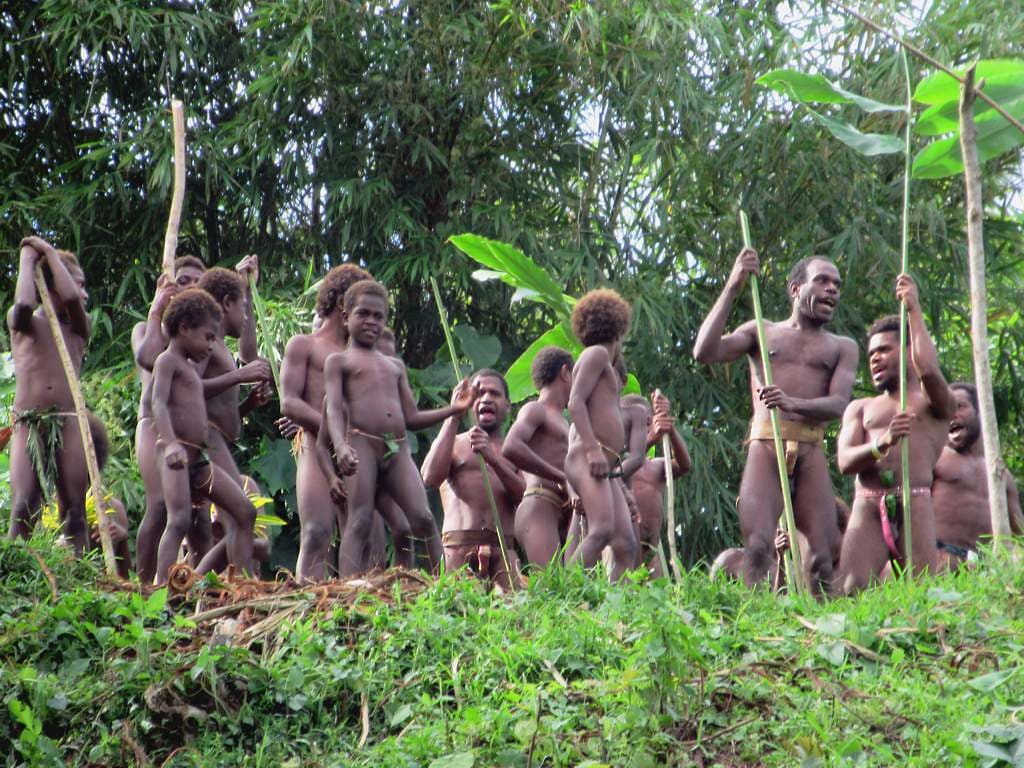
Naghol, or land diving, is an ancient ritual performed on Pentecost Island in Vanuatu, a South Pacific nation of more than eighty islands. Every year, during the yam harvest season, men from villages in the south of the island build tall wooden towers and jump from them with vines tied to their ankles, aiming to land close to the ground without being hurt.
According to local legend, the ritual began with a woman who fled from her husband by climbing a tree. When he followed her, she jumped, having tied vines to her ankles, and survived, while he fell to his death. Men later began jumping to show that they could not be tricked again. Over time, the ritual became connected to the yam harvest: a successful dive is said to bless the soil and ensure a good harvest.
The towers, built by hand from poles lashed together with vines, can reach around thirty meters. Boys begin jumping from lower platforms, while experienced men dive from the top. The vines are chosen by an elder and matched to each jumper, as their length and elasticity determine the jump's safety. The ritual is often cited as an inspiration for modern bungee jumping, which the Oxford Dangerous Sports Club launched in 1979.
A tower of logs, a pair of vines, and a leap that is meant to bless the year's harvest.
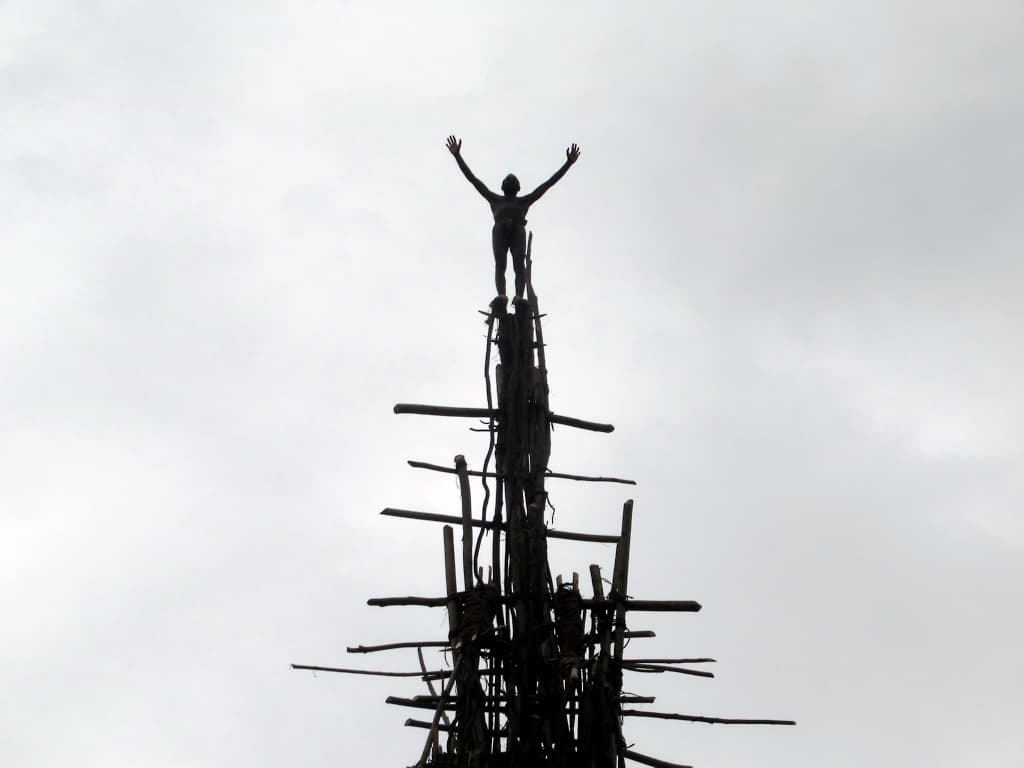
A diver on top of the Naghol tower on Pentecost Island
Photo by D-Stanley / flickr · CC BY 2.0
What to expect
Jumps take place on Saturdays during the season, usually organized by villages for visitors who arrive on day tours.
Weeks before
Building the tower
Villagers build the tower on a cleared slope, testing vines and loosening the soil below to soften landings.
Jump day morning
Arrival
Visitors arrive by small plane and walk or drive to the jump site, where villagers in traditional dress gather to sing and dance.
Jump day
The dives
Jumpers climb to platforms at increasing heights, from young boys to experienced men. Each one gives a short speech or performs a ritual before diving.
Planning your trip
Getting there
Vanuatu's capital, Port Vila, on Efate island, is the main international gateway, with direct flights from Australia, New Zealand, Fiji and New Caledonia. Pentecost lies about 190 kilometers north, and visitors fly in on small planes from Port Vila or Santo to Lonorore airstrip. Since Air Vanuatu's domestic fleet was grounded in 2024, much of this traffic runs through charter operators such as Air Taxi Vanuatu and Unity Airlines, whose land-diving tours run on Saturdays in season. From the airstrip, a truck ride takes you to the jump site.
Combine your trip with other islands of Vanuatu, such as Tanna, with its active volcano, or Espiritu Santo, with its beaches and diving. Flights between islands are small and can be affected by weather, so allow flexibility in your itinerary.
Where to stay
Accommodation on Pentecost is very limited, mainly basic guesthouses and bungalows with only a few rooms, so book well ahead if you want to stay overnight. Most visitors base themselves in Port Vila and make the trip as a day tour. Spending a few days beyond the capital, in village guesthouses or on islands like Tanna, offers a deeper understanding of the kastom, traditional customs, that shape ceremonies like Naghol. Vanuatu has more than a hundred languages, and the festival is one of many local traditions.
What it costs
Watching means paying a viewing fee to the host village: for the 2026 season the Vanuatu Tourism Office listed 9,500 vatu per adult and 4,000 per child at Ratap. Most visitors book a day tour, which bundles flights, transfers, the fee and lunch, and prices vary by operator. The flights are the biggest expense.
Go like you know
- Dress modestly and respectfully when visiting villages.
- Ask before taking photos of people, and follow village rules on filming, which may require permission or fees.
- Try lap lap, a Vanuatu staple of grated root vegetables cooked in banana leaves.
- Buy local handicrafts from the villages, which support the community.
- Learn a few words of Bislama, one of Vanuatu's official languages, such as tankyu tumas, "thank you very much".
- Stay overnight on Pentecost if you can, to experience village life beyond the day-tour schedule.
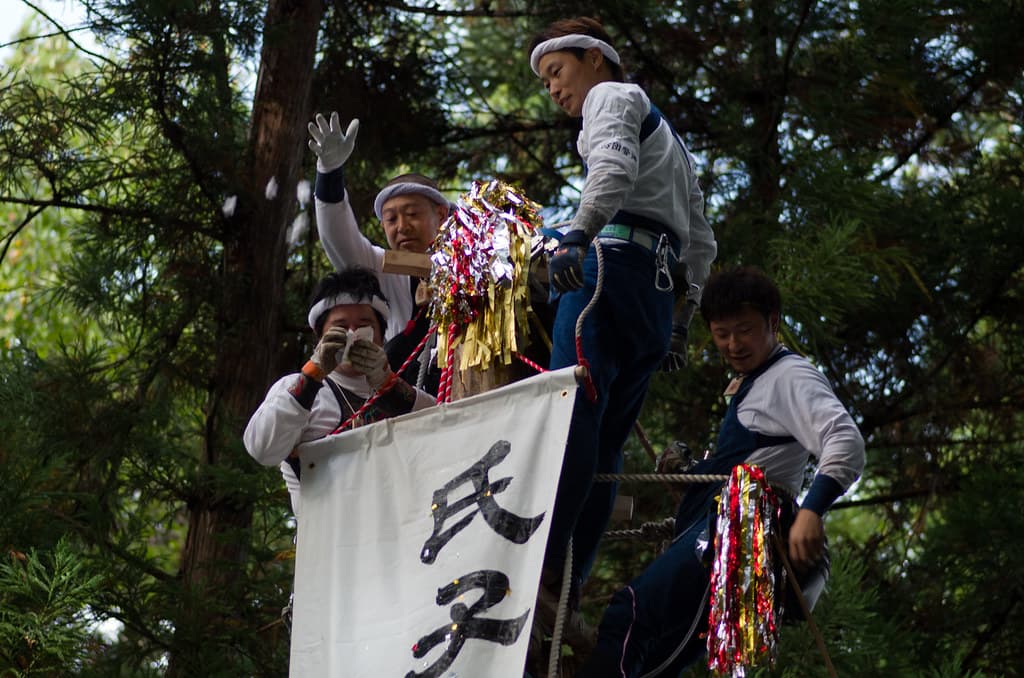
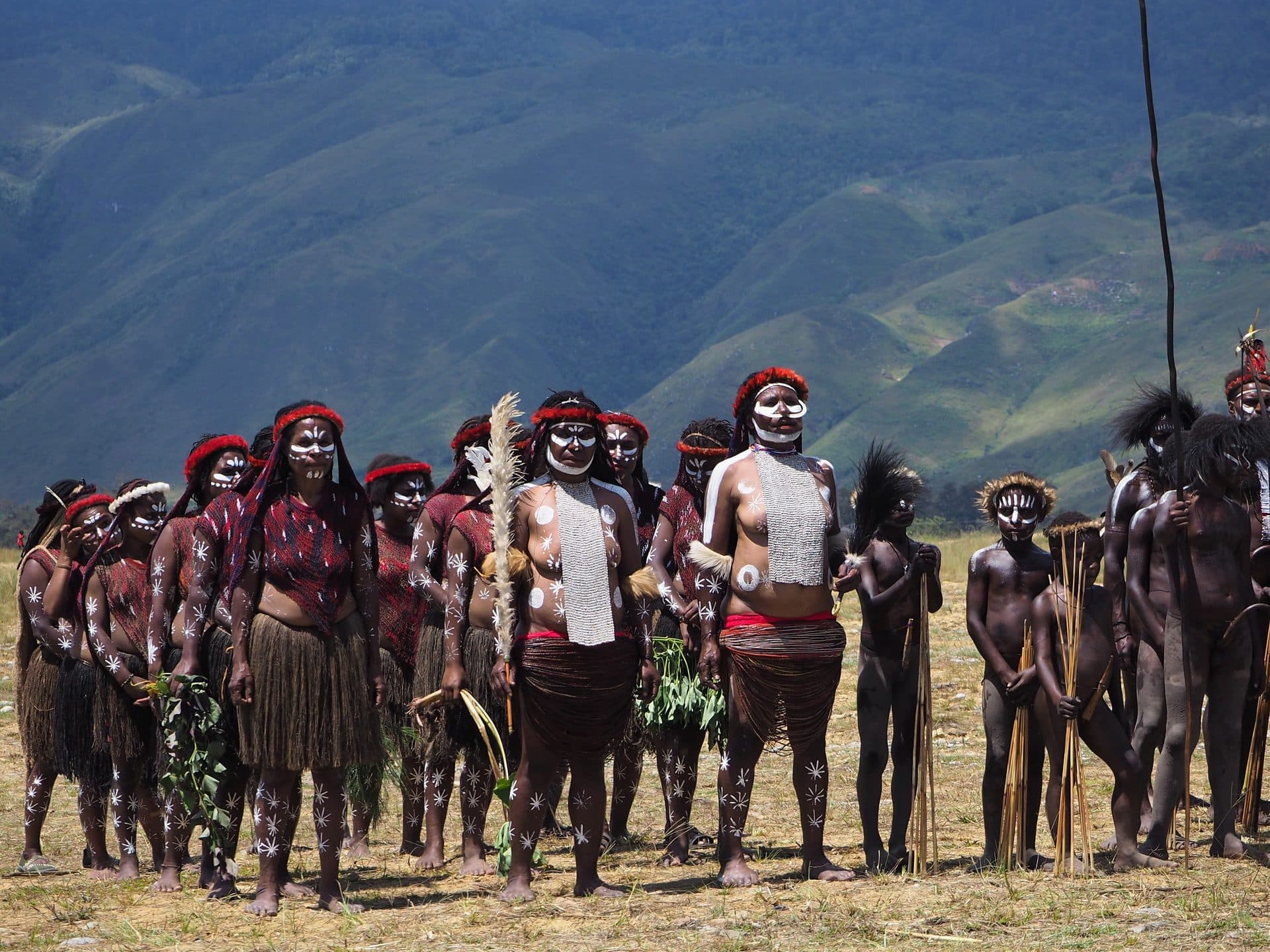
- Drawn to risky timber rituals? Japan's Onbashira, held every six years, sends men riding giant logs down a slope. For another Melanesian tradition, the Baliem Valley Festival stages highland tribal mock battles in Papua each August.
Frequently asked questions
When can I see Naghol?
Naghol takes place on Saturdays from around April to June, during the yam harvest season. Dates are arranged by villages and listed by the Vanuatu Tourism Office and tour operators. Book a tour in advance and be flexible, as schedules can change.
How do I get to Pentecost Island?
Fly to Port Vila, Vanuatu's capital, then take a small plane to Pentecost, usually as part of an organized day tour. Tours include flights, ground transport and entry to the jump site. Independent travel is possible but requires more planning.
Is it safe for the jumpers?
Land diving carries real risk. The vines are chosen by an elder and matched to each jumper, and the soil below is tilled to cushion landings, but injuries and even deaths have occurred over the years. The community takes the ritual very seriously, and visitors should watch from the designated areas.
Can visitors try land diving?
No. Naghol is a traditional ritual reserved for men from the participating villages, and visitors are spectators. If you want to try something similar, bungee jumping, which it is said to have inspired, is offered by adventure operators in other countries.
How much does it cost?
Visiting Naghol involves a viewing fee paid to the host village, which the Vanuatu Tourism Office listed at 9,500 vatu per adult for 2026, plus transport. Most visitors book day tours from Port Vila or Santo, which bundle flights, transfers, the fee and lunch. Prices vary by operator, so check current rates with the tourism office or licensed tour companies.