What is the Baliem Valley Festival?
The Baliem Valley cuts through the central highlands of Papua, Indonesia's easternmost territory, at around 1,600 meters: cool nights, fierce sun, sweet potato gardens climbing the valley walls. It's home to the Dani people and their neighbors the Lani and Yali, whose cultures rank among the most distinct on earth.
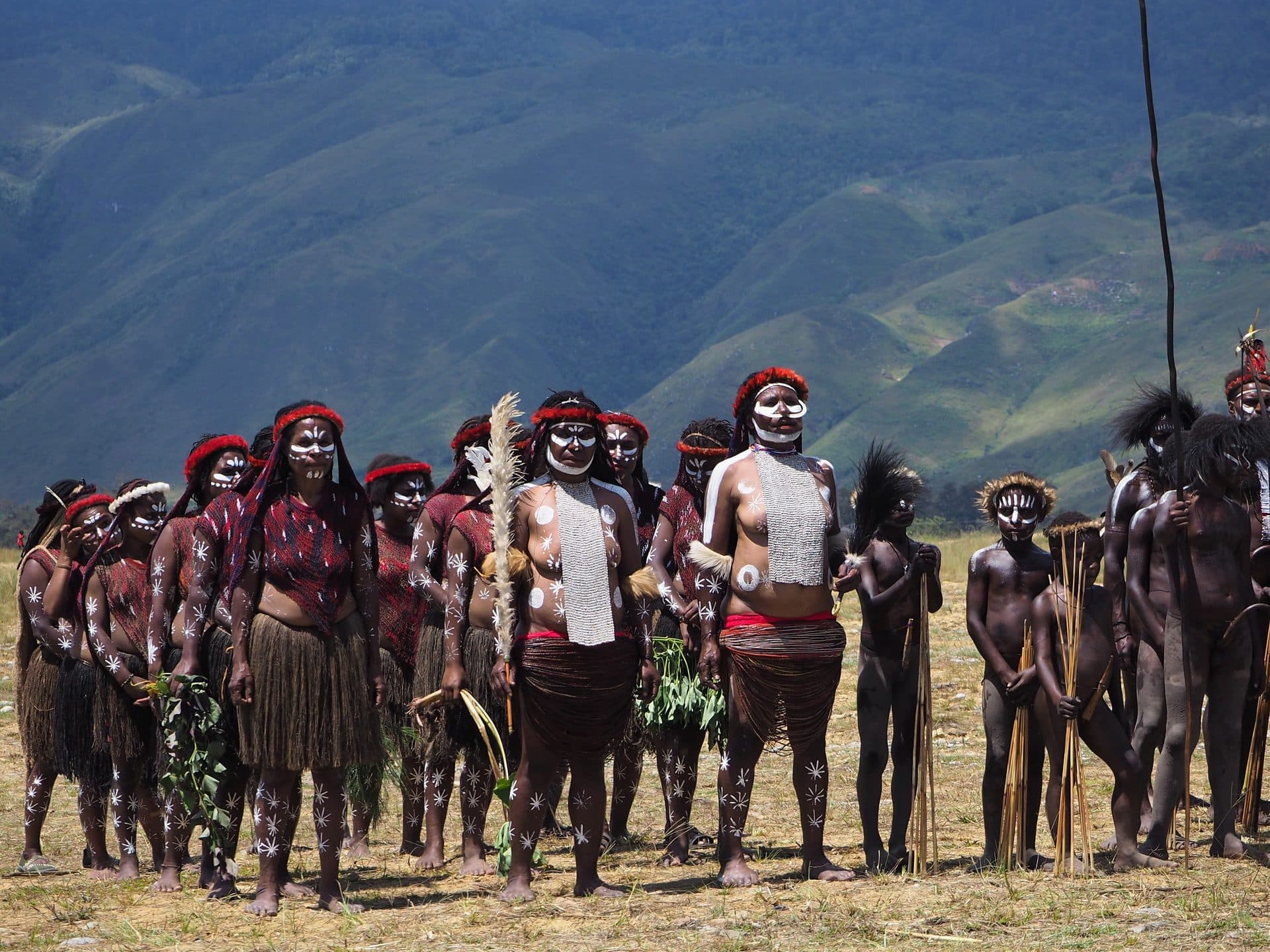
The festival began in 1989 and centers on choreographed mock battles: clans in full traditional dress (feathered headdresses, boar-tusk ornaments, the koteka that western visitors have usually read about before arrival) re-enact the raids and standoffs that once punctuated valley life. What was historically real inter-clan warfare has been channeled into performance, athletics, and bragging rights. Between battle scenarios come group dances accompanied by the pikon (a traditional jaw harp), the traditional youth sports sikoko and puradan, pig races that bring down the house, and the slow ceremony of bakar batu, a whole feast steam-cooked underground on fire-heated stones.
This is a living culture presenting itself, not a theme park reconstruction of one.
Honesty requires a caveat: the festival is organized as a regional tourism event with government backing, and it compresses ritual life into a stadium-adjacent format. But the participants are performing their own grandfathers' history in their own valley, and the dancing, feasting, and rivalries between villages are entirely real. Few travelers leave unmoved.
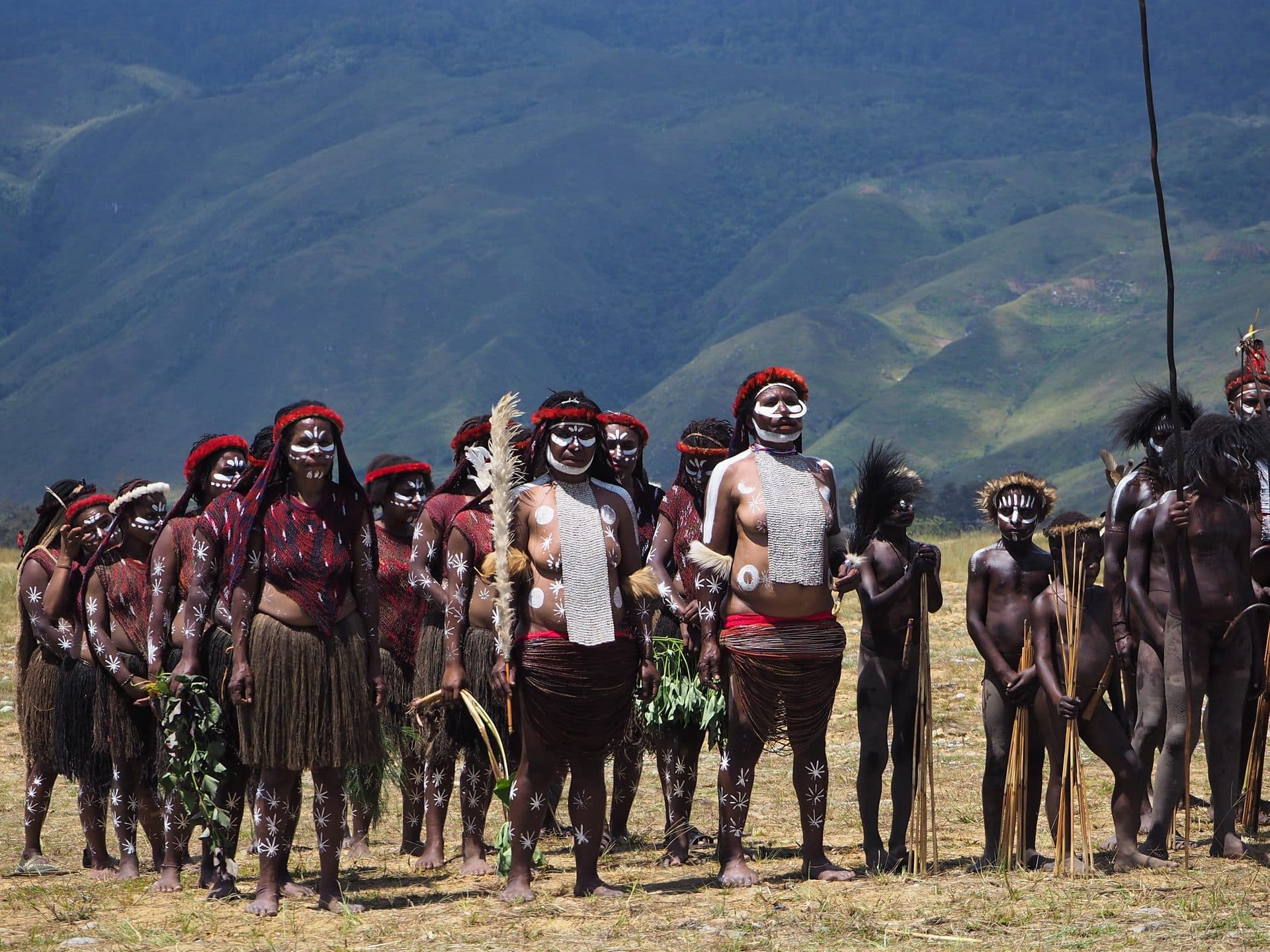
Dani participants at the Baliem Valley Festival, Wamena
Photo by Nurul Ichlasiah / wikimedia · CC BY-SA 4.0
What to expect
The festival runs a few days in early August, and the exact length changes from year to year. The venue has moved too: recent editions have been staged in Welesi and in Wosilimo (Kurulu district), outside Wamena, the valley's main town. Mornings build slowly, with delegations arriving from across the valley, regalia being adjusted, and pigs protesting. Late mornings through afternoons carry the program: battle choreography in waves (a 2019 organizer account described some 26 groups of 30 to 50 fighters), dance groups, and contests. The field is open, and the crowd is small next to world-famous festivals.
Around the main ground you'll find craft stalls selling string bags (noken), carvings, and ornaments, plus roasted sweet potato and boiled corn. Evenings belong to Wamena's handful of restaurants and early nights; the valley goes dark and cold quickly.
Planning your trip
Getting there
In practice, you fly: official coverage describes the valley as accessible only by air from Jayapura. Fly to Jayapura (Sentani airport), roughly five and a half hours from Jakarta by one traveler's account, then take a short turboprop hop over the mountains to Wamena. Quoted flight times run from about 35 to 50 minutes, so plan on under an hour. Ask your operator exactly where this year's festival ground is and how you will get there from town, since the venue has changed between editions.
Where to stay
Base yourself in Wamena, where the guesthouses and hotels are basic and few. Festival-week beds and seats on the small planes are the scarce resource, so book flights and beds together, well ahead, ideally through a local operator who can also handle logistics on the ground. Nights are cold at this altitude, so bring warm layers, serious sun protection for the days, and any medication you need, since the pharmacy situation is thin.
If you are building a longer Indonesian trip, the Dieng Plateau's Dieng Culture Festival falls in late August in Central Java. Farther afield, in the Philippines, Davao's Kadayawan Festival also celebrates indigenous tribes every August.
What it costs
Watching is free: the Ministry of Tourism's listing gives admission as free. The expense is reaching the valley. One recent traveler report put Wamena rooms at roughly US$50 a night in ordinary times (about US$70 for a better hotel, and more than US$150 for resort bungalows) and an airport transfer at about 200,000 rupiah, so treat those as a floor, not a festival-week quote. Bring cash from Jayapura rather than counting on Wamena's ATMs, and expect to tip for posed portraits.
Go like you know
- Ask before photographing people, every time. A small tip for posed portraits is customary and fair, since this is income for the valley.
- Stay for the bakar batu. The earth-oven feast is the festival's social heart, and visitors are routinely waved in to share.
- Add two or three days beyond the festival for village walks in the valley: suspension bridges, salt springs, and hamlets where the festival's regalia is simply Sunday best.
- The valley is predominantly Christian, with missions dating to the 1950s alongside traditional practice; Sundays are quiet, and modest dress in villages is appreciated.
- Watch the archery contests closely. The bows are the same ones used for hunting, and the accuracy at distance explains valley history better than any museum panel.
Frequently asked questions
Is the festival authentic or staged for tourists?
Both, honestly. The festival format exists for visitors and is run as a government tourism event, but the participants, regalia, dances, and rivalries are the valley's own, and the performers are valley communities. Treat it as a living culture's public open day rather than an untouched ritual, and it delivers far more than it promises.
How hard is the trip, really?
Not physically hard, since flights do the work, but logistically demanding: two or three flight legs, scarce festival-week beds, cash-only practicalities, and paperwork that changes. A local operator turns all of that into a solved problem for a modest cost, and is worth it if this is your first time in Papua.
Exactly which dates should I book?
Early August, but confirm before committing. The length has varied by edition: the Ministry of Tourism listing for 2026 showed a two-day festival, while earlier editions ran longer. Organizers announce final dates months ahead, so check the current year's listing and let your operator confirm before you pay for flights.