What is Thrissur Pooram?
Thrissur, in the heart of Kerala, is known as the cultural capital of the state, and its Pooram is Kerala's most famous temple festival. It was started in the late eighteenth century by Sakthan Thampuran, the ruler of the Kingdom of Cochin, who brought together temples from around Thrissur to celebrate a joint festival in front of the Vadakkunnathan Temple, an ancient Shiva temple at the center of the city.
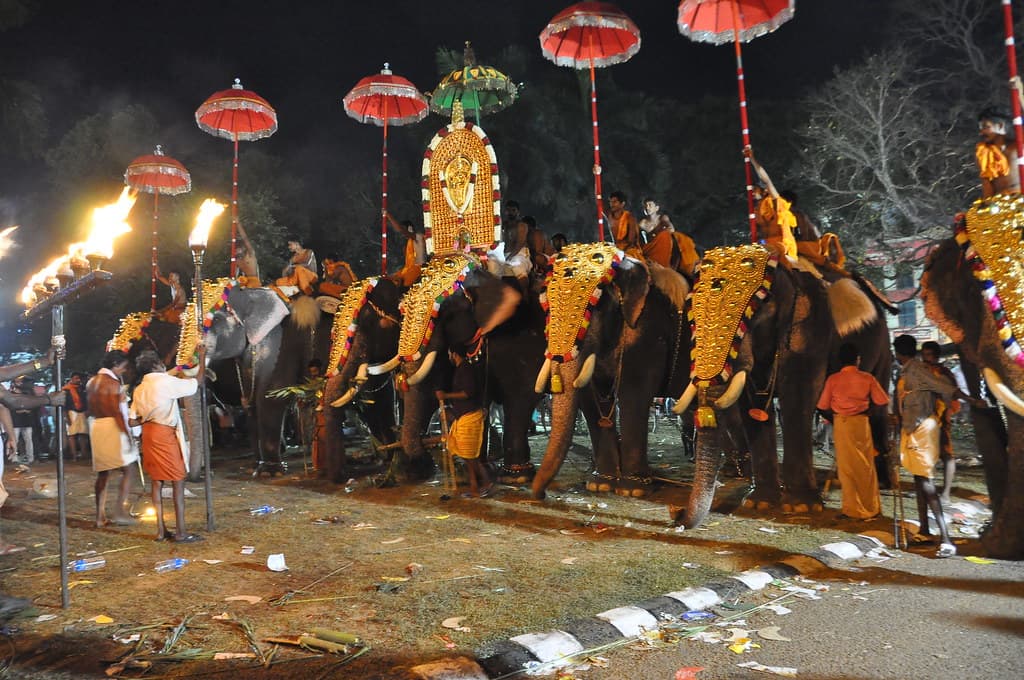
The festival is built around a friendly rivalry between two groups of temples, led by the Paramekkavu and Thiruvambady temples. Each side brings its deities on elephants to the grounds around Vadakkunnathan, the Thekkinkadu Maidanam, and competes in the splendor of its elephants, music and parasols. The highlight is the kudamattam, an exchange of parasols on the elephants' backs in which each side tries to outdo the other with designs kept secret until the moment they are revealed.
Music is just as important. The Ilanjithara Melam, a performance by hundreds of percussionists playing the chenda drum and other instruments, builds over hours into a thunderous, hypnotic rhythm, and connoisseurs travel from across Kerala to hear it. The festival ends with a huge fireworks display in the early hours, the vedikkettu, which lights up the sky over the city.
Two temples, two rival displays, and a whole city keeping score.
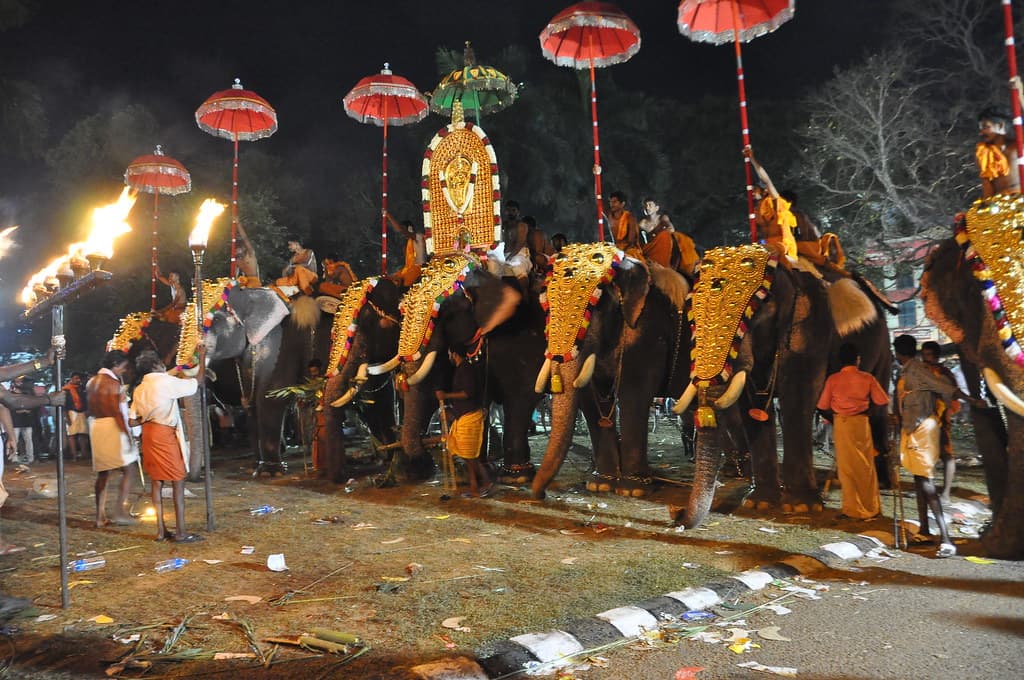
Decorated elephants and torch-bearers in the Thrissur Pooram procession
Photo by shankar s. / flickr · CC BY 2.0
What to expect
The festival builds over several days and peaks on Pooram day and the following morning.
Days before
Flag hoisting and sample fireworks
The festival opens with flag hoisting at the participating temples. A sample fireworks display, sample vedikkettu, gives a taste of the main show a few days before.
Pooram morning
Processions arrive
Smaller temples arrive with their deities on elephants from early morning, and the Madathil Varavu, a performance of traditional temple music, takes place from late morning into the early afternoon.
Afternoon
Ilanjithara Melam
A massive percussion ensemble of about 250 artists performs in the Vadakkunnathan Temple courtyard from around 2 p.m., one of the festival's musical highlights.
Evening
Kudamattam
Around 6 p.m., the two groups face each other with their elephants and exchange parasols in a dazzling competition.
Early morning
Fireworks
After a night procession, the main fireworks display lights up the sky before dawn, and the festival ends around midday with a farewell ceremony.
Planning your trip
Getting there
Thrissur is about an hour and a half by road from Kochi International Airport, which has connections across India, the Gulf and Asia, and the town has its own railway station. Trains and buses are crowded on Pooram day. The Malayalam month of Medam begins in mid-April, so in some years Pooram lands close to Songkran in Thailand (April 13–15) and the two can share a trip.
The festival grounds are in the center of the city around the temple, and vehicle restrictions apply during the festival hours. Walking is the only practical way to get around on the day itself.
Where to stay
Properties within a kilometer or so of the temple grounds are in highest demand, and Thrissur hotels fill up quickly for the festival, so book early or stay in Kochi and travel in, leaving time for the crowded roads.
What it costs
Watching the processions, music and fireworks from the grounds is free. Foreign visitors are pointed to Kerala Tourism for booking viewing slots, so check its website ahead of time. The Thrissur Pooram Exhibition at the temple grounds charged a ₹50 ticket in 2026 and runs daily through May. Rooms are the real expense: prices surge around the festival, with budget options starting under ₹1,000 a night in 2026 and luxury hotels at the top end.
Go like you know
- Dress modestly, and remove shoes when entering temple areas.
- Try Kerala snacks such as pazham pori, banana fritters, and fresh coconut water from street vendors.
- Visit the exhibition of caparisons and parasols, chamayam pradarshanam, held at the temples before the festival.
- Respect temple rules; entry to the inner temple is generally restricted to Hindus.
- Watch the sample fireworks if you cannot stay for the main display.
- Travel with a local friend or guide if possible; they can explain the rituals and help navigate the crowds.
- Stay for the Pakal Pooram, the daytime farewell on the final day, when the deities take leave of each other in a calmer, emotional ceremony.
- Following the Hindu festival calendar? Holi comes earlier in the spring in Uttar Pradesh, and Thaipusam draws devotees to Batu Caves near Kuala Lumpur in January or February.
Frequently asked questions
When is Thrissur Pooram?
It is held in the Malayalam month of Medam, usually in April or May, on the day the moon is in the Pooram asterism. The date changes every year and is announced by the participating temples. The fireworks take place in the early hours of the following morning.
Can foreigners attend?
Yes, Thrissur Pooram welcomes visitors of all backgrounds, and you can watch the processions, music, kudamattam and fireworks from the temple grounds. Entry to the inner part of Vadakkunnathan Temple is generally restricted to Hindus, but the festival takes place outside, in the grounds around it.
What about animal welfare?
The use of captive elephants in Kerala's temple festivals is the subject of ongoing debate, with animal welfare organizations raising concerns about their treatment. Courts have set minimum distances between elephants and crowds in recent years, and the rules have been contested. Visitors can learn more and make their own informed choices.
What should I bring?
Bring water, sunscreen, a hat, light cotton clothes, comfortable shoes, earplugs and a small bag for valuables. A portable fan can help in the heat. If you plan to stay for the fireworks, bring a light layer and be ready for a very late night.