What is the Hiratsuka Tanabata Festival?
Tanabata, the Star Festival, celebrates the meeting of two lovers in Japanese and Chinese legend: Orihime, the weaver princess, and Hikoboshi, the cowherd, represented by the stars Vega and Altair, who are separated by the Milky Way and can only meet once a year, on the seventh day of the seventh month. Across Japan, people write wishes on strips of paper and hang them on bamboo branches.
In Hiratsuka, a city on the Shonan coast south of Tokyo, Tanabata is celebrated on a grand scale. The Shonan Hiratsuka Tanabata Matsuri was first held in 1951, as part of the city's recovery after the Second World War, and has grown into one of the biggest Tanabata festivals in Japan, drawing over a million visitors.
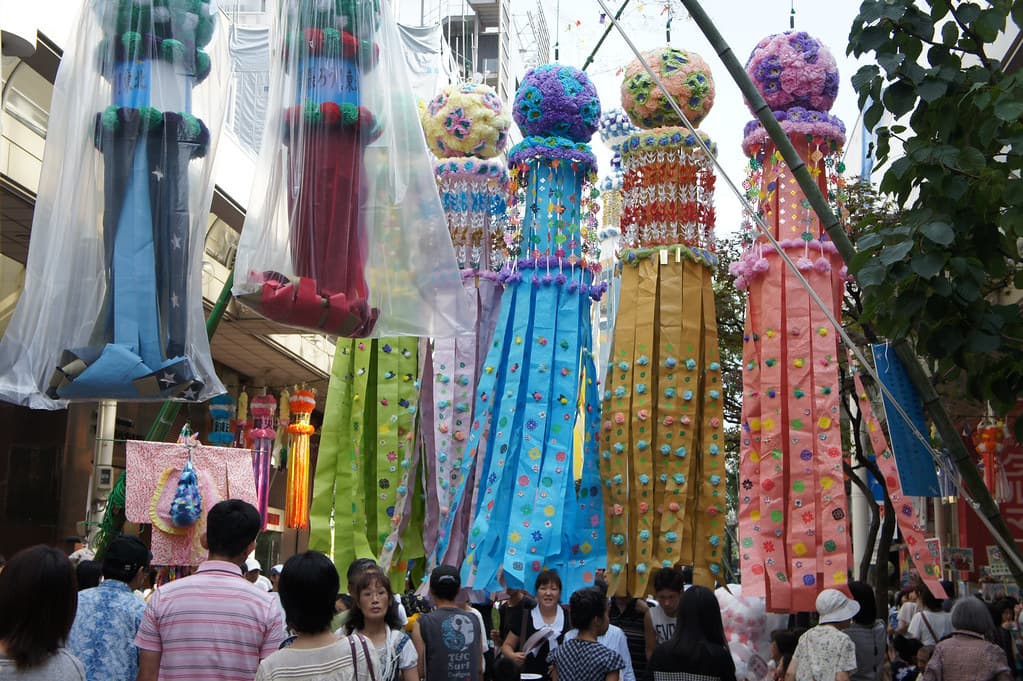
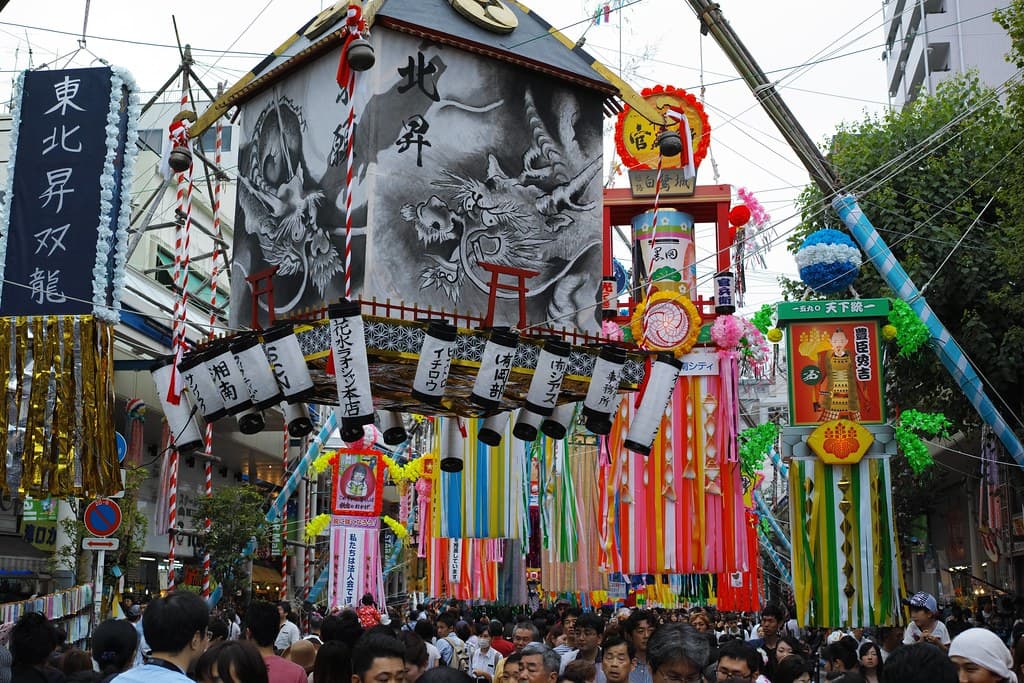
The festival's highlight is its decorations. About 300 giant ornaments hang over the shopping streets around the station, some more than five metres long: cascades of colourful paper streamers, balls, paper cranes and lanterns, many made by local shops and businesses, which compete for prizes. Some of the decorations depict popular characters or current events, and the streets, especially the covered Shonan Star Mall, become tunnels of colour.
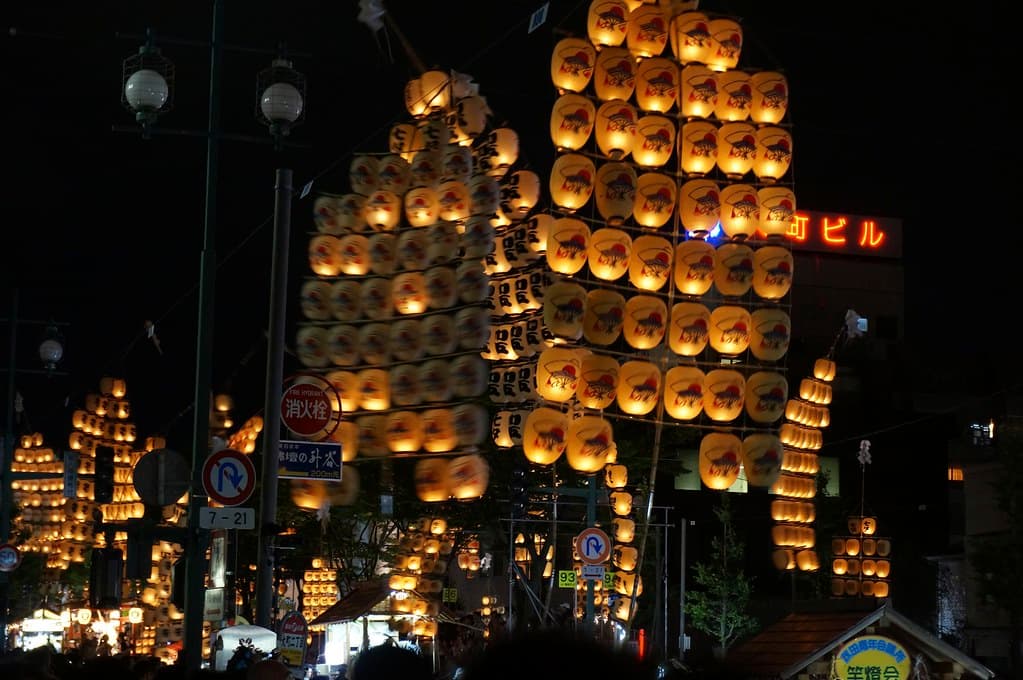
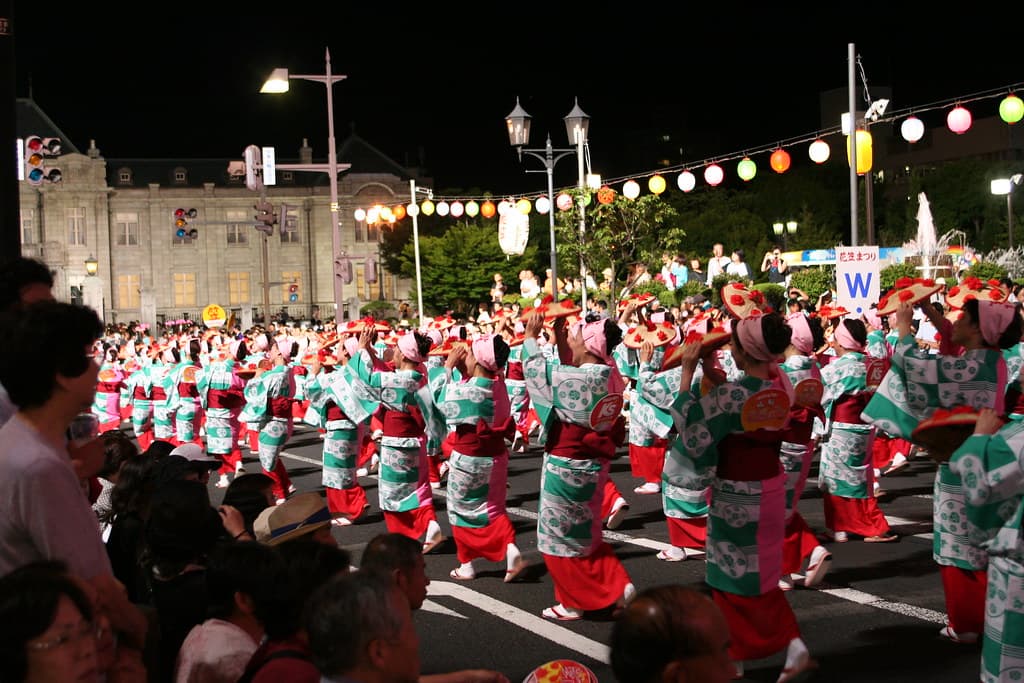
Around the decorations, the festival brings parades, music, dance performances and hundreds of food stalls, and in the evening, the lanterns glow as crowds stroll through the streets.
Hiratsuka sits on Sagami Bay, with beaches a short bicycle ride from the station and views of Mount Fuji on clear days. The festival is an easy day trip from Tokyo, and many visitors combine it with an afternoon on the Shonan coast or in the temple town of Kamakura, a short train ride away.
The festival's decorations are made by hand over months by local shops, schools and community groups, and each year they reflect the city's mood, from traditional ornaments to playful designs inspired by anime, sport and the news of the year.
What to expect
The festival runs for three days, Friday to Sunday, in early July.
Friday
The decorations go up
The giant decorations hang over the streets around the station, and the food stalls open for the first evening.
Saturday
Parades and crowds
The busiest day, with parades, performances and crowds strolling under the decorations into the evening.
Sunday
Last day
The festival continues until the early evening, when the decorations are taken down.
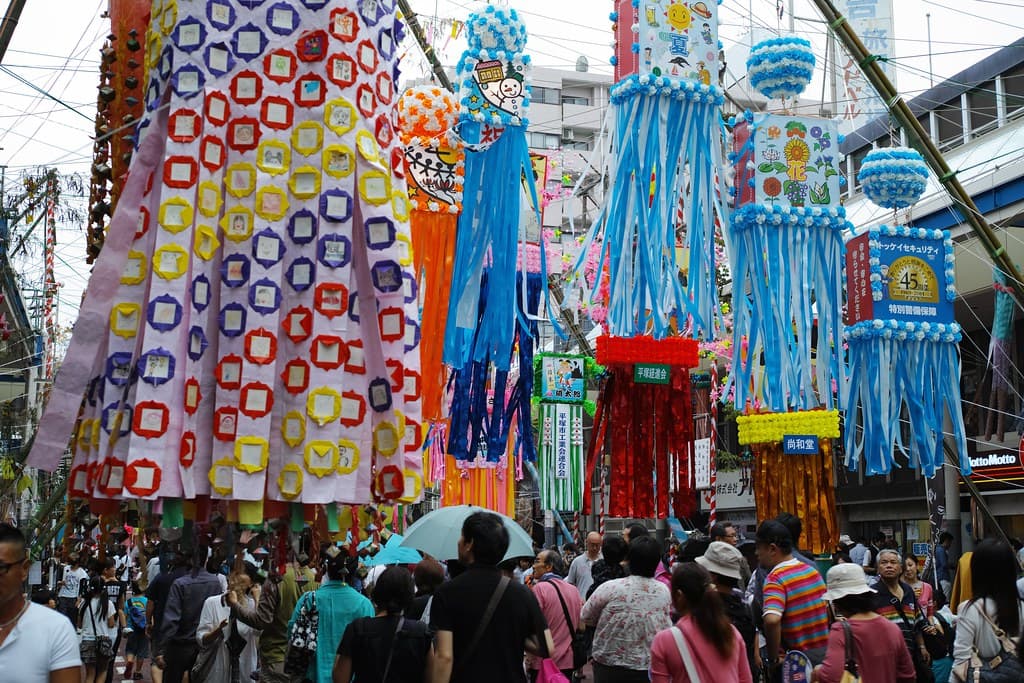
Decorations over the streets of Hiratsuka
Photo by Zengame / flickr · CC BY 2.0
Planning your trip
Getting there
Hiratsuka is about an hour from Tokyo Station on the JR Tokaido Line, and about 65 minutes from Shinjuku on the Shonan-Shinjuku Line. The festival area is a two-minute walk from the north exit of JR Hiratsuka Station.
Where to stay
Most visitors come for the day from Tokyo or Yokohama. Hiratsuka has a few business hotels, and the beach towns of the Shonan coast, such as Fujisawa and Kamakura, are pleasant bases.
What it costs
The festival is free. Food from the stalls is cheap, and the train from Tokyo costs about ¥1,000 each way.
Go like you know
- Wear a yukata, a light summer kimono; many visitors do.
- Go on Friday or early on Sunday if you want to avoid the biggest crowds of Saturday.
- Look out for the decoration contest winners; the prize-winning ornaments are marked with ribbons.
- Bring a small towel and a fan; the streets get hot and humid.
- Check the weather; early July is often in the rainy season, and a light umbrella or rain jacket is handy.
- Walk beyond Shonan Star Mall into the side streets, where smaller decorations made by local groups hang.
- Try festival foods: yakisoba, kakigori shaved ice and grilled corn.
- Visit in the evening, when the decorations are lit and the heat eases.
- Spend the morning at the beach in nearby Shonan or in historic Kamakura.
- Sendai's Tanabata, in August, is Japan's most famous Tanabata festival.
- Tokyo's Sumida River Fireworks, at the end of July, is another summer classic near the capital.
Frequently asked questions
When is the Hiratsuka Tanabata Festival?
Over three days, Friday to Sunday, in early July, around Tanabata on July 7. In 2026, it ran from July 3 to 5. The 2027 dates have not been announced; if the usual pattern holds, the festival will fall on the weekend closest to July 7.
What is Tanabata?
Tanabata, the Star Festival, celebrates the legend of Orihime and Hikoboshi, two lovers represented by the stars Vega and Altair, who can meet only once a year, on the seventh day of the seventh month. People write wishes on strips of paper and hang them on bamboo branches.
How is it different from Sendai's Tanabata?
Sendai's Tanabata, in early August, follows the traditional lunar calendar and is famous for its elegant paper streamers. Hiratsuka's festival, in early July, follows the modern calendar, with colourful and often playful decorations, parades and food stalls, and is easy to reach from Tokyo.