What is Akita Kantō?
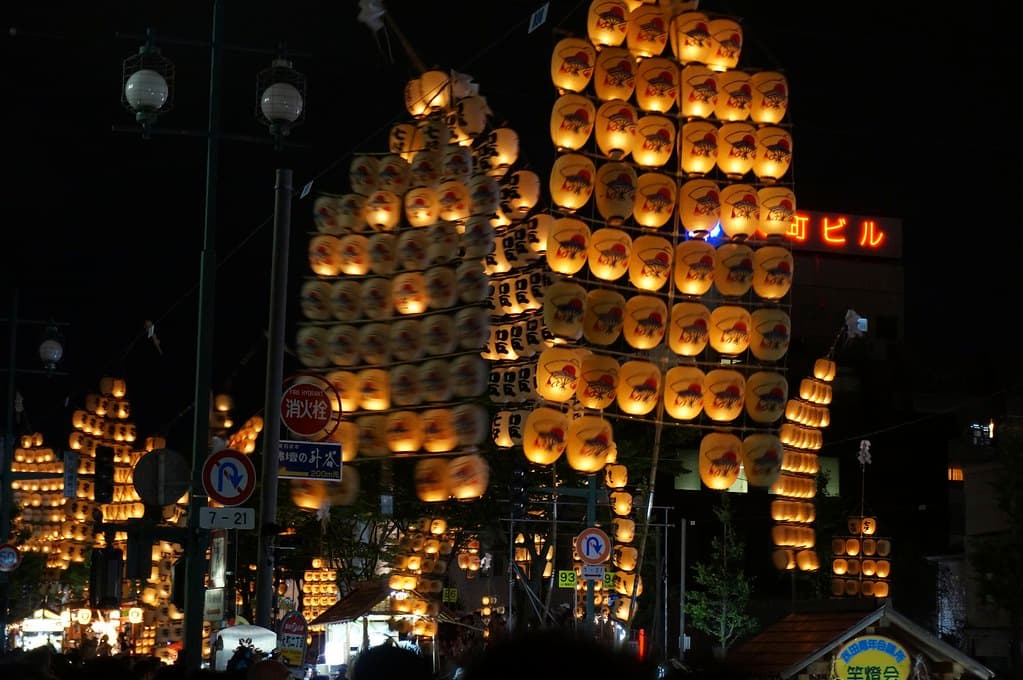
The Akita Kantō Matsuri (秋田竿燈まつり) is a festival of balance. For four nights every August, the city of Akita, in the north of Japan's main island, fills its main avenue with kantō: long bamboo poles hung with rows of glowing paper lanterns, raised by single performers who balance them on the palm of one hand, on a shoulder, on the lower back or even on the forehead, while the crowd gasps and cheers.
The biggest poles stand 12 metres tall, weigh about 50 kilograms and carry 46 lanterns, and as they sway against the night sky they are meant to look like ears of ripe rice. That is the festival's purpose: a prayer for a good harvest. Its roots are older still, in neburi nagashi, a summer rite to drive away illness and drowsiness in the hot months, which was already being practised in Akita in the 18th century; the earliest written description of it comes from a traveller's diary of 1789. The festival was named an Important Intangible Folk Cultural Property of Japan in 1980.
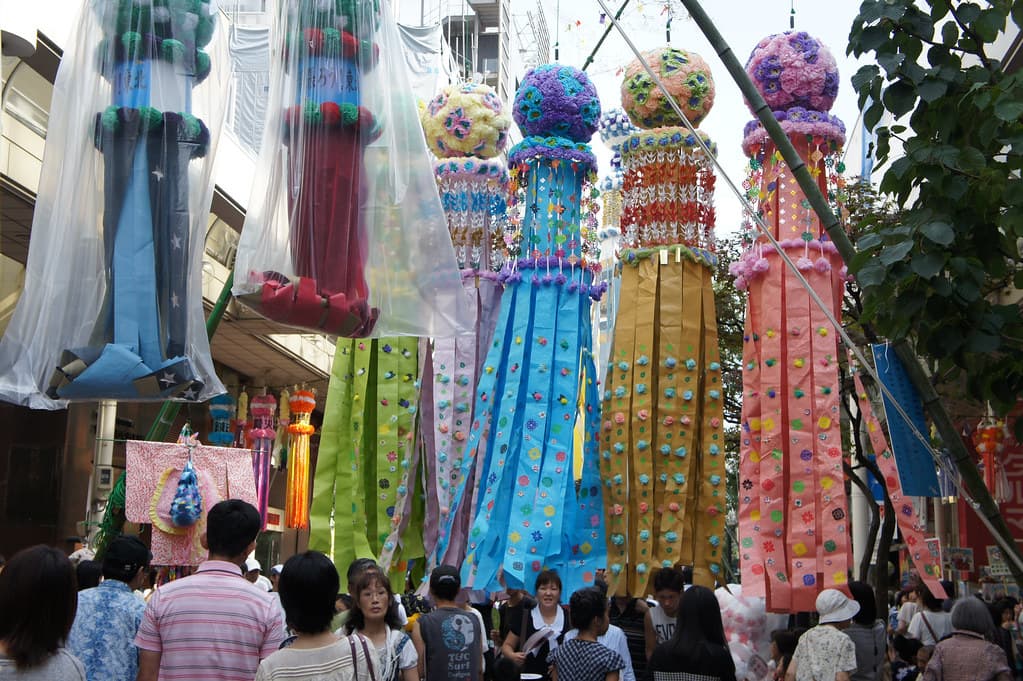
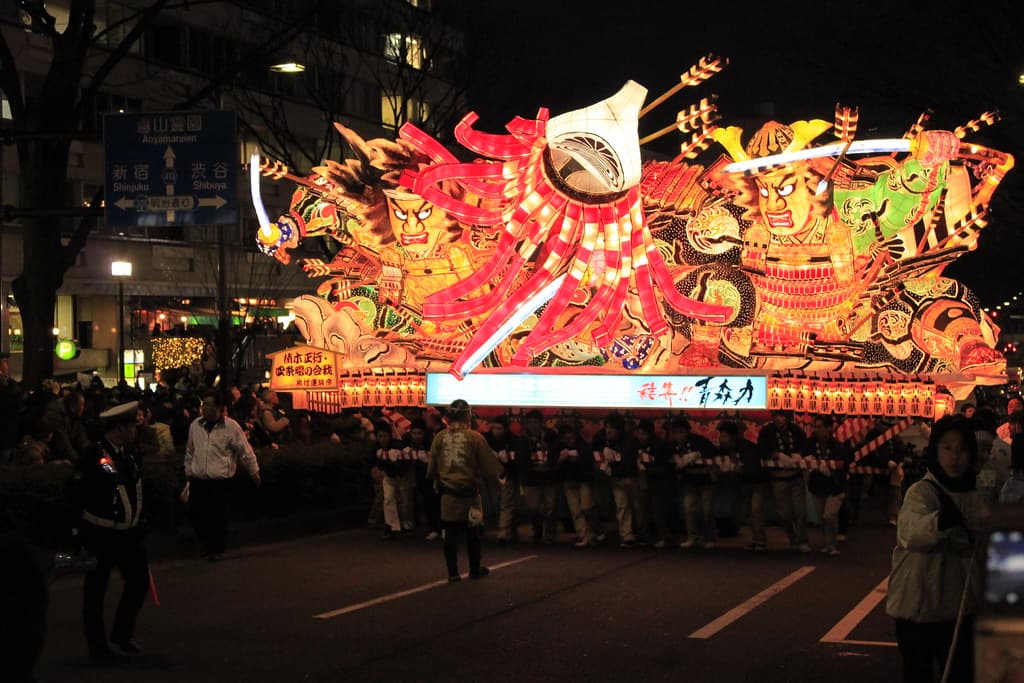
Akita Kantō is one of the three great summer festivals of Tohoku, the north-east of Japan, along with Aomori Nebuta and Sendai Tanabata, and all three fall in the first week of August, which makes it easy to see them together on a single trip by train. Of the three, Akita's is the one where the skill of individual performers is the whole show, and where you can try it yourself afterwards.
What to expect
The evening performances take place on Kantō Ōdōri, the city's main avenue, closed to traffic for the festival. Hundreds of kantō from local neighbourhoods and companies line up along it.
Evenings
The night performance
At dusk the lanterns are lit and, at a signal, the poles rise all along the avenue at once to the sound of flutes and taiko drums and the chant of dokkoisho! Performers pass the poles from hand to shoulder to forehead, adding extensions to make them taller, and sometimes they bend and lean dramatically before they are steadied.
After the show
Meet the kantō
When the performance ends, visitors are invited onto the avenue to meet the performers, take photos and even try lifting a smaller kantō, a highlight for many.
Daytime
The skills competition
By day, teams compete in a contest of technique in the city centre, judged on how steadily and beautifully they handle the poles, with smaller kantō carried by children.
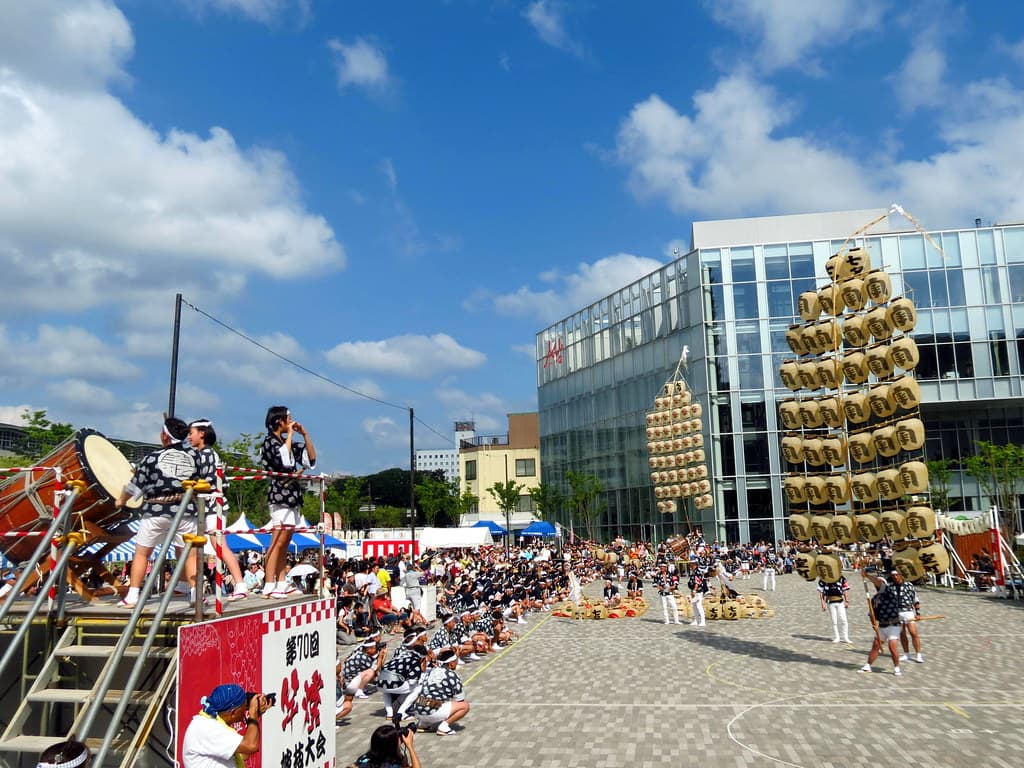
A daytime kantō display in Akita
Photo by redlegsfan21 / flickr · CC BY-SA 2.0
Planning your trip
Getting there
Akita is about four hours from Tokyo on the Akita Shinkansen, and Akita Airport has flights from Tokyo and Osaka. Kantō Ōdōri is a walk of about fifteen minutes from Akita Station, through the centre of the city.
Where to stay
Akita's hotels fill early for festival week, especially as many visitors are touring all three Tohoku festivals. Stay near Akita Station for the easiest access, or base yourself in a nearby town on the train line, such as Kakunodate, the samurai town, and travel in for the evening.
What it costs
Watching from the street is free. Reserved seats along the avenue are sold in advance at modest prices and are worth it for comfort and view. The shinkansen fare from Tokyo is the biggest single cost, and Akita's hotels raise prices in festival week.
Go like you know
- Try your hand at a small kantō after the show. It is much harder than it looks.
- Join in the chant of dokkoisho, dokkoisho as the poles rise.
- Try kiritanpo, Akita's grilled rice sticks, often served in a hot pot, and the local sake.
- See all three of Tohoku's great summer festivals in one trip: Aomori Nebuta and Sendai Tanabata fall in the same days.
- For the giant shells of the Nagaoka Fireworks, head south on August 2 and 3.
Frequently asked questions
When is Akita Kantō?
Every year from August 3 to 6, with the main performances in the evening, from around dusk. The dates are fixed, so you can plan well ahead. Akita's festival overlaps with Aomori Nebuta and comes just before Sendai Tanabata, which runs from August 6 to 8.
How heavy are the kantō?
The largest weigh about 50 kilograms and stand around 12 metres tall, with 46 lanterns. Smaller kantō, for younger performers and children, are lighter and shorter. Performers train for years to balance the big poles on one hand, a shoulder or the forehead, often adding bamboo extensions as they go.
Can I try holding a kantō?
Yes. After the evening performances, visitors can walk onto the avenue, meet the teams and, with their help, try lifting a smaller kantō. Ask a performer politely, follow their instructions, and expect it to be much harder to keep upright than it looks from the crowd.