What is hanami?
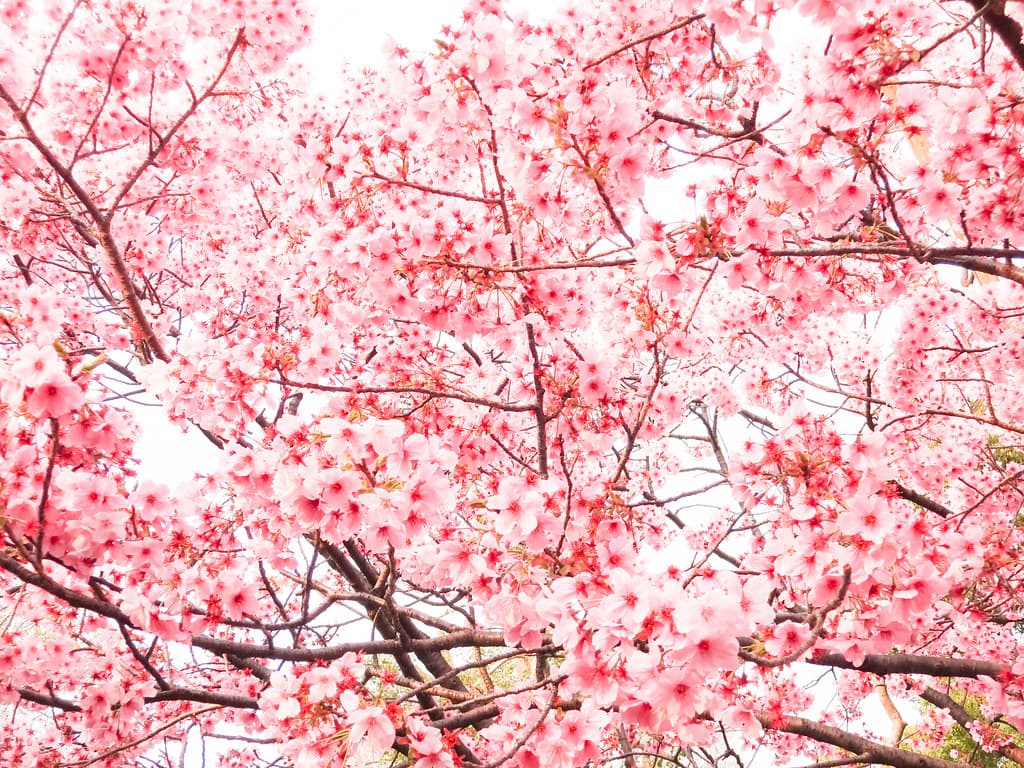
Hanami (花見) simply means "flower viewing", and in Japan it almost always means cherry blossoms, sakura. The custom is more than a thousand years old. Aristocrats of the Heian court held poetry parties under blossoming trees, and over the centuries the practice spread to samurai and then to ordinary townspeople. In the Edo period, the shogun Tokugawa Yoshimune had cherry trees planted along the Sumida River and in parks such as Asukayama on the edge of the capital, which helped make blossom-viewing a pastime for townspeople.
The blossoms hold a special place in Japanese culture because they are so brief. A tree reaches full bloom and begins to scatter its petals within about a week, and that fleeting beauty is linked to mono no aware, a gentle awareness of impermanence. The blossoms also mark the start of the school and fiscal year in April, so they are tied to new beginnings, graduations and fresh starts.
Today hanami is a national ritual. Television news tracks the sakura zensen, the cherry blossom front, as it moves north from Okinawa in January to Hokkaido in May. The Japan Meteorological Agency watches official sample trees in each city, including one at Yasukuni Shrine in Tokyo, and announces first bloom and full bloom. Companies, schools and groups of friends plan their picnics around those announcements.
A week of perfect bloom, then petals on the wind: the whole country pauses to watch it happen.
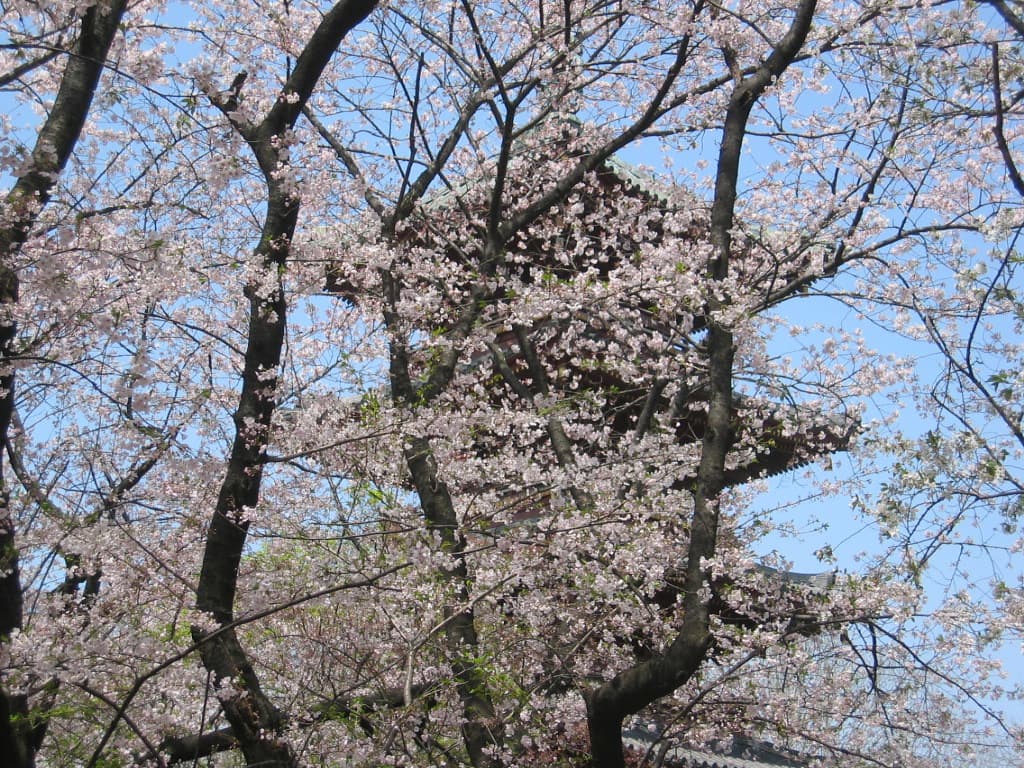
Cherry blossoms framing a pagoda roof in Tokyo's Ueno Park
Photo by tiarescott / flickr · CC BY 2.0
What to expect
In Tokyo, the season usually lasts about two weeks from first bloom to the last petals, with full bloom in between.
First bloom
Kaika
The first flowers open on the official sample trees. Parks begin to fill, especially on sunny weekends, as people anticipate full bloom.
About a week later
Mankai
Full bloom, when most flowers are open. Parks are at their most beautiful and most crowded, day and night.
Evenings
Yozakura
Night viewing, when trees are lit by lanterns or spotlights. Many parks and riversides illuminate their trees during the peak.
Final days
Hanafubuki
Petals fall like snow, covering paths and floating on rivers and moats, a moment many locals consider the most beautiful of all.
Planning your trip
Getting there
Tokyo and Kyoto are the usual bases, and both are easy to combine with a trip north or south as the blossom front moves. Because the front climbs the country over several weeks, you can extend the season by travelling. If you miss full bloom in Tokyo, head to cooler places such as Sendai, Hirosaki or Hakodate, where trees open later. In the mountains, Takayama's spring Sanno Matsuri on April 14 and 15 is a good excuse for a detour. Forecasts from the Japan Meteorological Agency and private weather services, published from January, help you plan.
At peak bloom, the famous spots get extremely crowded. Expect queues for toilets and, on the busiest weekends, crowd-control measures such as one-way foot traffic along the Meguro River. Weekday mornings are calmer.
Where to stay
Cherry blossom season is one of the busiest times to travel in Japan. Flights and hotels in Tokyo and Kyoto fill up and become expensive months in advance. Book early, and build flexibility into your itinerary, since the exact bloom dates shift every year with the weather.
What it costs
Viewing is free in most parks, so the main costs are the trip itself and the seasonal surge in hotel prices. Paid extras are small. Shinjuku Gyoen charges ¥500 for adults, and renting a rowboat at Chidorigafuchi has varied between sources, so confirm the price and booking rules with the boathouse. A picnic from a department store food hall, plus sakura-flavored treats, rounds out the day.
Go like you know
- Try hanami dango, three-colored rice dumplings on a skewer, and limited-edition sakura sweets and drinks sold everywhere in the season.
- Rent a rowboat on the moat at Chidorigafuchi for a view of blossoms hanging over the water.
- Walk the Meguro River at night, when lanterns light the trees.
- Look for weeping cherry trees, shidarezakura, which bloom earlier and often stand alone in temple gardens.
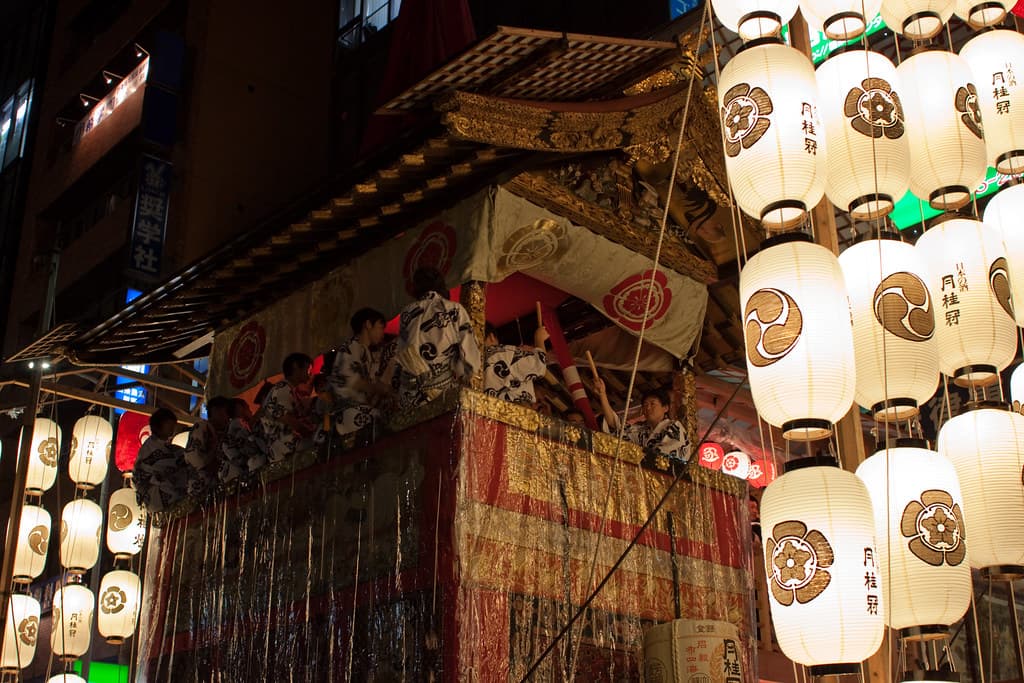
- Visit Kyoto's Philosopher's Path or Maruyama Park if you have time to travel west, and come back in July for Gion Matsuri.
- Missing the blossoms by a few weeks? Tokyo's Sanja Matsuri fills the Asakusa streets in May.
- Buy a seasonal bento from a department store food hall the morning of your picnic; they sell out by lunchtime at peak bloom.
Frequently asked questions
When is cherry blossom season in Tokyo?
Tokyo's first bloom usually comes in late March (in 2026 the official tree opened on March 19), with full bloom about a week or so later and petals falling in early April. Dates shift each year depending on the weather. Follow forecasts from the Japan Meteorological Agency and weather services, published from January.
What is the best place to see cherry blossoms in Tokyo?
Ueno Park and Chidorigafuchi are classic spots, the Meguro River is famous for night views, and Shinjuku Gyoen offers many varieties in a calmer, ticketed garden. Smaller parks and riversides in residential neighborhoods are often just as lovely and far less crowded.
Can I have a picnic under the trees?
Yes, picnics are the heart of hanami. Bring a tarp or picnic mat, food and drinks, and arrive early on weekends to find a spot. Check park rules, as some ban alcohol, barbecues or large groups, and always take your rubbish with you.
What if I miss full bloom?
Travel north. The blossom front moves from south to north over several weeks, so cities like Sendai, Hirosaki and Sapporo bloom later. Late blooming varieties, such as double-flowered yaezakura, also extend the season in many parks for a week or two after the main bloom.