What is the Takayama Festival?
Takayama is a small city in the mountains of Gifu Prefecture, in the region known as Hida. It became wealthy in the Edo period through timber and trade, and its carpenters and craftsmen were famous across Japan. The town's old quarter, Sanmachi, still has streets of dark wooden merchant houses, sake breweries and shops that look much as they did centuries ago.
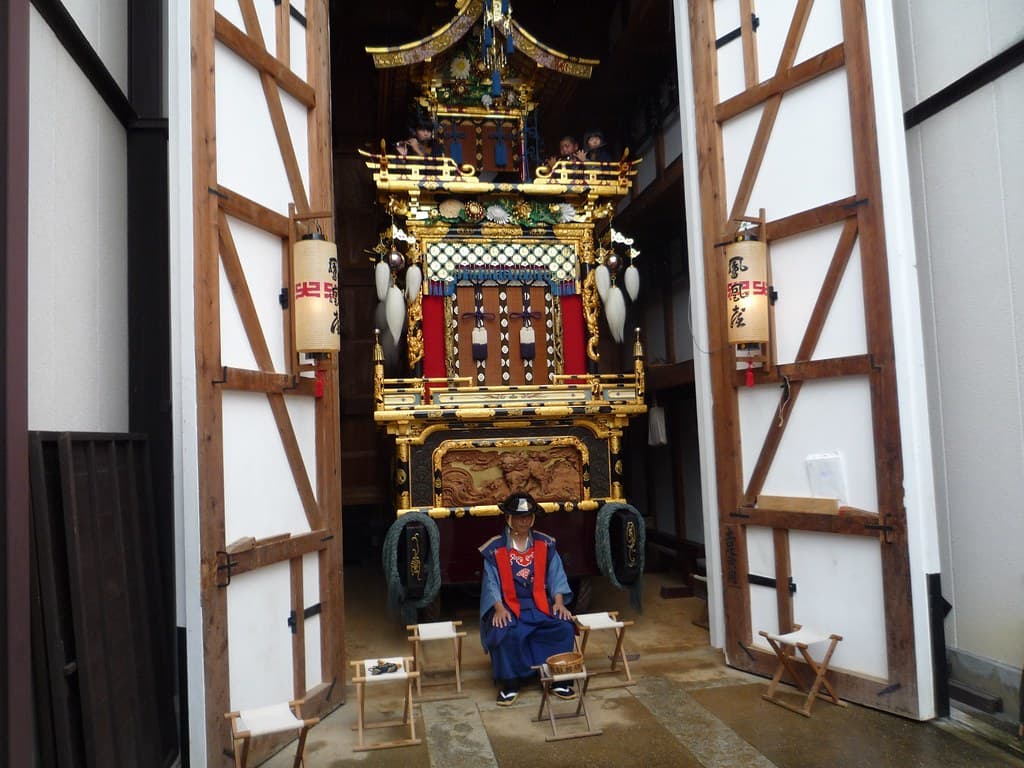
The Takayama Matsuri (高山祭) is the collective name for two festivals held each year: the spring Sanno Matsuri at Hie Shrine and the autumn Hachiman Matsuri at Sakurayama Hachimangu. Both feature yatai, festival floats owned by neighborhood groups and decorated by generations of local craftsmen with intricate carvings, metalwork, lacquer and embroidered hangings. Some carry karakuri, mechanical puppets that perform elaborate routines.
The floats are treasured as works of art, and the festival is often ranked among Japan's three great float festivals, alongside Kyoto's Gion Matsuri and the Chichibu Night Festival. In 2016 it joined 32 other float festivals on UNESCO's intangible heritage list. The spring festival has twelve floats and the autumn one eleven, and each has its own character, but both combine daytime displays and processions with a lantern-lit evening parade on the first night.
A town of carpenters built its best work to roll through the streets twice a year.
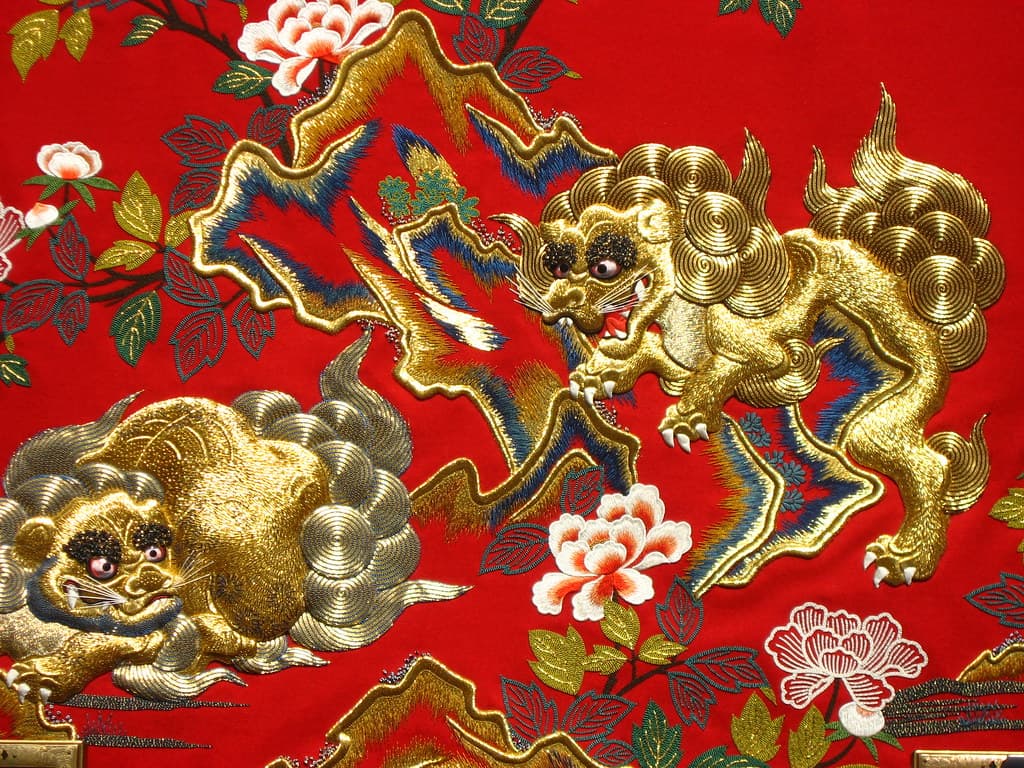
Gold-thread embroidery on a Takayama festival cart (yatai)
Photo by randomidea / flickr · CC BY 2.0
What to expect
Each festival lasts two days, with similar programs in spring and autumn. Times shift a little each year, so check the official schedule.
Day 1
Float display and karakuri
The floats are displayed around the shrine area. Karakuri performances take place twice a day at set times, drawing big crowds. A procession with lion dancers, musicians and costumed participants winds through the town in the afternoon (in autumn, from about 1:20pm).
Day 1 evening
Night festival
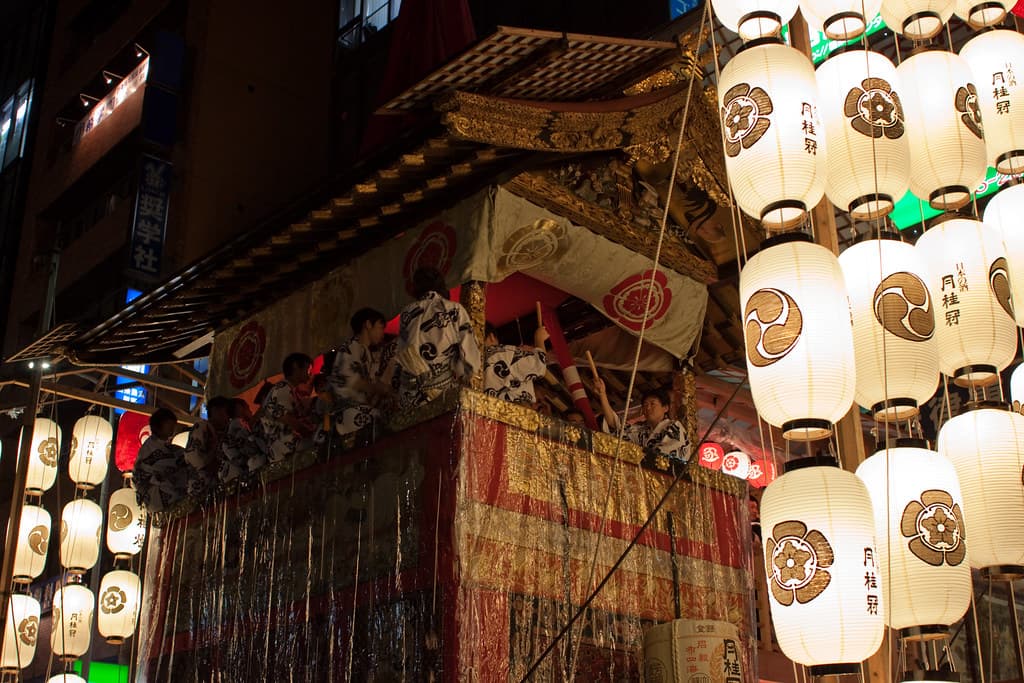
Around a hundred paper lanterns are lit on each float, and the floats are paraded slowly through the streets after dark, a magical sight against the old houses. This evening parade happens on the first night only, and rain cancels it.
Day 2
Procession and display
The floats are displayed again, with more karakuri performances and the procession continuing through town (in autumn, it starts around 8:30am and runs into the afternoon).
Planning your trip
Getting there
Takayama is reached by the scenic JR Hida limited express from Nagoya (about two and a half hours) or from Toyama (about 90 minutes) along the JR Takayama Line, and by highway buses from Tokyo, Osaka and Kanazawa. Toyama is also home to Owara Kaze no Bon in September, if you want to stitch two festivals into a Hida and Toyama loop. The old town and festival areas are walkable from the station, so once there you move on foot. Combine your trip with a visit to the World Heritage village of Shirakawa-go, about an hour away by bus.
The evening processions are the festival's most atmospheric moment. As dusk falls, each float is hung with around a hundred paper lanterns and pulled slowly through the streets to the sound of flutes and drums. Find a spot on one of the narrow lanes of the old town rather than a main road, where the glow reflects off the dark wooden facades.
Where to stay
Central Takayama hotels book out many months ahead for festival days, and prices rise. Book as early as possible, or stay in nearby towns such as Hida-Furukawa (one stop north) or Gero Onsen and travel in by train. If the evening parade is your priority, sleep in town on its first night, since late transport back to a day-trip base is limited.
What it costs
Watching the festival is free. The costs are the room, which carries a festival-day premium, and extras such as a visit to the Floats Exhibition Hall, which charges an admission fee (sources report roughly ¥900–1,000 for adults, so check before you go). Meals and street snacks are ordinary Takayama prices, and we found no published figures for transport costs to the festival days.
Go like you know
- Visit the Takayama Festival Floats Exhibition Hall to see several floats up close on any day of the year.
- Try Hida beef, served as sushi on rice crackers or grilled skewers at street stalls.
- Taste sake at the old breweries in Sanmachi, marked by cedar balls hanging outside.
- Visit the morning markets along the Miyagawa River for local produce and crafts.
- Stay in a traditional ryokan to experience Hida cuisine and hot springs.
- Explore the Hida Folk Village, an open-air museum of thatched farmhouses on the edge of town.
Frequently asked questions
When is the Takayama Festival?
There are two festivals: the spring Sanno Matsuri on April 14 and 15, and the autumn Hachiman Matsuri on October 9 and 10. The dates are fixed every year. Each festival has its own floats and shrine, but the program is similar.
Spring or autumn: which is better?
Both are beautiful. The spring festival can coincide with cherry blossoms, while the autumn festival comes with crisp weather and early autumn colors. The spring festival takes place south of Yasugawa Street, the autumn one north of it, around Sakurayama Hachimangu.
What are karakuri?
Karakuri are mechanical puppets worked by teams of skilled puppeteers (tsunakata) who move many strings at once. They perform intricate movements and transformations, a centuries-old craft. Performances are a highlight of the festival and take place twice a day at set times.
What happens if it rains?
The floats are precious and are not taken out in rain. The organizers say events can be canceled with no postponement: the float tour and evening parade are called off, the floats are displayed at their storehouses or the exhibition hall, and karakuri are performed indoors. Check announcements on the day.
How crowded does it get?
Very, especially around the karakuri performances and evening processions. Takayama is a small town, and festival days bring visitors from across Japan and abroad. Arrive early, explore quieter streets between events, and consider staying overnight to enjoy the town before day-trippers arrive.