What is Ganesh Chaturthi?
Ganesh Chaturthi (गणेश चतुर्थी) celebrates the birth of Ganesha, the elephant-headed son of Shiva and Parvati, god of new beginnings, wisdom and good fortune, and the remover of obstacles. Hindus pray to him before anything important, from a wedding to an exam, and for ten days at the end of the monsoon he is invited home as a guest.
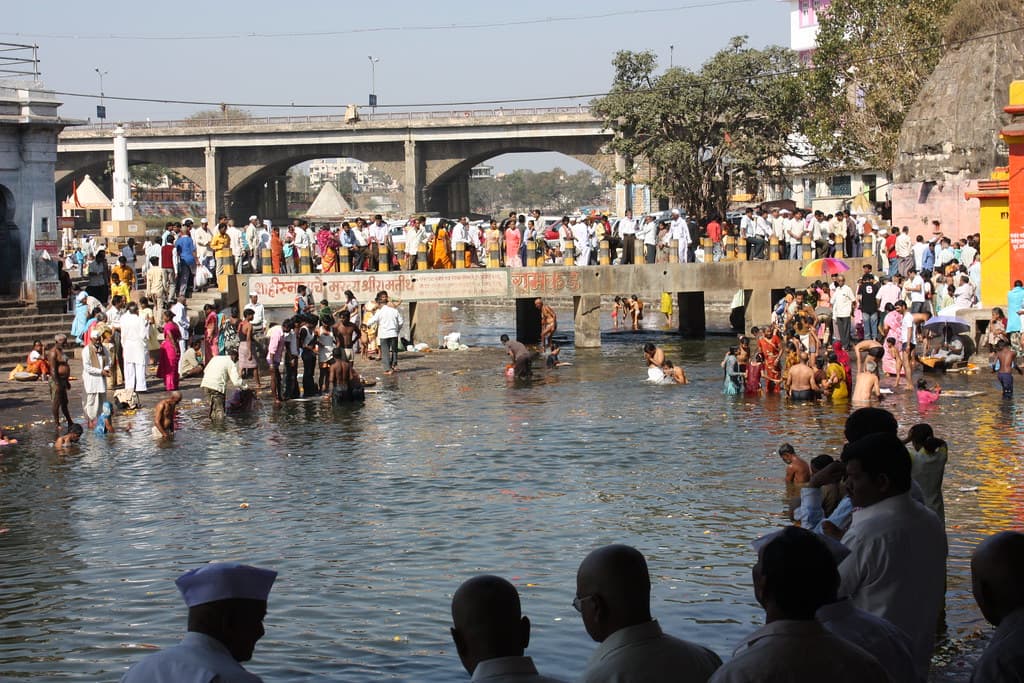
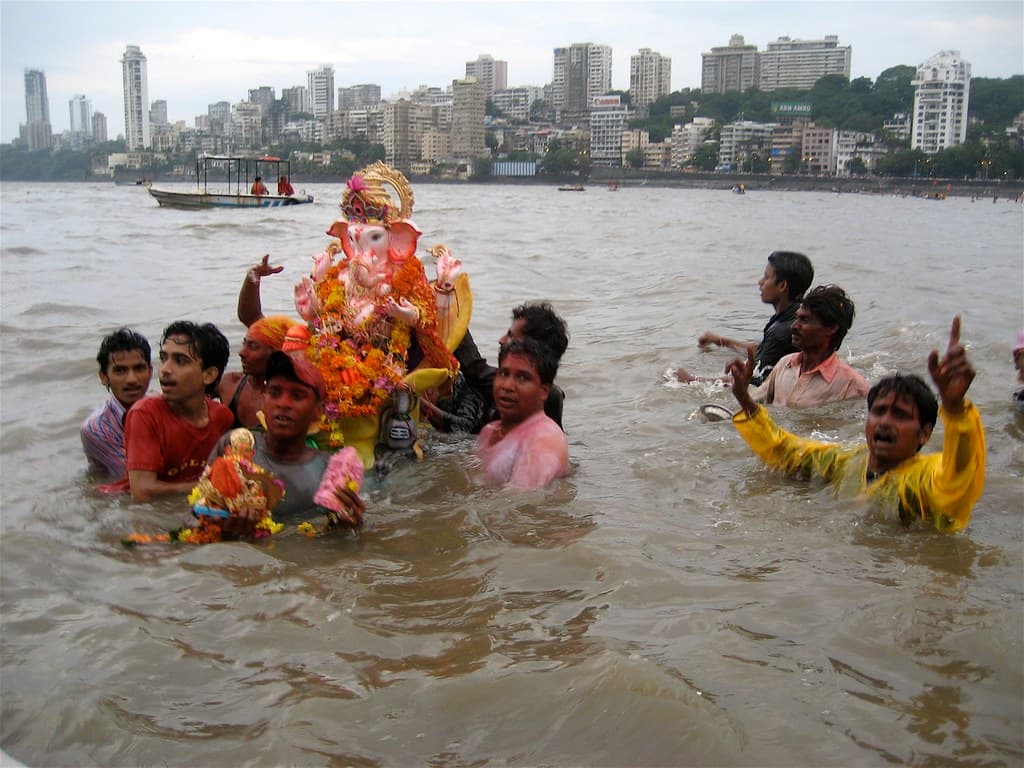
The festival falls on the fourth day of the bright half of the month of Bhadrapada, in August or September. Families bring a clay idol of Ganesha into the house, worship him with flowers, lamps and his favourite sweet, the dumpling called modak, and after a day and a half, three, five, seven or ten days, carry him to the water to be immersed, sending him home until next year.
It has been celebrated in homes for centuries, but its public form is younger. In 1893, the nationalist leader Bal Gangadhar Tilak promoted community celebrations in Pune and Mumbai, with idols in public halls and street processions, as a way of bringing people together under colonial rule. The idea stuck. Today Maharashtra, and Mumbai above all, celebrates on a scale nowhere else can match.
What to expect
In Mumbai, neighbourhood associations called mandals set up thousands of public idols in pandals, temporary shrines built in streets and halls. Some are modest; others are many metres tall and draw queues around the block. The most famous, Lalbaugcha Raja in central Mumbai, draws so many devotees that the queue to see him can take many hours.
Day 1
Ganesha arrives
Idols are carried home and to the pandals, often to drums and chants of Ganpati Bappa Morya, and installed with prayers at an auspicious hour. The city fills with music and the smell of incense and flowers.
Days 2–10
Pandal hopping
Evenings are for visiting pandals, joining the aarti, the lamp ceremony, and eating your way through stalls of sweets. Smaller immersions take place on the days in between, as households end their celebrations.
Anant Chaturdashi
The great immersion
On the last day, the big public idols leave their pandals in processions of drummers, dancers and coloured powder, moving through the streets to the sea at Girgaon Chowpatty, Juhu and other beaches. The largest processions take the better part of a day and carry on through the night.
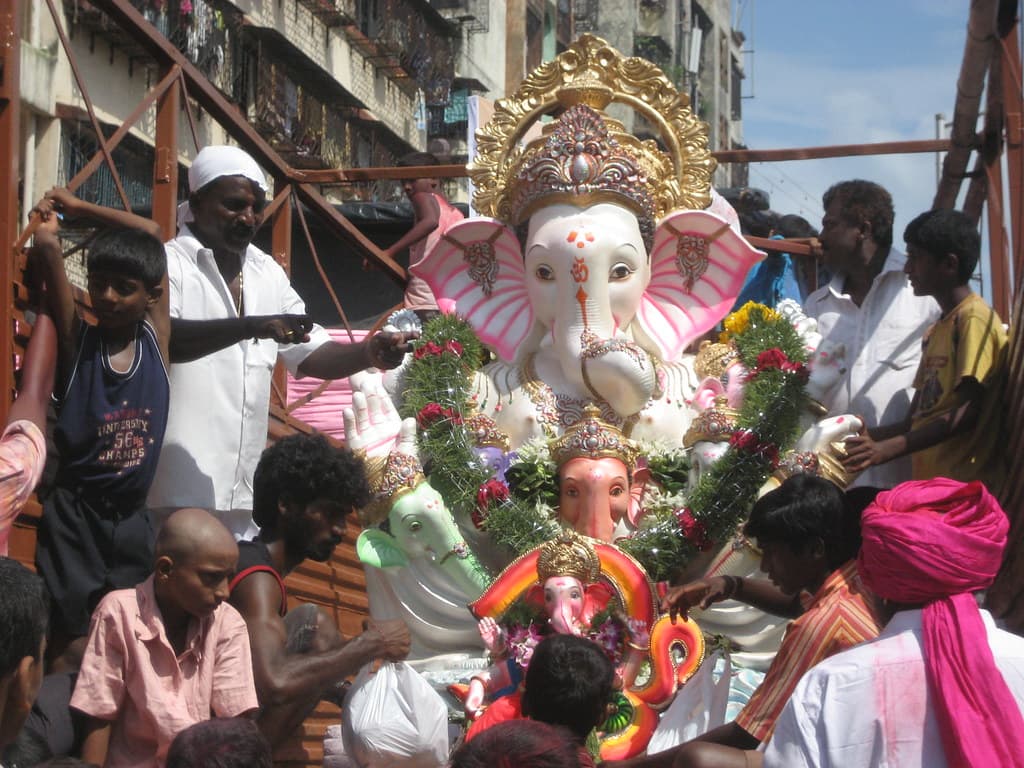
A Ganesh idol on its way through Mumbai
Photo by nickgraywfu / flickr · CC BY-SA 2.0
Planning your trip
Getting there
Mumbai's international airport has flights from around the world, and the city's suburban trains reach most of the big pandals. Lalbaug is in the old mill district of central Mumbai, and Girgaon Chowpatty is at the northern end of Marine Drive. On the last day, many roads close and walking is the only reliable way to move around the centre.
Where to stay
South Mumbai, around Colaba, Churchgate and Marine Drive, puts you close to Girgaon Chowpatty for the final immersion. Hotels near the airport and in the western suburbs are cheaper and close to Juhu, but trains between the two are packed during the festival.
What it costs
Visiting pandals and watching the processions are free, though some big mandals run separate queues for donors or VIP passes. Mumbai hotels are expensive at any time of year, and rooms in the south of the city rise for the last weekend. Street food and local trains are cheap.
Go like you know
- Take your shoes off before entering a pandal, and ask before taking photos; some of the big mandals ban them near the idol.
- Wear clothes you don't mind ruining on immersion day, when coloured powder flies in the processions.
- Look for clay idols. Plaster of Paris idols pollute the sea, and Mumbai now encourages clay idols and artificial ponds for immersion.
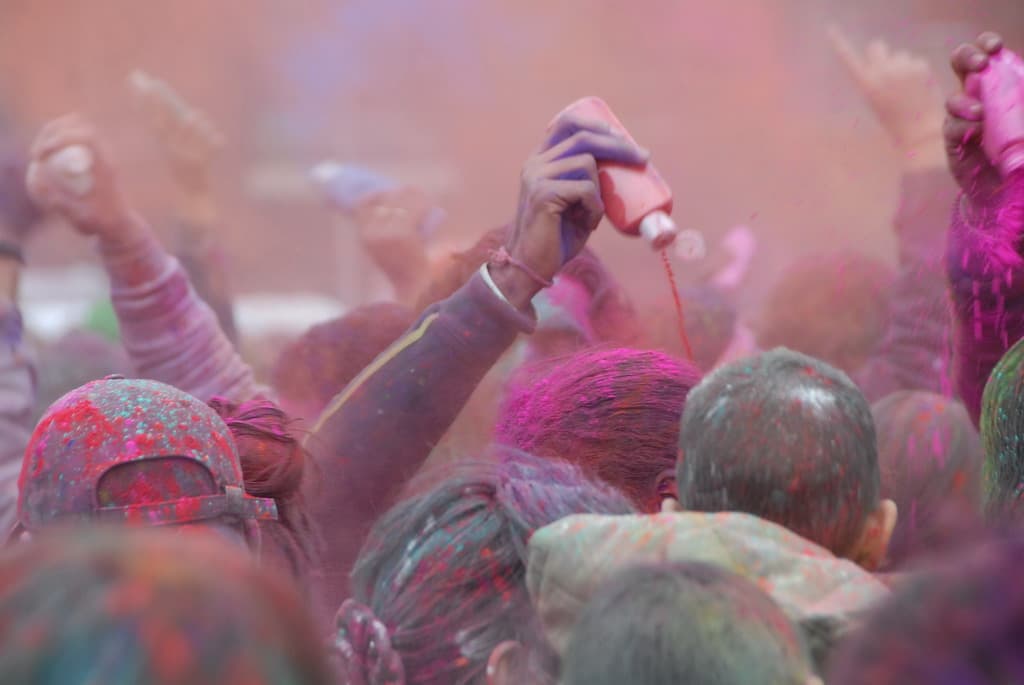
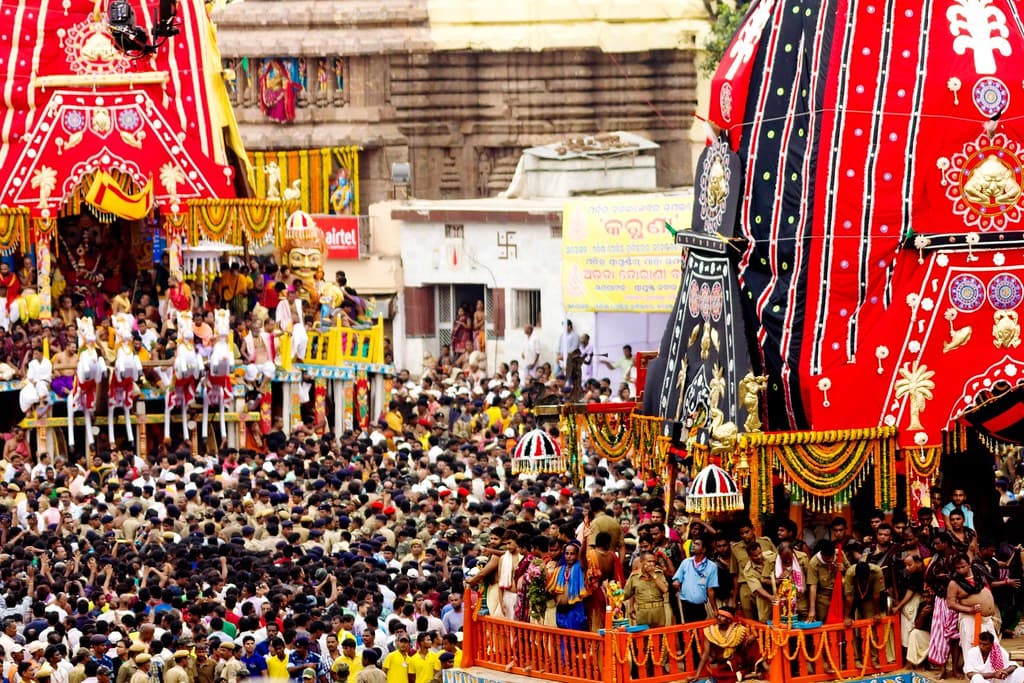
- For more Indian festivals on this scale, see Holi in spring and Puri's Rath Yatra in early summer.
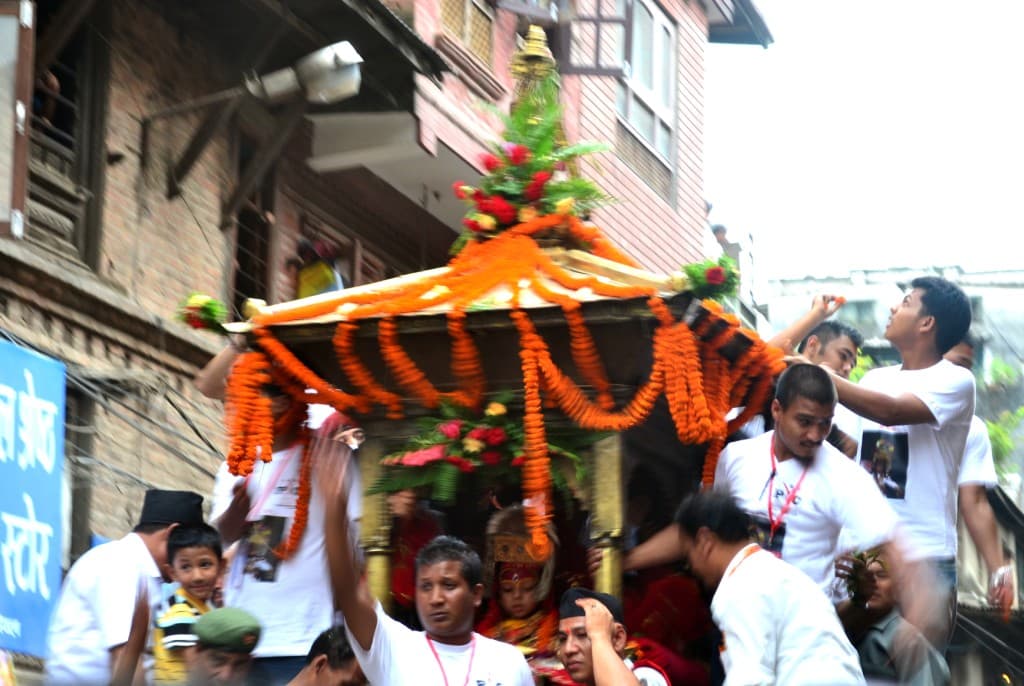
- Kathmandu's Indra Jatra reaches its main day in the same days, on the same lunar date as the final immersion.
Frequently asked questions
When is Ganesh Chaturthi?
It follows the Hindu lunar calendar and falls in August or September. In 2026 it began on September 14, with the final immersion on Anant Chaturdashi, September 25. In 2027 it is expected to begin on September 4, with the immersion on September 14.
Can visitors and non-Hindus join in?
Yes. Pandals welcome visitors of any faith, and onlookers line every procession on immersion day. Dress modestly, remove your shoes where others do, and follow the queue. Joining the dancing at a procession is usually welcome, but take your cue from the group and don't push forward.
Is Mumbai the only place to see it?
No. It is celebrated across India, especially in Maharashtra, Goa, Karnataka and Andhra Pradesh, and by the Hindu diaspora worldwide. Pune has its own great processions, with groups of hundreds of drummers. But Mumbai's pandals and immersions are the biggest and most famous.