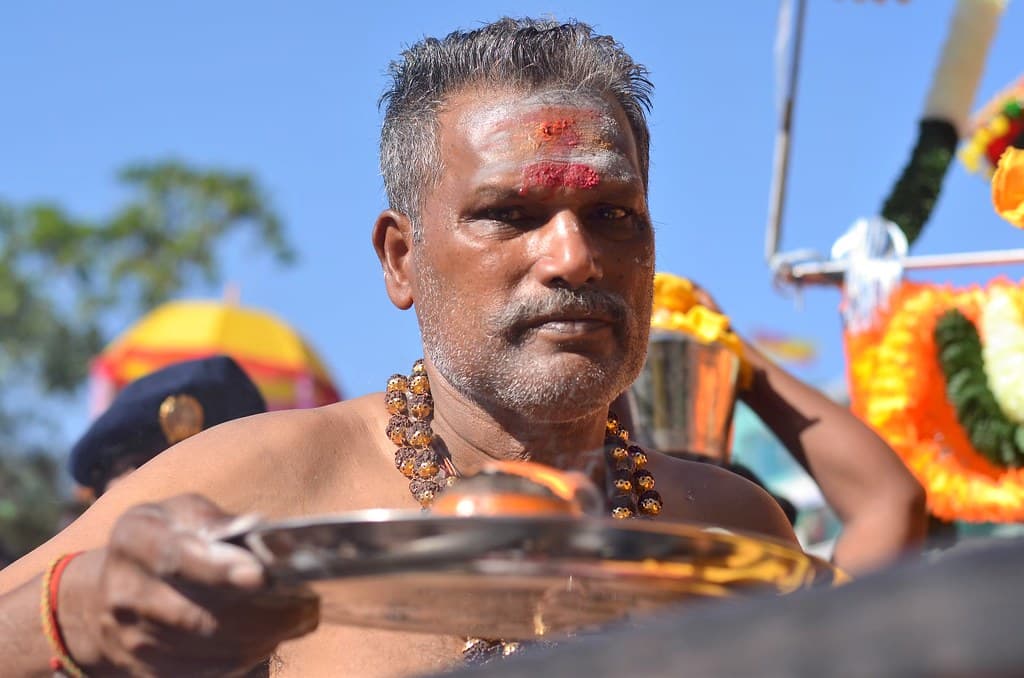
What is Thaipusam?
Thaipusam falls on the full moon of the Tamil month of Thai and honors Lord Murugan, the Tamil god of war and victory, to whom his mother Parvati gave a divine spear to vanquish evil. For Malaysia's Tamil Hindu community, it is the year's great public act of faith, and Batu Caves, the limestone cathedral of caverns just north of Kuala Lumpur, guarded by a 42.7-meter gilded Murugan statue, is its world stage. Tourism Malaysia and the police projected more than 2.5 million visitors for the 2026 celebration.
The festival's essence is the kavadi: a burden carried in fulfillment of a vow. Most devotees carry paal kudam, pots of milk borne on the head up the 272 steps to the Temple Cave. The iconic few carry vel kavadi, ornate frames of steel, flowers, and peacock feathers, some weighing tens of kilos, attached to the bearer's body with hooks and skewers through the skin. Bearers prepare with weeks of fasting, prayer, and abstinence (traditionally 48 days); on the day they walk in trance, held steady by the urumi melam drumming and the roar of supporters chanting vel, vel!
Vel! Vel! The spear, the spear.
Visitors sometimes arrive braced for something grim and leave describing something else entirely: a festival of family pride, shared food, and an almost athletic joy surrounding the piercings that photographs make look solitary.
What to expect
It begins the night before, when the silver chariot bearing Murugan's image departs Sri Maha Mariamman Temple on Jalan Tun H.S. Lee in central Kuala Lumpur at about nine in the evening and rolls through the night toward Batu Caves, devotees walking alongside, with coconuts often smashed on the road in purification. By the small hours, the procession grounds at the caves are a city of their own: kavadi being assembled, drum troupes circling, families camped on mats, free food (annadanam) served by the thousands of plates.
Through festival day, an unbroken column climbs the 272 steps, repainted in rainbow colors in 2018: milk pots, infants carried up for blessings, vel kavadi turning slow circles as their bearers dance. At the shrine the milk is poured over the deity's statue, vows are completed, and the trance lifts, often with a disorientation and relief that is intensely human to witness.
Planning your trip
Getting there
Batu Caves is one of the easiest major festivals to reach on this site: the KTM Komuter train runs from KL Sentral directly to Batu Caves station in about half an hour. For the 2026 festival KTM ran its trains around the clock from January 30 to February 2, with free rides on January 31 and February 1. Skip driving entirely: roads close (police diverted twelve junctions for the chariot procession) and parking is hopeless. If you take a ride-hailing car, arrange a drop-off in Taman Wahyu or Sentul and walk the rest.
Where to stay
Kuala Lumpur is the natural base, and Thaipusam is a public holiday in Selangor, Kuala Lumpur and several other states, so the city itself half-empties toward the caves. In 2026 the date coincided with Federal Territory Day, creating a long weekend, so book early when the date meets a holiday.
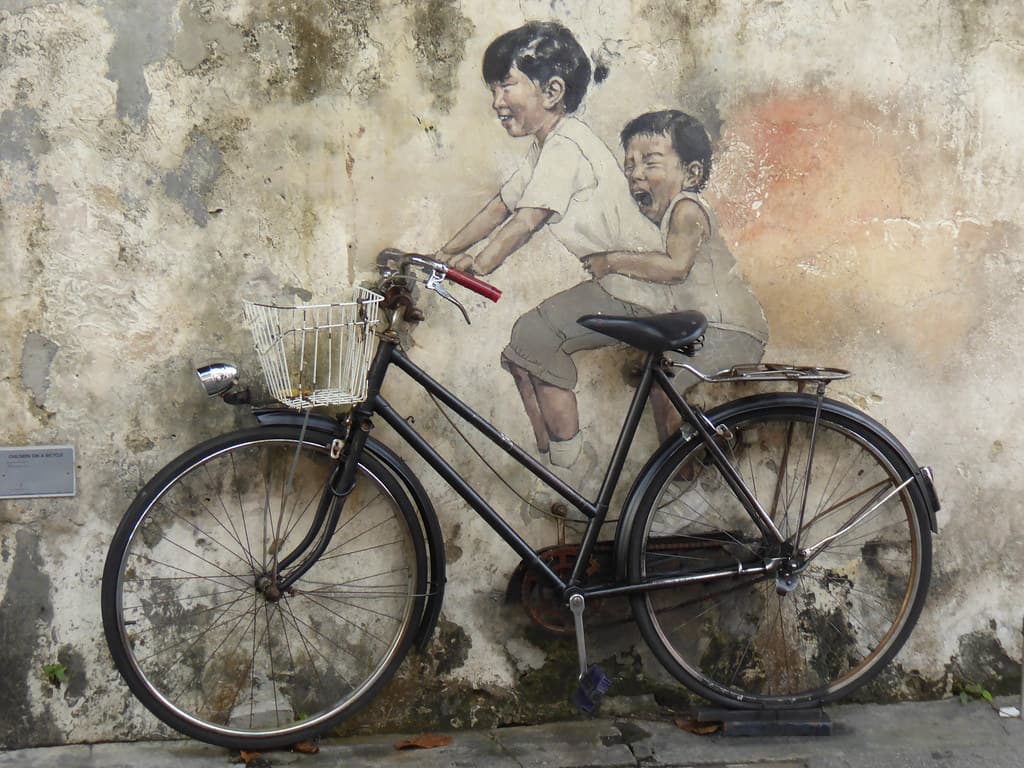
Penang is the other big Thaipusam site in Malaysia, with its own procession and crowds. If you want to extend into the south, pair it with the George Town Festival, Penang's August arts festival, on a separate trip.
What it costs
Everything at the festival is free, including, if you're willing, your lunch: accepting annadanam food is participation, not imposition. The costs you will meet are your base in Kuala Lumpur, your train fare (free on the main days in 2026, though that is not guaranteed in other years) and water for the climb. We found no published figure for the festival-week hotel surge in Kuala Lumpur.
Dress modestly, with covered shoulders and knees, and expect security checks at the grounds.
Go like you know
- Position yourself at the base of the steps rather than racing to the cave: the kavadi bearers' final gathering of resolve before the climb is the festival's most powerful vantage.
- Never touch a kavadi or its bearer, and never block their path; supporters will move you firmly if the trance is deep.
- Ask before close-up photographs of pierced devotees; families usually agree proudly, and the asking is what matters.
- The urumi melam drum troupes are hired by families; follow one at respectful distance for the best sustained experience of the day.
- Weekday or not, book nothing else that day. Thaipusam rewards surrender to its own schedule.
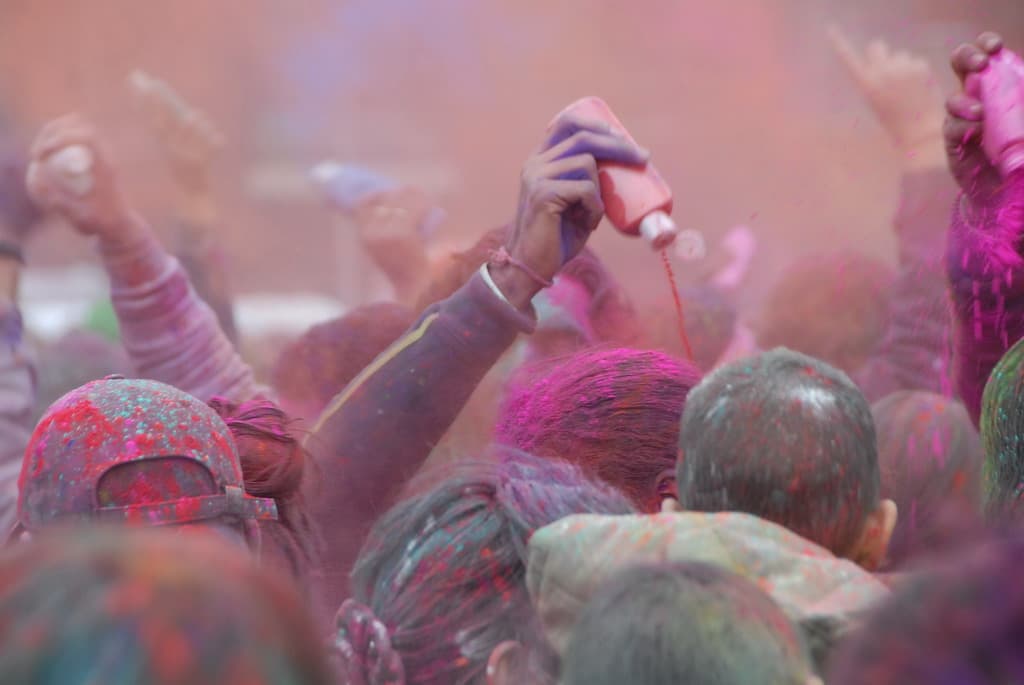
- Another Hindu street festival worth a trip is Holi, the March festival of colors in India.
Frequently asked questions
Is it appropriate for non-Hindus to attend?
Yes. Thaipusam at Batu Caves is emphatically public, and the community is long accustomed to respectful visitors, who are often handed food and explanations unprompted. The requirements are modest dress, patience with crowds, and treating devotees as people keeping vows rather than spectacle.
Will the piercings be difficult to watch?
Less than you expect. Bearers prepare for weeks and are surrounded by celebratory support crews, and the hooks and skewers are removed afterwards with consecrated ash sprinkled over them. Most first-time visitors report awe rather than squeamishness, but you can keep to the milk-pot processions and skip the piercing tents entirely.
When exactly is Thaipusam?
It follows the Tamil lunar calendar: February 1 in 2026, January 22 in 2027. The chariot procession runs the night before, and the caves are active for a full day either side, so build a two-day window around the date if you can.