What is Rath Yatra?
Rath Yatra (ରଥଯାତ୍ରା), the chariot festival, is the day Lord Jagannath comes out to his people. Jagannath, a form of Vishnu worshipped above all in Odisha, lives in Puri's great 12th-century temple with his elder brother Balabhadra and his sister Subhadra. Once a year, on the second day of the bright half of the month of Ashadha, the three deities leave the temple and ride down the Grand Road, the Bada Danda, to the Gundicha Temple, where they stay for about a week before riding home.
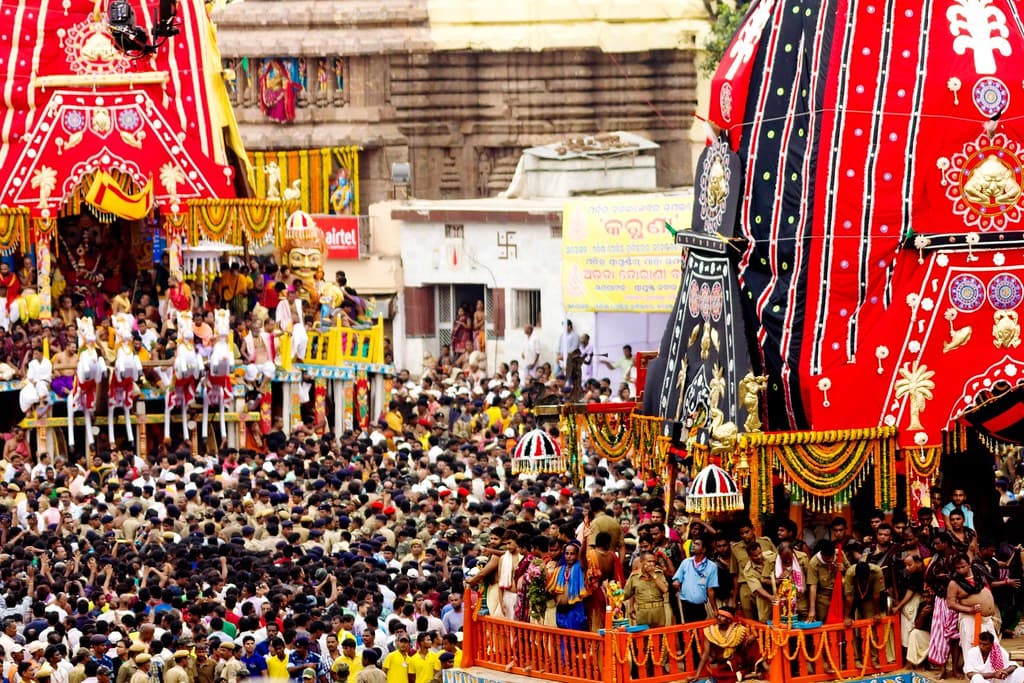
They travel on three enormous wooden chariots built new every year. The timber comes from specified trees in the forests of the old princely state of Dasapalla, floated down the Mahanadi river, and a hereditary guild of carpenters spends the spring building them by traditional measures. Jagannath's chariot, Nandighosa, is the tallest at about 13 metres, on sixteen wheels; Balabhadra's Taladhwaja has fourteen and Subhadra's Darpadalana twelve. Each is wrapped in its own colours of cloth and pulled by ropes that thousands of devotees take turns to haul, a privilege rather than a chore.
The festival is the climax of a cycle that starts weeks earlier. On the full moon before it, at Snana Purnima, the deities are bathed with 108 pots of water and then rest out of sight for about two weeks, said to be recovering from a fever. Their reappearance, and their ride through the crowds, is the one moment of the year when anyone, whatever their faith, can see them.
What to expect
Day 1
The chariots roll
In the morning the deities are carried out of the temple and onto their chariots in a swaying, drum-led procession. The Gajapati, the hereditary king of Puri, then sweeps the platform of each chariot, a ritual called Chhera Pahanra that shows the king as the god's humblest servant. Later in the day the ropes are taken up and the chariots begin to move down the Grand Road, one after another, through crowds of hundreds of thousands.
Days 2–8
At the Gundicha Temple
The deities stay at the Gundicha Temple, their garden house at the far end of the Grand Road, for about a week. Pilgrims come to see them there, and the town stays in festival mood.
Day 9
Bahuda Yatra
The return journey. On the way back the chariots stop at the Mausi Maa temple, where the deities are offered poda pitha, a baked rice cake. Once home, they are dressed in gold ornaments on their chariots for Suna Besha, one of the most crowded sights of the season.
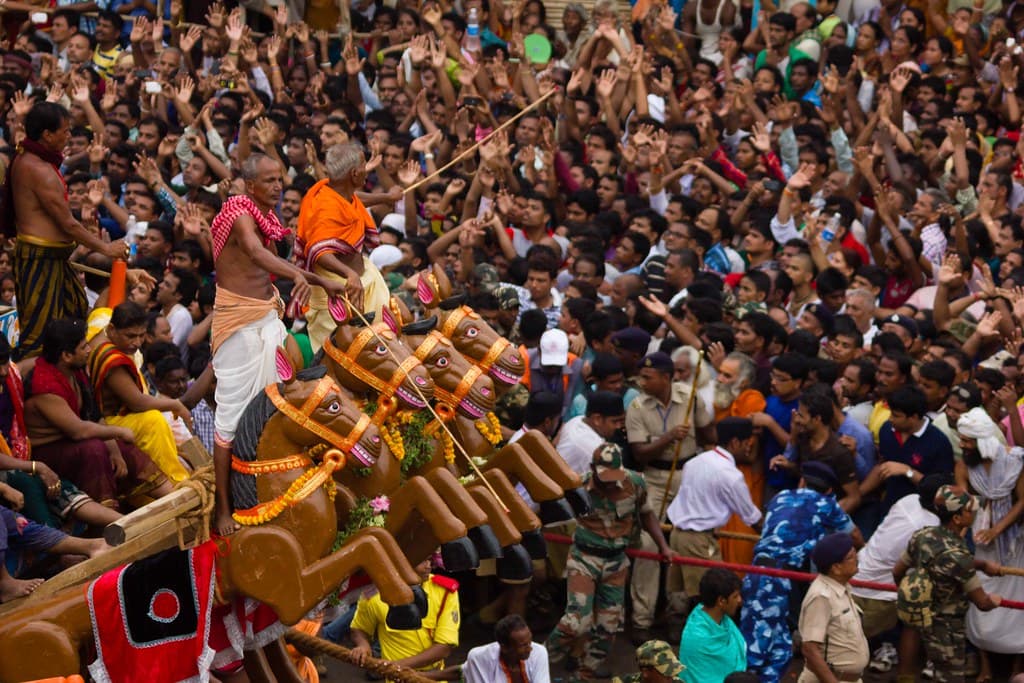
Devotees crowd around a chariot during Rath Yatra
Photo by picturesbypriyesh / flickr · CC BY 2.0
Planning your trip
Getting there
The nearest airport is at Bhubaneswar, Odisha's capital, roughly an hour and a half from Puri by road. Puri's railway station has direct trains from Kolkata, Delhi and other big cities, and extra festival trains run for Rath Yatra. On the first day, roads into the centre close and everything around the Grand Road is reached on foot.
Where to stay
Puri is also a beach town, so there are plenty of hotels along the sea front, a short walk or rickshaw ride from the Grand Road. Rooms for the opening day go weeks ahead. Bhubaneswar has more choice if Puri is full, with buses and trains in for the day.
What it costs
The procession is free to watch and to join. The costs are a room, which rises sharply for the opening day, and a rooftop or balcony place on the Grand Road if you want one, negotiated with the owner. Food and transport in Puri remain cheap by any standard.
Go like you know
- Arrive a few days early to see the finished chariots standing outside the temple before they roll. They are a sight in themselves.
- Dress modestly and take your shoes off where locals do; this is a religious procession first.
- Stay for the evening: in some years the chariots stop for the night partway down the Grand Road, lit up and surrounded by pilgrims.
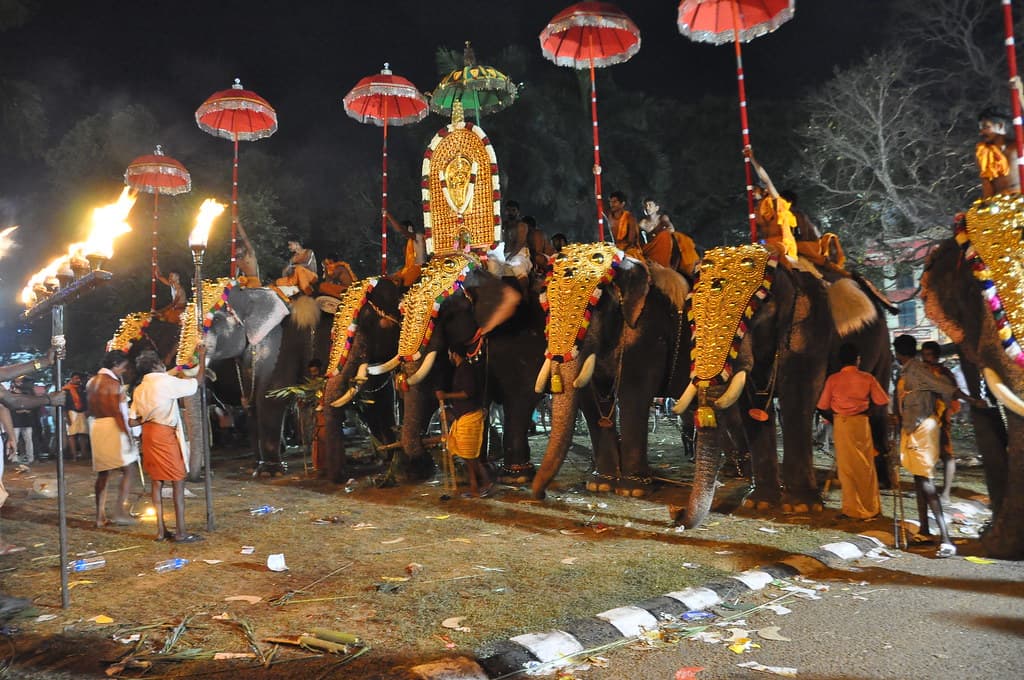
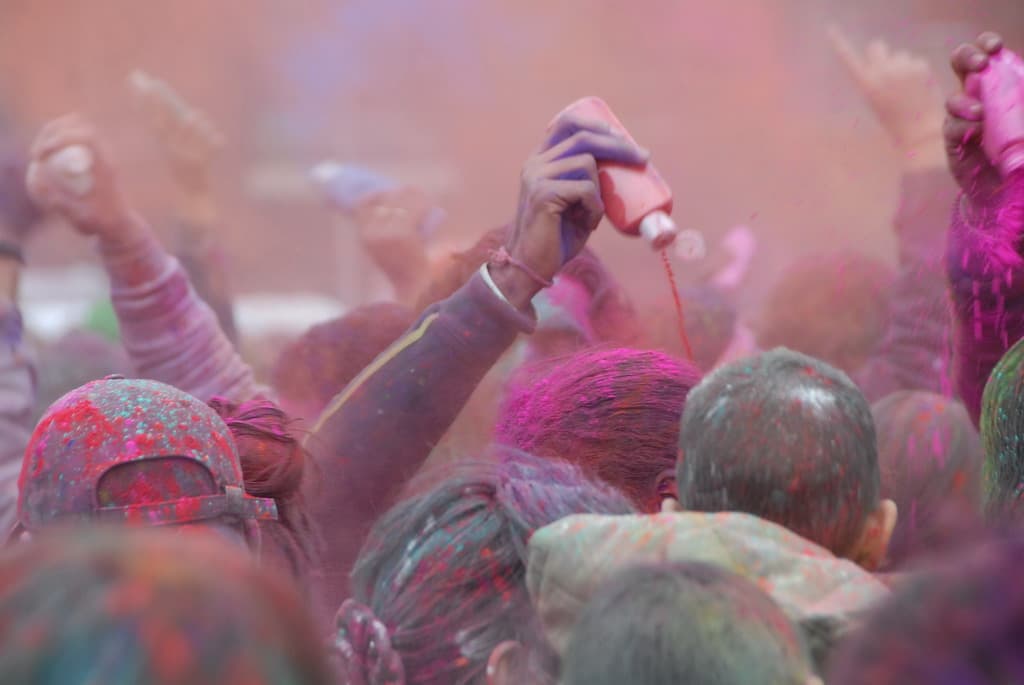
- India's great temple festivals all have their own scale. Kerala's Thrissur Pooram brings out elephants and fireworks, and Holi turns whole cities to colour.
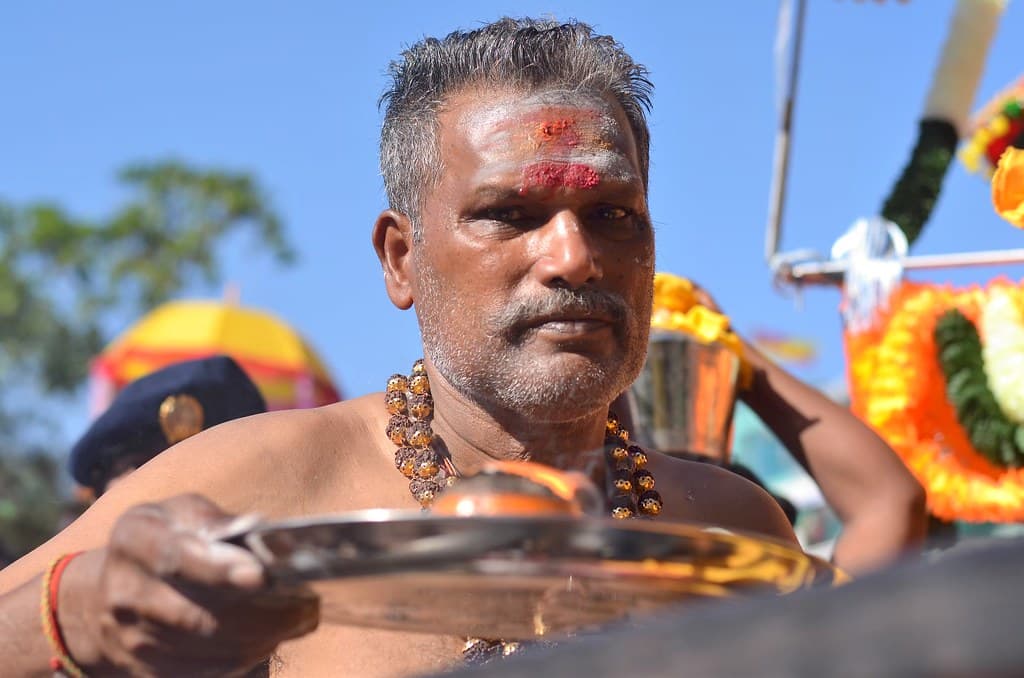
- For another pilgrimage where devotion means physical effort, see Thaipusam at Malaysia's Batu Caves.
Frequently asked questions
Can non-Hindus attend Rath Yatra?
Yes. The procession on the Grand Road is open to everyone, and the chariots are the one time the deities can be seen outside the temple. Non-Hindus may not enter the Jagannath Temple itself; the roof of the Raghunandan Library, across the road, gives a view of the temple's exterior.
Which day is best to go?
The first day, when the chariots are pulled to the Gundicha Temple, is the big one, with the king's sweeping ritual and the largest crowds. The return journey, Bahuda Yatra, about eight days later, is calmer but still spectacular, and is followed by the deities' golden dressing, Suna Besha, on the chariots outside the temple.
Is Rath Yatra only in Puri?
No. Rath Yatras are held across India and, through the Hare Krishna movement, in cities around the world. But Puri's is the original and by far the largest, with chariots built new each year to rules that have stayed the same for centuries.