What is the Ubon Ratchathani Candle Festival?
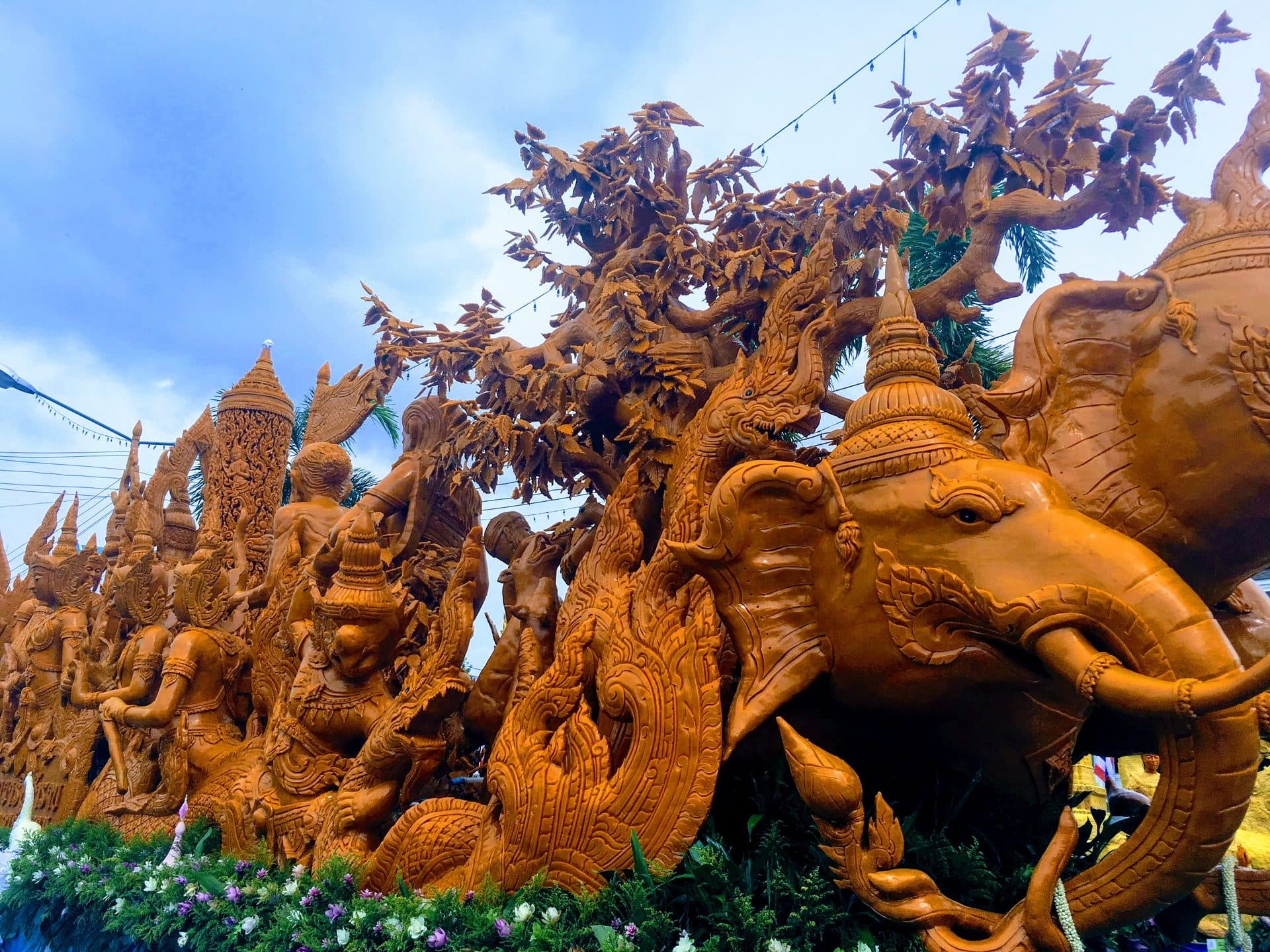
The festival grew from a small, practical act of devotion. Long before electricity, Thai Buddhists donated candles to their local temples so that monks would have light to study through Khao Phansa (เข้าพรรษา), the three-month rains-retreat that keeps the sangha indoors. Those offerings grew steadily more ornate, communities began to compete over them, and the humble candle swelled into a carved colossus paraded through the streets.
As an organized event it is well over 120 years old. The 2023 edition was officially themed "122 Years" and 2026 was billed as the 125th, dating the tradition to around 1901, and it was recognized as a national cultural festival in 1976. What you see today is the accumulated craft of more than a century: dozens of towering wax sculptures (47 pieces in 2026), each the product of a single temple community working for weeks.
Two techniques compete for the judges' eyes. Traditional carving, worked directly into the wax and developed by Thai National Artist Kummha Sangngam in 1958, sits alongside a newer "printing" method, where molten wax is cast in molds and the finished pieces pasted onto the candle. Either way a single festival float takes no less than a month of design, framework-building, wax application and detail carving. The work is communal and openly public: in the weeks before the parade you can tour the temple candle-making communities and watch the teams build.
A month of design, framework and carving, so that monks might have light to read by.
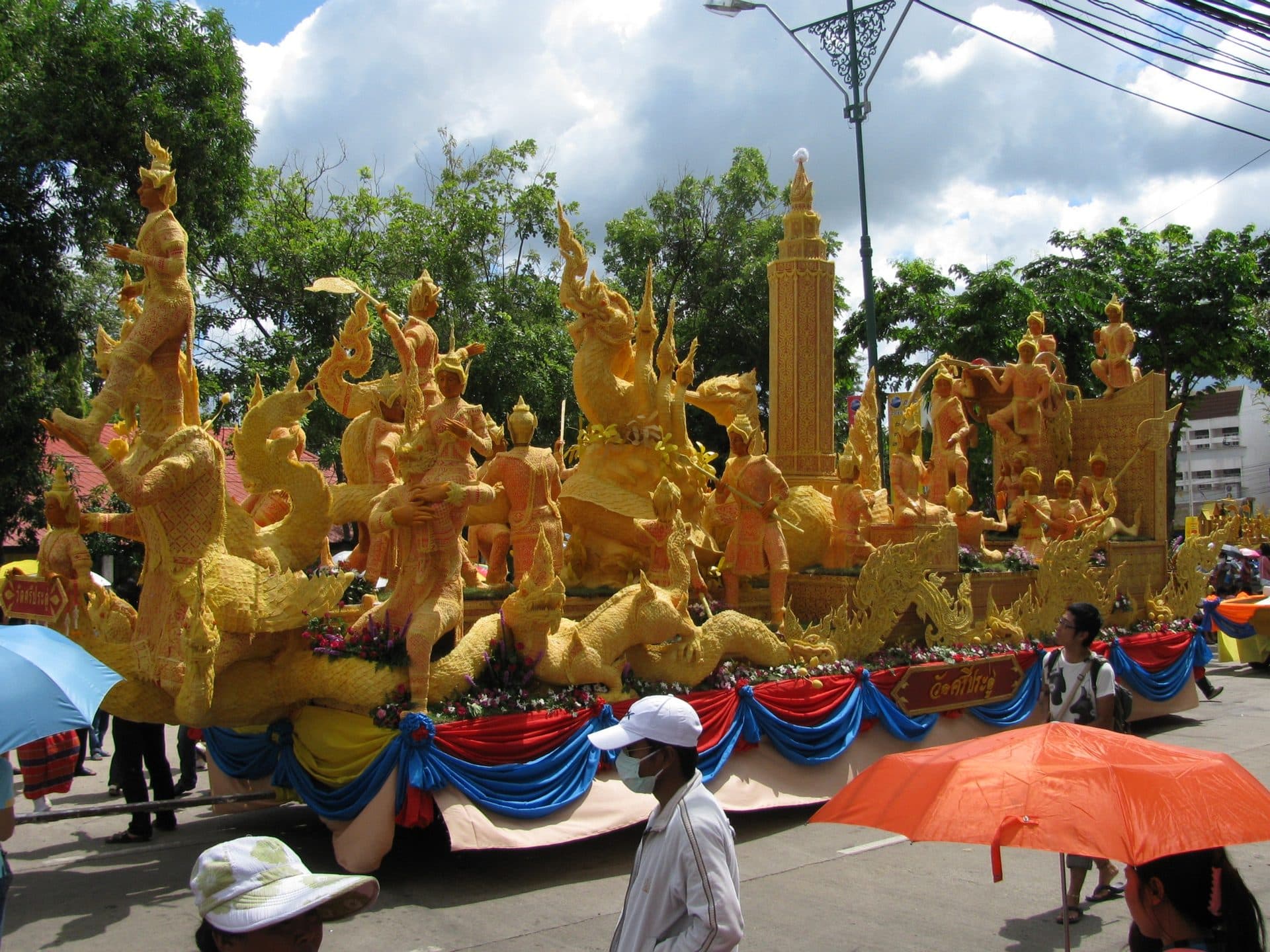
A wax-carved candle float in the parade in Ubon Ratchathani
Photo by Plenz (assumed) / wikimedia · CC BY 3.0
What to expect
The festival is built around a rhythm: gather, parade, display. The floats first assemble at Thung Si Mueang (ทุ่งศรีเมือง) park, parade for two days, then return to the park, and later a nearby temple, for a long public viewing.
Candle-gathering day
The floats assemble
All the finished candles converge around Thung Si Mueang park in the city centre. It is the calm before the parade, the best chance to walk right up to the sculptures, see the carving detail up close, and scout your viewing spots for the days to come.
Asalha Bucha & Khao Phansa
The two parade days
The main event, on the full-moon holy day and the first day of Lent. A daytime procession starts at about 8:30am (08:29 in 2026) and runs along Uparat and Chayangkul Roads, the floats moving at a crawl while mor lam bands play and dancers perform the serng (เซิ้ง), an Isan folk dance. From 7pm the candles return for sound-and-light shows in the dark.
The days after
The long display
Once the parades end, the prize-winning candles stay on show at Thung Si Mueang park for a couple more days (31 July to 1 August in 2026), then move to Wat Phra That Nong Bua for roughly two weeks, a quieter window to admire the winners without the crowds.
Planning your trip
Getting there
Ubon Ratchathani has its own airport, with flights from Bangkok taking about an hour; one-way fares in recent listings start around 1,150 THB, and more at festival time. Overnight buses from Bangkok's Mo Chit terminal take roughly nine to ten hours (listings cite about 600–900 THB), and trains take about ten and a half hours, with third-class seats from around 170 THB. Once you arrive, the city centre is compact and the parades, park and food markets are all within easy reach of each other.
Where to stay
The catch is beds. City hotels fill months in advance for festival week, and travel guides advise booking accommodation and flights several months ahead. If the centre is full, look across the Mun River to Warin Chamrap, about 2 km from the city centre by road bridge, which has more availability and is a short ride from the action.
What it costs
Watching is free: the parades and park displays cost nothing, and TAT announced more than 5,000 complimentary seats at five viewing points for 2026. Paid grandstand seats are also sold, so check current prices if you want a guaranteed spot. Transport (see above) and festival-week rooms are the main spend, while Isan street food stays cheap. If you are in Thailand at another time of year, Songkran is the country's other signature festival, though it falls in April.
Go like you know
- Paid grandstand seats exist, but more than 5,000 free seats are provided at five points along the route, so arrive one to two hours early to claim one, or watch free from the roadside along Chayangkul Road.
- Two of the official free viewing points are the Wat Si Ubon Rattanaram temple and Lan Khwan Mueang square, both marked performance stops along the route.
- See the candles twice: the morning procession shows off the carving in daylight; the 7pm illuminated evening show is a different spectacle entirely.
- Eat from the festival food markets while you wait for the floats: spicy som tam (ส้มตำ) and grilled pork with sticky rice are the signature Isan street orders.
- Save the last stretch of your trip for Wat Phra That Nong Bua, where the winning candles go on extended display after the crowds thin out.
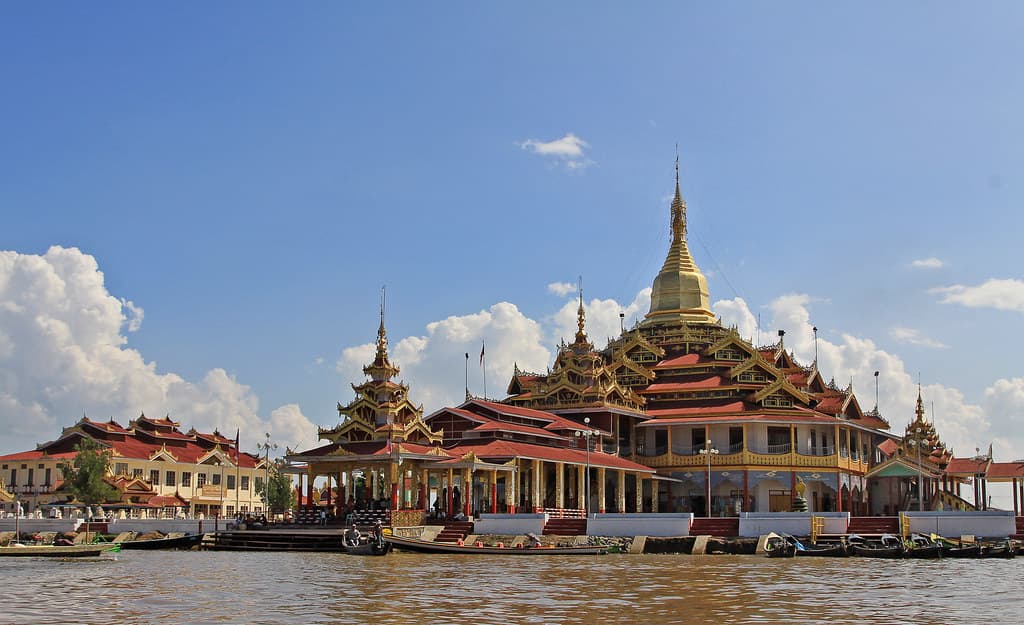
- The Buddhist rains retreat that opens here ends about three months later; the Burmese month of Thadingyut brings the Phaung Daw Oo Pagoda Festival on Inle Lake, a good bookend if you follow the Lent calendar.
Frequently asked questions
When exactly is the festival?
It follows the lunar calendar, so the dates move each year but land in July. The two main parades fall on Asalha Bucha, the full moon of the 8th Thai lunar month, and Khao Phansa the next day, with gathering and display days on either side. Always confirm the current year's schedule before booking.
Do I need a ticket to watch the parade?
No. The parades and the park displays are all free, and much of the best viewing is simply roadside along Chayangkul Road or near the temple stops. Paid grandstand seats offer a guaranteed spot, but free seating is also provided and neither is necessary to enjoy the day.
Is one day enough?
One of the two parade days covers the heart of it: a morning procession and an illuminated evening show will present the candles at their best. But arriving a day early to watch the artisans finish carving, or staying on for the calmer park display, turns a good visit into a memorable one.