What is Timkat?
Timkat (ጥምቀት), meaning "baptism" in Amharic, is the Ethiopian Orthodox Tewahedo Church's celebration of Epiphany, commemorating the baptism of Jesus in the River Jordan. Ethiopia has one of the oldest Christian traditions in the world, adopted by the Kingdom of Aksum in the fourth century, and Timkat is one of its biggest public festivals. UNESCO recognized the celebration as intangible cultural heritage in 2019.
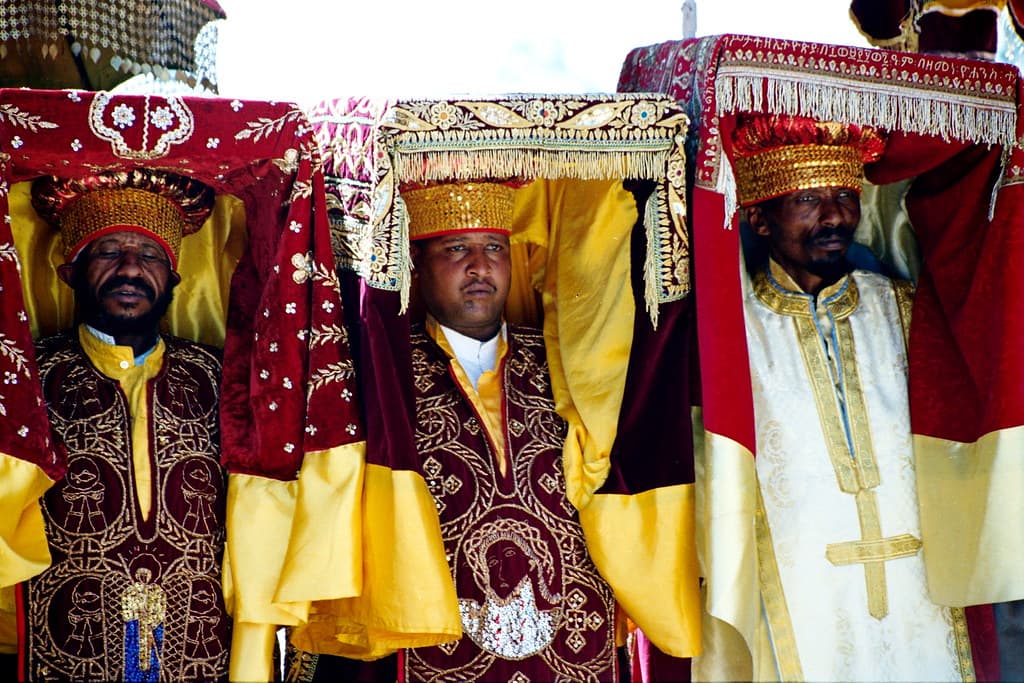
At the center of the ritual is the tabot, a consecrated tablet that represents the Ark of the Covenant, the vessel said in Ethiopian tradition to rest in the city of Aksum. Every Ethiopian Orthodox church has one, kept in its inner sanctuary and seen only by priests. At Timkat, each church's tabot is wrapped in rich cloth and carried in procession to a body of water, where it rests overnight while the faithful keep vigil.
The following morning, priests bless the water, and the crowd surges forward to be sprinkled, or in some places to plunge in, renewing their baptismal vows. Then the tabots are carried home in jubilant processions, with singing, dancing and drumming, and the festivities continue into a third day dedicated to the archangel Michael.
For one night a year, the hidden heart of every church is carried out into the open air, and the whole city keeps watch.
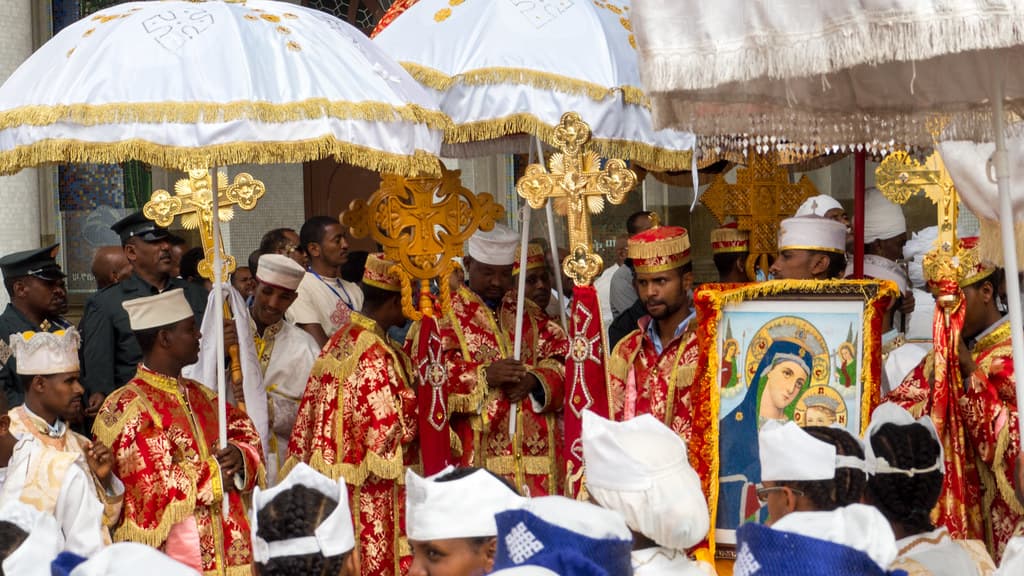
Clergy carry crosses and an icon in the Timkat procession
Photo by jeanotr / flickr · CC BY 2.0
What to expect
Timkat unfolds over three days, each with its own mood.
Eve
Ketera: the procession to the water
In the afternoon, tabots leave their churches in processions of priests, deacons and crowds of faithful. They are carried to a pool, river or field, where they rest overnight. Prayers and hymns continue through the night.
Timkat
The blessing of the water
Before sunrise, a liturgy is held by the water. Priests bless it, and the crowd is sprinkled or jumps in. In Gondar, young men leap into the stone pool of Fasilides' Bath. Later, the tabots begin their joyful return to the churches.
Day after
Feast of St Michael
The celebrations continue with processions for the archangel Michael, especially at churches dedicated to him, along with feasting and family visits.
Planning your trip
Getting there
Addis Ababa's Bole International Airport is the hub for flights into Ethiopia, and Ethiopian Airlines connects it with Gondar, Lalibela and other destinations; Lalibela is about an hour by air. Gondar, with its royal pool, and Lalibela, with its rock-hewn churches, are the most famous places to celebrate, but both lie in the Amhara region, where the UK Foreign Office advises against all travel. Addis Ababa offers a very large, accessible celebration at Jan Meda and is the practical option for most visitors. Book flights early either way.
Timkat also pairs with another January festival on the same continent: Ouidah Vodun Days in Benin run in early January, though you would need a separate flight.
Where to stay
Gondar and Lalibela have limited accommodation, and operators advise booking many months ahead for Timkat. In Addis Ababa, base yourself within easy reach of Jan Meda.
What it costs
Watching is free, and the main expenses are flights and rooms, which are at their tightest around Timkat. We have no sourced prices for either, so check fares and rates when you book. Carry small notes for church donations and for the umbrella and shawl sellers along the routes.
Go like you know
- Arrive early for the eve procession and find a spot along the route. Processions start at different times from different churches, so ask locally.
- At the water, choose your position with care. The center gives the best view but also the most water and the strongest crowd surges.
- Ask before photographing priests and worshippers, especially during prayers. Many will agree; some prefer not to be photographed.
- Try injera with a fasting or festive stew, and accept the coffee ceremony if invited; it is a mark of hospitality.
- Keep small notes handy for church donations and for the sellers who line the routes.
- Drawn to Orthodox processions? Orthodox Easter in Corfu is a very different tradition, with candlelit processions and Philharmonic bands.
- Carry a small torch or headlamp for the overnight vigil and the walk to the water before dawn, when streets are dark and crowded.
Frequently asked questions
Where is the best place to experience Timkat?
Gondar is famous for the blessing at Fasilides' Bath, a seventeenth-century royal pool that is filled for the festival, and Lalibela offers celebrations among its rock-cut churches, but both are in Amhara, where the UK advises against travel. Addis Ababa has very large, accessible celebrations at Jan Meda and is the practical choice for most visitors.
Can non-Christians attend Timkat?
Yes. Visitors of all backgrounds are welcome to watch and take part respectfully. Dress modestly, follow the lead of locals during prayers, and avoid standing in front of processions. Wearing white is appreciated but not required. Remember that this is a religious celebration first.
How long should I stay?
Plan for at least the eve and Timkat day itself, which contain the main processions and the blessing. Staying for the third day adds the feast of St Michael and a more relaxed atmosphere. Check current travel advice before adding other sites in northern Ethiopia.
What should I bring?
Bring warm layers for the cold night vigil and early morning, sun protection for the day, comfortable shoes, a small cushion or mat, and something to protect your camera and phone from water. A white shawl is a thoughtful addition and is easy to buy locally.
What is the tabot?
The tabot is a consecrated tablet representing the Ark of the Covenant, kept in the inner sanctuary of every Ethiopian Orthodox church. Only priests may see it. During Timkat it is wrapped in rich cloth and carried in procession on a priest's head, and UNESCO notes that tabots are taken to the water only at Timkat, which is why the procession is treated with such reverence.