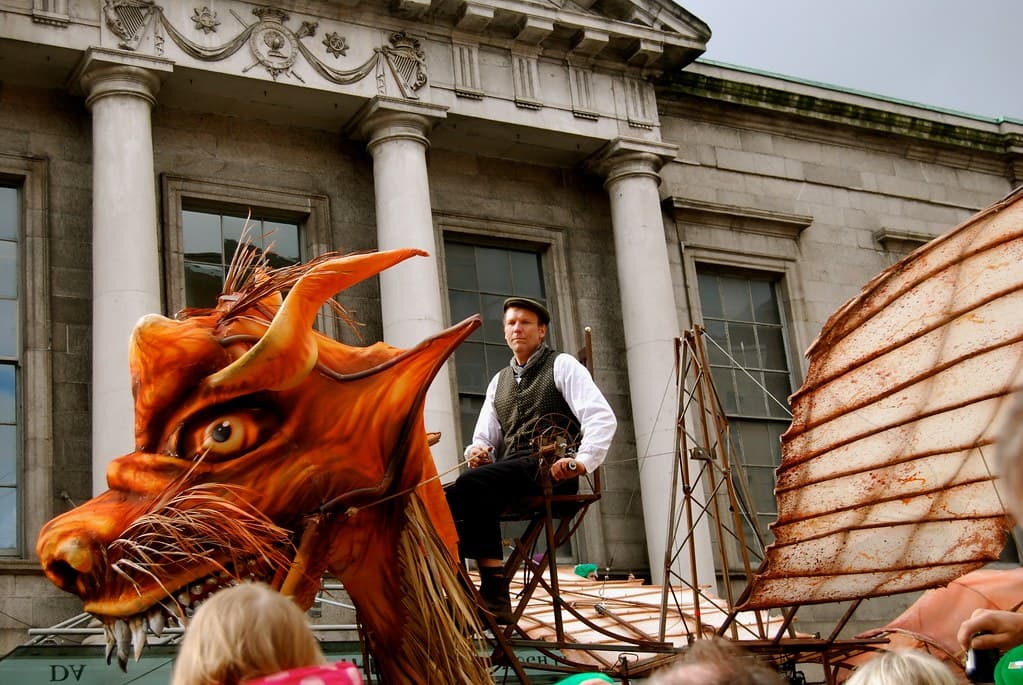
What is St. Patrick's Festival?
Saint Patrick is the patron saint of Ireland. Tradition places him in fifth-century Roman Britain, from where he was captured by raiders as a teenager and enslaved in Ireland, escaped, and later returned as a missionary. He is credited with spreading Christianity across the island, and legends grew around him, including the story that he used the three-leafed shamrock to explain the Holy Trinity. March 17, traditionally said to be the day of his death, became his feast day.
For centuries, St. Patrick's Day in Ireland was a religious holiday, with church services and family meals. Big parades actually began among Irish emigrants in the United States and elsewhere. In Ireland, the modern festival began in 1996, when the government created the St. Patrick's Festival in Dublin, a single day at first, to showcase Irish culture and creativity to the world.
Today, the festival lasts several days, with concerts, céilís (Irish social dances), family events, talks and the big parade. It celebrates not only Saint Patrick but Irish identity, music, language and the diaspora, which the Irish government puts at around 70 million people worldwide, counting everyone of Irish descent. For another big Celtic street celebration, Edinburgh's Hogmanay is the Scottish midwinter counterpart.
A saint's feast that went abroad with emigrants came home as a festival for everyone.
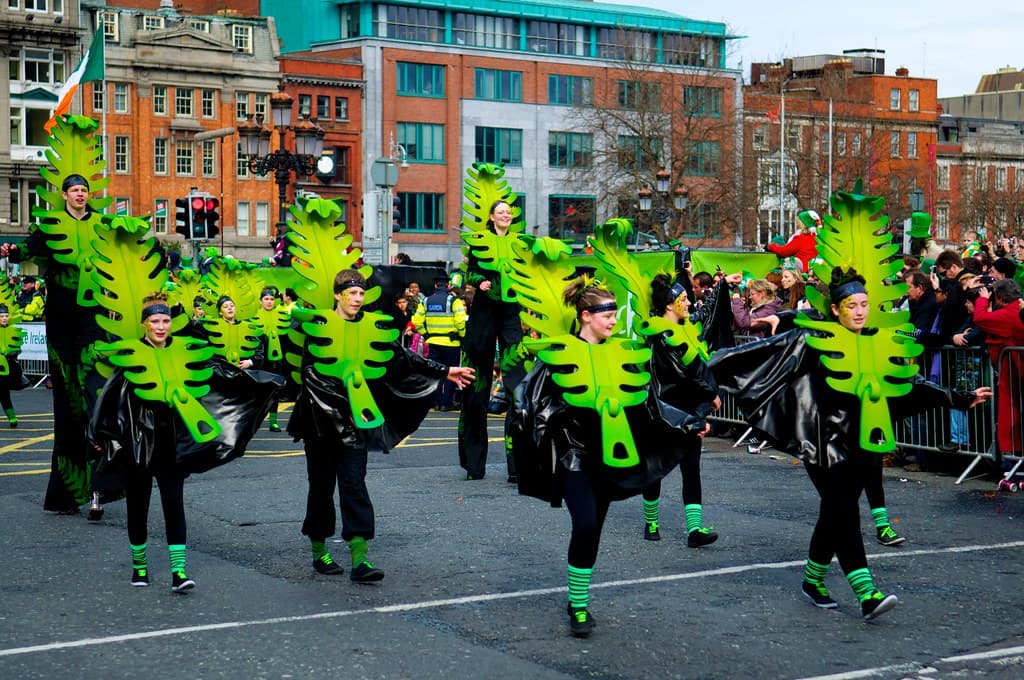
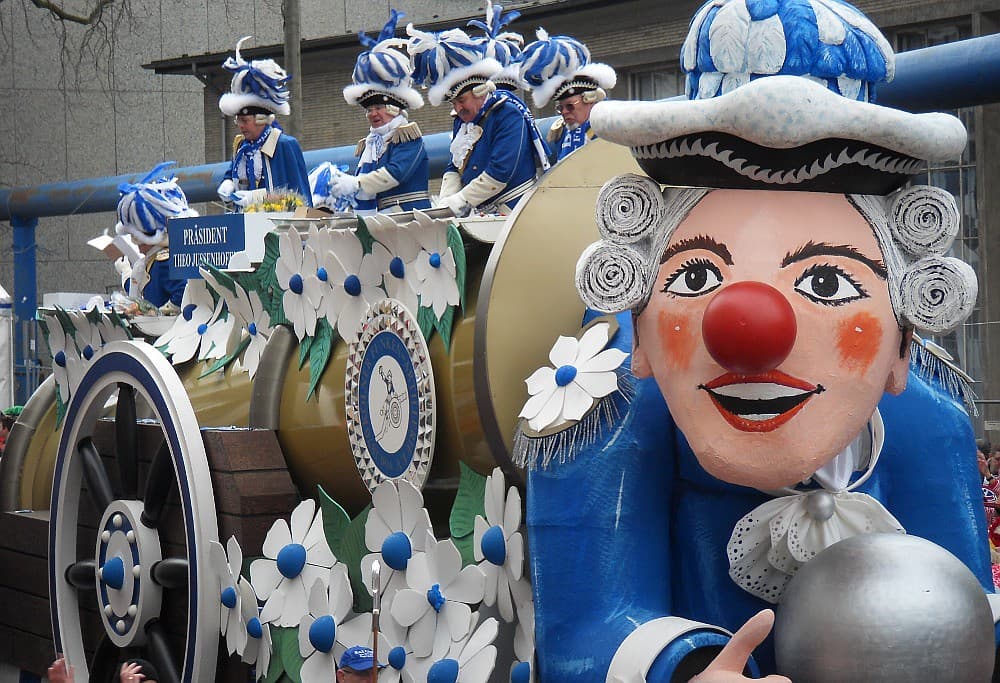
Costumed performers in the St. Patrick's Festival parade through Dublin
Photo by Miguel Mendez / flickr · CC BY 2.0
What to expect
The festival spreads across several days, with the parade on March 17 as its centerpiece.
Festival days
Concerts and céilís
Street performances, workshops, a treasure hunt, a funfair on Custom House Quay, an after-dark program and traditional dance sessions spread across the city before the big day.
Mar 17
Parade day
The parade starts at midday at Parnell Square, runs down O'Connell Street and across O'Connell Bridge, and ends at Cuffe Street, about 3.2 kilometers later. Expect pageant groups, bands, dancers and community groups from across Ireland and abroad. A Céilí Mór (a mass social dance) takes place on Merrion Square West the same day.
Evening
Pubs and sessions
The celebration moves into pubs and venues, with traditional music sessions and parties late into the night.
Planning your trip
Getting there
Dublin Airport has connections across Europe and North America, and the city center is a bus or taxi ride away, typically 25 to 40 minutes depending on traffic. Ferries from Britain and France and trains into Connolly, Heuston and Pearse stations are the other main ways in.
Staying in the center lets you walk to the parade route and events. On March 17, Dublin Bus has in past years run to a Sunday timetable, the Luas has been partly suspended along the route, and about 60 routes have been diverted for the parade, so check Transport for Ireland for the current plan. To watch, arrive early to find a spot along the route, especially around O'Connell Street.
Where to stay
Base yourself in the center, around O'Connell Street, Temple Bar or St. Stephen's Green, to be on foot for the parade, the funfair and the evening sessions. Book early: the festival draws visitors from across Ireland and abroad, and good rooms go first.
What it costs
Watching the parade from the street is free, and most festival events are free, though some need advance sign-up and a small minority charge admission. Covered, tiered grandstand seats are the paid option: the festival's 2027 listing runs from about €143 to about €254 per seat, with the priciest outside the GPO on O'Connell Street, and sales open in late September for the following March. Accommodation prices rise around the festival, but we found no published figures, so compare dates before you commit.
Go like you know
- Wear a sprig of shamrock or something green; locals do too.
- Learn a few words of Irish, such as Lá Fhéile Pádraig sona duit, "Happy St. Patrick's Day".
- Join a céilí, even if you have never danced; callers teach the steps.
- Escape the crowds with a walk to the coast at Howth or Dalkey.
- Visit smaller towns, which hold their own parades with a friendlier, local atmosphere.
- Look up the festival's program in advance; the full schedule is published in January, and some free events need advance sign-up.
- Mid-March crowds also fill Las Fallas in Valencia, which runs March 15–19. It overlaps the festival's last days, so choose one for the 17th.
- If you are visiting with children, find a spot near the end of the route, where crowds are thinner.
Frequently asked questions
When is St. Patrick's Festival?
The festival takes place over several days around March 17, St. Patrick's Day, with the parade on the 17th. The exact dates and program are announced each year by the organizers, usually several months in advance.
Do I need tickets for the parade?
No, the parade is free to watch along the route. Covered grandstand seats, which offer a guaranteed view, cost roughly €143 to €254 and are sold in advance online. Most festival events are free, though some need advance sign-up and a few charge a small ticket fee.
Is it family-friendly?
Yes, especially during the day. The parade and festival events include many activities for children. In the evening, pubs and some areas become crowded and lively, so families may prefer daytime events and quieter neighborhoods.
What else should I see in Dublin?
Visit Trinity College and the Book of Kells, Dublin Castle, St. Patrick's Cathedral, and the Guinness Storehouse. Walk along the River Liffey and explore neighborhoods such as Temple Bar, Stoneybatter and Portobello. Day trips to Wicklow or Howth offer a break from the city.
Is everything closed on St. Patrick's Day?
It is a public holiday in Ireland, so banks, offices and some shops close, and Dublin Bus has run a Sunday timetable. Pubs, restaurants and many attractions stay open and are very busy. Book restaurants in advance and check opening hours for museums and sights.
Where else in Ireland can I celebrate?
Almost every town and village holds its own parade on March 17, often with tractors, local bands and sports clubs. Cork, Galway, Limerick and Kilkenny host lively celebrations. Across the border in Northern Ireland, Downpatrick, where Saint Patrick is believed to be buried, holds a parade and a church service in his honor.