What is La Patum de Berga?
La Patum is the festival of Berga, a small town in the foothills of the Pyrenees in Catalonia, and one of the most extraordinary street festivals in Europe. Held during Corpus Christi week, it fills the town's main square with a dense, sweating crowd, a booming drum, and a series of dances by fantastic figures, many of them spitting fire. UNESCO named it a Masterpiece of the Oral and Intangible Heritage of Humanity in 2005.
Its roots are in the medieval Corpus Christi processions, which used street theatre and symbolic figures to teach the faithful about good and evil. In Berga, records of the festivities go back to at least 1454, and over the centuries the figures stopped processing and started dancing in the square, becoming a festival of their own. Its name comes from the sound of the tabal, the great drum that beats pa-tum, pa-tum and calls each figure to dance.
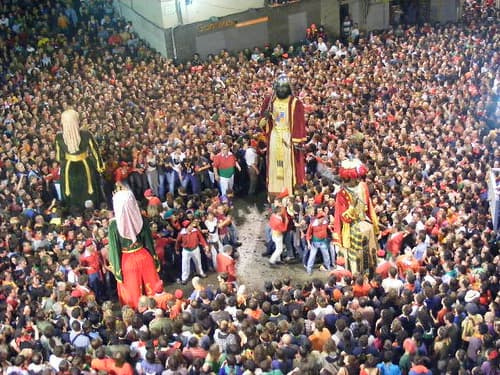
Every figure, or comparsa, has its own dance, or salt, and its own history: the Turks and knights who fight on hobby horses, the maces, devils with clubs, the guites, fire-spitting mule-dragons, the eagle, the dwarfs and the giants. And then come the plens, about a hundred devils covered in leaves and carrying fireworks on their horns, who fill the square with fire.
What to expect
The festival runs from Wednesday to Sunday of Corpus Christi week, with the biggest events on the Thursday and Sunday.
Wednesday
The parades
The passacarrers, parades through the old town, bring the giants and the tabal drum out to announce the festival, and the town fills with people dressed in the blue and red of La Patum.
Thursday
Corpus Christi
At midday the Patum de Lluïment, a shorter, ceremonial Patum, is held in the square. At night comes the Patum Completa, the full sequence of dances, ending with the leap of the plens, when the square goes dark and fills with fire and smoke.
Friday to Sunday
Children's Patum and the finale
On Friday, children perform their own version, the Patum Infantil, with smaller figures. On Sunday, the full Patum is repeated, and the festival ends with the tirabols, wild dances of all the figures and the crowd that can go on for hours.
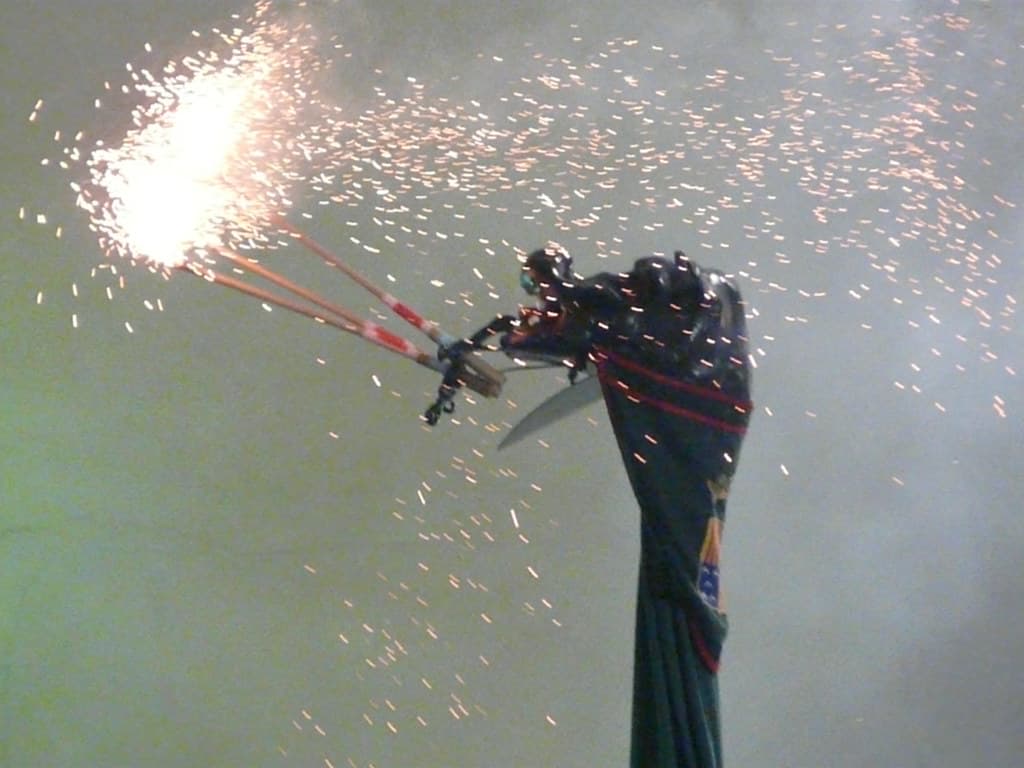
A fire-spitting figure during La Patum
Photo by albir / flickr · CC BY 2.0
Planning your trip
Getting there
Berga is about an hour and a half by car north of Barcelona, and regular buses connect the two. There is no train station in Berga itself. During the festival, the old town is pedestrian, and the main square, Plaça de Sant Pere, is a short walk from anywhere in the centre.
Where to stay
Berga has only a few hotels and guesthouses, and they fill months ahead. Rural houses in the surrounding Berguedà region make a good alternative, and many visitors come for the day from Barcelona or Manresa.
What it costs
Entry to the square is free. A small number of balcony places, including on the town hall balcony, are allocated in advance through the town. Berga is inexpensive, and the costs are mostly travel and a room, if you can find one.
Go like you know
- Wear a bandana and old clothes; you will smell of gunpowder for days.
- Learn the tirabol: link arms, jump and spin, and don't let go.
- Drink barreja, a mix of moscatel and anisette, and share it with the people around you.
- Barcelona's La Mercè brings fire runs and giants to the city each September.
- Valencia's Las Fallas is Spain's greatest festival of fire, in March.
Frequently asked questions
When is La Patum?
During Corpus Christi week, from Wednesday to Sunday. Corpus Christi moves with Easter, so the Patum falls between late May and late June. In 2026 it ran from June 3 to 7. In 2027 Corpus Christi is on May 27, so the Patum is expected from May 26 to 30.
What is the salt de plens?
The climax of each Patum Completa. The lights in the square go out, and about a hundred plens, dancers covered in leaves and wearing devil masks with fireworks fixed to their horns, leap and dance in a storm of fire and smoke, each guided by a helper. It lasts only a few minutes and is unforgettable.
Is La Patum safe for visitors?
Yes, if you take care. Watch from the edges or a balcony if you're not prepared for crowds and fire, and wear protective clothing if you go into the middle of the square. The people of Berga take the festival seriously, and following their lead is the best way to stay safe.