What is La Mercè?
La Mercè is Barcelona's festa major, the city's great annual party, held around September 24, the feast of the Mare de Déu de la Mercè, Our Lady of Mercy. Barcelona adopted her as its patroness after she was credited with saving the city from a plague of locusts in 1687, and the feast became an official city holiday in 1871. In 1902 the city added its parades of giants and the sardana, the Catalan circle dance, and the festival has grown ever since.
Today it is five days of almost entirely free events, some 600 of them, spread across squares, streets, parks, beaches and museums: concerts, street theatre, circus, dance and the great set pieces of Catalan popular culture. Close to two million people take part, and the metro runs all night on the busiest evenings.
Each year a guest city brings its own culture to the programme: in 2026 it was Shanghai. But the heart of La Mercè is Catalan, and it is the best chance a visitor has to see the human towers, fire runs and giants that fill the festes majors of Catalonia's towns all year, gathered into one city.
What to expect
Events run from morning to the early hours across the city, with the biggest concentrated in the Gothic Quarter, around the waterfront and at Montjuïc.
Opening days
Giants and the opening
The festival opens with the pregó, a speech from the city hall, and the parades of gegants, the towering papier-mâché giants of the city's neighbourhoods, which dance through the old streets with their bands. Concerts begin on stages across the city.
September 24
The feast day
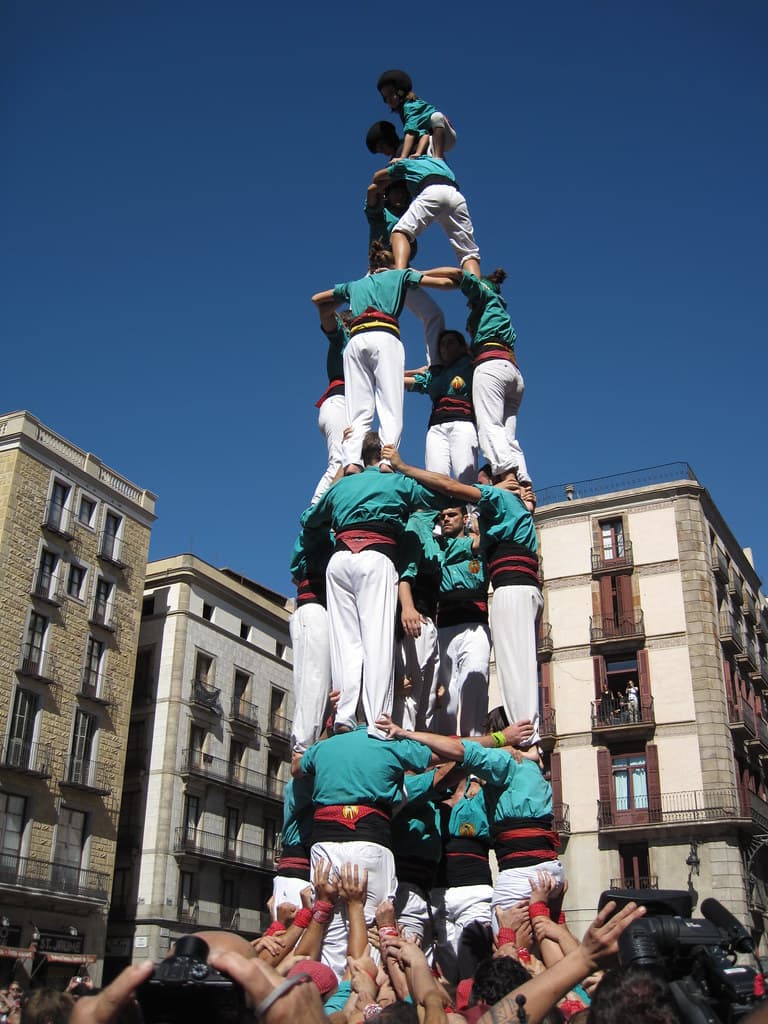
The day of the Mercè itself brings mass at the Basilica de la Mercè, the castellers building human towers in Plaça Sant Jaume, and more giants and dances in the old city. It is a public holiday in Barcelona.
The evenings
Fire and fireworks
The correfoc, the fire run, sends devils with spinning fireworks and fire-breathing beasts through crowds in the streets of the old city. On the last night, a piromusical show of fireworks, light and music closes the festival at the foot of Montjuïc.
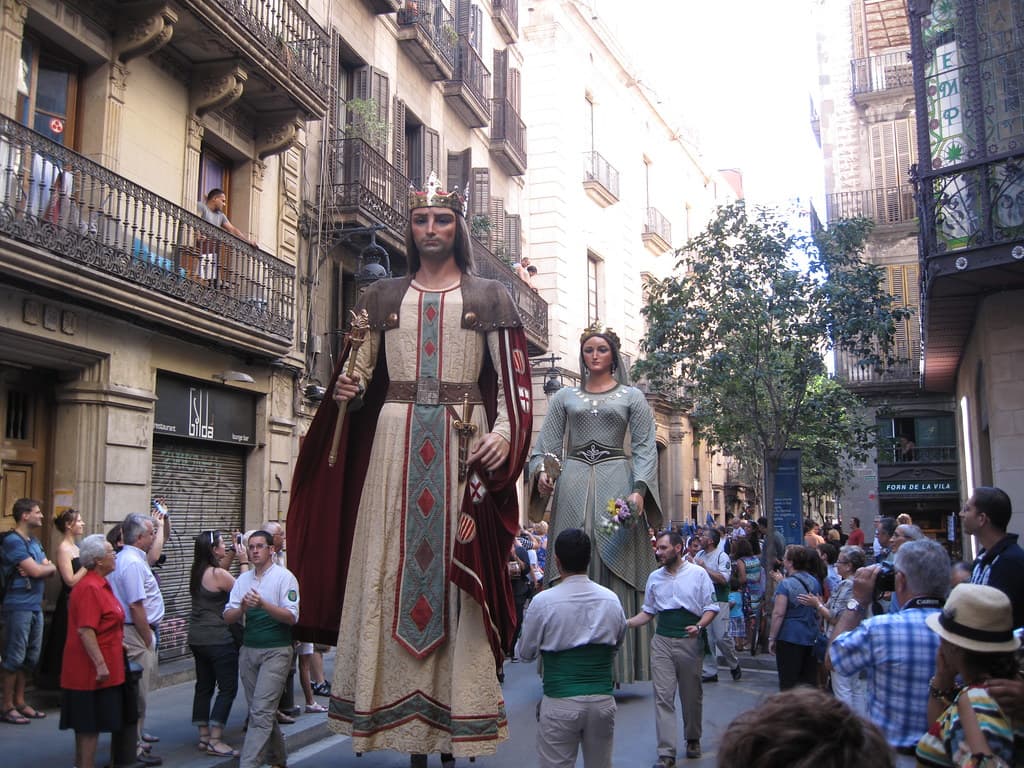
Giants dancing through the old town during La Mercè
Photo by somewhereintheworldtoday / flickr · CC BY 2.0
Planning your trip
Getting there
Barcelona's El Prat airport has flights from across Europe and beyond, and Sants station has high-speed trains from Madrid, France and elsewhere in Spain. The metro, buses and your own feet cover the festival; much of the old city is closed to traffic for the big events.
Where to stay
The Gothic Quarter, El Born and the Raval put you in the middle of the action, though they are noisy until late. Eixample and Gràcia are a short metro ride away and a little quieter. Late September is one of Barcelona's busiest months, so book well ahead.
What it costs
Almost every event is free. Your costs are a room, which is expensive in late September, and eating and drinking, which can be done cheaply with tapas and a vermut away from the main tourist streets. Some museums open for free during the festival.
Go like you know
- Watch the castellers from the edge of Plaça Sant Jaume, and cheer when the enxaneta, the child at the top, raises a hand.
- Pick up the official programme, published in early September, and plan around the events you most want to see.
- Join a sardana circle if you're invited; the steps are simple and slow, and nobody minds a beginner.
- Head to the beaches and the waterfront in the afternoons, where some of the concerts and family activities take place.
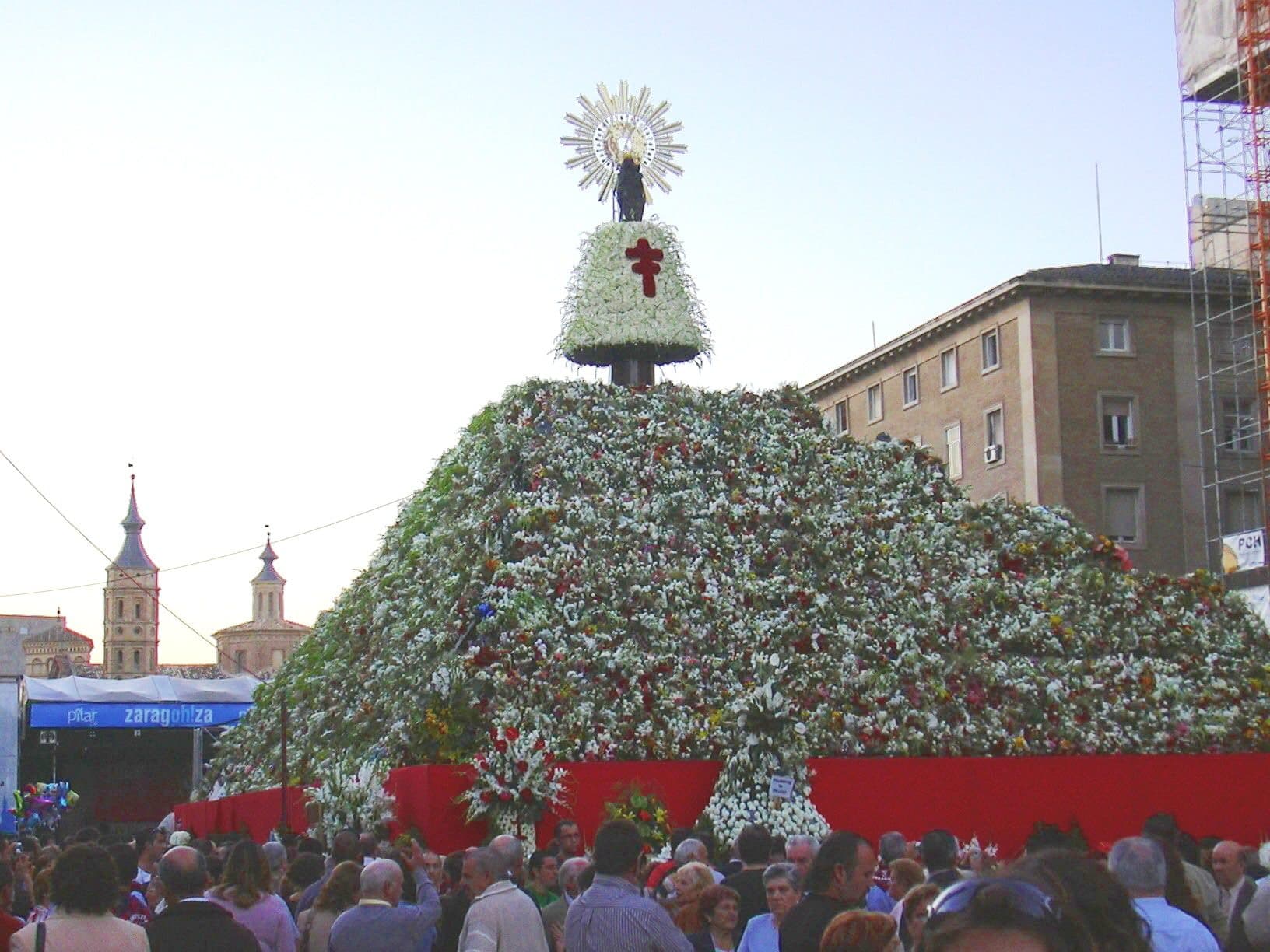
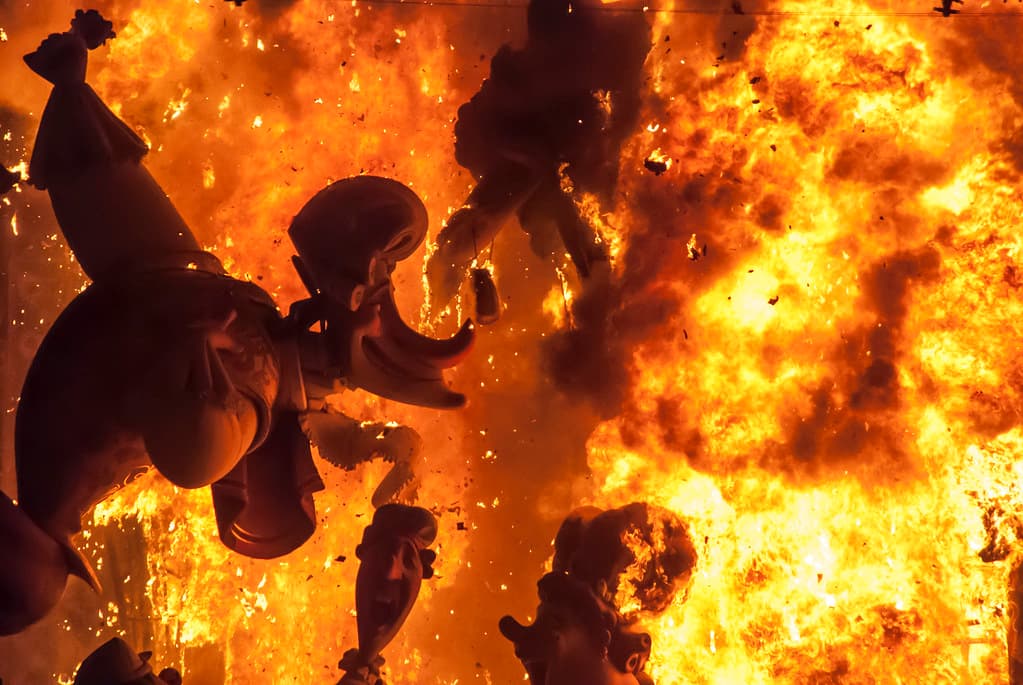
- Zaragoza's Fiestas del Pilar follow in October, and Valencia's Las Fallas is Spain's great festival of fire, in March.
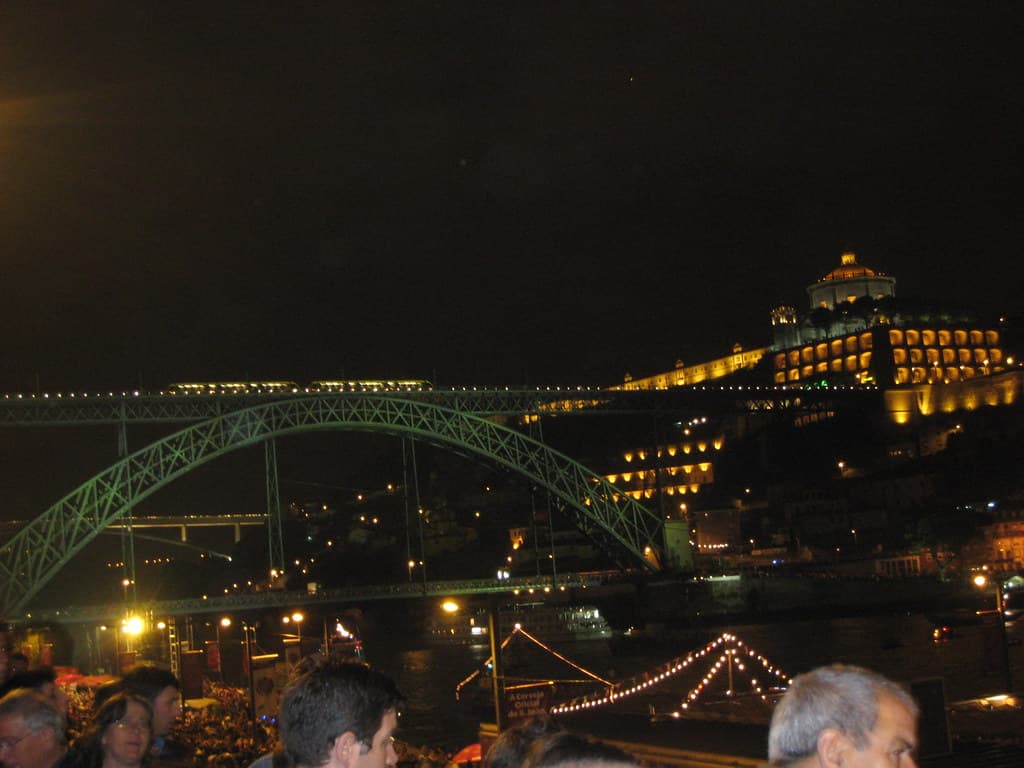
- Porto's São João is the Iberian street party of June.
Frequently asked questions
When is La Mercè?
Around September 24, the feast of Our Lady of Mercy, over about five days. In 2026 it ran from September 23 to 27. The city publishes the full programme in early September each year, with exact times for the correfoc, the castellers and the closing piromusical.
What is a correfoc?
Literally a fire run. Groups dressed as devils, carrying sparking fireworks on poles, run through the streets with fire-breathing beasts and drums, and spectators dance in and out of the sparks. It is thrilling and genuinely hot; wear protective clothing if you want to be close.
Is La Mercè suitable for families?
Yes. Much of the programme is designed for families, including the giants parades, children's correfocs with smaller fireworks, circus and theatre in the parks, and daytime concerts. The main correfoc and the late-night concerts are better for older children and adults.