What is the Andong Maskdance Festival?
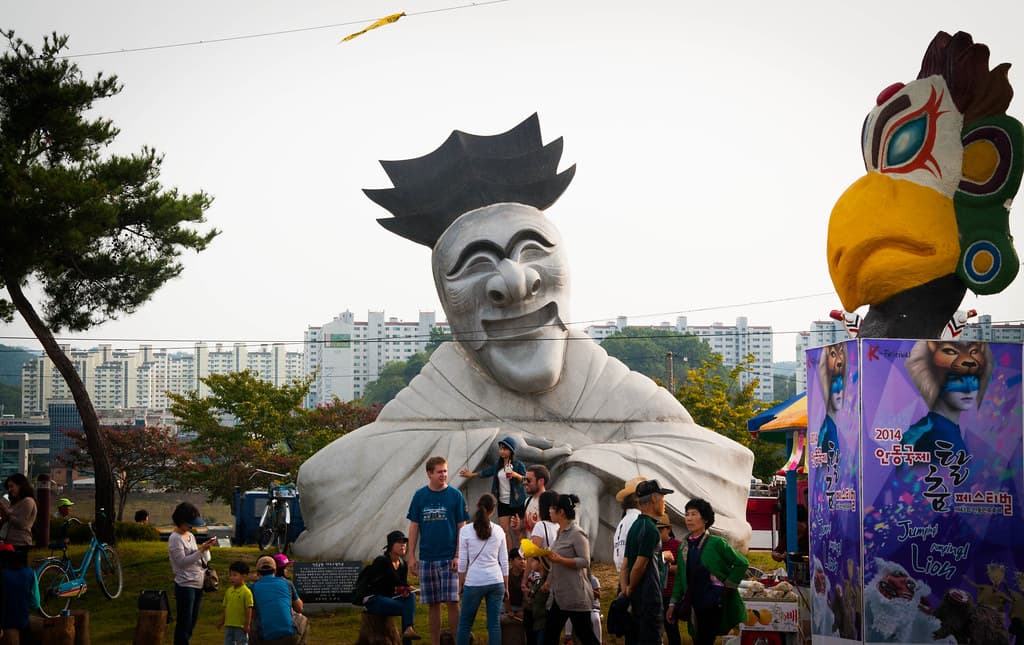
The Andong International Maskdance Festival (안동국제탈춤페스티벌) began in 1997, but the thing it celebrates is far older. It grew directly out of Andong's own Hahoe byeolsingut talnori (하회별신굿탈놀이), a satirical shamanic mask drama performed in the nearby folk village for centuries (the Hahoe masks are traditionally dated to the 12th century) and designated Korea's Important Intangible Cultural Property No. 69. The drama's whole point is impudence: masked players mock aristocrats, monks, and scholars in front of everyone, a licensed rebellion that let ordinary villagers laugh at their betters.
That local root now carries a global stage. Korean talchum (탈춤), the broader tradition of mask dance drama, was inscribed on UNESCO's Representative List of the Intangible Cultural Heritage of Humanity in 2022, and the festival's stature jumped with it. The 2024 edition drew about 1.48 million visitors over ten days, with 35 overseas teams from 25 countries on the bill; organizers listed 24 countries and 28 overseas teams for 2026.
Programming runs daily from 10am to 10pm across three main zones: the old downtown, Talchum Park, and the Jungang Line 1942 Andong Station grounds, with a few evening shows out in Hahoe Village. You get Korean and international mask dances, madanggeuk (마당극) courtyard plays, mask-making workshops, street parades, and the World Maskplay Contest, which carries a total prize pool of KRW 70,000,000 across individual and group divisions. The festival grounds themselves are free; only some individual programs charge.
The masks let the village laugh at everyone above it.
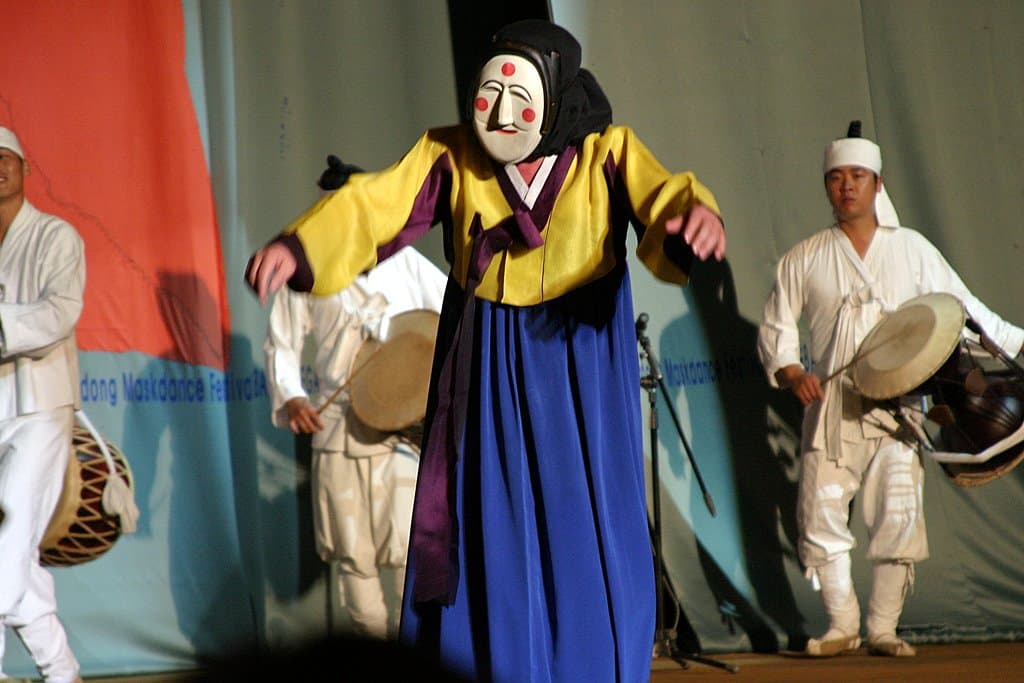
A mask dance performance at the Andong Mask Dance Festival
Photo by Robert at w:Picasa / wikimedia · CC BY 3.0
What to expect
Sep 24
Pre-festival eve
The 30th edition begins a day before the formal opening, with pre-festival events around town. It is a gentle way to arrive and find your bearings before the crowds build.
Sep 25
Opening ceremony and parade
The formal opening starts at 6pm: a parade of Korean and international troupes and local residents moves through the old downtown, then the main program continues on the stage at Andong Station. It is the most photogenic and participatory moment of the festival, so arrive in time rather than treating this as a travel day.
Sep 26–Oct 3
The full run
Daytime belongs to talchum performances, madanggeuk plays, and mask-making workshops rotating across the downtown, Talchum Park, and the station grounds from 10am to 10pm. International troupes and Korean groups trade the stages, an evening mask parade sets out from the festival grounds, and the World Maskplay Contest builds toward its October 3 finals. The night shows under lights are the ones to plan around.
Oct 4
Closing day
The final Sunday wraps up the last performances. It is a calmer, softer note than the opening roar, and a good day to fold in a slow lunch in the Old Market before you travel out.
Planning your trip
Getting there
The KTX-Eum high-speed train links Seoul's Cheongnyangni Station with Andong in a little over two hours, which technically puts the festival within day-trip range of the capital. Do not treat it that way if you can help it: the parade starts in the evening, the best performances are after dark, and the city rewards an overnight. Once you are in town, the old downtown, Talchum Park, and the station grounds are close enough to cover on foot, and Hahoe Village is a short ride out.
Late September and early October usually bring mild days and cool evenings. Bring a light jacket for the night performances and you are set.
Where to stay
You have a real choice of character. Hanok (한옥) guesthouses in and around Hahoe Village give you the full traditional stay, timber and paper screens and morning quiet; hotels and motels in downtown Andong put you within walking distance of the festival zone and its late-night food.
What it costs
The festival grounds, street parades, and outdoor shows are free to enter. For 2026, organizers sold advance tickets at KRW 6,000 (KRW 4,000 for students), with gate prices KRW 2,000 higher; local reports describe them as covering designated indoor performances, and advance buyers also got a KRW 2,000 coupon for participating shops. Check the official site for exactly what a ticket covers. Beyond that, the real costs are the train from Seoul and the room, and lodging runs highest when the dates overlap Chuseok. The Andong Soju & Traditional Food Museum, which runs tastings, has free admission.
Go like you know
- Arrive for the opening evening. The 6pm parade through the old downtown is the most participatory moment of the festival, and it only happens once.
- Do the Hahoe day trip on a Tuesday-to-Sunday afternoon so you catch the 2–3pm byeolsingut talnori performance, then head up to Buyongdae for the panorama if the ferry is running.
- Eat in Jjimdak Alley in the Old Market: Andong jjimdak (찜닭), the soy-braised chicken now famous nationwide, is commonly traced to market restaurateurs here in the 1980s.
- Chase it with real Andong soju, a 45% ABV distilled liquor protected as Gyeongsangbuk-do Intangible Heritage, nothing like the green-bottle stuff. The Andong Soju & Traditional Food Museum runs tastings.
- Check the official site map before you go: the venue layout shifts between riverside Talchum Park and the downtown and station grounds from year to year.
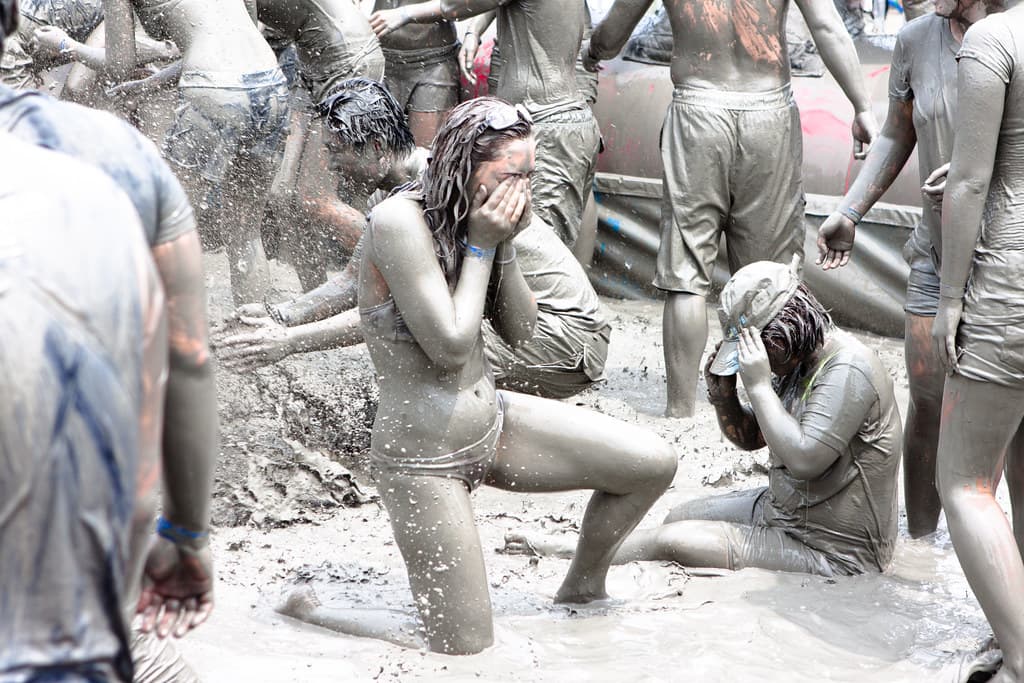
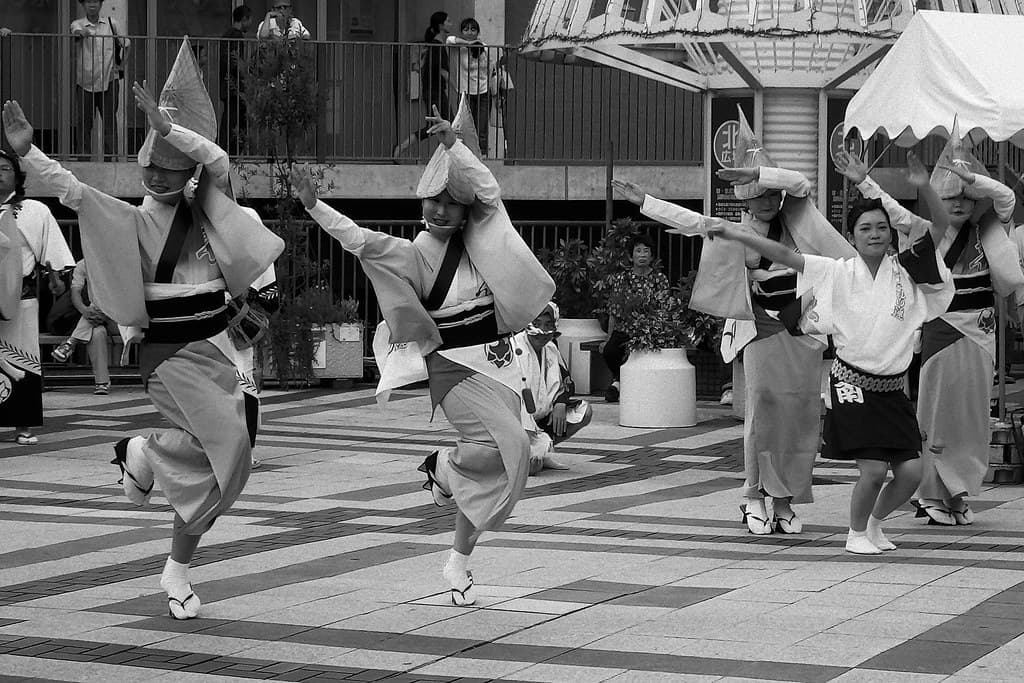
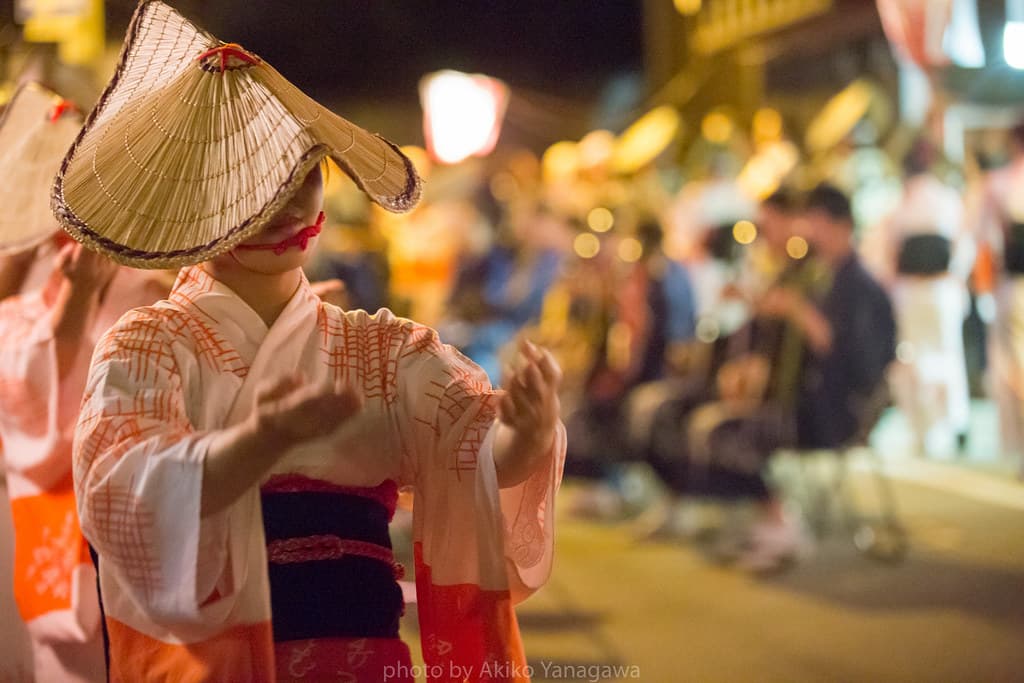
- Building a longer trip? The Boryeong Mud Festival fills Korea's west coast in late July and early August, while Japan's Awa Odori (August 12–15, Tokushima) and Owara Kaze no Bon (September 1–3, Toyama) are good dance-festival contrasts to the masked satire here.
Frequently asked questions
Do I need tickets?
The festival grounds, street parades, and outdoor shows are free to enter. Local reports describe ticketed indoor performances, and 2026 advance tickets cost KRW 6,000 (students KRW 4,000), with gate prices KRW 2,000 higher. Workshops and some programs charge separately, so check the official site for what each ticket covers before you buy.
Is it worth it if I only have one day?
You can do it in a day from Seoul via the two-hour KTX-Eum, and you will see plenty, but you will miss the evening parade and the after-dark performances that are the festival's best hours. If a single day is all you have, come for the opening evening rather than a midday drop-in.
When should I book?
Early, whenever the dates touch a holiday. The 2026 edition opened on the Chuseok holiday (September 24–27), when the whole country travels, so trains and rooms filled fast. Reserve KTX-Eum seats the day the booking window opens and secure your room months ahead; the walkable downtown and Hahoe hanok stays go first.