What is the Pahiyas Festival?
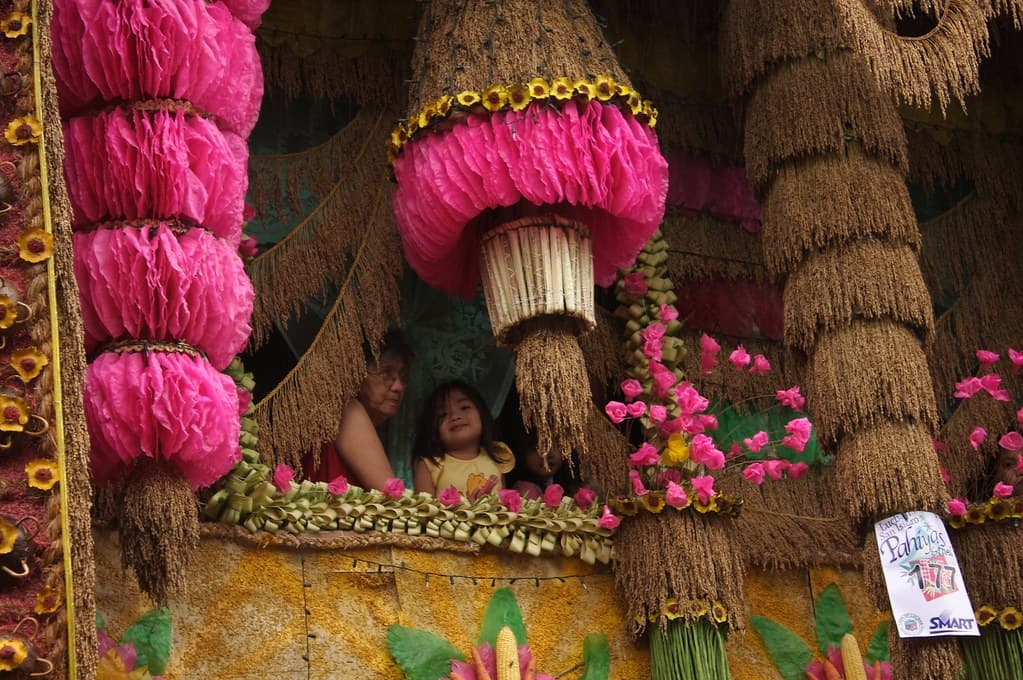
Every May 15, the town of Lucban, in the province of Quezon south-east of Manila, gives thanks for the harvest in the most colourful way imaginable. It is the feast of San Isidro Labrador, the patron saint of farmers, and for Pahiyas the people of Lucban cover the fronts of their houses in the fruits of the land: rice stalks, vegetables, fruit, strings of longganisa sausages, and above all kiping.
Kiping are thin wafers made from rice dough, pressed onto leaves to take their shape, then dyed in bright pinks, yellows, greens and reds and dried in the sun. Hung in clusters, they form flowers, chandeliers and curtains called arangya that cover windows and walls, glowing when the sun shines through them. Together with the produce, they turn whole streets into giant works of folk art.
Only the houses along the procession route take part, and the route changes every year, so a house may wait several years for its turn. Families spend weeks preparing, and the town awards prizes for the best decorated houses, which encourages ever more elaborate designs. The day starts with an early morning Mass at Lucban's church, followed by the procession of the image of San Isidro and his wife through the decorated streets.
The festival has grown into a week of events, with parades, street dancing and food, and Lucban, a pleasant town at the foot of Mount Banahaw, fills with visitors from Manila and beyond. When the day is over, the produce and the kiping are traditionally shared out, and visitors are welcome to take a souvenir.
What to expect
The main celebrations take place on May 15, with events in the days before.
The days before
Decorating the town
Families along the route build their displays, and the town fills with stalls selling food and crafts. Parades and contests build the excitement through the week.
May 15 morning
Mass and procession
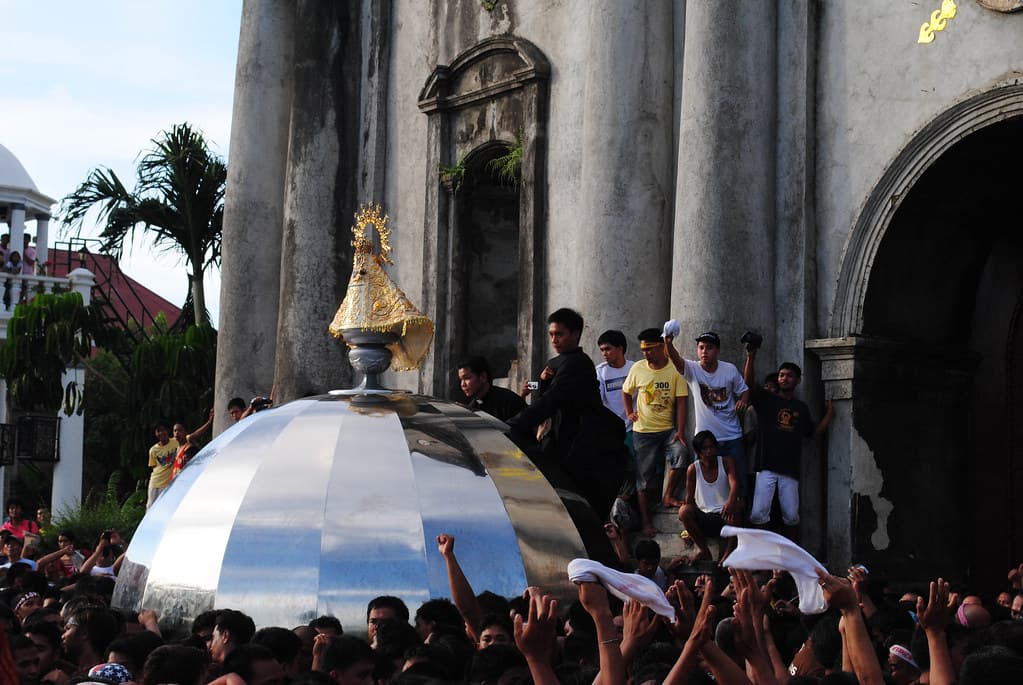
The day begins with Mass at the church, followed by the procession of San Isidro through the decorated streets, as the houses are judged and crowds start to arrive.
May 15 afternoon
The parade
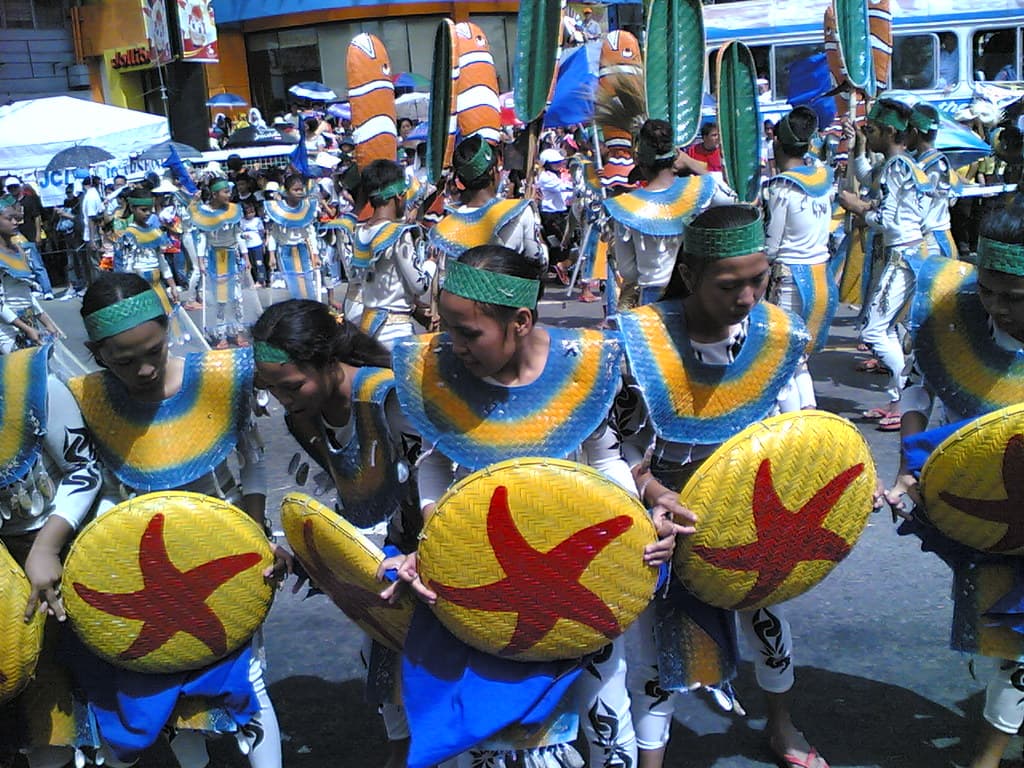
In the afternoon, a parade winds through the town with floats, some pulled by carabao, the water buffalo of the Philippine farms, along with street dancers and giant papier-mâché figures.
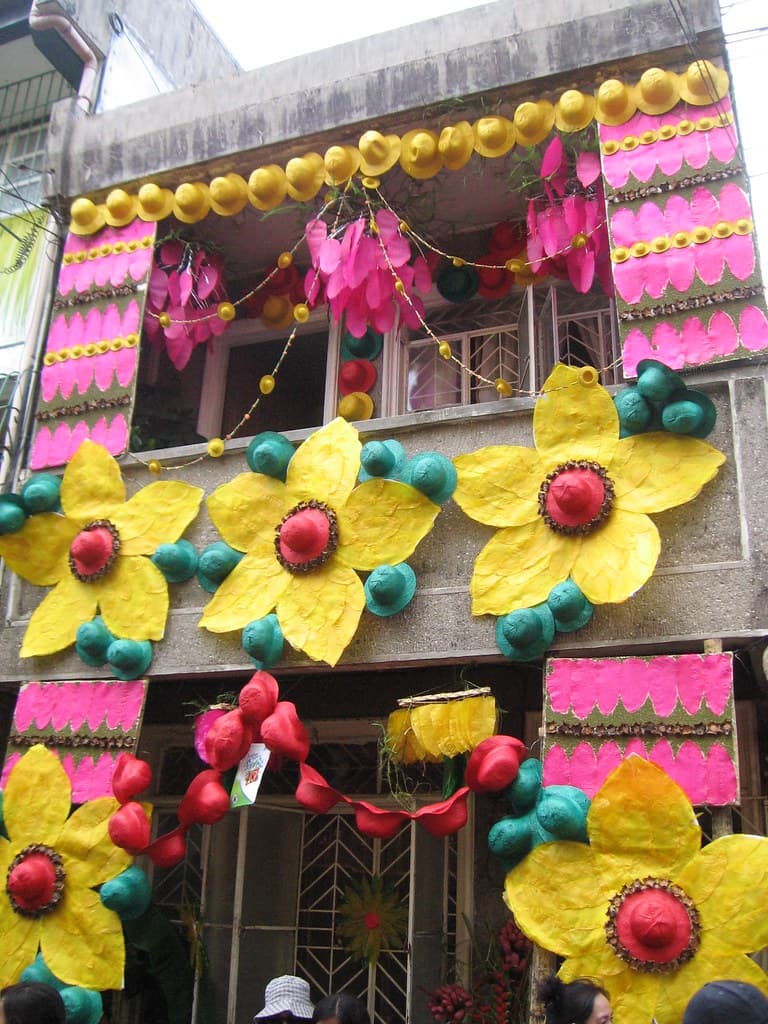
A house dressed in kiping for Pahiyas
Photo by lolay / flickr · CC BY 2.0
Planning your trip
Getting there
Lucban is about 120 kilometres from Manila. Buses run from Manila to Lucena, about 22 kilometres away, from where jeepneys and vans continue to Lucban; the trip can take three to four hours or more on festival day. Driving is possible, but traffic is heavy and parking scarce.
Where to stay
Lucban has few hotels and guesthouses, and they fill for the festival. Many visitors stay in Lucena, Tayabas or resorts in the surrounding hills, or come on a long day trip from Manila. Book well ahead if you want to stay in town.
What it costs
The festival is free, and food in Lucban is cheap. Transport from Manila is inexpensive by bus, more by private car. Rooms are scarce and can be pricier during the festival, but a day trip keeps costs very low.
Go like you know
- Eat pancit habhab, Lucban's noodles, eaten straight from a banana leaf without utensils.
- Try the town's famous longganisa, garlicky local sausages, and take some home.
- Buy kiping from stalls to see how it's made, and look for houses that let visitors take part of the display at the end of the day.
- Visit Kamay ni Hesus, a hillside shrine with a giant statue of Christ on the edge of town, on a quieter morning.
- Cebu's Sinulog, in January, is the Philippines' great festival of street dance.
- For another great Philippine feast, see Naga's Peñafrancia Festival, in September.
Frequently asked questions
When is the Pahiyas Festival?
Every year on May 15, the feast of San Isidro Labrador, with events in the days before. In 2027, May 15 falls on a Saturday, so expect larger crowds from Manila than on a weekday. Check the Lucban municipality's announcements for the programme and the year's route.
What is kiping?
Kiping is a thin, colourful wafer made from ground rice, shaped on real leaves, coloured and dried in the sun. In Lucban it is used to decorate houses for Pahiyas, often in chandelier-like clusters. It is edible, and is sometimes grilled or fried as a snack.
Can I see the decorations elsewhere?
Pahiyas is unique to Lucban, though other towns in Quezon celebrate San Isidro in May with their own harvest festivals. Lucban's decorations are only up for the festival, and the route changes each year, so the best way to see them is to be there on May 15.