What is the Peñafrancia Festival?
In the Bicol region of southern Luzon, in the Philippines, one image commands a devotion like no other: Our Lady of Peñafrancia, the patroness of Bicol, known to her devotees simply as Ina, mother. Every September, Naga City, her home, holds a festival in her honour that draws pilgrims from across the region and the country, and local officials count the crowds in the hundreds of thousands, by some estimates more than a million.
The devotion came from Spain. The original Virgin of Peñafrancia is venerated in the mountains near Salamanca, and a Spanish devotee, Miguel Robles de Covarrubias, is credited with bringing the devotion to Naga, where he had a copy of the image made and built her first shrine in the early 18th century. The custom of carrying her through the city and back along the river grew into the festival held today.
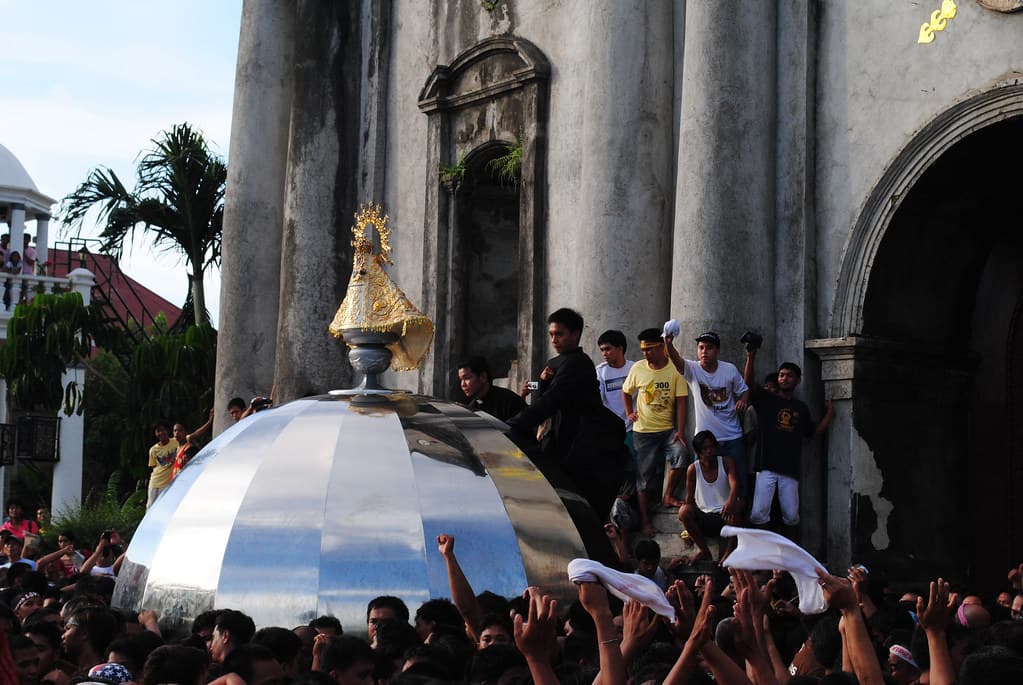
At its heart are two processions. In the first, the Traslación, the image is carried from her basilica to Naga's cathedral for nine days of prayer. In the second, she returns by river in a great fluvial procession, watched from both banks by crowds waving white handkerchiefs and shouting Viva la Virgen!
What to expect
The festival lasts most of September, with concerts, parades and trade fairs, but the sacred core is ten days built around the two processions.
Second Friday
The Traslación
The image of Ina, together with the Divino Rostro, the Holy Face of Jesus, is carried from the Basilica Minore to the Naga Metropolitan Cathedral. The andas are borne by the voyadores, barefoot male devotees who surge and push to touch and carry them through the packed streets.
Nine days
The novena
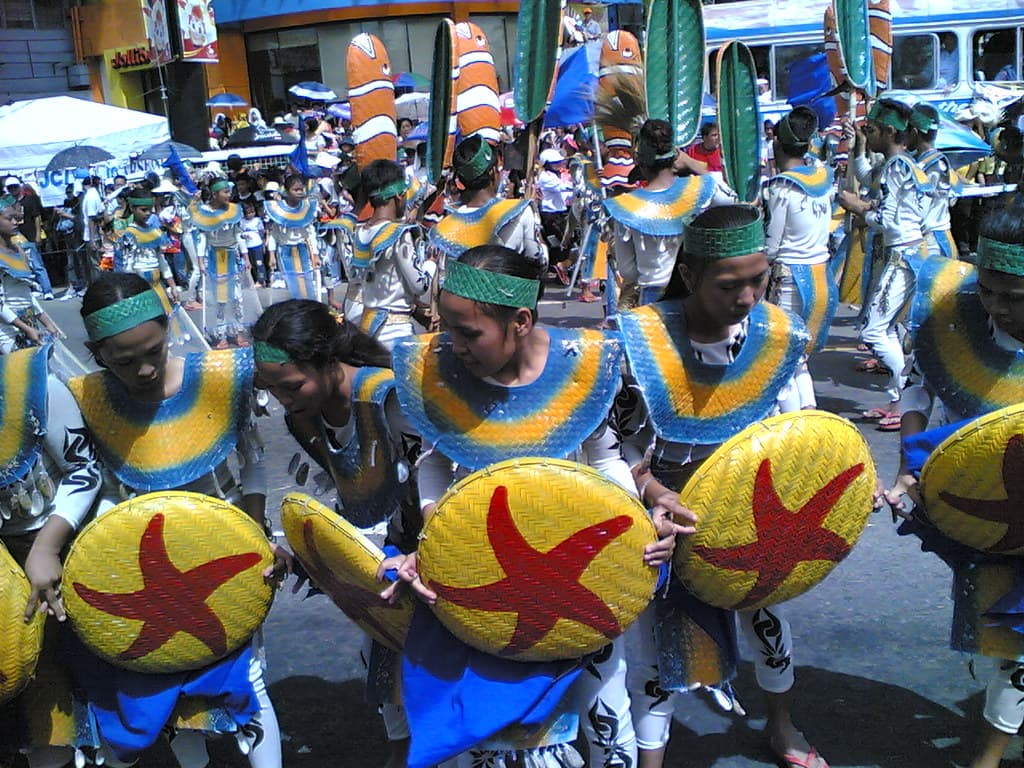
Masses and prayers run at the cathedral through the day and evening, while the city fills with pilgrims, street parties and civic parades, including a voyadores festival of street dancing.
Third Saturday
The fluvial procession
In the afternoon the images are placed on a decorated barge, the pagoda, and towed along the Naga River back towards the basilica, escorted by boats of devotees and lit candles as dusk falls. The feast day follows on Sunday.
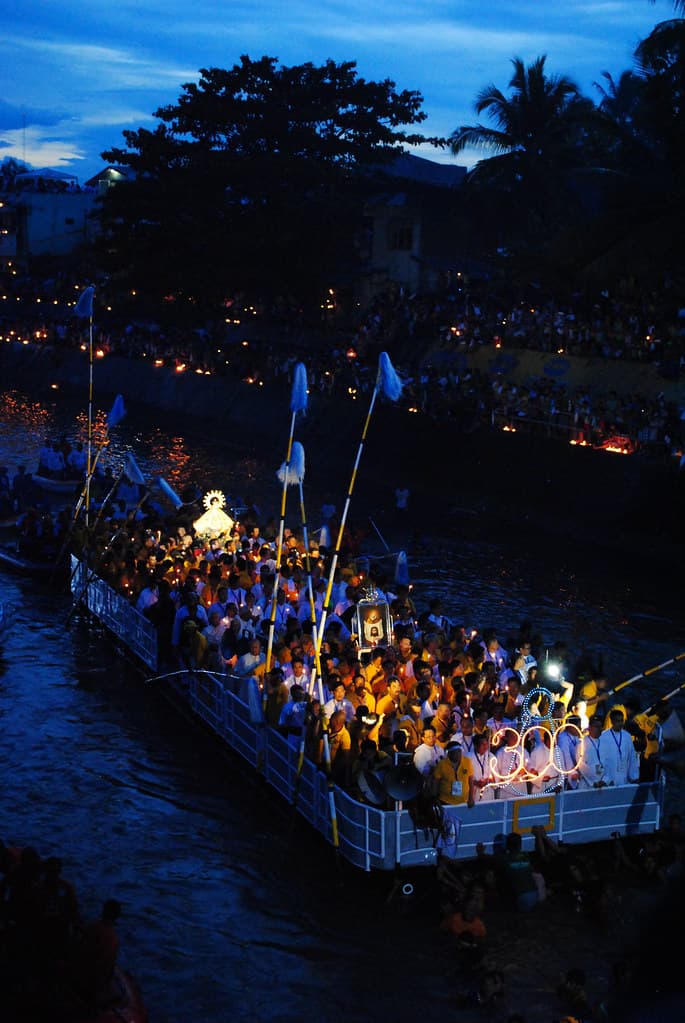
The fluvial procession on the Naga River at dusk
Photo by jeromz / flickr · CC BY-SA 2.0
Planning your trip
Getting there
Naga is served by an airport at nearby Pili, with flights from Manila of about an hour. Overnight buses from Manila take most of a night, and extra services run for the festival weekend. During the festival, roads in the city centre close to traffic, and the processions are best followed on foot.
Where to stay
Naga has hotels and guesthouses for most budgets, but rooms fill for the Traslación and the fluvial procession weekend, so book early. Many pilgrims stay with family and friends; visitors without a booking may find rooms in nearby towns such as Pili.
What it costs
Everything is free. Naga is an inexpensive city by any standard, with cheap food at carinderias and street stalls, and rooms are moderately priced even in festival week, if you can find one. Flights from Manila are the biggest cost, and they rise in September.
Go like you know
- Bring a white handkerchief to wave as the image passes, as everyone around you will.
- Dress modestly for the masses and the processions, and give way to the devotees, who come first.
- Try Bicol Express, pork stewed in coconut milk and chillies, the region's signature dish.
- For the Philippines' great January festivals of the Santo Niño, see Cebu's Sinulog and Aklan's Ati-Atihan.
- Davao's Kadayawan Festival in August is Mindanao's harvest celebration.
Frequently asked questions
When is the Peñafrancia Festival?
The Traslación is on the second Friday of September and the fluvial procession on the third Saturday, with the feast on the Sunday after. In 2026 they fell on September 11 and 19. In 2027 they are expected on September 10 and 18, to be confirmed by the archdiocese and the city.
Can women take part in the procession?
The voyadores who carry the image in the Traslación are traditionally men, and the crush around the andas is no place to be for anyone who isn't prepared for it. Women devotees take part everywhere else: in the novena, in the crowds, and along the river during the fluvial procession.
Is the festival suitable for non-Catholics?
Yes, as long as you treat it as a religious event first. Visitors of any faith are welcome to watch the processions and attend the masses. Dress modestly, follow the lead of the devotees around you, and avoid pushing into the crowds around the image for photos.