What is Oktoberfest?
Munich's Oktoberfest, the Wiesn to locals, started as a wedding party. In October 1810 Crown Prince Ludwig of Bavaria married Princess Therese, and the city celebrated with a horse race on a meadow outside the walls. The meadow took the bride's name, Theresienwiese, and the party kept coming back. More than two centuries later it is the world's largest folk festival, drawing around seven million visitors a year to the same patch of ground.
What makes it Munich's rather than anyone else's is the beer. Only beer brewed inside the city limits under Bavaria's old purity law may be served, which leaves six breweries with the rights: Augustiner, Hacker-Pschorr, Hofbräu, Löwenbräu, Paulaner and Spaten. It comes in a one-litre glass mug, the Maß, hauled to the tables by servers carrying several in each hand.
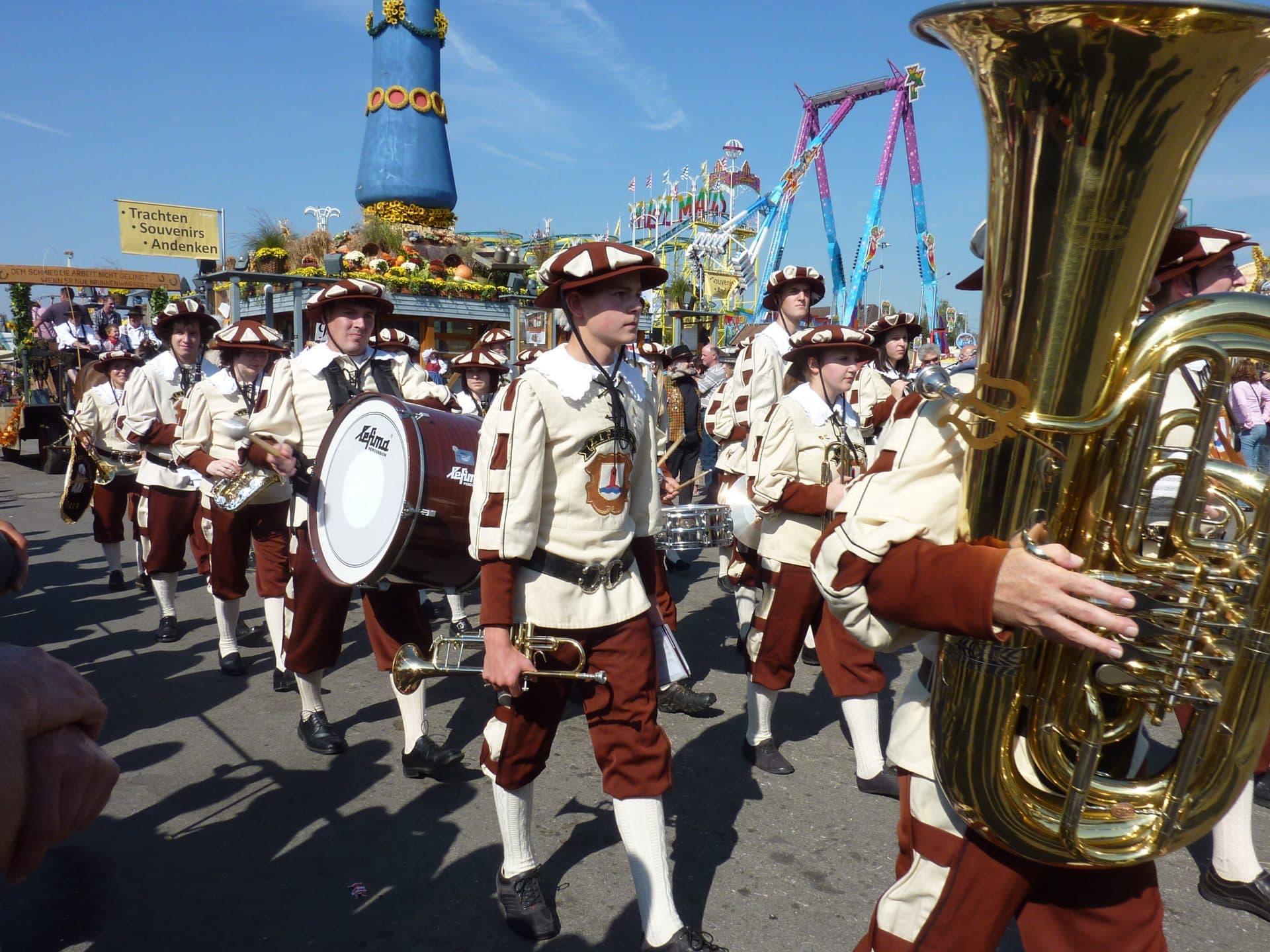
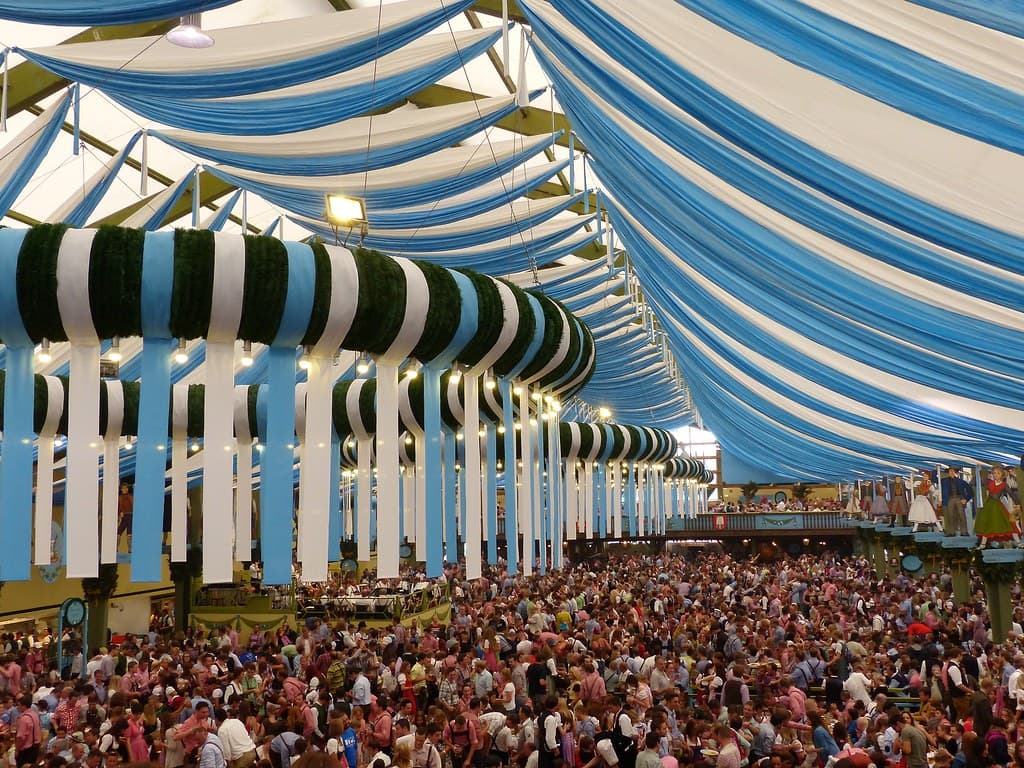
The rest is a fairground with a strong sense of ritual. Seventeen large festival halls, each run by a family of hosts and tied to a brewery, sit along the main avenue, with twenty-one smaller tents, roller coasters, gingerbread stalls and roast-chicken stands around them. Plenty of locals come in Tracht, the leather shorts and dirndl dresses of Bavarian country dress, and the brass bands play the same songs every night.
O'zapft is! (It's tapped!)
What to expect
Opening Saturday
The first keg
At noon the mayor of Munich taps the first barrel in the Schottenhamel tent, shouts "O'zapft is!", and only then do the other halls start pouring. Before that the hosts' parade, the Wiesn-Einzug, brings the tent families and brewery horse-drawn drays to the grounds. Tents fill from early morning; if you want a seat inside on day one, you need to be there hours ahead.
First Sunday
The costume parade
The traditional costume and riflemen's parade winds through the city centre to the Theresienwiese: thousands of people in regional dress, shooting clubs, marching bands and decorated floats. Watching from the route is free and arguably the best hour of the whole festival.
Weekdays
The sweet spot
Midweek lunchtimes are when the halls are easiest to walk into. Two Tuesdays are family days, with cheaper rides and stands for children until 7pm.
Closing Sunday
Last orders
The final evening is the last chance for a table, and the bands play the halls out at closing time. By the next morning the meadow is a building site again.
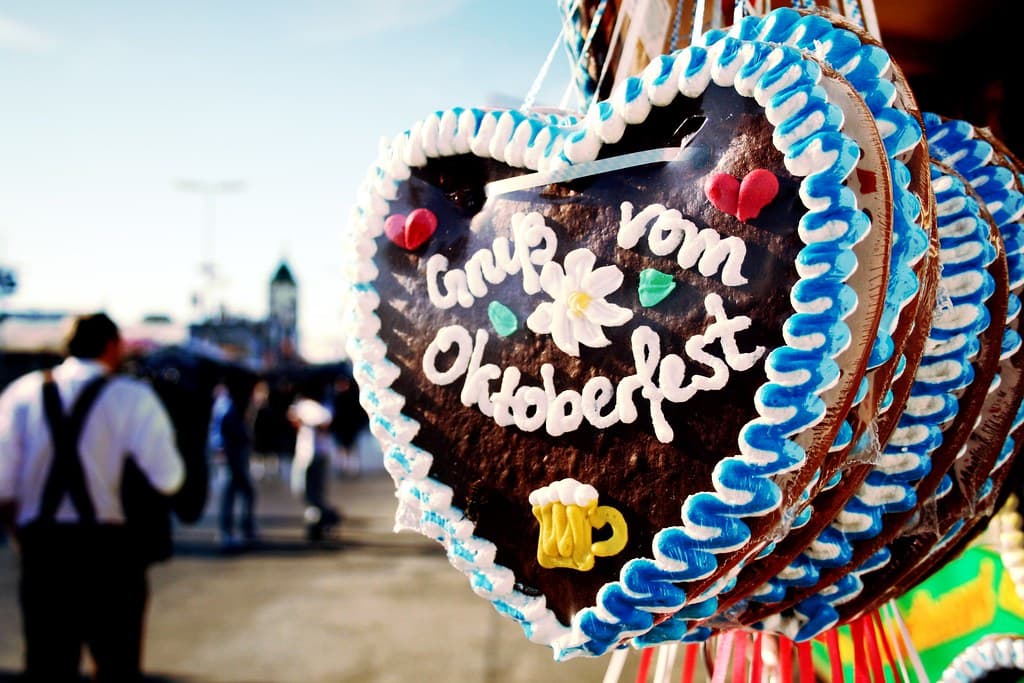
Gingerbread hearts, the Wiesn's classic souvenir
Photo by DitschisWorld / flickr · CC BY-SA 2.0
Planning your trip
Getting there
Munich's airport is under an hour from the centre by S-Bahn, and high-speed trains reach the main station from across Germany, Austria and Switzerland. The Theresienwiese sits a short walk south-west of the main station and has its own U-Bahn stop, so you never need a car. Expect standing-room trains at closing time.
Where to stay
Anywhere central works, because the U-Bahn runs late. The streets between the main station and the meadow put you on foot from the gates; Schwabing, Haidhausen and the Glockenbach quarter are calmer for the nights you are not drinking. Some visitors save money by staying in towns along the S-Bahn lines and commuting in.
What it costs
The grounds and the halls are free to enter; only the Oide Wiesn, the historic section with vintage rides and old-style tents, charges admission. A Maß cost between 14.80 and 15.90 euros in 2026, and even a litre of tap water averaged about 11 euros, so a long day in a tent adds up fast. Half a roast chicken, the standard tent meal, is a second big cost. Rides charge per go.
Go like you know
- Tip your server when you order the first round, and keep tipping. It is the fastest way to stay on their route through a packed hall.
- Pace yourself: a litre glass hides how much you have had, and the halls serve until late evening.
- Go on the opening weekend for the ceremony, then come back midweek for the easy version.
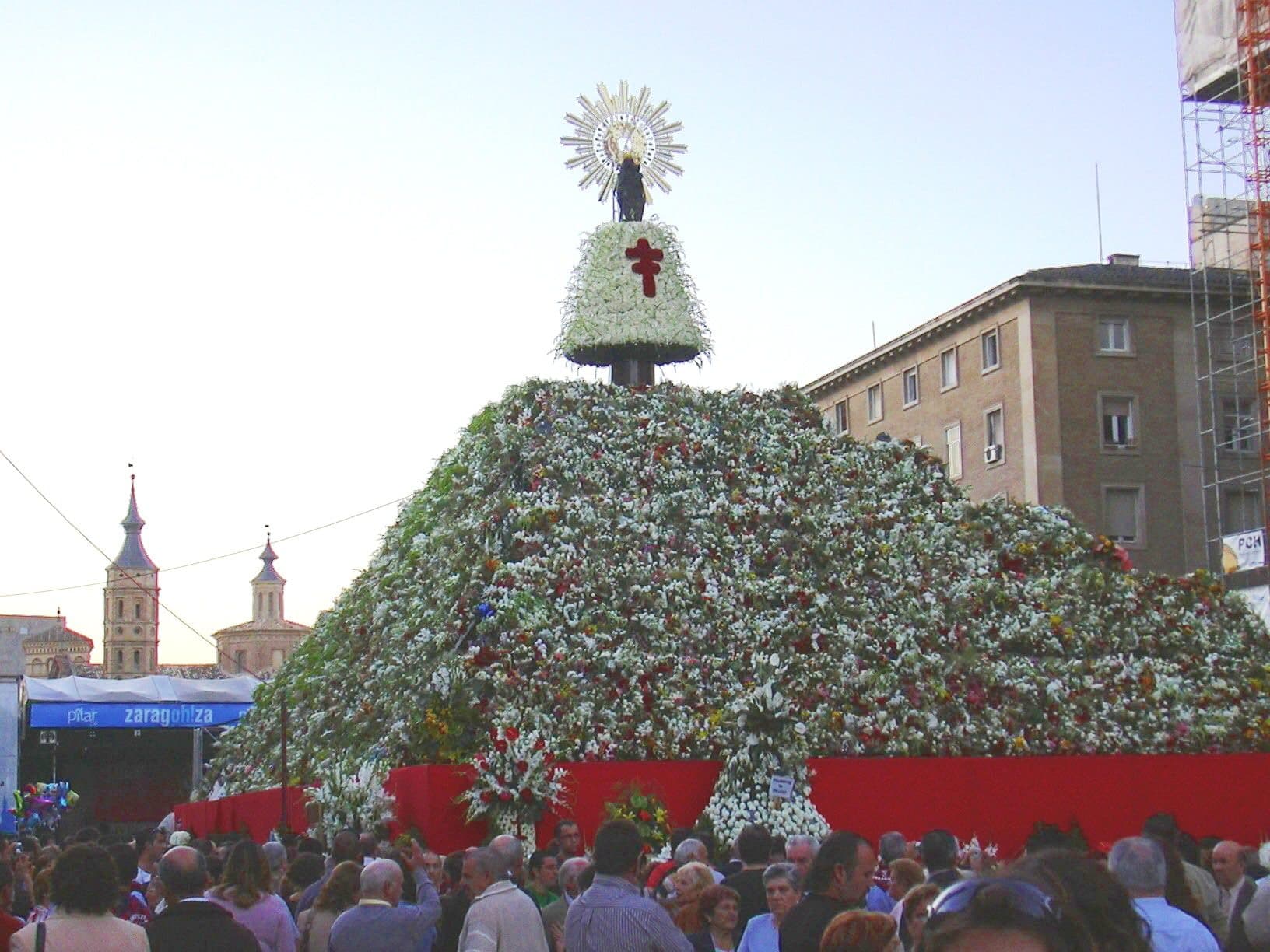
- Make it a beer-festival double with Stuttgart's Cannstatter Volksfest, which runs at the same time, or head south for Zaragoza's Fiestas del Pilar a week after the Wiesn closes.
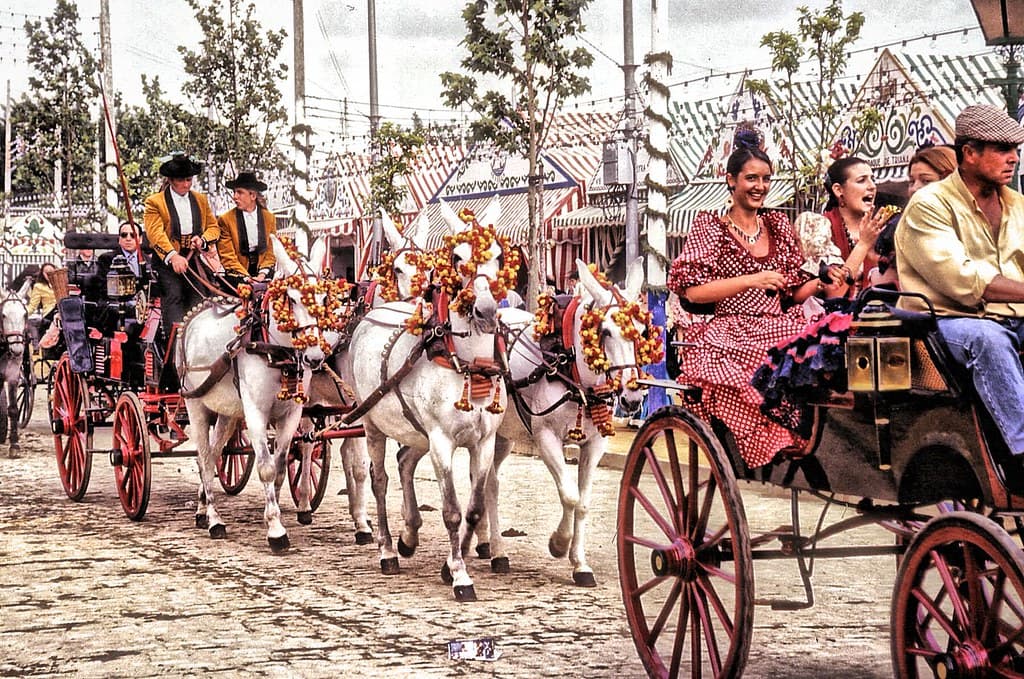
- For another city that turns over to one party for a week, Seville's Feria de Abril has the same mix of tents, costume and family tradition.
Frequently asked questions
Do I need to wear lederhosen or a dirndl?
No, and plenty of visitors don't. Locals do wear Tracht in large numbers, and you will blend in more if you do, but nobody is turned away in jeans. If you buy, skip the thin costume-shop versions for an outfit made to be worn again.
Can I visit with children?
Yes. The fairground has rides for all ages, and children can sit in the tents with adults during the day. Two Tuesdays are family days with reduced prices until 7pm. In the evenings the halls get loud and crowded, so most families leave by late afternoon and come back another morning.
Is it worth going if I don't drink beer?
Yes. Every tent sells soft drinks, wine and radler, and the food, music, rides and parades are half the experience. The Oide Wiesn is the calmest corner, with old carousels and folk music. Just know that soft drinks are not much cheaper than beer inside the halls.
How early do the tents fill up?
On the opening Saturday and on weekends, many halls are full by late morning and close their doors. On weekdays you can usually find a seat until mid-afternoon. Evenings are hardest, especially on Fridays and Saturdays, when only a reservation reliably gets you in.