What is Midsummer in Sweden?
Midsommar is the day Sweden celebrates summer itself. After a long, dark winter, the light in late June barely fades at night, and on Midsummer Eve the whole country seems to head for the countryside, the lakes and the summer cottages. It is often called Sweden's unofficial national day, and for many Swedes it matters more than the official one.
The heart of it is the maypole, the midsommarstång: a tall pole with a cross-bar and two hoops, wrapped in birch leaves and wildflowers, raised in a village meadow and danced around to fiddles and accordions. Families then sit down to the midsummer table of pickled herring, new potatoes with dill, sour cream and chives, and strawberries, often with small glasses of snaps and drinking songs between them.
The festival began as a celebration of the solstice, the season of growth and fertility, and the night was long believed to be magical: a time for telling fortunes, when plants gained healing powers. Some of that survives in the custom of picking seven kinds of wildflowers on Midsummer Eve and putting them under your pillow to dream of your future love. Since the 1950s the holiday has been fixed to a Friday, so the whole country can take the long weekend.
What to expect
Every town and village has its own celebration, and most are open to anyone. Dalarna, the province of lakes and red wooden farmhouses in the centre of the country, is the traditional heartland, and its celebrations spread over several days.
Thursday
Dressing the maypole
In many villages, people gather the day before to cover the pole in birch branches and flowers, and to make wreaths. Visitors are usually welcome to help, and it's the friendliest way in.
Midsummer Eve
Raising the pole
The main day. Crowds gather in the afternoon as the pole is raised by hand, often by men with ropes and long poles, to music. Then the dancing starts, ring dances for all ages, including the famous one where everyone hops round the pole pretending to be little frogs. The evening is for the long midsummer meal and, for many, a party.
Midsummer Day
The quiet day
The Saturday is calm, often spent recovering, at church or on the lake. In some Dalarna villages there are smaller celebrations and dances through the weekend.
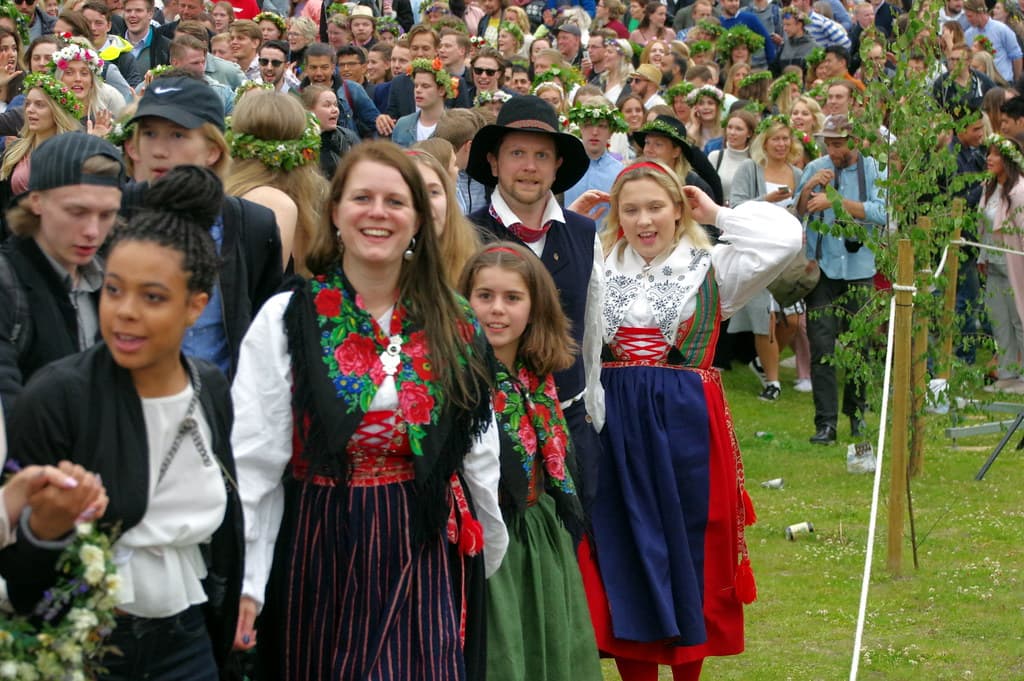
The largest celebration is in Leksand, on the shore of Lake Siljan, where Sweden's tallest maypole is raised in a grassy natural bowl, and where 20,000 to 30,000 people come every year. Many wear the folk costumes of their parish, each slightly different, often handmade and handed down through families.
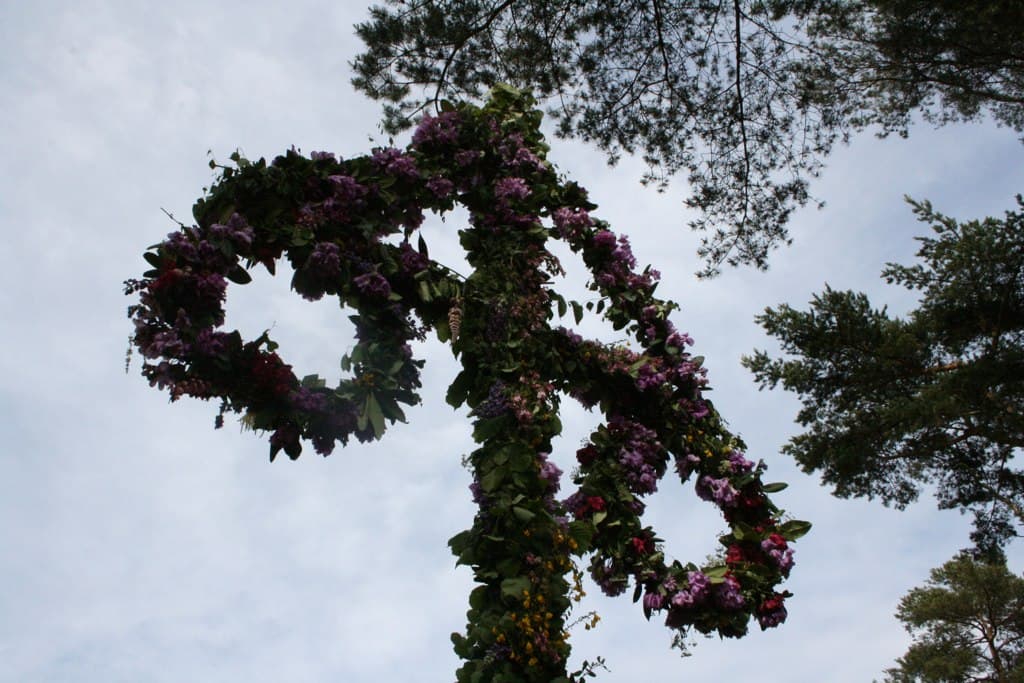
A dressed midsommarstång, the Swedish maypole
Photo by David (Standout) / flickr · CC BY 2.0
Planning your trip
Getting there
Stockholm's Arlanda airport is the main gateway. Trains run from Stockholm to Leksand and the other towns around Lake Siljan in about three hours, with extra demand on the Thursday before Midsummer, so book early. A car gives you the freedom to visit several village celebrations in one day.
Where to stay
Hotels, guesthouses and cabins around Lake Siljan book out months ahead for midsummer week, and some ask for a minimum stay over the whole weekend. Campsites and youth hostels are a good alternative, and Falun or Mora, a short drive away, have more beds.
What it costs
The village celebrations themselves are free. Sweden is an expensive country to travel in, and accommodation is the largest cost over the holiday weekend. Restaurants that stay open often serve a fixed midsummer menu at a premium; a picnic with supplies from a supermarket is the local way and much cheaper.
Go like you know
- Make or buy a flower wreath for your hair. Everyone wears one, of every age.
- Learn the frog dance before you go: you'll be expected to join in, and hopping round the pole is the point.
- Bring a blanket and a picnic for the meadow, and something warm for the evening.
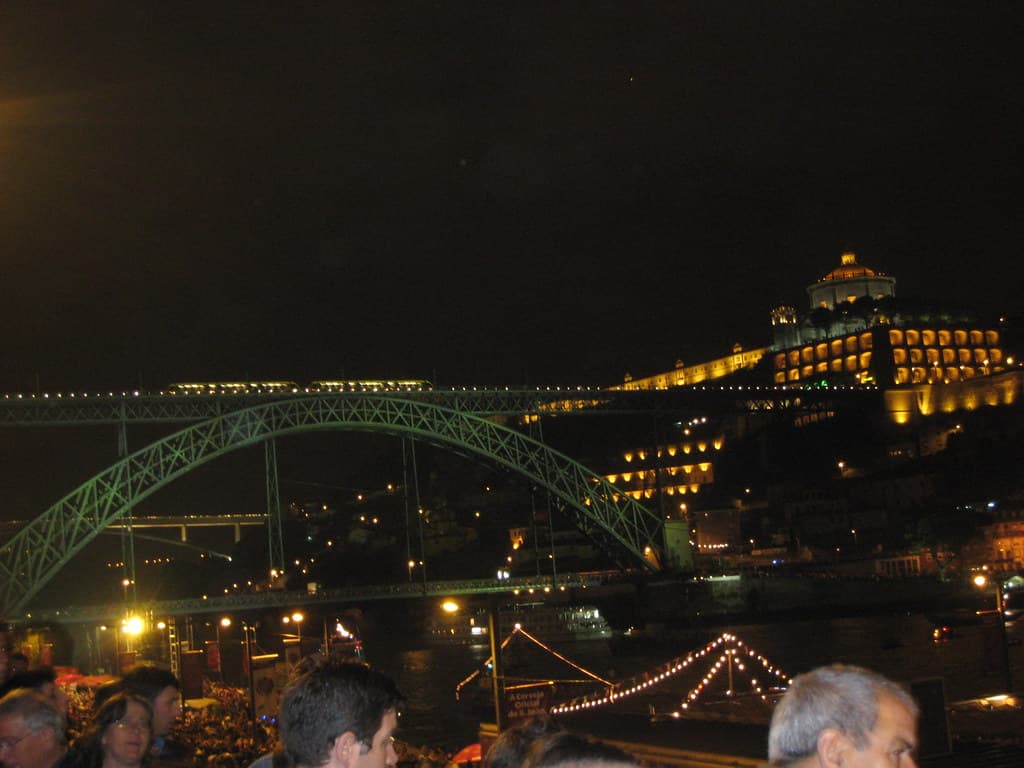
- Porto's São João celebrates the same midsummer night in a very different style, with sardines and fireworks.
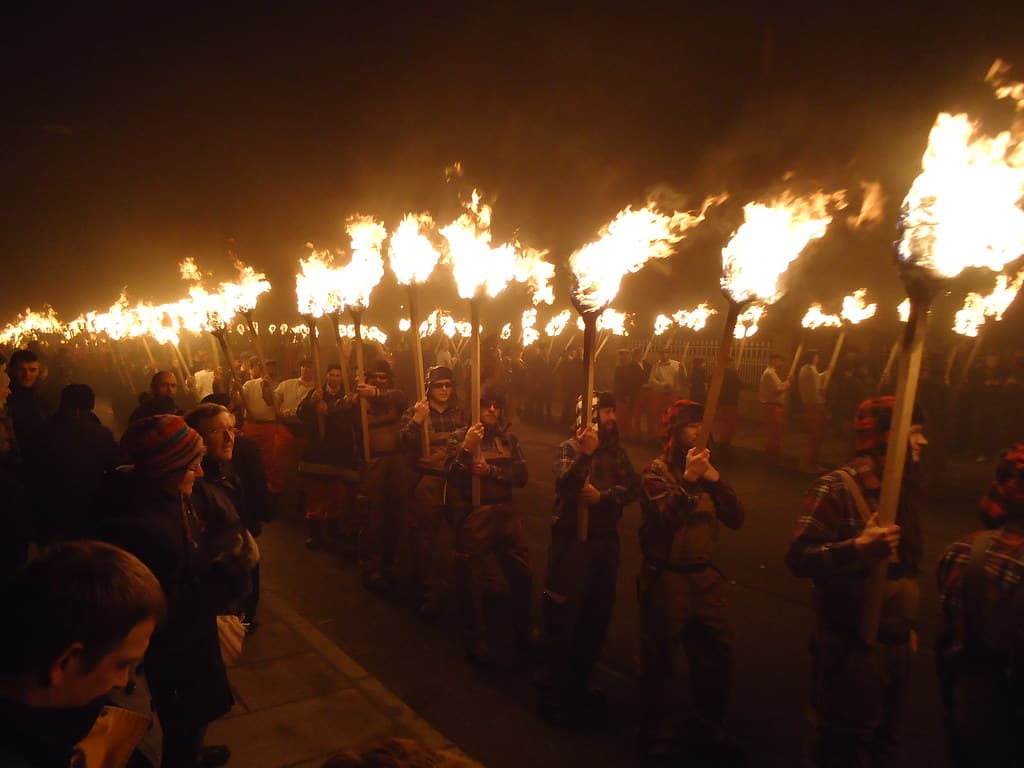
- For the northern winter equivalent, see Shetland's Up Helly Aa fire festival, or Reykjavík's Iceland Airwaves in November.
Frequently asked questions
When is Midsummer in Sweden?
Midsummer Eve is always a Friday between June 19 and 25, and Midsummer Day is the Saturday after. In 2026 the Eve fell on June 19; in 2027 it falls on June 25. Celebrations in Dalarna often begin a day or two earlier, with the dressing of the maypoles.
Where is the best place to celebrate?
Dalarna, around Lake Siljan, is the traditional heartland, and Leksand has the biggest celebration. But almost every Swedish town and village raises its own maypole, including open-air museums such as Skansen in Stockholm, so you can find a celebration wherever you are staying.
Do I need to be invited?
No. Public celebrations in town squares and village meadows are open to everyone, and visitors are welcome to watch, dance and help dress the pole. The midsummer meal afterwards is usually a private affair among family and friends, so bring your own picnic unless you are invited.