What is the summer solstice at Stonehenge?
Stonehenge has stood on Salisbury Plain, in the south of England, for around 4,500 years, and no one knows exactly why it was built. What is clear is that it is aligned with the sun: on the summer solstice, the longest day of the year, the sun rises in line with the stones' main axis, and on the winter solstice it sets on the same line.
For most of the year, visitors walk around the circle on a path at a distance. But on the summer solstice, English Heritage, which looks after the monument, opens the site for free for one night, and anyone can walk among the stones, touch them, and wait for the sunrise inside the circle. Thousands come: about 20,000 in 2026, and more than 37,000 in the record year of 2014.
People have gathered here for the solstice since at least the 19th century, when the railway to Salisbury brought the first crowds. Druid revivalists held ceremonies around 1900, and in the 1970s a free festival grew around the stones, until it was ended by the violent "Battle of the Beanfield" in 1985 and the site was closed. Since around 2000, English Heritage has run the solstice as a managed open access event.
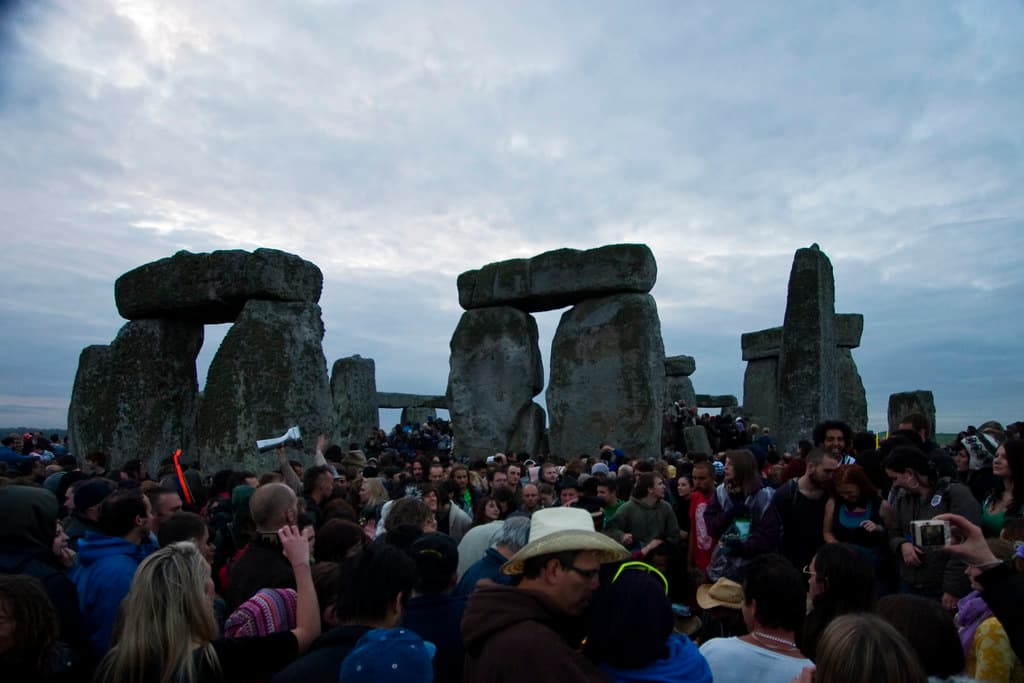
The crowd is like no other: druids in white robes, pagans, witches and followers of earth religions hold ceremonies among the stones, alongside families, students, tourists, drummers and dancers. Some come to pray, others to party, and most simply to share a sunrise in one of the most famous places on Earth.
What to expect
The site opens on the evening before the solstice and closes in the morning, a few hours after sunrise.
Evening
Sunset and arrival
The gates open in the evening, and the crowd gathers to watch the sun set over the plain. Drummers start up, and people settle in on the grass for the shortest night of the year.
Night
The vigil
Through the night, the circle fills with music, singing, dancing and ceremonies. It is cold, even in June, and the crowd is at its densest in the hours before dawn.
Dawn
The sunrise
Sunrise comes just before 5am. The druids lead their ceremonies, a cheer goes up as the sun appears over the horizon, weather allowing, and the crowd slowly drifts away as the morning goes on.
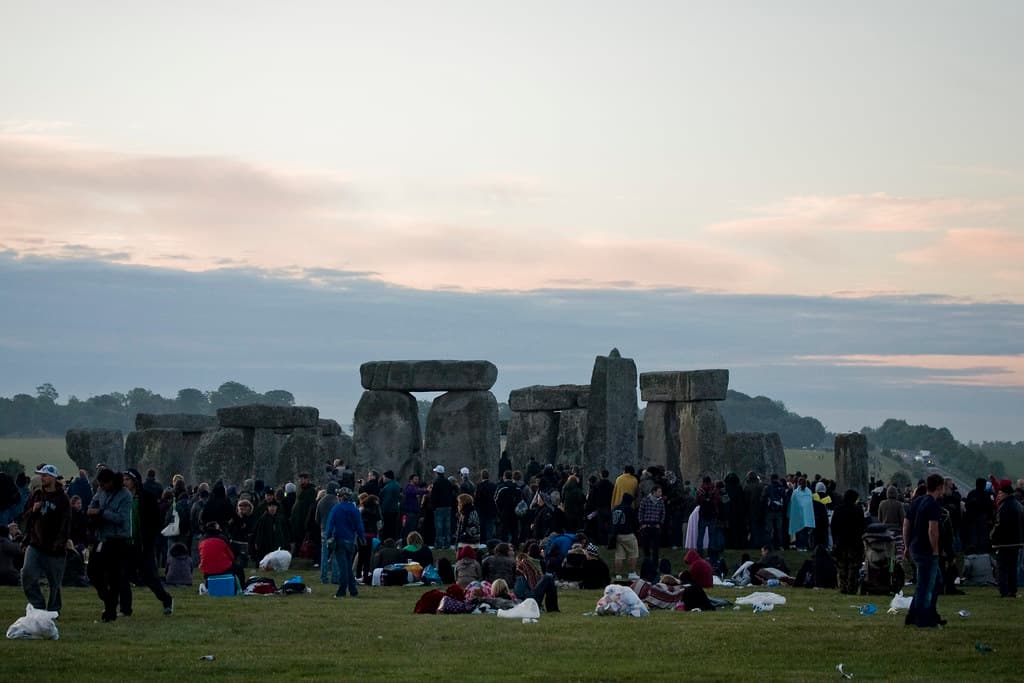
Dawn over Stonehenge on the solstice
Photo by vintagedept / flickr · CC BY 2.0
Planning your trip
Getting there
Stonehenge is about two hours' drive west of London, near the town of Amesbury. The nearest railway station is Salisbury, about 15 kilometres away, with trains from London Waterloo; for the solstice, extra buses have run from Salisbury to the site through the night. If you drive, parking must be booked and paid for in advance, and cars without a booking are turned away.
Where to stay
Salisbury, a cathedral city with hotels, pubs and guesthouses, is the best base, and Amesbury is closer to the stones. Both fill for the solstice, so book early. Many people skip a bed altogether, staying up all night at the stones and sleeping the next day.
What it costs
Entry is free. Parking costs extra, at £25 per car in 2026, and must be booked in advance; the shuttle buses from Salisbury are paid. Hotels in the area cost more for the solstice, but the event itself can be done on a very small budget.
Go like you know
- Check English Heritage's solstice page in the spring for the year's times, rules and parking bookings.
- Be respectful of the ceremonies: give the druids and pagans space, and don't climb on the stones.
- Visit Avebury, a larger stone circle and village about 30 kilometres north, which also draws a crowd at the solstice.
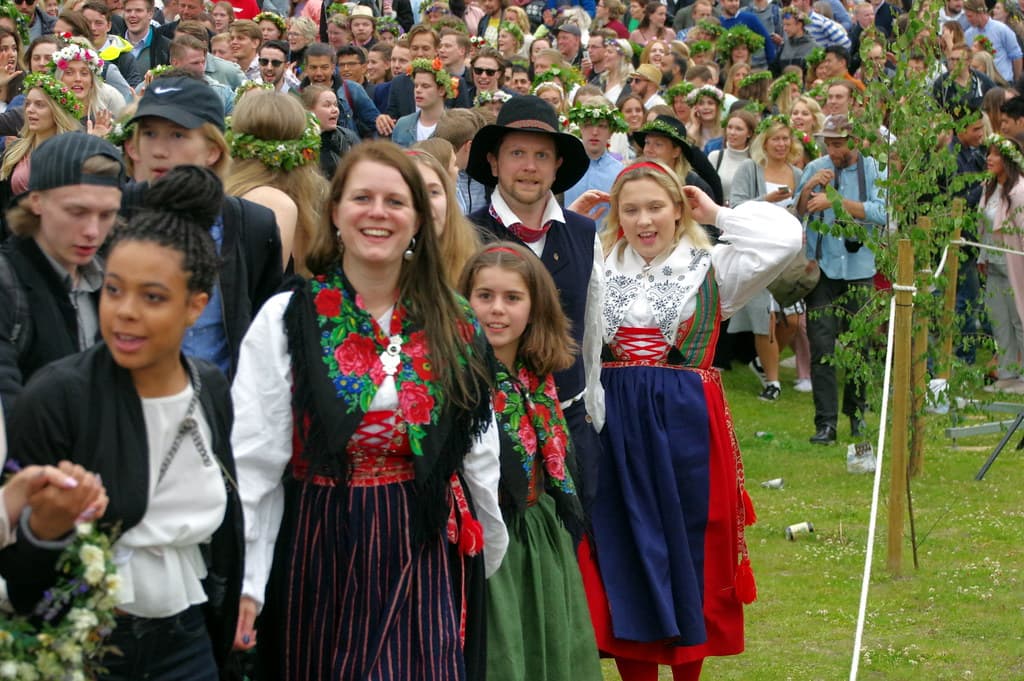
- For a midsummer celebration in Scandinavia, see Midsummer in Sweden.
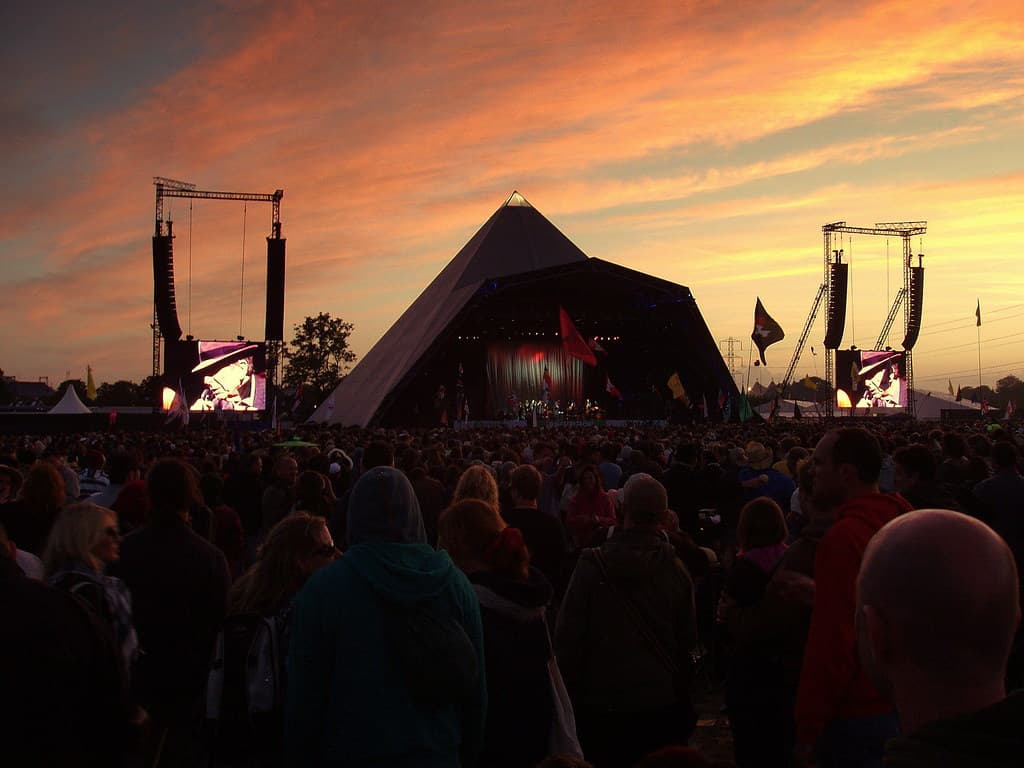
- Britain's Glastonbury Festival is held in late June, in the same part of England.
Frequently asked questions
When is the summer solstice at Stonehenge?
On the night before the summer solstice, usually from the evening of June 20 to the morning of June 21. In 2027 the solstice falls on June 21, so the open access is expected overnight from June 20. English Heritage confirms the dates, opening times and parking in the spring.
Can I touch the stones?
Yes. The solstice is one of the few times of the year when the public can walk inside the circle and touch the stones, along with the winter solstice and the equinoxes. Climbing or standing on the stones is not allowed, and stewards will ask you to get down.
Will I see the sun rise?
Only if the weather allows. English summer dawns are often cloudy, and many years the sun is hidden. Even then, the gathering, the ceremonies and the moment the crowd greets the morning are worth the night, and the light over the plain can be beautiful.