What is Inti Raymi?
Inti Raymi, the "festival of the sun" in Quechua, was the great state ceremony of the Inca empire. According to the colonial chroniclers Guamán Poma de Ayala and the Inca Garcilaso de la Vega, the ruler Pachacútec instituted it in the 15th century to honour Inti, the sun god, around the June solstice, the start of the Andean year, and to ask for good harvests. After the Spanish conquest it was banned as pagan, and for centuries it survived only in fragments in remote villages.
The version Cusco stages today is a 20th-century reconstruction. In 1943 a group of local intellectuals led by the historian Humberto Vidal Unda set out to revive it, and on June 24, 1944, the first modern Inti Raymi was performed at Sacsayhuamán, with a script by the Quechua scholar Faustino Espinoza Navarro, who also played the Inca. It drew largely on Garcilaso's account of the ceremony and has been staged almost every year since. The city government organizes it through its festival company, EMUFEC.
It is a pageant rather than a living rite, and it doesn't pretend otherwise. But it is performed in Quechua, cast from Cusco's own people, and watched by thousands of families from the region, which makes it feel less like a show for visitors than a city telling its own story.
What to expect
The ceremony runs for about six hours across three stages, moving from the city centre up to the fortress above it.
Morning
Qorikancha: greeting the sun
The Inca, the coya (queen) and the high priest appear at the Qorikancha, the Inca sun temple whose walls still support the colonial church of Santo Domingo, and greet the sun with offerings of coca leaf. The esplanade below the temple is free and fills hours ahead.
Late morning
Plaza de Armas: the meeting of times
The procession moves to the main square, once the Inca plaza of Hauqaypata, where the Inca meets the city's mayor in the Encuentro de los tiempos and hands over a quipu, the knotted-cord record of the empire. This stage is also free and packed.
Afternoon
Sacsayhuamán: the main ceremony
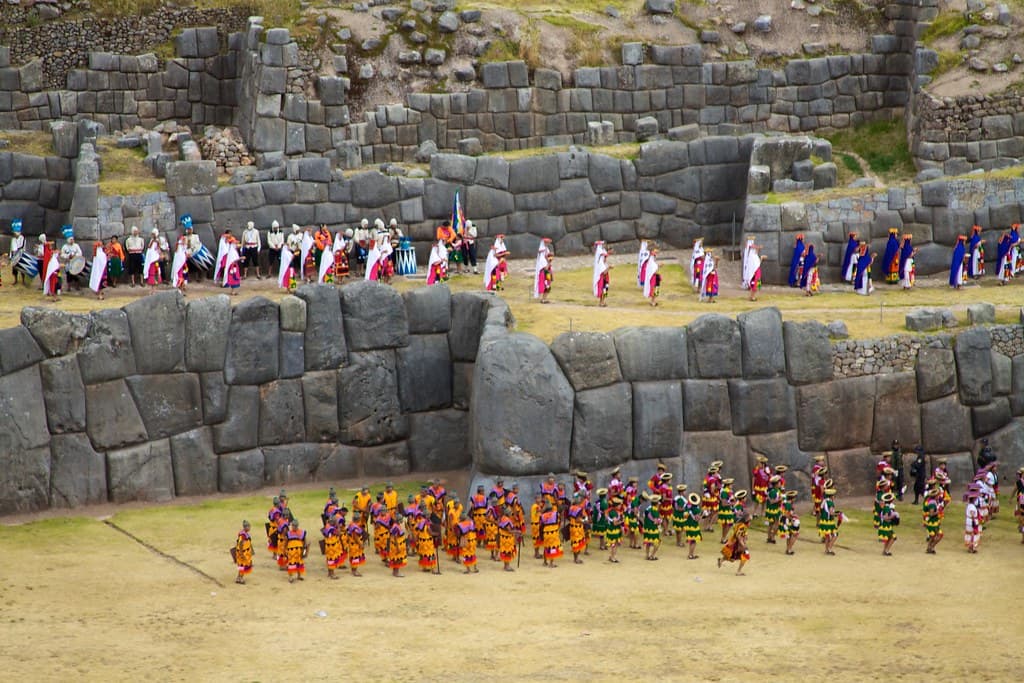
On the grass esplanade below Sacsayhuamán's huge zigzag walls, hundreds of performers in the costumes of the four regions of the empire fill the field. The rite follows: the sacred fire, the chicha (maize beer) offering, the ritual offering of a llama, the reading of omens, and the sharing of sankhu (sacred bread), all in Quechua.
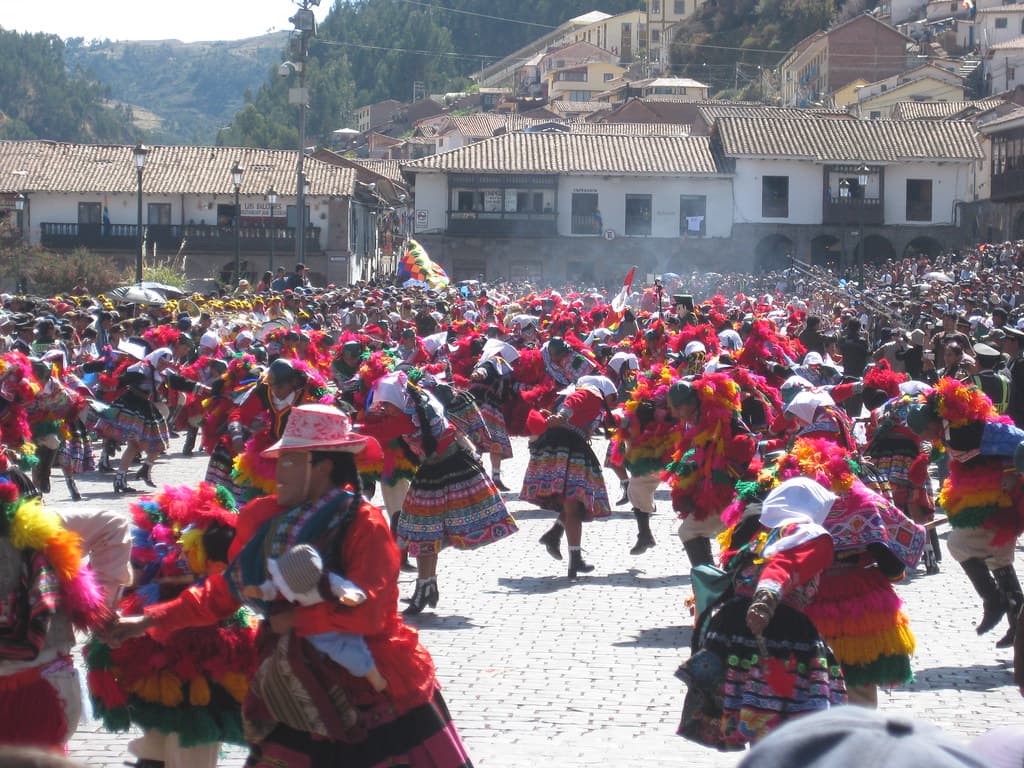
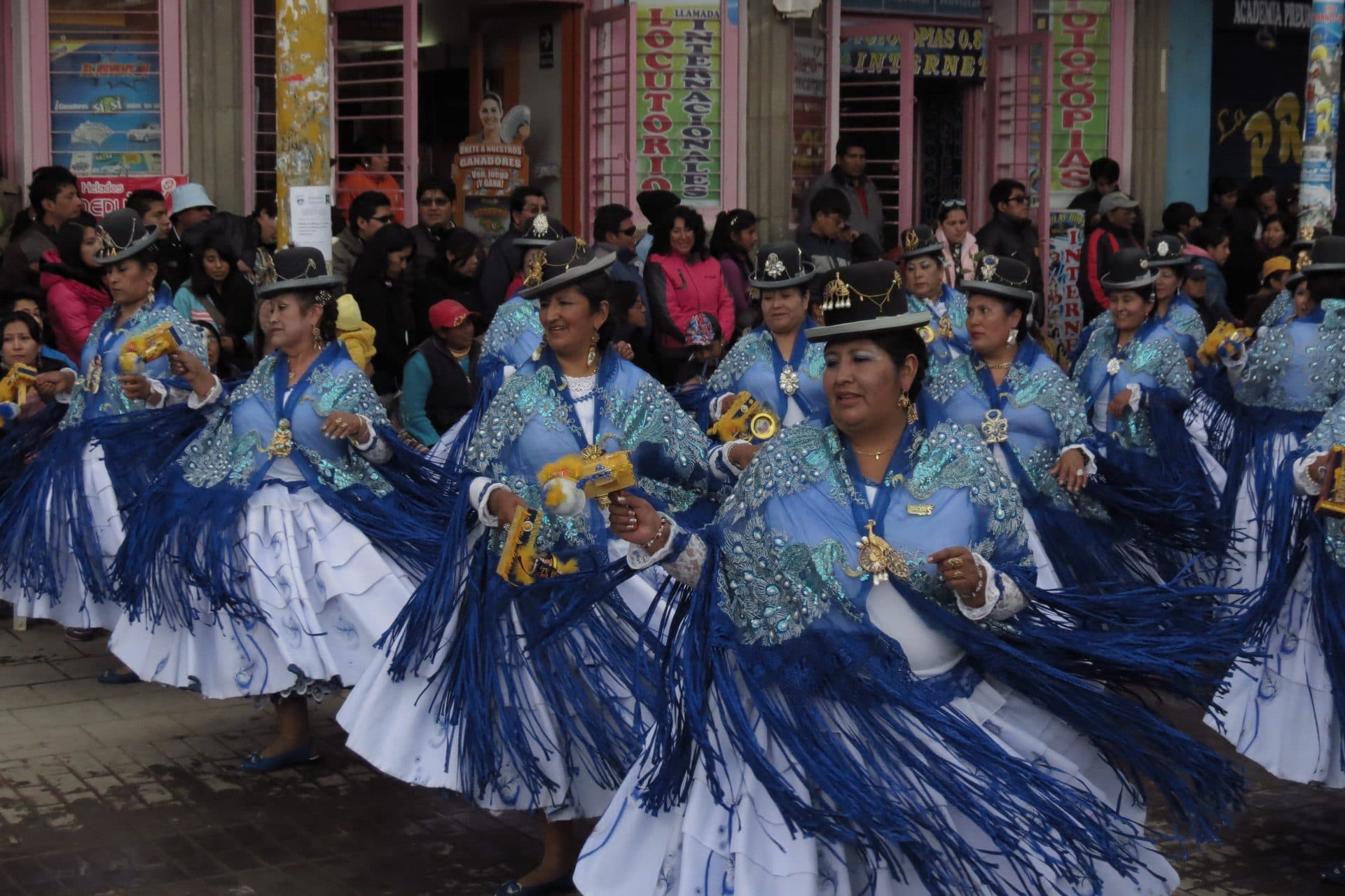
Dance groups parade through Cusco on Inti Raymi
Photo by BillDamon / flickr · CC BY 2.0
Planning your trip
Getting there
Cusco has an airport with frequent short flights from Lima; overland buses take the better part of a day. On June 24, traffic in the centre stops, so walk between the three stages. Sacsayhuamán is a steep climb above the Plaza de Armas, and the walk back down is crowded in the late afternoon.
Where to stay
The historic centre and the San Blas quarter put you within walking distance of the first two acts and the climb to Sacsayhuamán. Late June is Cusco's busiest time of year, since Inti Raymi caps a month of festivals in the city, so book early or stay in the Sacred Valley and come in for the day.
What it costs
The Qorikancha and Plaza de Armas ceremonies are free. Seats in the stands at Sacsayhuamán are sold by EMUFEC on its official site a few months ahead; in 2026 they cost several hundred soles and every grandstand had sold out more than a week before the day. Tour operators resell seats in packages with transport and a meal for more. Watching from the slopes above the esplanade costs nothing.
Go like you know
- Buy seat tickets from EMUFEC itself or a well-established agency, and as soon as sales open: the stands are small for the demand.
- Bring a cushion, water and snacks for Sacsayhuamán. The ceremony runs for hours and the sun at altitude is strong.
- Learn a few words of the story first: who the Inca, the coya and the four suyos (regions) are. It makes the Quechua-only stage much easier to follow.
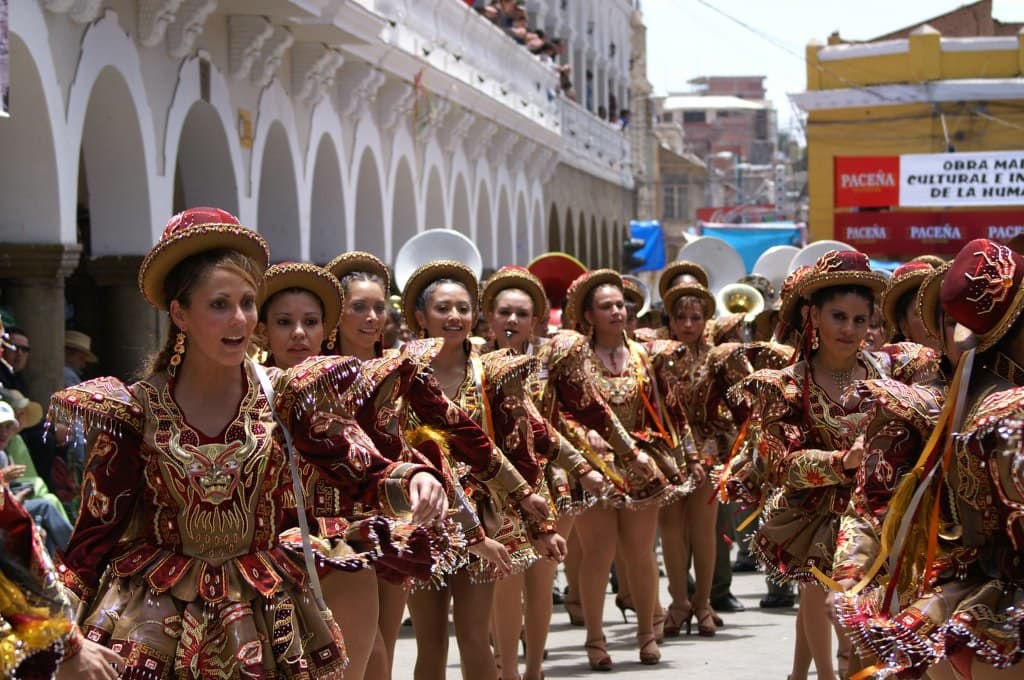
- Stay longer in the Andes for the year's other great celebrations: the Fiesta de la Candelaria in Puno and the Carnaval de Oruro in Bolivia both fall in February.
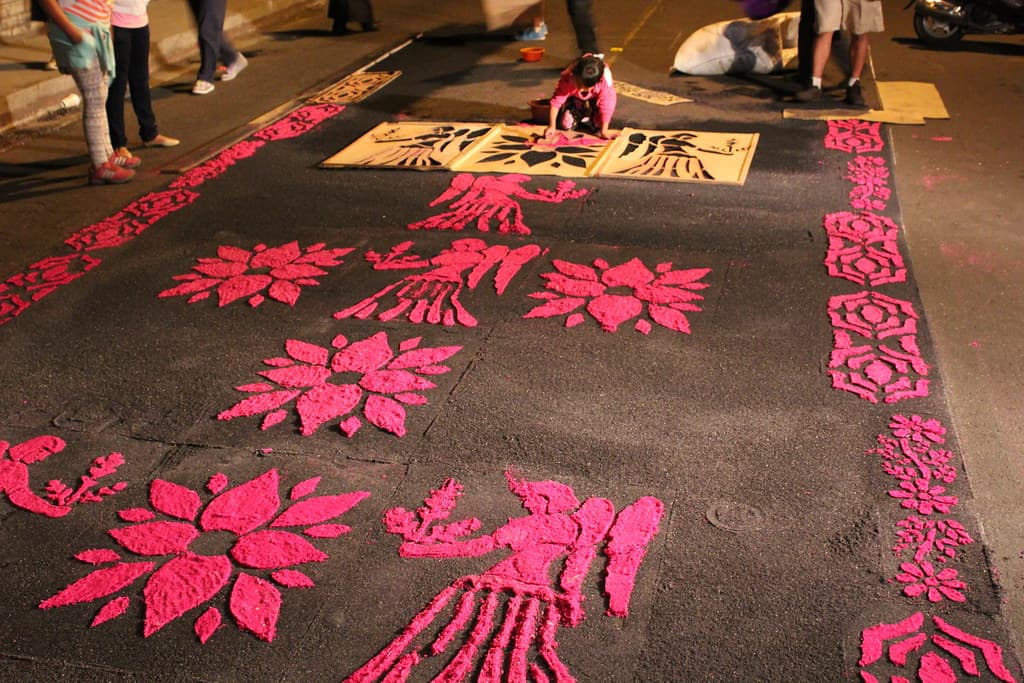
- For another festival where a city re-stages its own history in costume, see Holy Week in Antigua Guatemala.
Frequently asked questions
Is Inti Raymi worth it without a ticket?
Yes. The first two acts at Qorikancha and the Plaza de Armas are free, and the slopes above Sacsayhuamán give a wide, if distant, view of the main ceremony. You'll miss the close-up detail and the sound, but you'll be among Cusqueño families, which many visitors end up preferring.
Is it a real Inca ritual?
It is a reconstruction. The modern ceremony was written in 1944 from colonial chronicles, mainly Garcilaso de la Vega's, and has been performed annually since. That said, it is staged in Quechua by people from Cusco and is a genuine source of local pride, not a performance put on only for visitors.
When should I arrive in Cusco?
At least two days before June 24, to adjust to the altitude. Ideally come earlier: June is Cusco's festival month, with parades and dances in the main square on many days in the run-up, and the city is at its most lively in the week before Inti Raymi.