What is the Dieciocho?
In Chile, September means one thing: el Dieciocho, "the Eighteenth". The Fiestas Patrias, the country's national holidays, fall on September 18 and 19. The first marks the creation of Chile's First Government Junta on September 18, 1810, the first step on the road to independence. The second, the Day of the Glories of the Army, honours the armed forces with a great military parade in Santiago.
Officially the holiday is two days, sometimes three or four when the calendar adds a bridge day. In practice, much of the country slows down for most of a week. Schools close, offices empty, families travel to the countryside, and every town and city sets up its fondas and ramadas: temporary halls and open-air venues, often roofed with branches, where people eat, drink and dance late into the night.
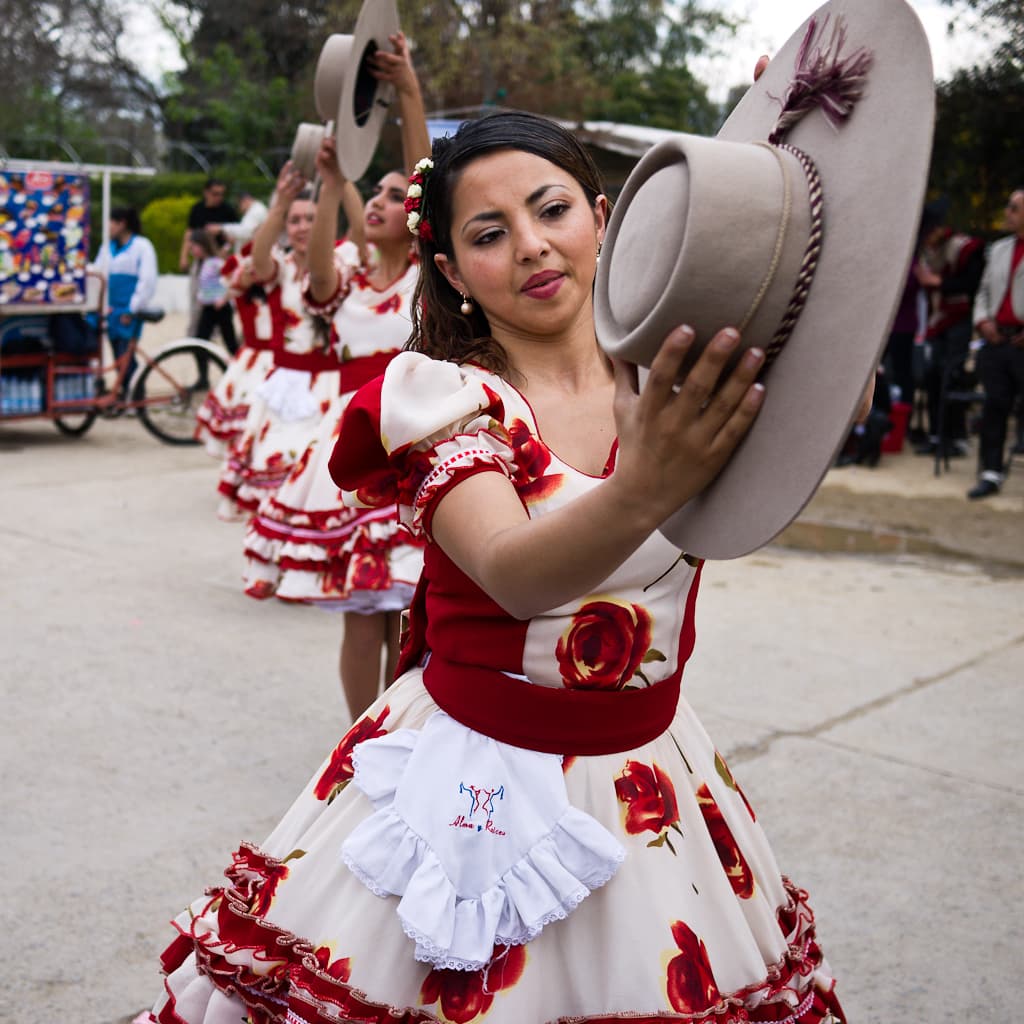
It is the most Chilean week of the year. The red, white and blue flag hangs from every house, kites fill the sky in the spring winds, and the smell of grilled meat drifts across the parks. Chileans dress up as huasos, the country's horsemen, in flat-brimmed hats and short ponchos, and dance the cueca, the national dance, in which a couple circles each other waving white handkerchiefs.
For a visitor it is the easiest way into Chilean life. Nobody is in a hurry, everyone is out of the house, and the fondas welcome all comers, especially those willing to try a step of cueca.
What to expect
The celebrations build over several days, with the official events on the 18th and 19th.
The days before
The fondas open
Fondas open in parks and fairgrounds across the country, the largest in Santiago's Parque O'Higgins. Schools and workplaces hold their own celebrations, with cueca performances and empanadas.
September 18
The national day
The day opens with the Te Deum services, attended by the president and political leaders. Then the country heads to the fondas and the family asado, the barbecue, for an afternoon and night of food, drink, music and dancing.
September 19
The military parade
The Gran Parada Militar marches through Parque O'Higgins in Santiago, overseen by the president and broadcast across the country, with troops, horses and a fly-past. The fondas carry on afterwards.
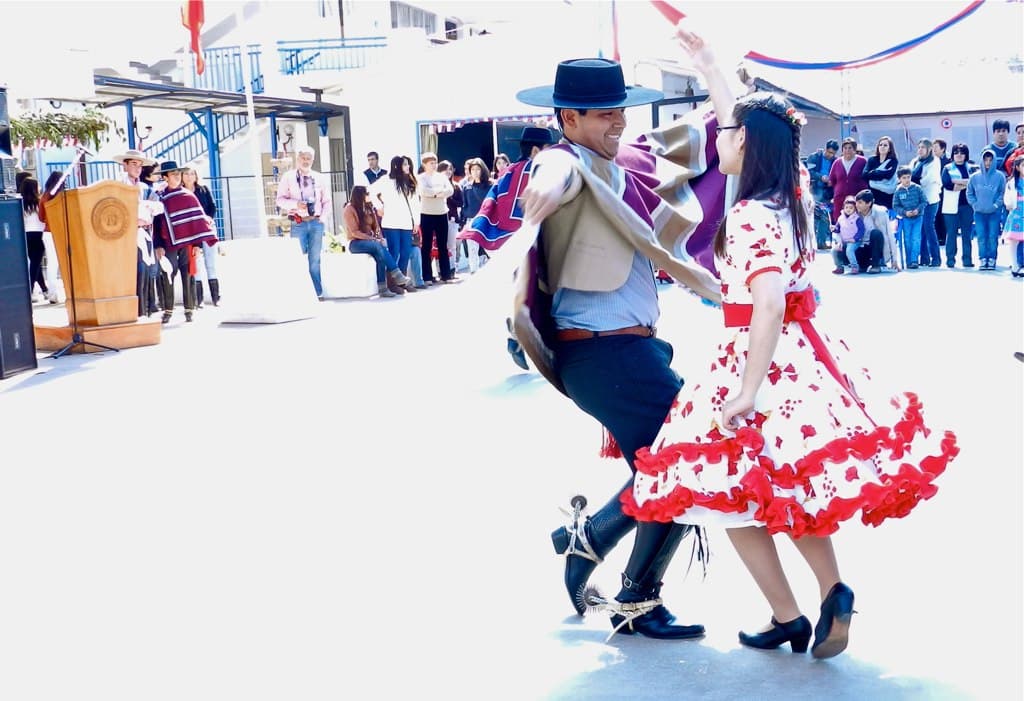
Dancing the cueca, Chile's national dance
Photo by Constanza.CH / flickr · CC BY 2.0
Planning your trip
Getting there
Santiago's international airport has connections across the Americas and to Europe, and buses run into the city. Parque O'Higgins, home of the biggest fondas and the military parade, is south of the centre, a short ride on metro Line 2. Long-distance buses and flights within Chile fill quickly over the holiday, as many Chileans travel home.
Where to stay
Santiago's central neighbourhoods, such as Lastarria, Bellas Artes and Providencia, are well placed, with hotels and apartments at every level. To see the countryside version of the holiday, with rodeos and village fondas, base yourself in a town in the central valley, such as those in the wine regions south of Santiago.
What it costs
Entry to the big fondas is cheap or free, depending on the venue, and food and drink are inexpensive. An empanada and a drink cost a few dollars. Santiago is moderately priced by international standards, and hotel prices in the city often drop as residents leave for the long weekend, while those in beach and country towns rise.
Go like you know
- Eat an empanada de pino, filled with beef, onion, egg and olive, and try anticuchos, grilled skewers, and choripán, a sausage in bread.
- Drink a chicha, the fermented grape or apple drink of the season, or try a terremoto, slowly.
- Fly a kite, or watch the volantines fill the sky over the parks.
- Visit a rodeo, Chile's national sport, held in towns across the central valley over the holidays.
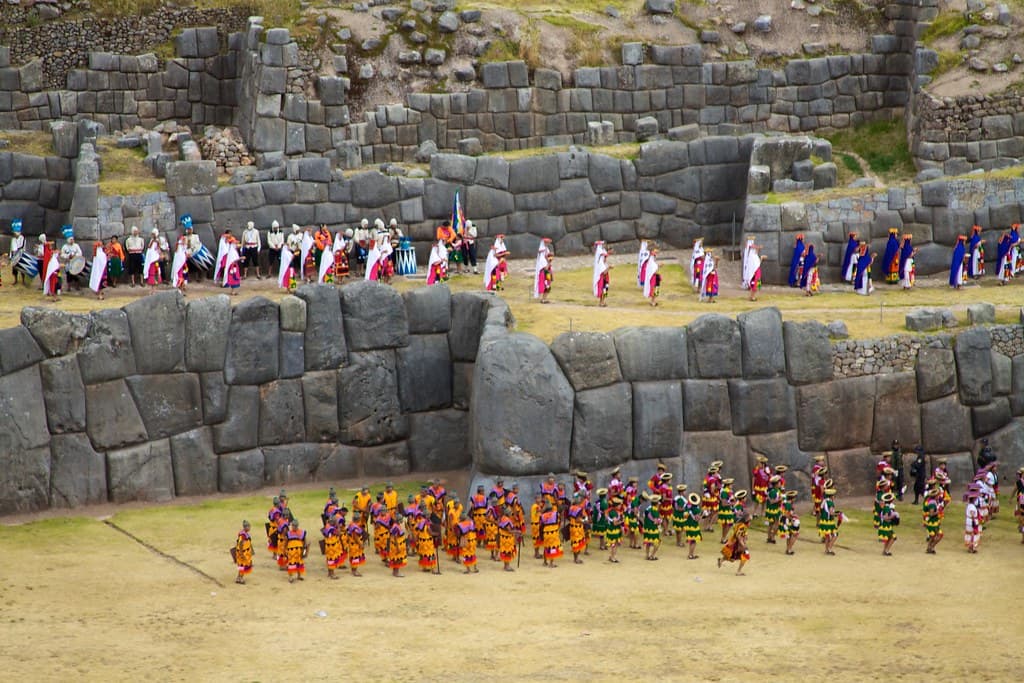
- For another great celebration of Andean heritage in South America, see Cusco's Inti Raymi, in June.
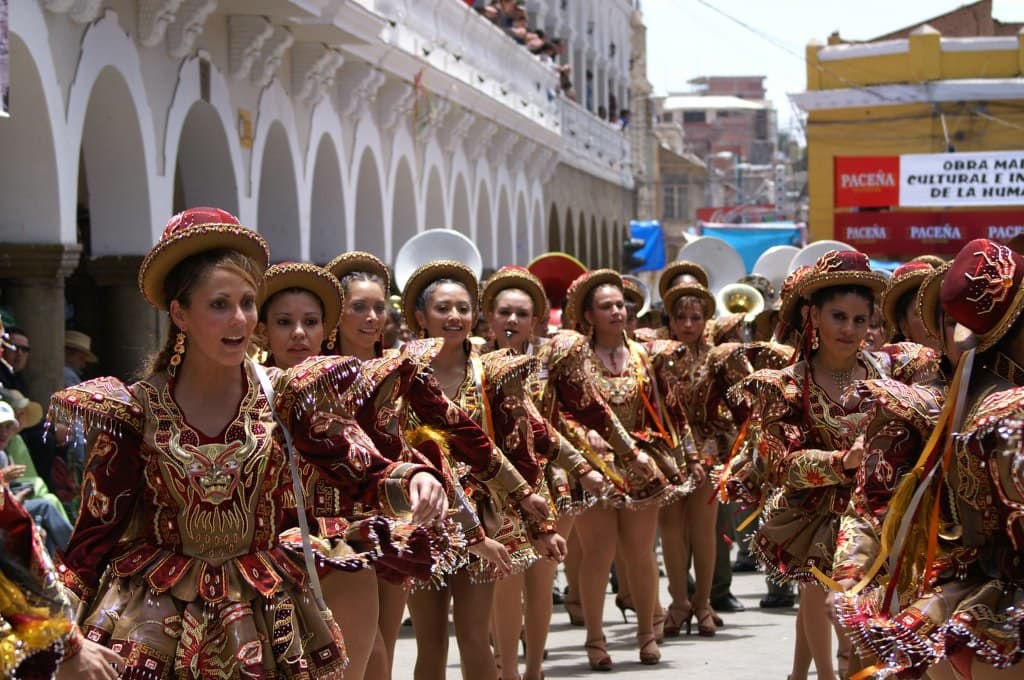
- Bolivia's Carnaval de Oruro is the continent's great dance parade, in February or March.
Frequently asked questions
When are the Fiestas Patrias?
The national holidays are September 18 and 19 every year. In 2027 they fall on a Saturday and Sunday, so Friday September 17 is also a public holiday, making a three-day weekend. Fondas usually open a few days before the 18th, and many people take the whole week off.
Where is the best place to celebrate?
Santiago's Parque O'Higgins has the biggest fondas and the military parade, and it is the easiest place for visitors. For a more traditional experience, head to a town in the central valley, where rodeos, village fondas and family asados keep the old countryside customs of the holiday.
What should I wear?
Anything comfortable, with warm layers, as September nights in central Chile are cool. Many Chileans dress up, the men in the huaso's hat and short poncho, the women in flowered dresses for the cueca, and a small Chilean flag or ribbon is a welcome touch for visitors.