What is the Fiesta de la Candelaria?
The Festividad de la Virgen de la Candelaria is the feast of Puno's patron saint, the Virgin of Candlemas, whose day is February 2. Puno sits on the Peruvian shore of Lake Titicaca, in a region where Quechua and Aymara cultures run deep, and the festival is a powerful meeting of Catholic devotion and Andean tradition. The Virgin is honored alongside older relationships with the earth, the lake and the agricultural cycle, since February is the season of growing crops and rain.
The celebration has grown into one of the largest festivals of music and dance in South America. Hundreds of groups take part, with tourism authorities citing more than 40,000 dancers and 9,000 musicians, and Puno is proudly called Peru's folklore capital. In 2014, UNESCO added the Fiesta de la Virgen de la Candelaria to its list of intangible cultural heritage.
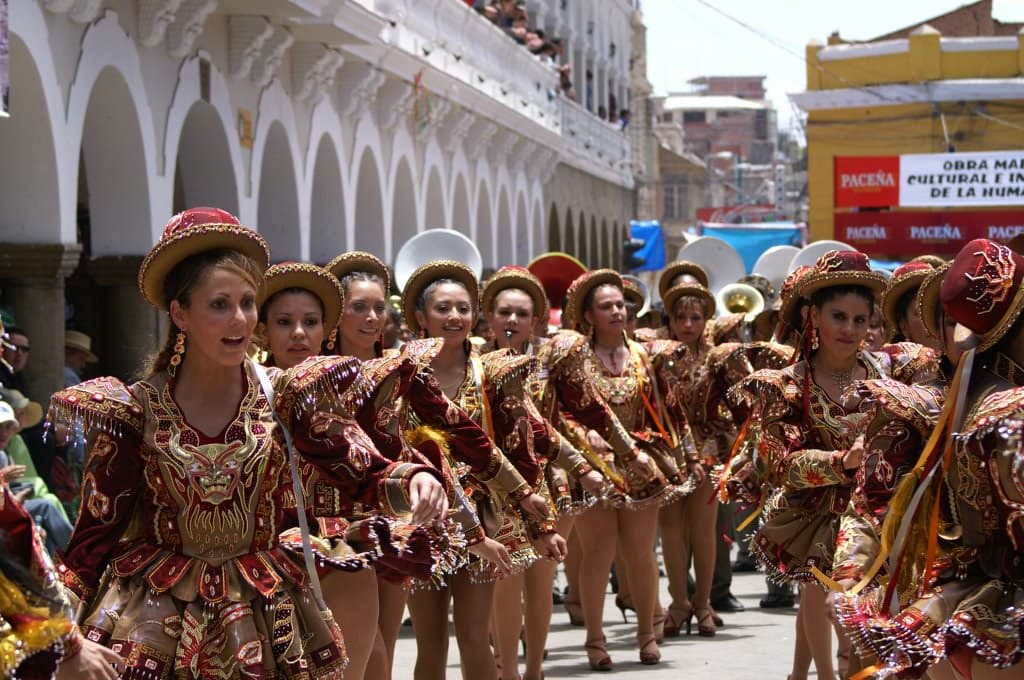
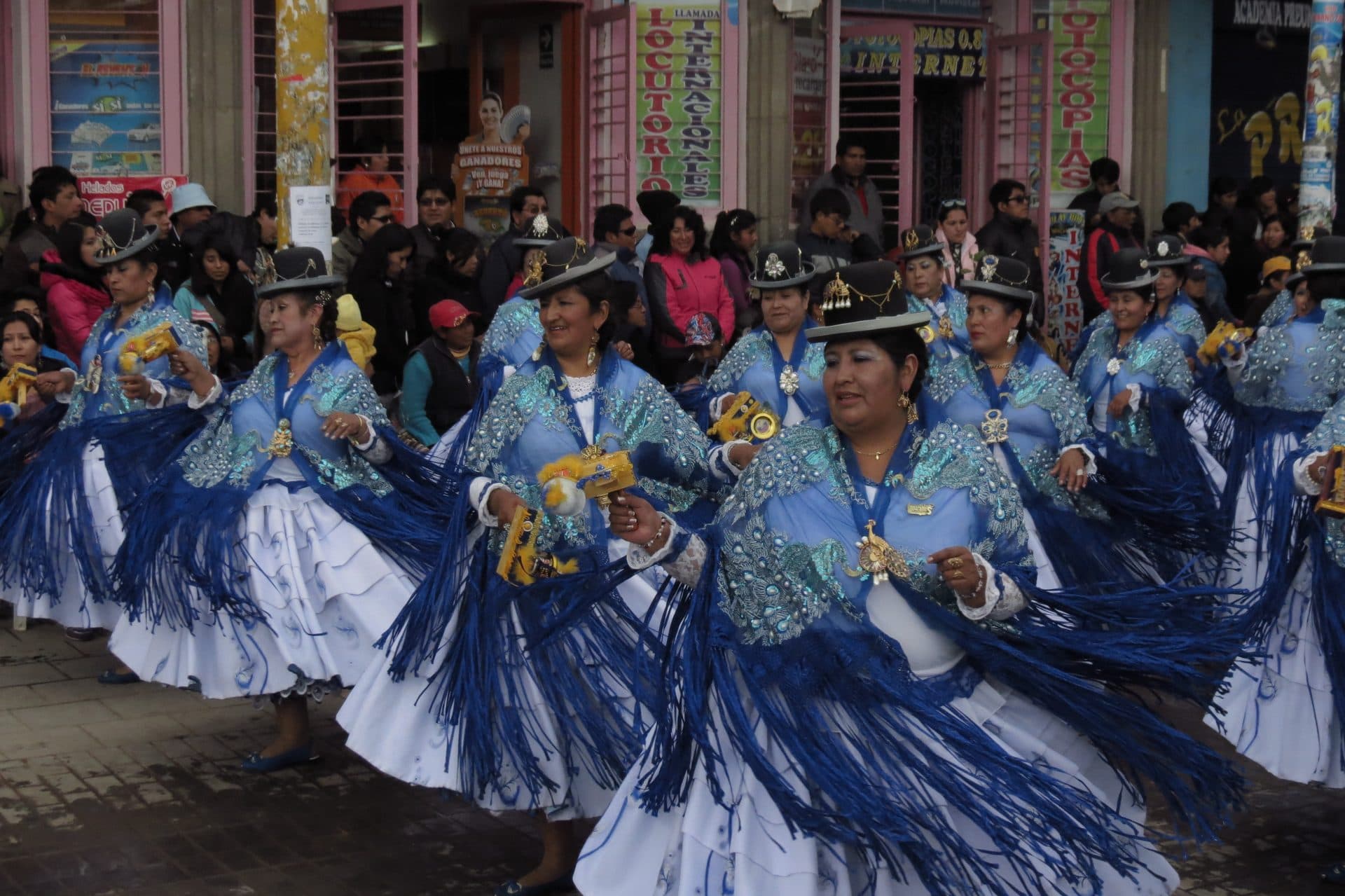
The festival has two great faces. The danzas autóctonas, or native dances, are performed by rural communities in their traditional dress, with dances tied to farming, herding, courtship and ritual. The trajes de luces, "suits of light", belong to urban troupes in spectacular embroidered and sequined costumes, dancing the diablada, morenada, caporales and other dances shared with neighboring Bolivia, where they anchor the Carnaval de Oruro.
Two festivals in one: the countryside's ancestral dances and the city's dazzling suits of light, both offered to the same Virgin.
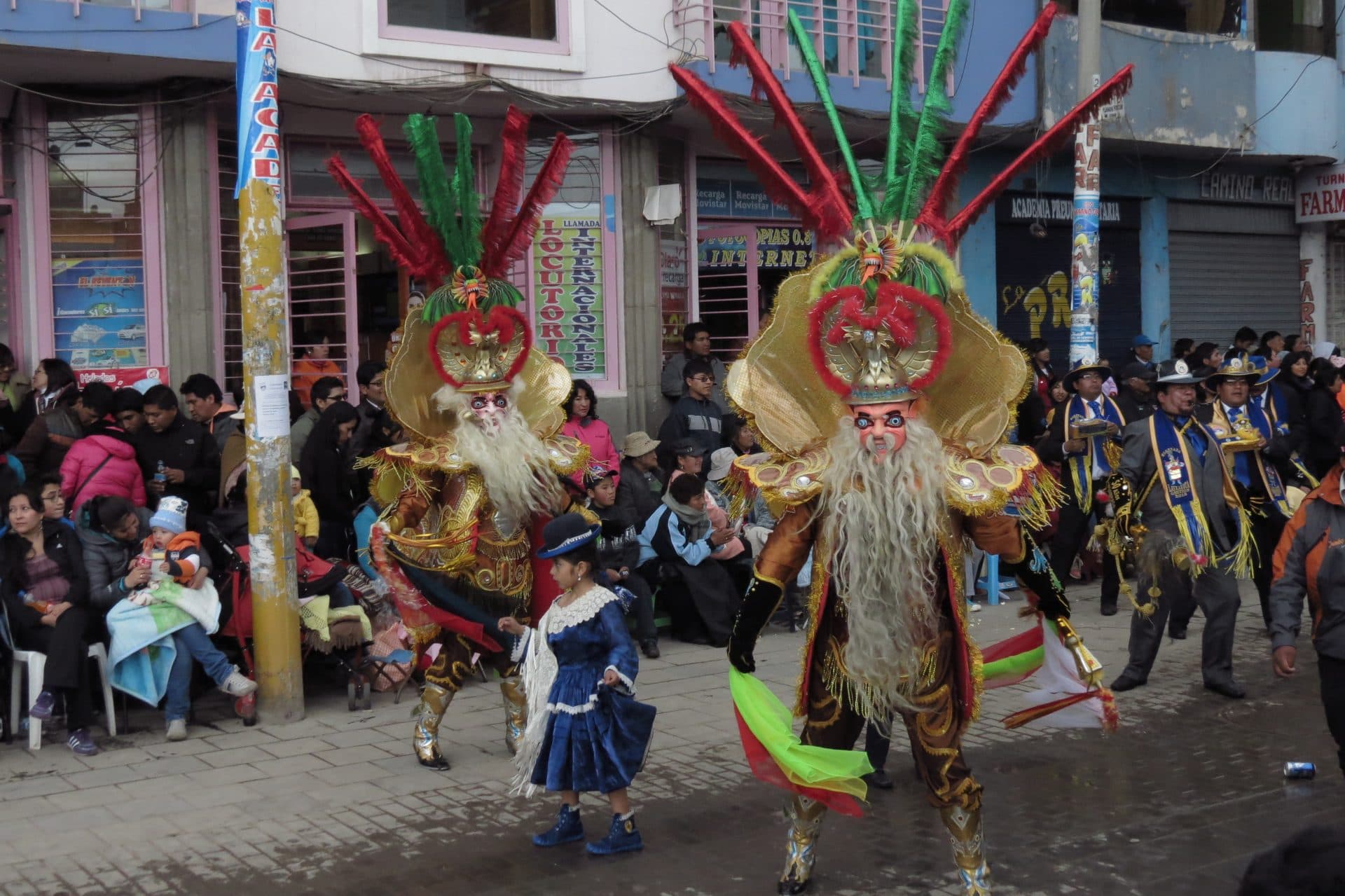
Dancers in the Candelaria parade in Puno
Photo by RicardoMarconato / wikimedia · CC BY-SA 4.0
What to expect
The celebrations stretch over weeks, but the main events concentrate in the days around February 2 and the week after.
Late January
Opening events
Masses, novenas and the coronation of the festival's folklore queens open the season, with dance rehearsals and brass bands in the streets.
Contest weekend
Native dance contest
Rural groups compete over two days in the Universidad Nacional del Altiplano's Estadio Monumental with ancestral dances and music. It is the festival's most authentic window into Andean community life.
Feb 2
Feast of the Virgin
A solemn mass and procession carry the image of the Virgin through Puno's streets, over carpets of flowers, accompanied by dance groups.
Octave
Suits of light
On the Sunday about a week after the feast, the troupes in trajes de luces compete in the stadium. On the following days they parade through the city in the Parada y Veneración, a long, glittering procession along Avenida Simón Bolívar.
Planning your trip
Getting there
Most visitors fly to Lima and on to Juliaca's airport, about an hour by road from Puno. The alternatives are a long bus ride or the PeruRail Titicaca train from Cusco, a scenic journey of roughly ten and a half hours. In town, the stadium contests are held at the Universidad Nacional del Altiplano's Estadio Monumental, while the feast-day mass and procession center on the cathedral and Plaza de Armas.
Where to stay
Puno's accommodation fills up and prices rise during the festival, so book early. The area around the Plaza de Armas and the pedestrian Jirón Lima keeps you within walking distance of most processions and restaurants. Combine your trip with Lake Titicaca's islands, such as Taquile and Amantaní, or the reed islands of the Uros, once the dancing is done. Carnival season continues in Bolivia at Oruro, and in some years the two festivals fall a week apart while in others they overlap.
What it costs
Watching the street processions and the parade costs nothing, but the stadium contests are ticketed through the organizers. For 2026 the organizing federation reportedly set suits-of-light seats at about S/40 to S/60 depending on location, and piloted online sales to cut queues. Hotel rates climb for the main weekends, so budget for the surge.
Go like you know
- Try chairo, a hearty highland soup, and trucha, trout from Lake Titicaca, in local markets.
- Bring rain gear and sun protection; the weather changes quickly at this altitude.
- Respect the religious meaning of the festival during masses and processions; dancers are fulfilling vows.
- Visit the Santuario de la Virgen de la Candelaria to see the image of the Virgin and the offerings left by devotees.
- Look out for brass band rehearsals in the evenings before the main events; they are informal and lively.
- Bring small change for the brass bands' collection hats and for snacks from street vendors along the parade route.
- Chasing carnival dance across South America? Colombia's Barranquilla Carnival also falls in the weeks before Ash Wednesday, with a very different Caribbean rhythm.
Frequently asked questions
When is the Fiesta de la Candelaria?
The festival centers on February 2, the feast of the Virgin of Candlemas. The native dance contest takes place on the weekend around it, and the suits-of-light contest and octave parade follow about a week later. Opening events and rehearsals begin in January.
Do I need tickets?
Tickets are needed for the stadium contests; for 2026 the organizers reportedly priced suits-of-light seats at about S/40 to S/60, with online sales piloted. The feast-day procession and the street parades can be watched for free from the route. Buy contest tickets early, since the stadium is the festival's big draw and seats can run short.
How does it compare with the Carnival of Oruro?
The two festivals share many dances, such as the diablada and morenada, and both are UNESCO-recognized. Candelaria stands out for its large contest of rural native dances, while Oruro is tied to carnival and the mining Virgin of the Socavón. Some years they fall about a week apart, so you can visit both; in others they overlap.
How should I prepare for the altitude?
Acclimatize gradually by spending a few days at intermediate altitude, such as Arequipa or Cusco. Drink plenty of water, rest on arrival, eat light meals and avoid heavy drinking. Coca tea is widely available. Seek medical help and descend if symptoms become severe.
Where should I stay in Puno?
Stay near the Plaza de Armas or along Jirón Lima, the pedestrian street, to walk to most processions and restaurants. Rooms fill and prices rise for the main weekends, so book early. Some travelers base themselves on the lake islands with homestays and come into town for the big days.