What is the Fiesta de La Tirana?
La Tirana is a tiny village in the Pampa del Tamarugal, in the Atacama Desert of northern Chile, home to only a few hundred people for most of the year. Every July, it is transformed. For the Fiesta de La Tirana, in honour of the Virgen del Carmen, more than 200,000 pilgrims and over 200 dance troupes descend on the village for days of music, dance and devotion, making it the largest religious festival in Chile.
The festival is named after a legend. According to the story popularized by the historian Rómulo Cúneo Vidal, an Inca princess, the Ñusta Huillac, led a band of rebels in the desert after the Spanish conquest and was known as La Tirana del Tamarugal, the Tyrant of the Tamarugal. She fell in love with a Portuguese prisoner, Vasco de Almeyda, converted to Christianity, and both were killed by her own followers. A friar later built a chapel on the spot, which grew into the sanctuary of the Virgen del Carmen.
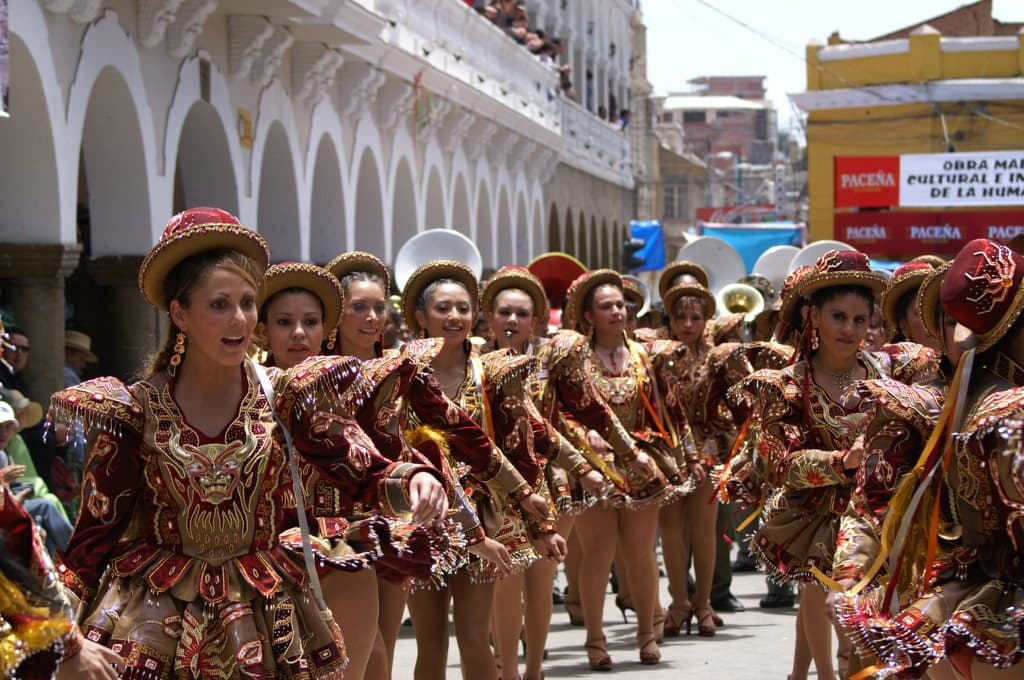
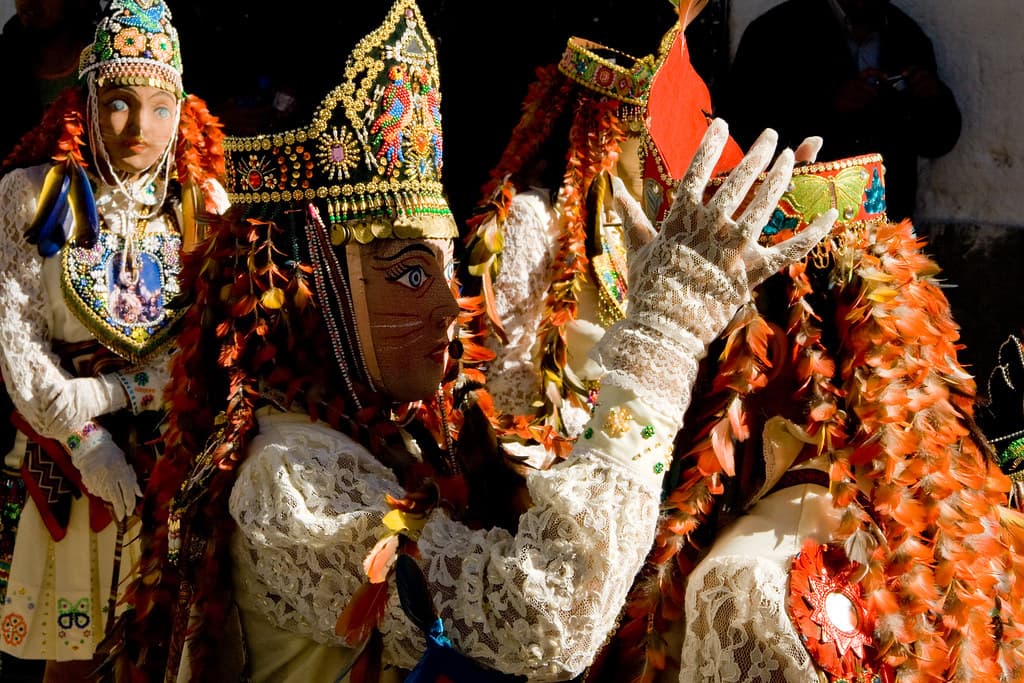
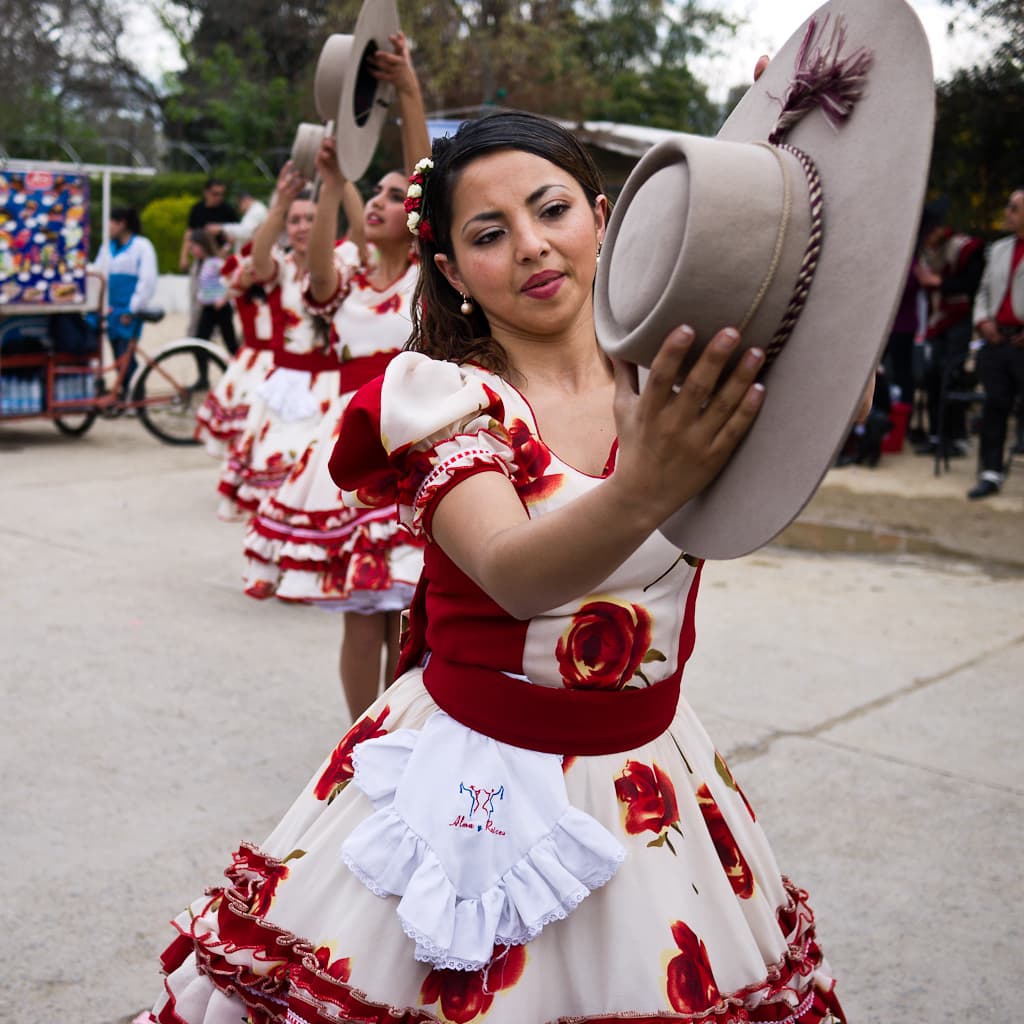
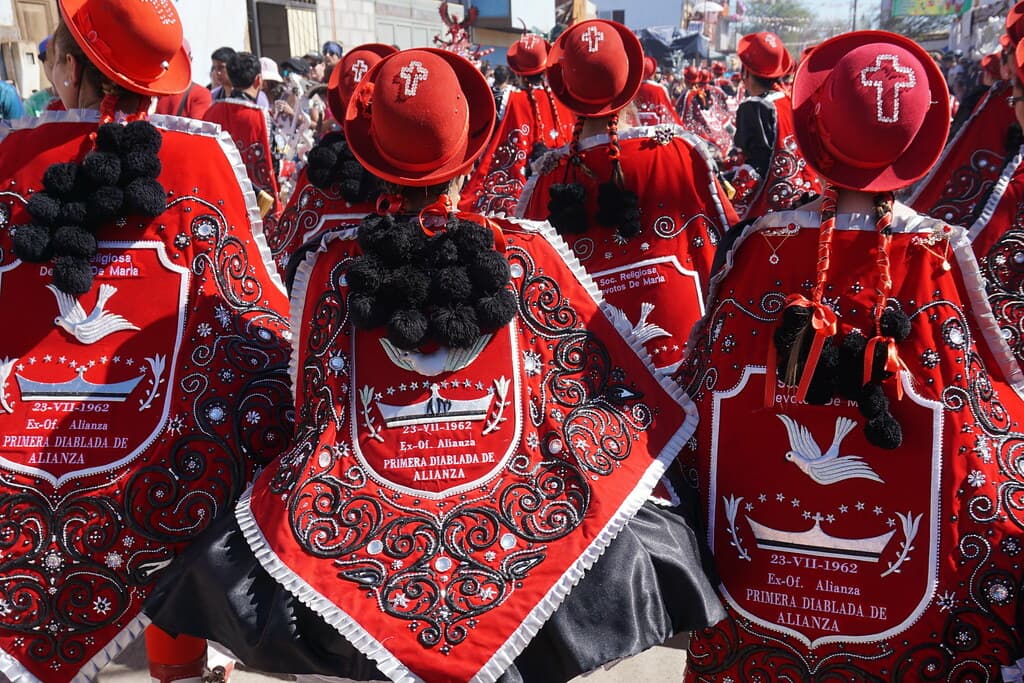
The heart of the festival is the dance. More than 200 cofradías, dance groups from across northern Chile, each devoted to the Virgin, dance for her day and night in the streets and in front of the sanctuary, in spectacular costumes and masks. There are diabladas, devils in horned masks with flashing lights; morenos, with their heavy, rattling suits; chunchos, inspired by peoples of the Amazon; and gitanos, chinos and many more, each with its own music, played by brass bands.
The festival reaches its peak on the night of July 15, the eve of the feast, when crowds gather to greet the Virgin at midnight, and on July 16, with mass and a procession of the image through the village.
What to expect
The festival runs for about ten days in mid-July, with its peak on July 15 and 16.
From July 10
The dancers arrive
The cofradías arrive and greet the Virgin at the sanctuary, and the village fills with music and dancing day and night.
July 15
The eve
Crowds pack the square for the vigil, and at midnight the dancers and pilgrims greet the Virgin with songs and fireworks.
July 16
The feast
Mass is celebrated, and the image of the Virgin is carried in procession through the streets, surrounded by dancers.
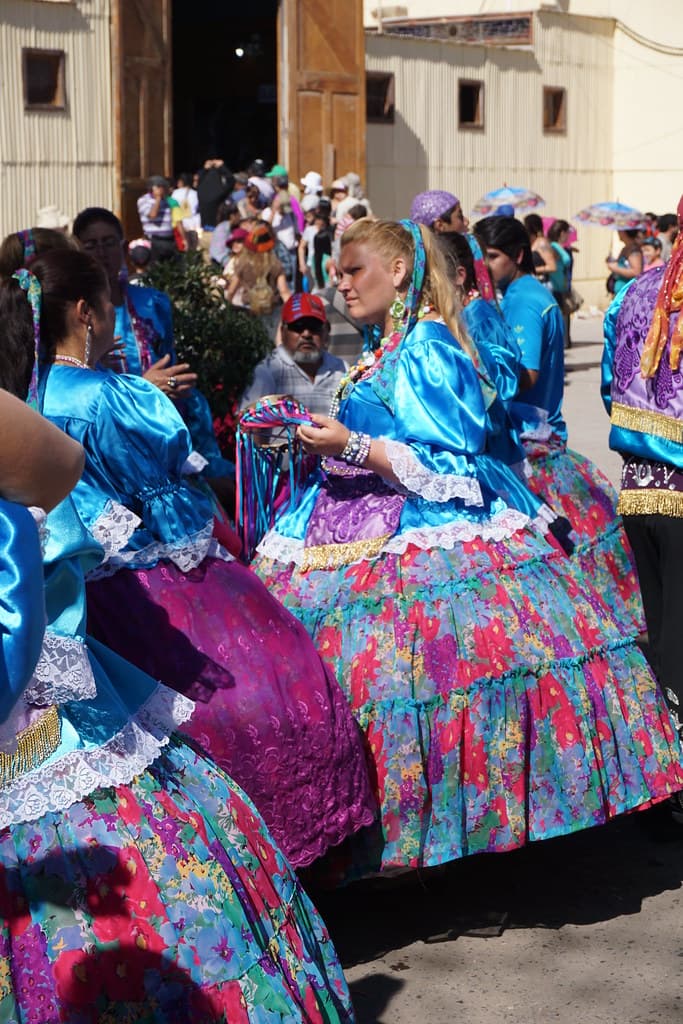
Dancers at La Tirana
Photo by pablo/T / flickr · CC BY 2.0
Planning your trip
Getting there
La Tirana is about 70 to 75 kilometres from Iquique, whose airport has flights from Santiago. Buses and shared taxis run from Iquique to the village during the festival, and the journey takes about an hour and a half.
Where to stay
Iquique has hotels and hostels for all budgets. In La Tirana itself, pilgrims sleep in houses rented by their cofradías, in tents or in campsites, which are very basic.
What it costs
The festival is free. Buses from Iquique cost a few thousand pesos and shared taxis a little more. Chile is moderately priced, and food stalls in La Tirana are cheap.
Go like you know
- Go for the eve, July 15, for the most intense night of the festival.
- Listen to the brass bands; each cofradía has its own, and they play almost without stopping.
- Respect the devotion; for the dancers, the festival is a religious vow, not a show.
- Bring a hat and sun protection by day, and a warm jacket by night.
- Visit the abandoned saltpetre works of Humberstone, a UNESCO World Heritage Site, on the way from Iquique.
- Bolivia's Carnaval de Oruro shares the diablada dance and much of La Tirana's music.
- Peru's Virgen del Carmen in Paucartambo honours the same Virgin on the same days, in the Andes.
Frequently asked questions
When is the Fiesta de La Tirana?
Every year in July, with the festivities running from around July 10 to July 20 and the main days on July 15, the eve, and July 16, the feast of the Virgen del Carmen. In 2027, the eve falls on a Thursday and the feast on a Friday.
How many people attend?
Estimates vary, but more than 200,000 pilgrims and visitors come to the village during the festival, with the largest crowds on the eve, July 15. More than 200 dance troupes take part, each with dozens of dancers and a brass band, making it the largest religious festival in Chile.
Can visitors watch the dances?
Yes. The dances take place in the streets and in front of the sanctuary, and visitors are welcome to watch. Remember that the dancers are fulfilling a religious vow, so be respectful, ask before taking close-up photos, and don't get in the way of the groups.