What is the Festa de Iemanjá?
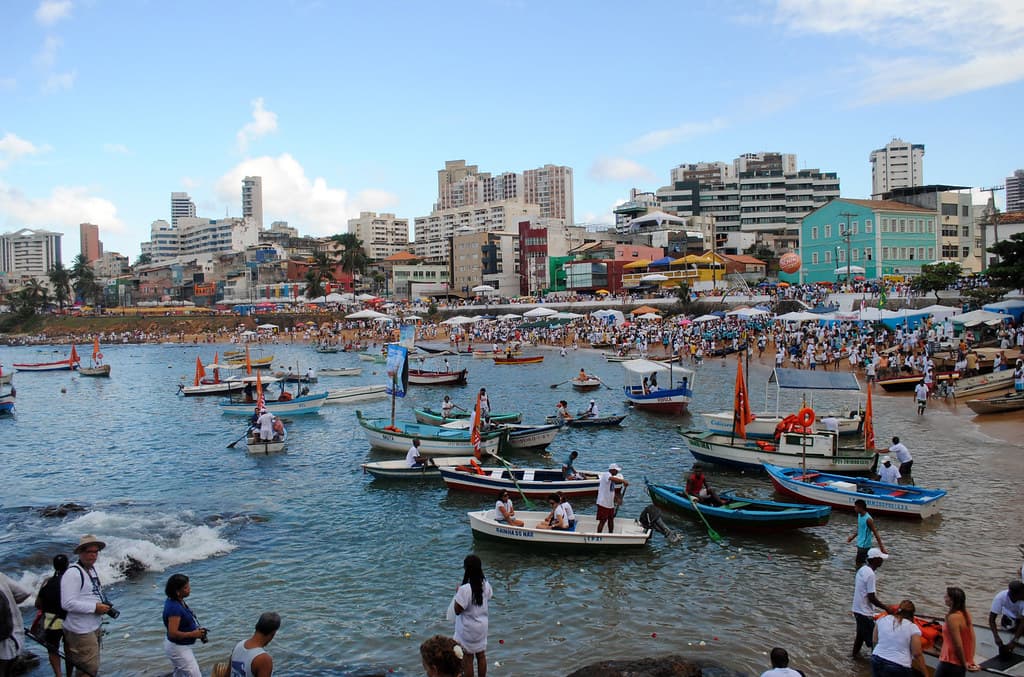
Every year on February 2, the beach of Rio Vermelho, a bohemian neighbourhood of Salvador da Bahia, in Brazil, turns blue and white. Hundreds of thousands of people, many dressed in white, come to honour Iemanjá, the goddess of the sea in Candomblé, the Afro-Brazilian religion, with flowers, perfume, mirrors and gifts, which are carried out to sea by fishing boats.
Iemanjá is one of the orixás, the deities of the Yoruba religion brought to Brazil by enslaved Africans. She is the mother of waters, protector of fishermen and of families, and her colours are blue and white. The festival in Rio Vermelho is said to have begun in the 1920s, when local fishermen, struggling with poor catches, offered a gift to Iemanjá, guided by a Candomblé priestess. It is organized by the fishermen's colony of Rio Vermelho, and in 2020, the city of Salvador recognized it as part of its intangible heritage.
The day starts before dawn. The main gift, prepared by the fishermen, is taken to the beach with fireworks, and throughout the day, people queue at the fishermen's house to leave their offerings in large baskets: flowers, perfume, combs, mirrors, jewellery and letters with wishes. Candomblé priestesses in white dresses perform rituals on the sand, and the atmosphere mixes devotion with a street party.
In the afternoon, the baskets are loaded onto fishing boats, which sail out in procession, followed by hundreds of other boats, to drop the gifts into the sea, far offshore. If the gifts sink, Iemanjá has accepted them; if they come back to shore, she has refused.
What to expect
The festival takes place on February 2, from before dawn until late in the evening, with events on the days around it.
Dawn
The main gift
The main gift prepared by the fishermen is taken to the beach in Rio Vermelho, greeted with fireworks.
Morning and afternoon
The offerings
People queue to leave their offerings, while Candomblé rituals take place on the beach and the streets fill with music and stalls.
Late afternoon
To the sea
The fishing boats carry the gifts out to sea in procession, and the party continues in Rio Vermelho into the night.
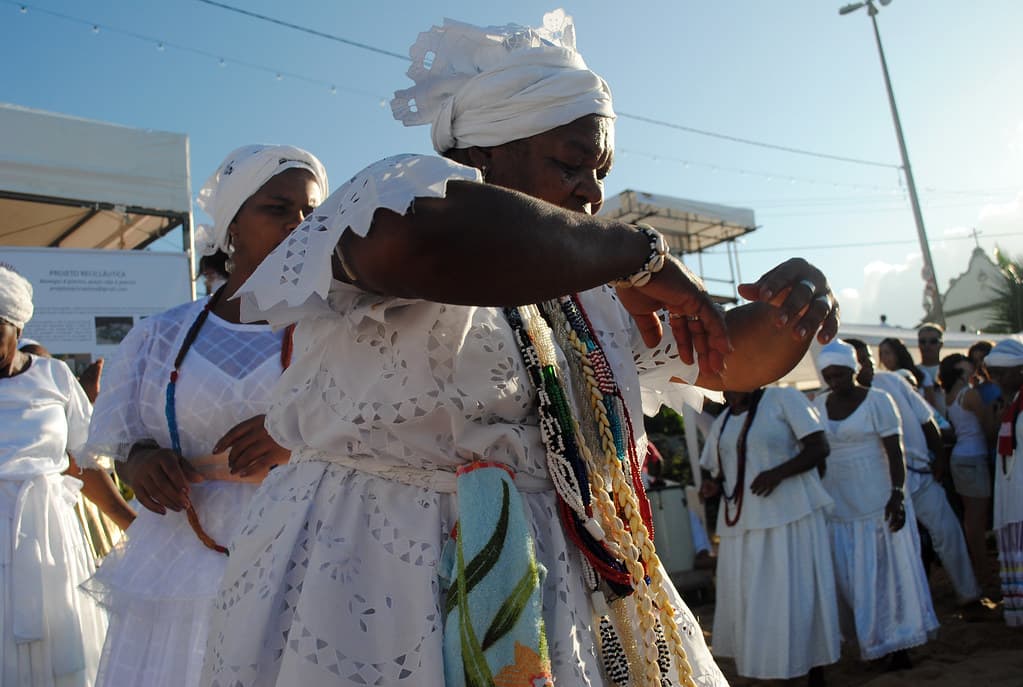
Rituals on the beach at Rio Vermelho
Photo by clarissapacheco / flickr · CC BY 2.0
Planning your trip
Getting there
Salvador's international airport has flights from across Brazil and some international routes. Rio Vermelho is a short taxi ride from the historic centre and the beaches, but traffic is heavy on February 2, so leave early.
Where to stay
Rio Vermelho has guesthouses and hotels, which fill up for the festival. Barra, nearby, has many more, and the historic Pelourinho is a good base for exploring the city.
What it costs
The festival is free. Flowers and offerings cost little. Salvador is affordable, but hotel prices rise in February, the start of the carnival season.
Go like you know
- Arrive early in the morning, before the crowds and the heat.
- Join the queue at the fishermen's house to leave your offering; it moves slowly, so be patient.
- Watch the boats leave in the afternoon from the rocks or the beach at Rio Vermelho.
- Stay for the evening, when bands play and the bars of Rio Vermelho fill with people dressed in white.
- Explore Pelourinho, Salvador's colourful historic centre, a UNESCO World Heritage Site.
- Bring sunscreen and a hat; February is high summer in Bahia.
- Use the bus or walk rather than drive; roads around Rio Vermelho are closed or jammed.
- Respect the rituals of the Candomblé priestesses; ask before taking photos.
- Try acarajé, a fried bean fritter sold by Bahian women in white dresses, in Rio Vermelho.
- Salvador's Carnival, a few weeks later, is one of the biggest street parties in the world.
- In Pernambuco, the Recife and Olinda Carnival is famous for frevo and giant puppets.
Frequently asked questions
When is the Festa de Iemanjá?
Every year on February 2, the day of Iemanjá in Bahia, with events starting the day before. In 2027, February 2 falls on a Tuesday. The day begins before dawn and the boat procession takes place in the afternoon, followed by a party into the night.
Who is Iemanjá?
Iemanjá is the goddess of the sea in Candomblé, the Afro-Brazilian religion. She is the mother of waters and protector of fishermen and families, often shown as a woman in blue rising from the sea. Her colours are blue and white, and her devotees offer her flowers, perfume and gifts.
Can visitors make an offering?
Yes. Anyone can leave flowers or gifts in the baskets at the fishermen's house in Rio Vermelho, which are carried out to sea in the afternoon. Avoid plastic and non-biodegradable gifts, which pollute the sea; flowers are the most common and best choice.